
The term “genocide” evokes images of unfathomable human suffering and the systematic destruction of a people. While its historical and ethical dimensions are paramount, a critical lens reveals how advancements in technology are increasingly becoming indispensable in understanding, documenting, and, crucially, preventing these horrific acts. This exploration delves into the technological facets that shed light on what genocide was, and more importantly, what it could be prevented from being.
The Digital Footprint of Atrocity: Capturing Evidence in Real-Time
The digital age has fundamentally altered how we perceive and interact with information, and this extends to the documentation of mass atrocities. Before the advent of ubiquitous digital tools, gathering evidence of systematic persecution was a painstaking and often dangerous endeavor. Today, a complex web of digital technologies offers unprecedented capabilities for capturing, preserving, and analyzing information that can serve as irrefutable proof of genocidal intent and execution.

Satellite Imagery and Geospatial Analysis
One of the most powerful technological tools in this domain is satellite imagery. High-resolution images, coupled with sophisticated geospatial analysis software, can reveal large-scale patterns of destruction that might otherwise go unnoticed. This includes tracking the demolition of villages, the construction of mass graves, the movement of displaced populations, and the alteration of landscapes that indicate deliberate efforts to erase cultural or physical markers of a targeted group. Algorithms can analyze these images for changes over time, identifying anomalies and areas of concern that warrant further investigation. This technology allows for an objective, external view, minimizing the risks faced by on-the-ground investigators.
Open-Source Intelligence (OSINT) and Social Media Forensics
The proliferation of smartphones and social media platforms has created an unprecedented volume of user-generated content. Open-Source Intelligence (OSINT) techniques, when applied ethically and rigorously, can sift through vast amounts of publicly available data – including social media posts, videos, audio recordings, and online news articles – to identify trends, monitor propaganda, and gather firsthand accounts. Specialized software can analyze the metadata of these digital artifacts, verifying their authenticity and pinpointing their origin. This allows for the rapid collection of diverse perspectives and evidence, offering a crucial window into the unfolding of events. Furthermore, social media forensics can help track the spread of hate speech and incitement, providing early warnings of escalating radicalization and violence.
Digital Archives and Blockchain for Preservation
The preservation of evidence is as critical as its collection. Digital archives, employing robust data management systems and redundancy protocols, ensure that gathered evidence remains secure and accessible for future legal proceedings and historical analysis. Beyond traditional archiving, emerging technologies like blockchain are being explored for their potential to create immutable and tamper-proof records of sensitive information. By distributing data across a decentralized network, blockchain can enhance the integrity of evidence, making it exceptionally difficult for perpetrators or their sympathizers to alter or destroy. This offers a level of security and trustworthiness vital for documenting crimes of such magnitude.
Algorithmic Analysis and Predictive Technologies: Identifying Patterns and Warning Signs
Beyond documenting what has happened, technology is increasingly being leveraged to identify patterns and predict the likelihood of future atrocities. By applying advanced analytical techniques to historical data and real-time information streams, researchers and humanitarian organizations are developing tools that can serve as early warning systems.
Natural Language Processing (NLP) for Hate Speech Detection
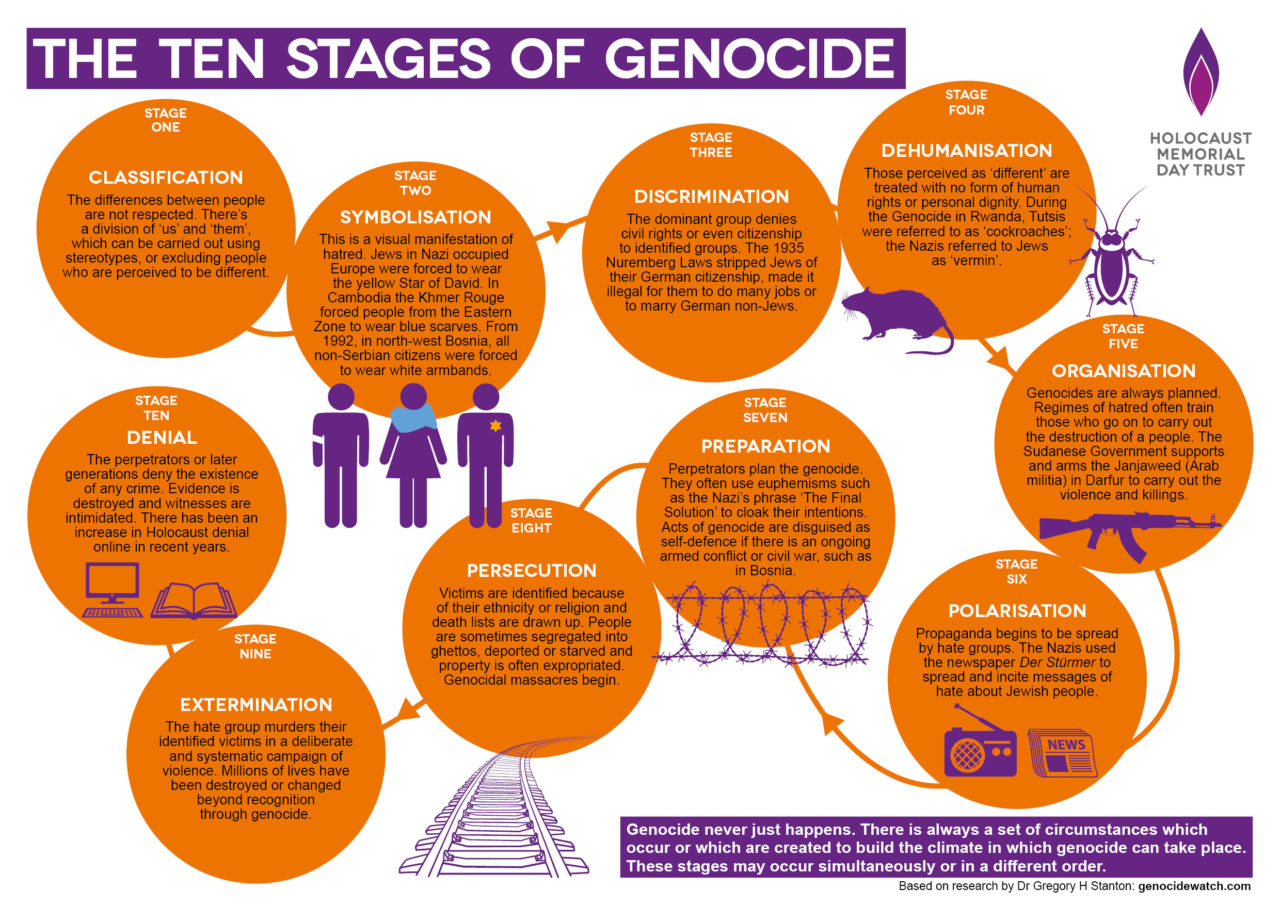
Natural Language Processing (NLP) is a powerful AI subfield that allows computers to understand, interpret, and generate human language. In the context of genocide prevention, NLP algorithms can be trained to identify and flag hate speech, dehumanizing rhetoric, and incitement to violence across various online platforms and media. By analyzing sentiment, identifying keywords, and understanding the context of linguistic patterns, these systems can detect escalating levels of hostile discourse that often precede organized violence. This allows for proactive intervention, enabling authorities and humanitarian groups to address the underlying drivers of conflict before they manifest physically.
Machine Learning for Pattern Recognition in Displaced Populations
Machine learning algorithms excel at identifying complex patterns within large datasets. When applied to demographic data, satellite imagery, and reports from conflict zones, these algorithms can help identify patterns associated with mass displacement. For instance, machine learning models can correlate unusual population movements with specific triggers like targeted attacks, the destruction of infrastructure, or the issuance of discriminatory decrees. This enables a more informed and timely response from international bodies and aid organizations, facilitating the allocation of resources and the implementation of protective measures for vulnerable populations.
Network Analysis for Identifying Perpetrator Structures
Understanding the organizational structure and networks of perpetrators is crucial for effective counteraction. Network analysis, a technique that visually maps relationships between individuals and groups, can be applied to digital communication records, financial transactions, and other available data. By identifying key actors, communication channels, and influence hierarchies within extremist or state-sponsored groups, these technologies can provide valuable intelligence for law enforcement and international justice mechanisms. This allows for a more targeted approach to dismantling the machinery of oppression and bringing individuals to justice.
Enhancing Accountability: Digital Forensics and International Justice
The pursuit of justice for victims of genocide relies heavily on the ability to gather and present compelling evidence. Technological advancements are revolutionizing the field of digital forensics, providing the tools necessary to build robust cases and hold perpetrators accountable on the international stage.
Virtual Reality (VR) and Augmented Reality (AR) for Immersive Testimony
While not directly evidence in the same vein as a video recording, Virtual Reality (VR) and Augmented Reality (AR) are emerging as powerful tools for conveying the scale and impact of atrocities. VR simulations can allow investigators, legal professionals, and even the public to experience a reconstruction of events or locations based on collected evidence. This immersive experience can foster a deeper understanding of the human cost of genocide, adding a vital emotional and contextual layer to dry factual evidence. AR, on the other hand, can be used to overlay digital information onto real-world environments, aiding in crime scene analysis and reconstruction.
Cryptography and Secure Communication for Whistleblowers
Protecting whistleblowers and sources is paramount in documenting and prosecuting genocide. Advanced cryptographic techniques and secure communication platforms are essential for ensuring the confidentiality and safety of individuals who risk their lives to provide crucial information. End-to-end encryption, anonymous communication channels, and secure data storage solutions allow for the safe transmission and preservation of testimonies and evidence, mitigating the risk of reprisal and ensuring the integrity of the information flow.

AI-Assisted Evidence Review and Legal Analysis
The sheer volume of digital evidence collected in complex cases can be overwhelming. Artificial intelligence (AI) is now being employed to assist in the painstaking process of evidence review and legal analysis. AI-powered tools can quickly sort, categorize, and identify relevant documents, images, and audio files, significantly speeding up the work of investigators and legal teams. Furthermore, AI can analyze legal precedents and assist in the drafting of indictments and arguments, streamlining the often protracted and resource-intensive process of international justice. This technological augmentation of human expertise allows for more efficient and thorough preparation of cases, increasing the likelihood of successful prosecutions and the delivery of justice for victims.
In conclusion, while the definition and history of genocide are rooted in human actions and their devastating consequences, technology has become an inextricable part of our understanding and our fight against it. From the initial capture of evidence to the intricate analysis of patterns and the pursuit of accountability, technological tools are empowering us to confront these crimes with greater clarity, speed, and effectiveness. The ongoing evolution of technology promises even more sophisticated methods for documenting the past, identifying present dangers, and ultimately, building a future where genocide is not just a historical phenomenon, but a preventable tragedy.
aViewFromTheCave is a participant in the Amazon Services LLC Associates Program, an affiliate advertising program designed to provide a means for sites to earn advertising fees by advertising and linking to Amazon.com. Amazon, the Amazon logo, AmazonSupply, and the AmazonSupply logo are trademarks of Amazon.com, Inc. or its affiliates. As an Amazon Associate we earn affiliate commissions from qualifying purchases.