
Understanding your political district is more than just a civic curiosity; it’s a fundamental step towards informed participation in your local, regional, and national governance. In an era where digital access is ubiquitous, the question of “what political district do I live in?” is increasingly answered not by visiting a town hall or poring over physical maps, but by leveraging the power of technology. This article explores the technological landscape that empowers citizens to easily identify their political representation, from the ubiquitous search engine to specialized governmental portals and the underlying data that makes it all possible.
The Digital Gateway: Online Tools for District Identification
In today’s connected world, the first port of call for most people seeking information is their digital device. Fortunately, a wealth of online resources has been developed to make identifying your political district as straightforward as a few keystrokes. These tools have democratized access to vital civic information, removing traditional barriers and empowering individuals to become more engaged citizens.
Search Engines: Your First Line of Inquiry
The most accessible and frequently used technological tool for this purpose is the standard internet search engine. Platforms like Google, Bing, and DuckDuckGo have indexed vast amounts of publicly available data, making it incredibly easy to find answers to civic questions. When you type “what political district do I live in?” into a search bar, a sophisticated algorithm goes to work, analyzing your query and, if you’ve allowed location services or provided a general location, it will often present you with direct answers.
How Search Engines Work for Civic Data:
Search engines primarily rely on several key pieces of information to provide accurate results:
- Location Services: If you have location services enabled on your device, search engines can pinpoint your approximate geographic coordinates with remarkable accuracy. This is the most efficient method for receiving personalized results.
- IP Address Geolocation: Even without explicit location services, your IP address can provide a general geographical location. While less precise than GPS, it’s often sufficient to narrow down relevant local information.
- User Input and Keywords: The search terms you use are crucial. Phrases like “congressional district [your city/zip code]” or “state senate district [your address]” will guide the search algorithm to relevant databases and information sources.
- Indexed Government Websites: Search engines constantly crawl and index official government websites at federal, state, and local levels. These sites are the authoritative sources for district boundaries and representative information, and search engines make them easily discoverable.
The effectiveness of a search engine query often depends on the specificity of the information you provide. While a general query might yield a list of potential resources, adding your zip code or even street name can significantly improve the accuracy and speed of the results.
Government Portals and Interactive Maps
Beyond general search engines, a more direct and often more authoritative approach involves utilizing dedicated government portals and interactive mapping tools. These platforms are specifically designed to provide citizens with detailed and up-to-date information about their political representation.
Federal, State, and Local Government Websites:
Most government agencies at various levels maintain websites that offer tools for identifying political districts.
- Federal Level: The U.S. House of Representatives website, for instance, often has a “Find Your Representative” tool where you can enter your zip code or full address. Similarly, the U.S. Senate website provides access to senator information, though senators represent entire states, so district identification isn’t applicable in the same way.
- State Level: State legislatures and Secretaries of State offices are prime sources for information on state senate and house districts, as well as judicial districts. Many states have developed sophisticated online portals with interactive maps and searchable databases.
- Local Level: County and municipal websites are essential for identifying city council districts, school board districts, and other local governance areas. These sites may host their own mapping tools or link to regional GIS (Geographic Information System) services.
Interactive GIS Mapping Tools:
Geographic Information Systems (GIS) have revolutionized how spatial data is accessed and visualized. Many governmental bodies now employ GIS technology to create interactive maps that allow users to:
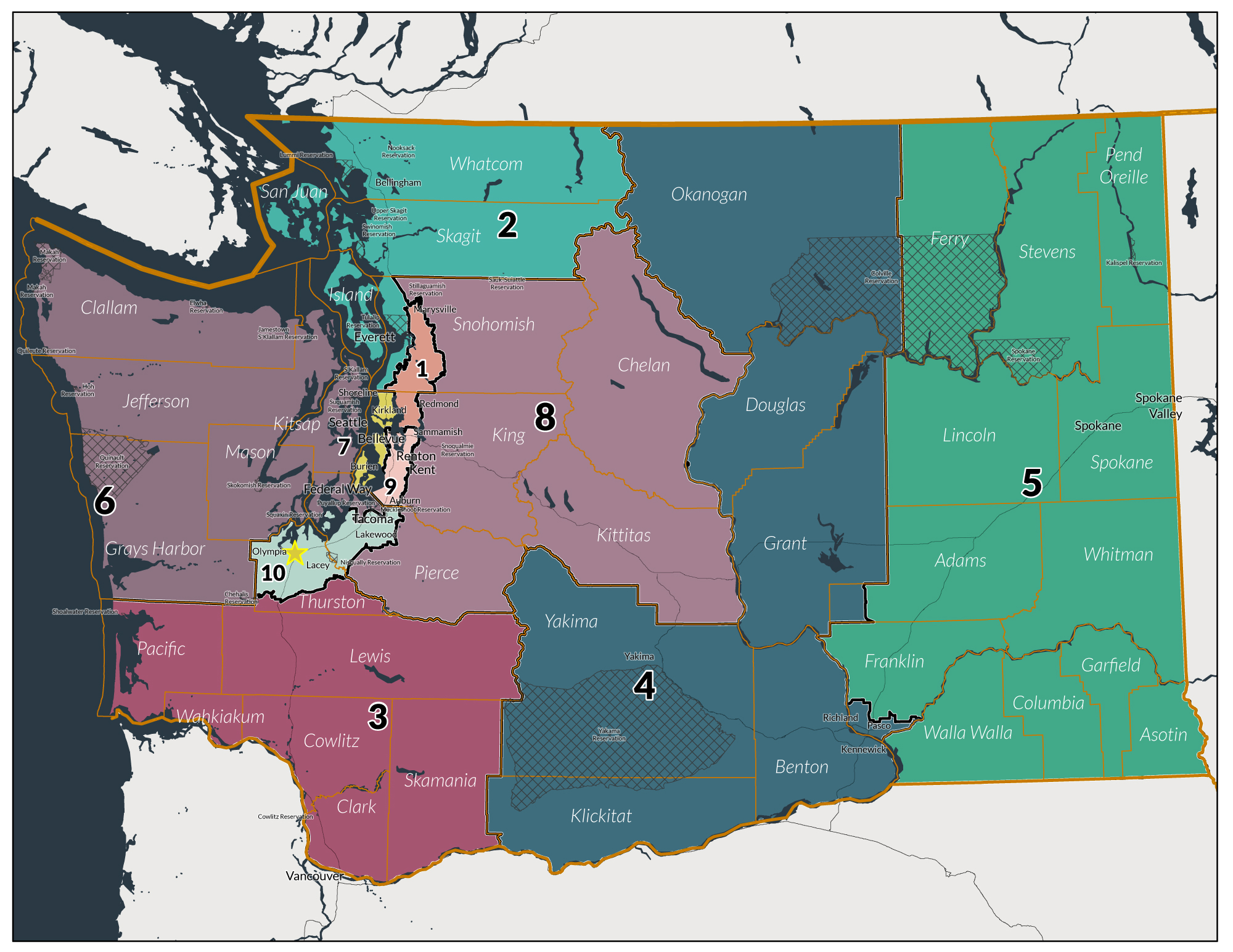
- Visualize Boundaries: See the exact geographical boundaries of different political districts overlaid on a map.
- Query by Location: Click on a specific point on the map or enter an address to determine which districts that location falls within.
- Identify Representatives: Link district information directly to the elected officials who represent those areas, often providing contact details and official biographies.
- Access Data Layers: In more advanced systems, users can toggle various data layers, such as census information, voting precinct boundaries, or even historical district changes, providing a richer understanding of their political geography.
These specialized tools offer a level of detail and certainty that general search engines might not always provide, making them invaluable for civic engagement.
The Underlying Technology: Data, APIs, and Geocoding
The seamless experience of using online tools to find your political district is underpinned by a complex but elegant technological infrastructure. This infrastructure relies on robust databases, sophisticated geocoding services, and Application Programming Interfaces (APIs) that allow different systems to communicate and share information efficiently.
Geocoding and Spatial Data Management
At the heart of identifying political districts lies the concept of geocoding. Geocoding is the process of converting a human-readable address (like “1600 Pennsylvania Ave NW, Washington, DC”) into geographic coordinates (latitude and longitude) on a map. This conversion is critical for matching your location to the specific boundaries of political districts.
How Geocoding Works:
Geocoding services use massive databases that contain millions of addresses and their corresponding spatial data. When you enter an address, the geocoding service:

- Parses the Address: Breaks down the address into its component parts (street number, street name, city, state, zip code).
- Matches to a Database: Compares the parsed address to its internal records.
- Assigns Coordinates: Returns the most accurate latitude and longitude coordinates for the matched address.
Spatial Data Management:
Political district boundaries are defined by precise geographic coordinates that form polygons. These polygons are stored in Geographic Information Systems (GIS) databases. These databases are optimized for managing and querying spatial data. When a geocoded address falls within a particular polygon, the system can identify the associated district.
- Shapefiles and GeoJSON: Common file formats used to store spatial data, including district boundaries. Shapefiles are a legacy format, while GeoJSON is a modern, text-based standard widely used on the web.
- Spatial Queries: GIS databases allow for complex spatial queries, such as “find all districts that intersect with this point” or “find the district that contains this address.”
The accuracy of geocoding and the precision of spatial data directly impact the reliability of the district identification tools we use.
APIs and Data Integration
Application Programming Interfaces (APIs) play a crucial role in connecting disparate systems and making data accessible. In the context of political districts, APIs allow government websites, third-party applications, and even search engines to programmatically access and retrieve district information without needing to build their own extensive databases from scratch.
How APIs Facilitate District Identification:
- Data Sharing: Government agencies can expose their district boundary data and representative information through APIs. This allows developers to build user-friendly tools that tap into this authoritative data.
- Interoperability: APIs ensure that different software systems can communicate. For example, a website might use an API from a mapping service (like Google Maps or Mapbox) to display district boundaries and an API from a government data source to retrieve representative contact information, all integrated into a single interface.
- Real-time Updates: When district boundaries or representatives change, APIs can provide access to the most current information, ensuring that the tools users interact with are always up-to-date.
- Third-Party Applications: Many civic tech organizations and non-profits build applications that leverage these APIs to provide even more specialized or user-friendly ways for citizens to understand their representation. These might include apps that track legislative votes, send out district-specific alerts, or analyze voting patterns.
The seamless integration of geocoding, spatial databases, and APIs forms the technological backbone that empowers citizens to easily answer the question of what political district they live in, thereby fostering greater civic participation and informed decision-making.
Beyond Identification: Leveraging Your Digital Representation
Once you’ve identified your political district using the technological tools available, the journey doesn’t end there. Understanding your representation is the first step towards engagement, and technology continues to be an invaluable ally in this ongoing process. The digital realm offers numerous avenues to stay informed, communicate with your representatives, and participate in the democratic process.
Staying Informed and Engaged
The availability of information about your representatives and their activities has exploded thanks to digital platforms.
- Official Websites and Social Media: Most elected officials maintain official websites that serve as a hub for their legislative priorities, voting records, press releases, and contact information. Furthermore, many actively use social media platforms (like Twitter, Facebook, and Instagram) to communicate directly with constituents, share updates, and gauge public opinion. Following them on these platforms provides a real-time feed of their activities and priorities.
- News Aggregators and Alerts: Services that aggregate news from various sources, often customized by location or interest, can help you stay informed about issues relevant to your district. You can set up alerts for mentions of your representatives or specific policy areas.
- Legislative Tracking Websites: Several websites and apps are dedicated to tracking legislation. These tools allow you to see what bills are being considered, how your representatives are voting, and the overall legislative agenda. Some even provide simplified explanations of complex bills.
Communicating with Your Representatives
Technology has significantly lowered the barrier to communicating with elected officials. Gone are the days when writing a physical letter was the primary method.
- Email and Online Contact Forms: Most representatives have dedicated email addresses or online contact forms on their official websites. These are efficient ways to send messages, ask questions, or express your views on specific issues.
- Digital Town Halls and Webinars: Increasingly, representatives are hosting virtual town hall meetings and webinars. These events, often conducted via video conferencing platforms, allow constituents to ask questions directly to their representatives in a public forum, fostering transparency and dialogue.
- Social Media Direct Messaging: While not always as formal as email, direct messages on social media can sometimes be an effective way to reach out, particularly for brief inquiries or to highlight an immediate concern.
- Constituent Services: Many offices have dedicated staff members who manage constituent services. These individuals can help you navigate government agencies, address local issues, or connect you with the right resources, often accessible via email or phone, with initial contact often initiated through online channels.

Participating in the Digital Democracy
The digital age has also opened up new avenues for participation beyond simply voting.
- Online Petitions: While the impact of online petitions can vary, they offer a way to collectively voice support or opposition to specific issues, which can be brought to the attention of representatives.
- Digital Advocacy Campaigns: Many advocacy groups organize online campaigns that allow citizens to easily contact their representatives, sign letters, or share information, amplifying their collective voice.
- Civic Tech Platforms: A growing ecosystem of “civic tech” platforms aims to make participation more accessible and engaging. These can range from tools that help you find your polling place and understand ballot measures to platforms that facilitate local community organizing and problem-solving.
By embracing the technological tools and platforms available, understanding your political district transforms from a passive piece of knowledge into an active catalyst for engagement. It empowers you to be a more informed, vocal, and effective participant in the democratic process.
aViewFromTheCave is a participant in the Amazon Services LLC Associates Program, an affiliate advertising program designed to provide a means for sites to earn advertising fees by advertising and linking to Amazon.com. Amazon, the Amazon logo, AmazonSupply, and the AmazonSupply logo are trademarks of Amazon.com, Inc. or its affiliates. As an Amazon Associate we earn affiliate commissions from qualifying purchases.