
The question of how many people inhabit our planet under the shadow of poverty is a complex one, laden with statistical nuances and ever-shifting global dynamics. It’s a question that cuts to the core of global inequality, human development, and the effectiveness of economic policies. While a single, definitive percentage can be elusive due to varying methodologies and data collection challenges, a consistent picture emerges: a significant portion of the global population struggles with deprivation, impacting their access to basic necessities, opportunities, and overall well-being. Understanding this percentage is not merely an academic exercise; it is crucial for informing international aid, shaping policy, and driving sustainable development efforts. This article delves into the current landscape of global poverty, exploring the metrics used to define it, the latest estimates, and the underlying factors that contribute to this persistent challenge.

Defining and Measuring Global Poverty
The concept of poverty is multifaceted, extending beyond a simple lack of income. While income is a primary indicator, it’s essential to recognize that poverty encompasses a broader spectrum of deprivations, including lack of access to education, healthcare, clean water, sanitation, and adequate housing. However, for the purpose of global comparisons and the estimation of poverty rates, economists and international organizations primarily rely on income-based measures.
The Role of Poverty Lines
At the heart of measuring poverty are poverty lines, thresholds below which individuals or households are considered to be living in poverty. These lines are typically set in monetary terms and are designed to reflect the cost of a basic basket of goods and services necessary for survival and a minimum standard of living. However, establishing these lines is a subject of ongoing debate and refinement.
International Poverty Lines: A Universal Benchmark
To facilitate cross-country comparisons and to monitor global progress, international poverty lines are established. The most widely cited of these is set by the World Bank. Historically, this line has been adjusted periodically to account for inflation and changes in the cost of living in different regions. The current international poverty line, set at $2.15 per day (in 2017 purchasing power parity terms), aims to capture the absolute minimum income required to meet basic food, clothing, and shelter needs. This purchasing power parity (PPP) adjustment is critical because it accounts for the fact that the cost of living varies significantly between countries. For instance, $2.15 in a low-income country might purchase more goods and services than $2.15 in a high-income country.
National Poverty Lines: Context-Specific Thresholds
While international poverty lines provide a global perspective, many countries also establish their own national poverty lines. These lines are often more tailored to the specific socio-economic conditions, cultural norms, and cost of living within that particular country. National poverty lines can be higher or lower than the international benchmark, reflecting a society’s own definition of what constitutes a minimally acceptable standard of living. For example, a country with a higher average income and cost of living might set its national poverty line significantly above the international $2.15 mark. The discrepancy between national and international poverty lines can sometimes complicate the overall picture of global poverty, but it also highlights the importance of context.
Beyond Income: Multidimensional Poverty Indices
Recognizing the limitations of purely income-based measures, efforts have been made to develop more comprehensive approaches, such as Multidimensional Poverty Indices (MPIs). These indices assess poverty based on a range of deprivations, including health (nutrition, child mortality), education (years of schooling, school attendance), and living standards (access to electricity, improved sanitation, clean drinking water, cooking fuel, housing type, and ownership of assets). The MPI, developed by the United Nations Development Programme (UNDP) and the Oxford Poverty and Human Development Initiative (OPHI), offers a complementary perspective by highlighting the different ways people experience poverty. While income measures remain dominant for large-scale global estimates, MPIs provide a richer understanding of the interconnected deprivations faced by the poor.
Global Poverty Statistics: The Latest Estimates
The most recent data and projections from international organizations paint a picture of persistent, though evolving, global poverty. While there have been significant strides in poverty reduction over the past few decades, progress has been uneven, and recent global events have introduced new challenges.
The Prevalence of Extreme Poverty
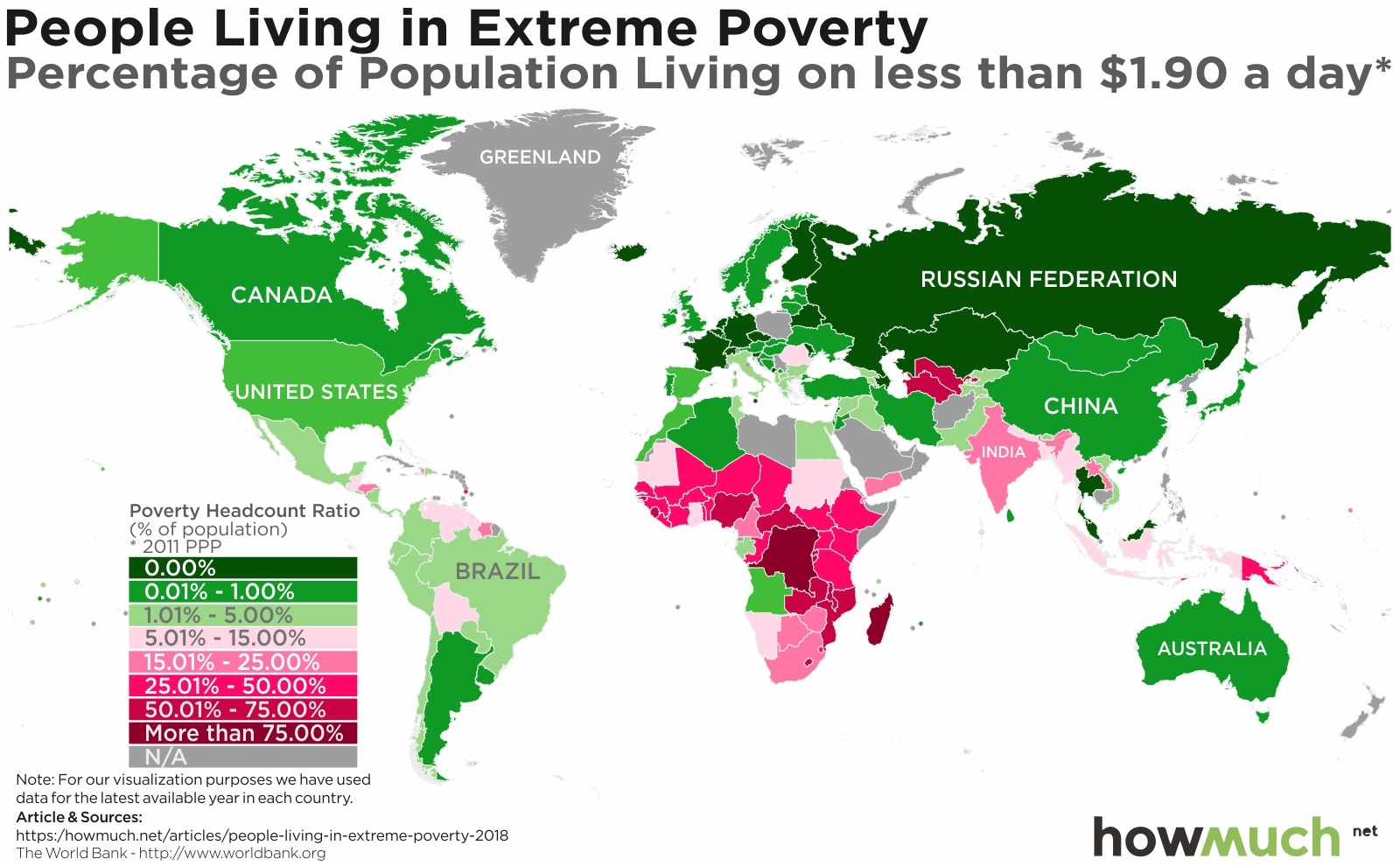
The latest figures from the World Bank indicate that a substantial portion of the world’s population still lives below the international poverty line of $2.15 per day. While the exact percentage fluctuates with each data update and projection, the numbers consistently show millions of people living in extreme poverty. For example, as of recent reports, it is estimated that around 8.5% of the world’s population lives in extreme poverty. This translates to hundreds of millions of individuals who lack the basic resources to sustain themselves. This figure represents a considerable decline from previous decades, demonstrating the impact of targeted development initiatives and economic growth in many parts of the world. However, it also underscores the magnitude of the challenge that remains.
Regional Disparities in Poverty
Poverty is not evenly distributed across the globe. Certain regions bear a disproportionately larger burden of extreme poverty. Sub-Saharan Africa, in particular, continues to face the highest rates of extreme poverty. Factors such as political instability, conflict, climate change impacts, and limited access to essential services contribute to the persistent challenges in these regions. Other parts of Asia and some Latin American countries also grapple with significant poverty levels, though progress has been more pronounced in some of these areas. Understanding these regional disparities is crucial for tailoring effective aid and development strategies.

The Impact of Recent Global Shocks
Recent years have witnessed a series of global shocks that have disrupted poverty reduction efforts. The COVID-19 pandemic, in particular, had a profound impact, reversing years of progress in some areas. Lockdowns, job losses, disruptions to supply chains, and increased healthcare costs pushed millions back into poverty. More recently, rising inflation, geopolitical conflicts, and the escalating impacts of climate change have further exacerbated economic vulnerabilities, particularly for those already living on the margins. These compounding crises have made it more challenging to reach global poverty reduction targets.
Factors Contributing to Global Poverty
The persistence of global poverty is a complex issue driven by a confluence of interconnected factors. Addressing poverty effectively requires a deep understanding of these underlying causes, which range from systemic economic inequalities to environmental vulnerabilities.
Economic and Structural Factors
At the core of poverty are economic and structural issues. Lack of access to quality education and healthcare is a primary driver, limiting individuals’ opportunities for skilled employment and perpetuating intergenerational cycles of poverty. Unemployment and underemployment, coupled with low wages, prevent many from earning a sufficient income to meet their basic needs. Limited access to financial services, such as credit and savings, further hinders individuals and small businesses from investing and growing. Inequality in wealth and income distribution within and between countries also plays a significant role. When economic growth benefits only a select few, it fails to lift the broader population out of deprivation. Furthermore, weak governance, corruption, and inadequate social safety nets can undermine development efforts and leave vulnerable populations unprotected.
Social and Political Determinants
Social and political factors are deeply intertwined with economic determinants of poverty. Discrimination based on gender, ethnicity, religion, or other social markers can systematically exclude certain groups from opportunities and resources, leading to higher poverty rates within these communities. For instance, women often face greater barriers to education, employment, and land ownership. Conflict and political instability are also major drivers of poverty, displacing populations, destroying infrastructure, and disrupting economic activity. The lack of access to justice and basic human rights can further entrench poverty by limiting individuals’ ability to advocate for their needs and participate in decision-making processes that affect their lives.
Environmental and Climate-Related Challenges
In an era of increasing environmental degradation and climate change, these factors have become significant contributors to poverty. Climate change impacts, such as extreme weather events (droughts, floods, storms), rising sea levels, and changing agricultural patterns, disproportionately affect the poorest populations who often rely on agriculture and natural resources for their livelihoods and have fewer resources to adapt to these changes. Environmental degradation, including deforestation and water scarcity, can further diminish the resources available to impoverished communities. The loss of natural capital can lead to reduced agricultural productivity, food insecurity, and increased vulnerability to natural disasters, trapping communities in a cycle of poverty.
Pathways to Poverty Reduction and Future Outlook
While the challenge of global poverty is immense, a range of strategies and interventions can contribute to its reduction. A multi-pronged approach, addressing both immediate needs and underlying systemic issues, is essential for sustainable progress.
Investing in Human Capital and Social Protection
A cornerstone of poverty reduction is investing in human capital. This means ensuring universal access to quality education and healthcare. Educated and healthy individuals are better equipped to secure decent employment, contribute to economic growth, and break free from poverty. Comprehensive social protection systems, including unemployment benefits, cash transfers, and food assistance programs, play a vital role in providing a safety net for the most vulnerable and preventing them from falling into extreme poverty during times of crisis. These programs can help smooth consumption, enable investment in education and health, and reduce stress on households.
Promoting Inclusive Economic Growth and Decent Work
Fostering inclusive economic growth that benefits all segments of society is paramount. This involves creating an environment that supports job creation, particularly in sectors that can absorb large numbers of workers. Promoting decent work – work that is safe, secure, provides a fair wage, and offers opportunities for advancement – is critical. This includes strengthening labor rights, ensuring fair wages, and combating exploitation. Supporting small and medium-sized enterprises (SMEs), which are often major employers, through access to finance, training, and markets can also stimulate economic activity and create opportunities.
Addressing Systemic Inequalities and Building Resilience
Tackling systemic inequalities is fundamental to long-term poverty reduction. This requires implementing policies that promote fair distribution of wealth and resources, including progressive taxation and investments in public services. Empowering marginalized groups, particularly women and girls, through education, economic opportunities, and participation in decision-making is crucial. Furthermore, building resilience to shocks, whether economic, environmental, or health-related, is essential. This involves strengthening infrastructure, diversifying economies, promoting sustainable land management, and investing in early warning systems for natural disasters. International cooperation, equitable trade policies, and effective development aid also remain vital components of the global effort to eradicate poverty. The future outlook for poverty reduction depends on sustained political will, effective policy implementation, and the collective commitment of the global community to create a world where everyone has the opportunity to thrive.
aViewFromTheCave is a participant in the Amazon Services LLC Associates Program, an affiliate advertising program designed to provide a means for sites to earn advertising fees by advertising and linking to Amazon.com. Amazon, the Amazon logo, AmazonSupply, and the AmazonSupply logo are trademarks of Amazon.com, Inc. or its affiliates. As an Amazon Associate we earn affiliate commissions from qualifying purchases.