
The S&P 500, a cornerstone of the financial world, is more than just a ticker symbol; it’s a meticulously curated index representing the performance of the 500 largest publicly traded companies in the United States. Understanding what constitutes this benchmark is crucial for investors, financial professionals, and anyone seeking to grasp the pulse of the American economy. It’s a dynamic entity, constantly evolving to reflect shifts in market capitalization, industry trends, and the overall health of corporate America. The composition of the S&P 500 is not a static list but rather a rigorously selected group of companies that serve as a proxy for the broader stock market.
The Pillars of Selection: Criteria for Inclusion
The S&P 500 is not an arbitrary collection of companies. Its value as an investment benchmark lies in the stringent and objective criteria employed by S&P Dow Jones Indices, the index provider. These rules ensure that the index remains representative of large-cap U.S. equities and provides a reliable measure of market performance. The selection process is designed to capture the leading companies across various sectors, offering a diversified snapshot of economic activity.
Market Capitalization: The Primary Driver
At the heart of S&P 500 inclusion is market capitalization, a measure of a company’s total value as determined by the market. This is calculated by multiplying the current share price by the number of outstanding shares. To be considered for the S&P 500, a company must meet a minimum market capitalization threshold. This threshold is adjusted periodically to reflect changing market conditions and inflation, ensuring that the index continues to represent the largest companies. The rationale behind this is straightforward: larger companies generally have a more significant impact on the overall economy and market sentiment.
Liquidity: Ensuring Tradability
Beyond sheer size, liquidity is a critical factor. The S&P 500 is designed to be a tradable index, meaning that constituent companies must have shares that can be easily bought and sold in the open market without significantly impacting their price. This is measured by metrics such as the float-adjusted market capitalization and trading volume. High liquidity ensures that institutional investors can efficiently enter and exit positions in these companies, which is vital for the index’s smooth functioning and its ability to accurately reflect market movements. A lack of liquidity could lead to price distortions and make it difficult for investors to replicate the index’s performance.
Public Float and Share Availability
Another key criterion is the public float, which refers to the number of shares that are available for trading by the public, excluding shares held by insiders, governments, or other controlling entities. The S&P 500 requires a significant portion of a company’s shares to be in public hands to ensure sufficient trading volume and prevent manipulation. This criterion helps to maintain the integrity and investability of the index. Companies with a substantial public float are more likely to be accessible to a wide range of investors.
Profitability: A Sign of Financial Health
To be included in the S&P 500, a company must demonstrate a track record of profitability. S&P Dow Jones Indices has specific rules regarding earnings, typically requiring a company to have positive earnings in the most recent quarter and positive aggregate earnings over the preceding four quarters. This profitability test ensures that the index comprises financially sound and successful businesses, contributing to its credibility as a representation of economic strength. It filters out companies that may be large in size but lack a sustainable business model.
Sector Representation: Diversification is Key
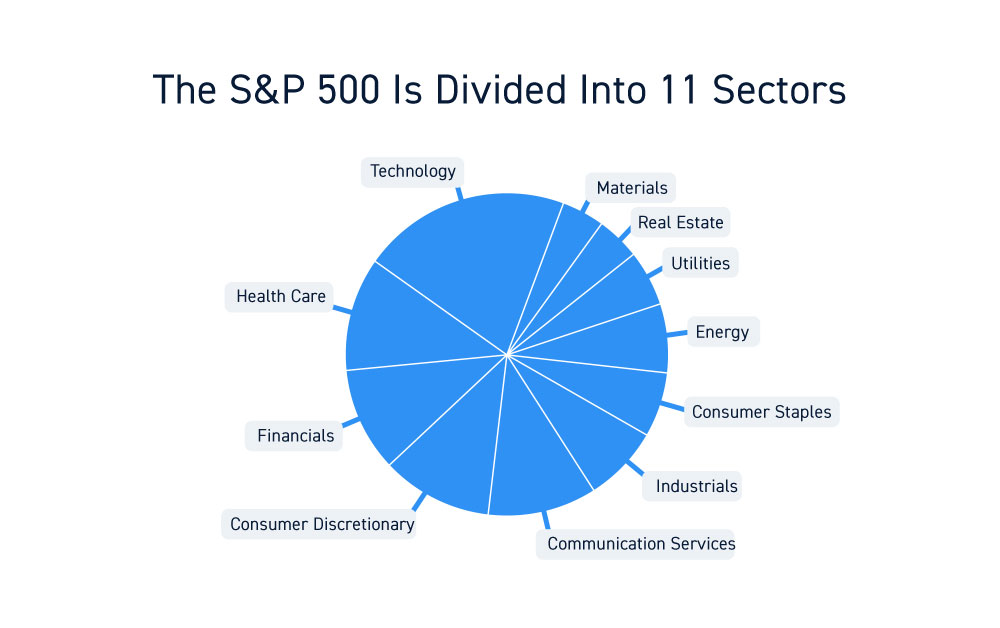
While market capitalization is the primary driver, the S&P 500 also aims for broad sector representation. The index committee considers the sector composition of the U.S. equity market and strives to ensure that the S&P 500 reflects this diversification. This prevents over-concentration in any single industry and provides investors with a balanced exposure to different segments of the economy. The goal is to avoid an index that is skewed by the performance of just one or two dominant sectors, thus offering a more holistic view of the market.
The Role of the Index Committee: Navigating Change
The S&P 500 is not a static entity. The composition of the index is subject to regular review and periodic rebalancing by an index committee at S&P Dow Jones Indices. This committee plays a vital role in ensuring the index remains relevant and representative of the U.S. equity market. Their decisions are driven by the objective criteria, but also by a nuanced understanding of market dynamics and economic shifts.
Rebalancing and Additions/Deletions
The committee meets regularly to assess companies for inclusion and deletion from the index. Companies that no longer meet the size, liquidity, or profitability requirements may be removed. Conversely, companies that grow and meet the criteria can be added. This process is typically done quarterly, with special rebalances occurring if significant market events warrant them. These adjustments are crucial for maintaining the index’s accuracy as a market indicator.
Mergers, Acquisitions, and Bankruptcies
Major corporate events like mergers, acquisitions, and bankruptcies can also trigger changes in the S&P 500’s composition. When a company is acquired, it is usually removed from the index. If a company files for bankruptcy, it is also removed. These events can impact the market capitalization and liquidity of other companies, sometimes leading to cascading changes within the index. The committee’s proactive management ensures that the index adapts to these significant corporate realignments.
Ensuring Index Integrity and Accuracy
The primary objective of the index committee is to maintain the integrity and accuracy of the S&P 500. This involves ensuring that the index accurately reflects the performance of large-cap U.S. equities and remains a reliable benchmark for investment strategies. Their decisions are guided by a commitment to objectivity and transparency, aiming to avoid subjective biases and maintain investor confidence. The committee’s work is essential for the S&P 500’s role as a leading indicator of market health.
Beyond the Top 500: The Weighting Mechanism
Once a company is included in the S&P 500, its influence on the index’s performance is determined by its market capitalization weighting. This means that companies with larger market capitalizations have a greater impact on the index’s movements than smaller companies. This weighting mechanism is a fundamental aspect of how the S&P 500 is constructed and how it reflects market dynamics.
Market-Capitalization Weighted Index
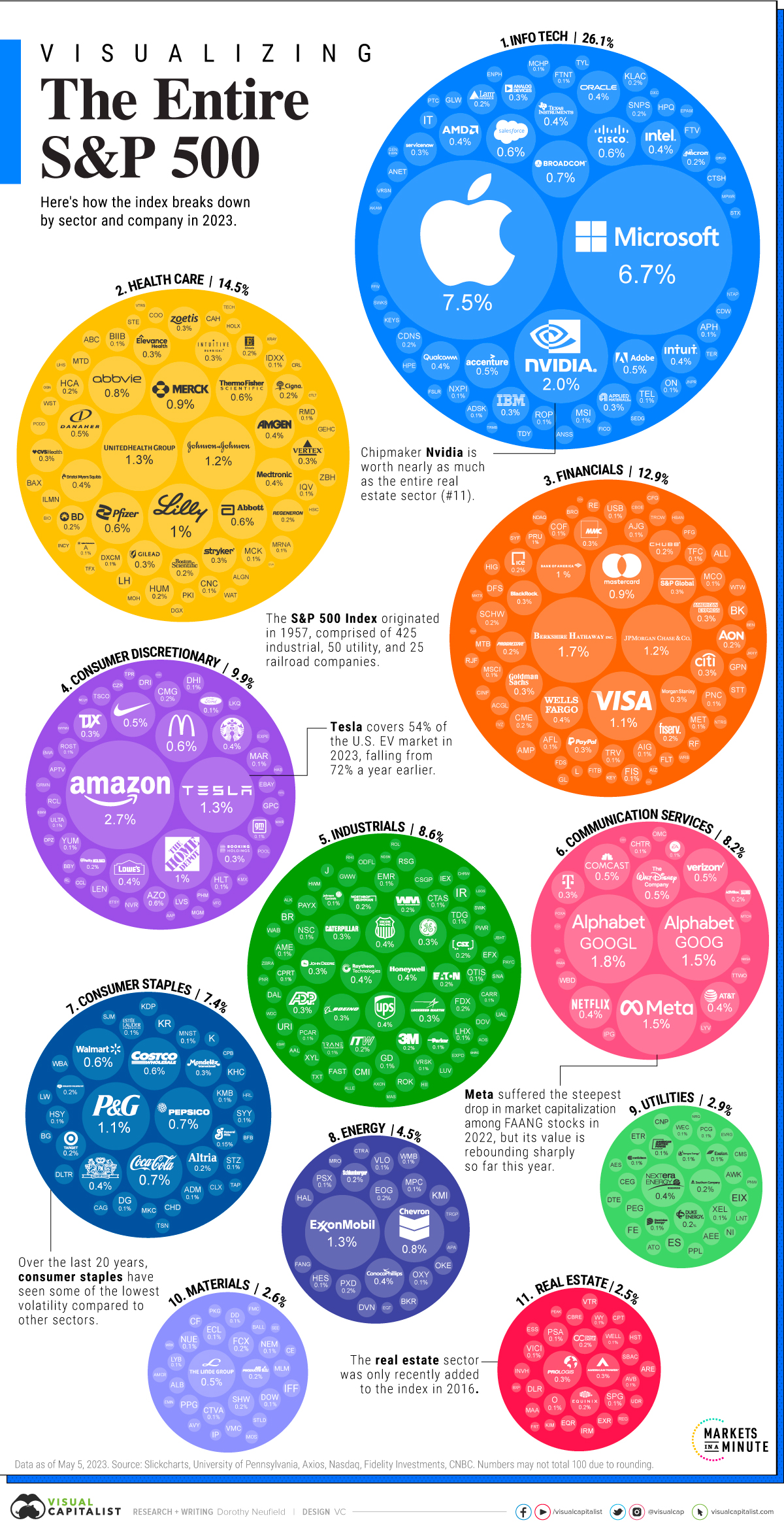
The S&P 500 is a market-capitalization-weighted index. This means that each company’s weighting in the index is proportional to its market capitalization. If Apple Inc. has a larger market cap than Microsoft Corporation, Apple’s performance will have a greater influence on the S&P 500’s daily fluctuations. This weighting system is designed to mirror the overall value of the large-cap U.S. stock market.
Impact of Large-Cap Stocks
The dominance of a few very large companies in the S&P 500 is a well-documented phenomenon. A handful of tech giants, for instance, can significantly influence the index’s overall performance. This concentration means that the S&P 500’s movements are often driven by the performance of these mega-cap stocks. Understanding this weighting is crucial for investors who are trying to understand why the index moves the way it does.
The Role of Index Funds and ETFs
The S&P 500 is the most widely followed stock market index in the world, and its popularity has led to the proliferation of S&P 500 index funds and Exchange Traded Funds (ETFs). These investment vehicles aim to replicate the performance of the index by holding the same stocks in the same proportions. The sheer volume of assets invested in these products means that their buying and selling activities can also influence the prices of the underlying S&P 500 constituents, creating a feedback loop. This liquidity aspect further solidifies the importance of the S&P 500 in the financial ecosystem.
The S&P 500 as a Barometer of Economic Health
Ultimately, what makes up the S&P 500 is a reflection of the leading edge of the U.S. economy. The companies within the index represent diverse industries, from technology and healthcare to consumer discretionary and financials. Their collective performance serves as a vital barometer for the health and direction of the broader economic landscape. Investors, policymakers, and analysts alike look to the S&P 500 for insights into market sentiment, corporate profitability, and the overall trajectory of economic growth.
Diverse Industry Representation
The S&P 500 is not dominated by a single sector. While technology has often held a significant weighting in recent years, the index also includes companies from industrials, healthcare, consumer staples, energy, and many other sectors. This diversification ensures that the index captures a wide range of economic activities and provides a more comprehensive picture of the U.S. economy’s performance. A downturn in one sector might be offset by gains in another, leading to a more nuanced overall market movement.
Tracking Investment Performance and Strategy
For investors, the S&P 500 serves as a benchmark against which they can measure the performance of their own portfolios. Many active fund managers aim to “beat the S&P 500,” meaning they try to generate returns that are higher than those of the index. The widespread availability of low-cost S&P 500 index funds and ETFs has also made it a popular choice for passive investors seeking broad market exposure. This has democratized access to diversified equity investing.
Insights into Corporate America
The performance of the companies within the S&P 500 offers valuable insights into the health and innovation of Corporate America. Rising profits within the index can signal economic expansion and robust consumer demand, while declining earnings might indicate economic headwinds. The types of companies that are gaining prominence within the index, such as those in emerging technologies, can also highlight key areas of future economic growth and disruption. Therefore, understanding what constitutes the S&P 500 is not just about understanding a stock market index; it’s about understanding the engine of the U.S. economy.
aViewFromTheCave is a participant in the Amazon Services LLC Associates Program, an affiliate advertising program designed to provide a means for sites to earn advertising fees by advertising and linking to Amazon.com. Amazon, the Amazon logo, AmazonSupply, and the AmazonSupply logo are trademarks of Amazon.com, Inc. or its affiliates. As an Amazon Associate we earn affiliate commissions from qualifying purchases.