
Demonstrated interest, in the context of higher education admissions and increasingly in the digital marketing landscape, refers to the tangible actions a prospective student or customer takes that signal genuine enthusiasm and a serious consideration of an institution or brand. It’s about moving beyond passive observation to active engagement, providing admissions officers and marketers with crucial insights into a candidate’s or prospect’s true level of commitment. In essence, it’s the observable proof that someone isn’t just browsing, but actively exploring and evaluating.
This concept has evolved significantly, driven by the need for institutions and businesses to differentiate themselves in increasingly competitive environments. For colleges and universities, understanding demonstrated interest helps them identify students who are not only academically qualified but also likely to enroll, contributing to yield rates and overall institutional health. In the business world, it mirrors the buyer’s journey, allowing companies to nurture leads effectively and personalize their outreach.
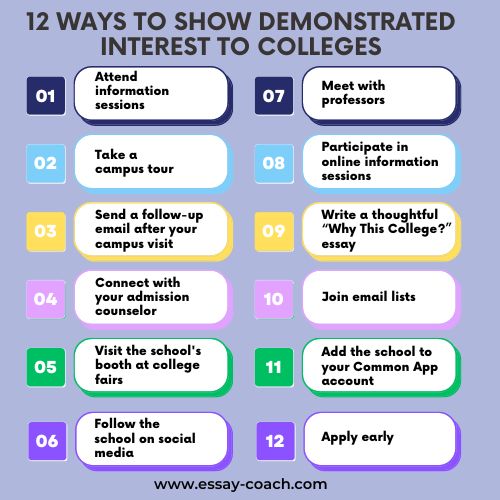
The Evolution and Significance of Demonstrated Interest
The traditional admissions process relied heavily on standardized test scores, GPA, and essays. While these remain vital components, the advent of digital communication and sophisticated tracking tools has opened new avenues for evaluating a prospect’s commitment. Demonstrated interest acknowledges that a student’s proactive engagement with a university is a strong predictor of their likelihood to matriculate. This is particularly important for institutions that want to build a strong, committed incoming class rather than simply accepting the highest-scoring applicants who may have multiple offers.
For businesses, the parallels are striking. In a world saturated with marketing messages, identifying individuals who are actively seeking solutions or engaging with a brand’s offerings is paramount. Demonstrated interest in this context allows for a more efficient allocation of marketing resources, focusing efforts on those most likely to convert into loyal customers. It shifts the paradigm from mass outreach to highly targeted and personalized communication, fostering stronger relationships and ultimately driving better results.
From Traditional Metrics to Digital Footprints
Historically, demonstrated interest was measured through more tangible, albeit less granular, means. Visiting campus, attending information sessions, and submitting an application were considered strong indicators. These actions were easy to track and offered a clear signal of a prospect’s engagement. However, these methods were limited by geographical constraints and the applicant’s ability to physically participate.
The digital age has revolutionized this. With the proliferation of websites, social media, email, and interactive online platforms, prospective students and customers leave a rich trail of digital breadcrumbs. Every click, every form submission, every interaction can now be tracked and analyzed, providing a far more comprehensive and nuanced understanding of their level of interest. This has led to the development of sophisticated systems that can quantify and score these interactions, making demonstrated interest a more measurable and actionable metric than ever before.
The Predictive Power of Engagement
The core value of demonstrated interest lies in its predictive power. Research and industry experience have shown a strong correlation between active engagement and eventual enrollment or purchase. Students who actively interact with a university’s admissions materials, attend virtual events, connect with faculty, and ask thoughtful questions are more likely to choose that institution when making their final decision.
Similarly, in marketing, prospects who repeatedly visit a website, download whitepapers, engage with social media content, or respond to email campaigns are far more likely to become paying customers. This predictive capability allows both educational institutions and businesses to move from a reactive approach to a proactive one, identifying and nurturing promising leads with tailored communication and support, thereby increasing conversion rates and improving overall success.
Key Indicators of Demonstrated Interest
The manifestation of demonstrated interest can be categorized into several key areas, each providing valuable insights into a prospect’s engagement level. These indicators are crucial for admissions committees and marketing teams to identify and acknowledge.
Direct Interactions with the Institution
This category encompasses actions taken by a prospective student or customer that involve direct, intentional contact with the institution or brand. These are often the most significant signals of interest as they require a deliberate effort from the individual.
Campus Visits and Information Sessions
Historically, physically visiting a campus was a gold standard for demonstrating interest. Attending campus tours, open houses, admitted student days, and departmental information sessions signifies a significant commitment of time and resources. These visits offer an immersive experience, allowing prospects to get a feel for the campus culture, facilities, and student life. For virtual environments, attending online information sessions, virtual tours, and Q&A webinars serve as the digital equivalent, offering valuable insights and opportunities for interaction.
Application and Inquiry Forms
Submitting an inquiry form to receive more information, requesting a prospectus, or officially submitting an application are foundational indicators of interest. These actions signal that a prospect has moved beyond initial curiosity to actively seeking more detailed information and considering a formal commitment. The act of completing these forms requires providing personal information, indicating a willingness to engage further in the admissions or sales process.
Communication with Admissions/Sales Representatives
Engaging in direct communication with admissions counselors, recruiters, or sales representatives is a powerful demonstration of interest. This can include attending college fairs and speaking with representatives, initiating email correspondence with specific questions, scheduling phone calls, or participating in virtual one-on-one meetings. Thoughtful questions and genuine dialogue indicate a serious consideration and a desire to understand the institution or brand better.
Digital Engagement and Content Consumption
The digital realm offers a vast array of interactions that can signal demonstrated interest. These actions are often tracked through website analytics, CRM systems, and marketing automation platforms.
Website and Platform Interactions
Visiting the institution’s website multiple times, exploring specific program pages, reading faculty profiles, and reviewing financial aid information are all significant digital indicators. In a business context, this translates to repeat visits to a company’s website, exploring product pages, reading case studies, and engaging with blog content. The depth and frequency of these interactions provide valuable data.
Email and Newsletter Engagement
Subscribing to an institution’s or brand’s email list and actively engaging with newsletters and promotional emails is a strong signal. Opening emails, clicking on links within them, and responding to calls to action within these communications demonstrate a sustained interest. This shows that the prospect finds the content relevant and is actively seeking information.
Social Media Interaction
Interacting with an institution’s or brand’s social media presence can also be a form of demonstrated interest. This includes following their accounts, liking and sharing posts, commenting on content, and participating in polls or Q&A sessions. These actions indicate that the prospect is actively seeking updates and engaging with the brand’s online community.
Academic and Program-Specific Exploration
Beyond general engagement, specific actions related to academic programs or specific offerings can be particularly telling.
Attending Program-Specific Events
Participating in webinars or online sessions focused on particular majors, departments, or academic programs is a more refined indicator of interest. For instance, a student attending a virtual engineering fair or a prospective business student attending a session on entrepreneurship showcases a focused academic curiosity.
Engaging with Faculty and Current Students
Initiating contact with faculty members for research opportunities or academic inquiries, or connecting with current students through ambassador programs or online forums, demonstrates a deep level of interest. This suggests the prospect is not just interested in the institution as a whole but in the specific academic experience it offers and the community it fosters.

Applying for Specific Opportunities
Applying for scholarships, honors programs, or specific research assistant positions tied to the institution are clear and unambiguous demonstrations of interest. These actions require a significant investment of time and effort, indicating a strong desire to be part of the institution’s more selective offerings.
Measuring and Utilizing Demonstrated Interest
Effectively measuring and acting upon demonstrated interest is crucial for both educational institutions and businesses. It requires a systematic approach to data collection, analysis, and personalized outreach.
Data Collection and Tracking Mechanisms
The ability to accurately track and quantify demonstrated interest relies on robust data collection systems. This typically involves a combination of technology and established processes.
CRM and Marketing Automation Platforms
Customer Relationship Management (CRM) systems are essential for tracking interactions with prospective students and customers. These platforms can record website visits, email opens and clicks, event attendance, application submissions, and communications with admissions or sales staff. Marketing automation platforms further enhance this by allowing for automated scoring of leads based on their engagement levels and triggering personalized follow-up communications.
Application Portals and Online Platforms
The application portals themselves serve as a primary source of demonstrated interest data. The act of creating an account, starting an application, uploading documents, and completing various sections all contribute to a prospect’s engagement score. Similarly, dedicated online platforms for prospective students or customers can track their progress through different stages of exploration.
Event Registration and Attendance Tracking
Both in-person and virtual event attendance needs to be meticulously tracked. Registration data, check-in records for physical events, and login/participation data for virtual sessions provide direct evidence of engagement. This information can be integrated into CRM systems for a holistic view of the prospect.
Scoring and Prioritizing Prospects
Once data is collected, it needs to be analyzed to understand the relative strength of a prospect’s interest. This often involves a scoring system.
Establishing an Engagement Score
Institutions and businesses develop scoring models that assign points to different actions. For example, attending a campus visit might be worth more points than opening an email. Completing an application typically garners the highest score. These scores can be dynamic, increasing as a prospect engages more actively.
Identifying High-Intent Prospects
By aggregating engagement scores, admissions and marketing teams can identify individuals who exhibit a high level of demonstrated interest. These are the prospects who are most likely to enroll or convert and should therefore receive priority attention and personalized outreach. This allows for a more efficient allocation of resources, focusing efforts on those most likely to yield positive outcomes.
The Role in Admissions and Marketing Strategy
Demonstrated interest is not just a metric; it’s a strategic tool that informs decision-making.
Influencing Admissions Decisions
Many universities now consider demonstrated interest as a factor in their admissions decisions, particularly for borderline candidates. A student with a slightly lower GPA but who has actively engaged with the university, attended multiple events, and communicated with admissions counselors may be viewed more favorably than a student with a higher GPA who has shown little to no engagement. This helps institutions build a class of students who are not only academically capable but also genuinely committed to attending.
Personalizing Outreach and Nurturing Leads
Understanding demonstrated interest allows for highly personalized communication. Instead of generic marketing messages, institutions and brands can tailor their outreach based on the specific actions and interests of each prospect. For example, a student who has shown interest in a particular STEM program can receive targeted information about research opportunities in that field, or a customer who has repeatedly viewed a certain product can receive special offers or detailed product guides. This personalized approach fosters stronger relationships and increases the likelihood of conversion.
Improving Yield Rates and Customer Acquisition
For universities, a strong focus on demonstrated interest can lead to improved yield rates – the percentage of admitted students who choose to enroll. By identifying and nurturing highly interested students, institutions can encourage them to commit. In the business world, this translates to more efficient customer acquisition, as marketing efforts are focused on prospects who have already shown a strong indication of interest, reducing marketing spend and increasing the return on investment.
Challenges and Ethical Considerations
While demonstrated interest offers significant advantages, its implementation is not without challenges and requires careful consideration of ethical implications.
Data Privacy and Transparency
The collection of vast amounts of data on prospect interactions raises significant privacy concerns. Institutions and businesses must be transparent about what data they collect, how they use it, and how they protect it. Ensuring compliance with data protection regulations like GDPR and CCPA is paramount. Prospects should have the right to know what information is being gathered and to opt out of certain tracking mechanisms.
The “Gaming” of Demonstrated Interest
As institutions and businesses increasingly emphasize demonstrated interest, there’s a risk that prospects might try to “game” the system by engaging in superficial activities solely to boost their score. For example, a student might attend numerous virtual sessions without genuine interest, or a prospect might click through emails without reading them. Institutions need to develop sophisticated methods to distinguish genuine engagement from performative actions. This might involve looking at the quality of questions asked, the depth of interaction, or combining demonstrated interest with other qualitative factors.
Ensuring Equity and Accessibility
It’s crucial that the concept of demonstrated interest does not inadvertently disadvantage certain groups of prospective students or customers. For example, students from low-income backgrounds or those with limited access to technology might face challenges participating in the same level of digital engagement as their more affluent peers. Institutions need to ensure that their methods for tracking demonstrated interest are equitable and that alternative pathways for demonstrating interest are available for all. This could involve offering more accessible in-person opportunities or focusing on the quality and depth of interaction rather than solely on quantity.

The Balance Between Data and Human Connection
While data analytics are powerful, they should not entirely replace the human element of connection. Admissions officers and sales representatives play a vital role in building relationships and understanding individual circumstances. Relying solely on algorithmic scoring can depersonalize the process. A balanced approach that leverages data to inform and enhance human interaction is essential. This means using demonstrated interest data to guide conversations and personalize outreach, but also recognizing that genuine human connection and nuanced understanding are irreplaceable.
In conclusion, demonstrated interest is a multifaceted concept that has become indispensable in modern admissions and marketing strategies. By recognizing and acting upon the tangible actions individuals take to signal their enthusiasm, institutions and businesses can forge stronger connections, make more informed decisions, and ultimately achieve greater success in attracting and retaining their desired students and customers. The key lies in a thoughtful, ethical, and strategic approach to data collection, analysis, and personalized engagement.
aViewFromTheCave is a participant in the Amazon Services LLC Associates Program, an affiliate advertising program designed to provide a means for sites to earn advertising fees by advertising and linking to Amazon.com. Amazon, the Amazon logo, AmazonSupply, and the AmazonSupply logo are trademarks of Amazon.com, Inc. or its affiliates. As an Amazon Associate we earn affiliate commissions from qualifying purchases.