
The world of digital photography is constantly evolving, and with it, the terminology used to describe its components. For those venturing into mirrorless cameras or seeking a deeper understanding of their modern DSLRs, the term “EVF” often arises. But what exactly is an EVF, and why is it a crucial element in today’s imaging technology? At its core, an EVF, or Electronic Viewfinder, is a miniature digital display situated where a traditional optical viewfinder would be in a camera. It’s a sophisticated piece of technology that aims to bridge the gap between the digital capture and the photographer’s direct observation, offering a unique blend of digital information and real-time preview.

The rise of the EVF is intrinsically linked to the development and popularization of mirrorless interchangeable-lens cameras. These cameras, by their very design, eschew the mirror box and pentaprism found in DSLRs, opting for a more streamlined, direct-to-sensor approach. This architectural shift necessitates an electronic means of displaying the image as it’s being captured, and that’s precisely where the EVF comes into play. Unlike the direct, optical view through a DSLR’s viewfinder, an EVF provides a digital rendition of the scene, processed by the camera’s sensor and imaging engine. This fundamental difference opens up a world of possibilities and considerations for photographers, impacting everything from creative control to shooting workflow. Understanding the nuances of EVF technology is key to appreciating the advantages and potential limitations of modern digital cameras, making it an essential topic for anyone interested in photography’s technological advancements.
The Evolution and Mechanics of Electronic Viewfinders
The concept of an electronic viewfinder isn’t entirely new, but its practical and widespread implementation in consumer cameras is a relatively recent phenomenon, driven by significant advancements in display technology and sensor capabilities. Early attempts at electronic viewfinders were often rudimentary, characterized by low resolution, slow refresh rates, and limited color depth, which made them largely unsuitable for serious photography. However, as digital camera technology matured, so too did the components that power EVFs, leading to the high-performance displays we see today.
From Early Concepts to Modern Implementations
The journey of the EVF began with a desire to eliminate the mechanical complexity of the optical viewfinder in DSLRs. Removing the mirror box and pentaprism allowed for smaller, lighter camera bodies, a significant advantage for portability and discreet shooting. This architectural freedom, however, created a void that needed to be filled. Initially, some compact digital cameras featured small electronic screens that served as both the rear LCD and a rudimentary viewfinder, but these offered a subpar viewing experience. The true breakthrough came with the development of high-resolution, low-power display technologies like OLED (Organic Light-Emitting Diode) and LCoS (Liquid Crystal on Silicon), which offered vastly improved image quality, faster response times, and better energy efficiency. These advancements paved the way for the integration of sophisticated EVFs into mirrorless cameras, transforming the way photographers interact with their equipment.
The Internal Workings: Sensor, Processor, and Display
At its heart, an EVF system comprises three primary components: the image sensor, the image processor, and the electronic display itself. When you look through the viewfinder, light from the scene passes through the lens and strikes the camera’s image sensor. This sensor converts the light into an electronic signal, which is then processed by the camera’s internal imaging engine. This processor interprets the data, applies various image adjustments (such as exposure, white balance, and color rendition), and prepares it for display. Finally, this processed image is fed to the miniature electronic display within the viewfinder, creating the image you see. This entire process happens in near real-time, allowing for a live preview of the scene, including any changes you make to camera settings. The speed and quality of this pipeline are critical to the EVF’s performance, determining how fluidly the image appears, how accurately colors are represented, and how effectively you can track moving subjects.
Advantages of EVF Technology
The integration of Electronic Viewfinders into cameras has brought about a host of benefits that cater to both seasoned professionals and enthusiastic hobbyists alike. These advantages stem from the inherent digital nature of the EVF, allowing for a dynamic and informative viewing experience that goes beyond what an optical viewfinder can offer.
Real-Time Exposure and White Balance Preview
One of the most significant advantages of an EVF is its ability to provide a live, real-time preview of how your camera’s settings will affect the final image. Unlike a DSLR’s optical viewfinder, which shows you the scene as it is, an EVF shows you the scene as the camera sees it, incorporating the effects of your exposure and white balance adjustments. This means that as you tweak your aperture, shutter speed, or ISO, you can see the impact on the brightness and color of the image directly in the viewfinder. Similarly, changing the white balance setting will visually alter the color cast of the preview, allowing you to achieve accurate colors before you even press the shutter button. This “what you see is what you get” (WYSIWYG) approach dramatically reduces the guesswork involved in photography, especially in challenging lighting conditions, and can significantly speed up your shooting process by minimizing the need for post-shot review and correction.
Displaying Crucial Shooting Information
Beyond the visual representation of the scene, EVFs excel at overlaying a wealth of vital shooting information directly into your line of sight. This can include essential data such as the current exposure settings (aperture, shutter speed, ISO), a histogram to help you gauge the tonal distribution of your image, focus peaking indicators to highlight in-focus areas, zebras to identify overexposed regions, and grid lines to aid in composition. This constant stream of data, readily accessible without taking your eye away from the viewfinder, allows photographers to make informed decisions on the fly and fine-tune their settings for optimal results. For those who prefer to work quickly and efficiently, this integrated information display is an invaluable tool that enhances both control and creative expression. Furthermore, many EVFs can display zoomed-in views for precise manual focusing, a feature that is particularly beneficial for macro photography or shooting with wide apertures.
Enhanced Low-Light Shooting and Focus Aids
EVFs can offer a significant advantage when shooting in dimly lit environments. Because the EVF is essentially a digital screen, the camera can electronically amplify the image signal in low light. This means that even if the scene is too dark to see clearly with your naked eye or through an optical viewfinder, the EVF can brighten it sufficiently for you to compose your shot and achieve accurate focus. This is a stark contrast to optical viewfinders, which offer no such amplification and can make low-light photography a frustrating endeavor. In addition to general brightness, EVFs can incorporate advanced focus aids. Focus peaking, for example, highlights the edges of in-focus areas with a colored overlay, making it incredibly easy to nail critical focus, especially in situations where depth of field is shallow. This combination of enhanced low-light visibility and sophisticated focus aids makes EVFs particularly attractive for photographers who frequently shoot in challenging lighting conditions or require precise manual focus control.
Potential Drawbacks and Considerations
While EVFs offer a compelling array of benefits, it’s important to acknowledge their potential limitations and the considerations that photographers should be aware of when working with this technology. These drawbacks often revolve around the inherent nature of electronic displays and their reliance on power, as well as nuanced differences in how they present the photographic world compared to traditional optical viewfinders.
Power Consumption and Battery Life

One of the most frequently cited drawbacks of cameras equipped with EVFs is their impact on battery life. Because the EVF is essentially a small, high-resolution screen that is constantly drawing power to display the image, it consumes a significant amount of energy. This is in contrast to the passive nature of a DSLR’s optical viewfinder, which draws no power. Consequently, cameras with EVFs typically have a shorter battery life per charge compared to their DSLR counterparts, especially when the EVF is used extensively. Photographers who rely heavily on the viewfinder for composition and shooting will find themselves needing to carry spare batteries more frequently. While manufacturers are continually working to improve power efficiency through more advanced display technologies and optimized power management systems, battery life remains a key consideration for anyone choosing a camera with an EVF, particularly for extended shooting sessions where access to charging may be limited.
Lag, Refresh Rate, and Viewing Experience
Despite significant advancements, some users may still experience subtle issues related to lag and refresh rate in certain EVF implementations, particularly in older or lower-end models. Lag refers to the slight delay between the camera’s sensor capturing the image and that image appearing on the EVF display. While modern EVFs have minimized this to imperceptible levels for most shooting scenarios, it can still be a factor when tracking very fast-moving subjects. Similarly, the refresh rate, which dictates how many times per second the image on the EVF is updated, can impact the fluidity of motion. A lower refresh rate can lead to a choppier appearance when panning or following a subject. Furthermore, the viewing experience itself can differ from an optical viewfinder. Some photographers may find that the electronic representation, even when accurate, lacks the same “direct connection” to the scene that an optical viewfinder provides. Issues like aliasing (jagged edges on diagonal lines) or color banding can occasionally be present depending on the EVF’s resolution and processing capabilities. However, as EVF technology continues to mature, these issues are becoming increasingly rare and less pronounced.
Performance in Extreme Conditions and “Digital Feel”
The performance of an EVF can also be affected by extreme environmental conditions. In very bright sunlight, for instance, the EVF’s brightness needs to be significantly increased to be visible, which can further drain the battery. Conversely, in very cold temperatures, the performance of the LCD panel can sometimes be impacted. Beyond these practical considerations, some photographers express a preference for the “organic” or “natural” feel of an optical viewfinder. They argue that the EVF, being a digital reproduction, can sometimes present a slightly processed or “digital” look to the scene, which may not appeal to everyone. This is often a subjective preference rather than a technical flaw, but it’s a sentiment that resonates with a segment of the photography community. While EVFs strive for accuracy, the inherent digital nature means that the image you see is an interpretation by the camera’s processor, which can differ from the direct, unfiltered view of the optical world.
EVF vs. Optical Viewfinder: A Comparative Look
The debate between EVFs and optical viewfinders (OVFs) is a central one in the world of digital photography, particularly when comparing mirrorless cameras with DSLRs. Each technology offers a distinct approach to how photographers frame their shots, and understanding these differences is crucial for making an informed decision about the type of camera that best suits individual needs and shooting styles.
Directness vs. Information: The Fundamental Difference
The most fundamental difference lies in their operational principles. An optical viewfinder provides a direct, unadulterated view of the scene through the lens, using a system of mirrors and prisms. What you see is precisely what the lens is capturing, without any electronic processing. This offers a crisp, clear, and immediate connection to the subject. In contrast, an EVF displays a digital feed from the image sensor. This means the image is processed, and settings like exposure, white balance, and picture styles are applied in real-time before being shown on the miniature display. This “what you see is what you get” characteristic of the EVF is a major advantage for many, as it allows for pre-visualization of the final image. However, some purists argue that the directness of an OVF offers a more authentic and less mediated photographic experience.
Compositional Aids and Creative Control
When it comes to compositional aids, EVFs generally hold a significant advantage. As discussed earlier, EVFs can overlay a wealth of information such as histograms, focus peaking, grid lines, and exposure warnings directly onto the live view. This allows photographers to make precise adjustments and maintain critical focus without having to look away from the viewfinder or rely solely on post-capture review. While some high-end DSLRs offer limited overlay capabilities in their OVFs, they cannot match the dynamic and comprehensive information display of a modern EVF. This makes EVFs particularly valuable for beginners learning the intricacies of exposure and focus, as well as for advanced users who appreciate having all the necessary tools at their fingertips for immediate creative decision-making.
Low Light Performance and Subject Tracking
The performance in low-light conditions is another area where EVFs generally excel over OVFs. The ability of an EVF to electronically amplify the signal allows photographers to see and compose shots in near darkness, something that is virtually impossible with an optical viewfinder. This opens up new possibilities for shooting in challenging lighting situations without resorting to overly high ISO settings or relying solely on the rear LCD. In terms of subject tracking, the advantage can be more nuanced. While modern EVFs have excellent autofocus systems and high refresh rates that can keep up with fast-moving subjects, some photographers may still find that the instantaneous feedback of an OVF, combined with a fast AF system, provides a slight edge for tracking erratic motion. However, the ability of EVFs to display the AF points and provide real-time feedback on focus confirmation often compensates for this, making them a very capable tool for action photography.
The Future of Viewfinders: The Dominance of EVF
As technology continues its relentless march forward, the trajectory for camera viewfinders points overwhelmingly towards the increasing dominance and refinement of the Electronic Viewfinder. The inherent advantages of EVF technology, coupled with ongoing innovation, are positioning it as the future standard in digital imaging, gradually phasing out the more traditional optical approach in many camera segments.
Technological Advancements Driving EVF Superiority
The rapid pace of technological advancement in areas like display resolution, refresh rates, and processing power is directly benefiting EVF technology. We are seeing EVFs with higher pixel counts that offer sharper, more detailed images, effectively eliminating the “screen door effect” that plagued early models. Refresh rates are constantly increasing, providing smoother motion tracking and reducing perceived lag to a point where it’s negligible for most users. Furthermore, the power efficiency of OLED and micro-OLED displays is improving, mitigating some of the concerns around battery life. Image processing algorithms are also becoming more sophisticated, allowing for more accurate and nuanced previews of exposure, color, and dynamic range. These ongoing improvements are steadily closing any remaining gaps between EVFs and OVFs, and in many aspects, surpassing them.
Mirrorless Camera Growth and EVF Integration
The exponential growth of the mirrorless camera market is intrinsically linked to the prevalence of EVFs. The compact and lightweight design of mirrorless cameras, made possible by the absence of a mirror box, necessitates an electronic viewing solution. As mirrorless cameras continue to capture a larger share of the interchangeable-lens camera market, the EVF is becoming the de facto standard for composing images. This widespread adoption fuels further research and development, creating a virtuous cycle where the technology improves as more cameras incorporate it. The focus of camera manufacturers is clearly shifting towards mirrorless systems, and with that, the EVF is solidifying its position as a cornerstone of modern camera design and functionality.
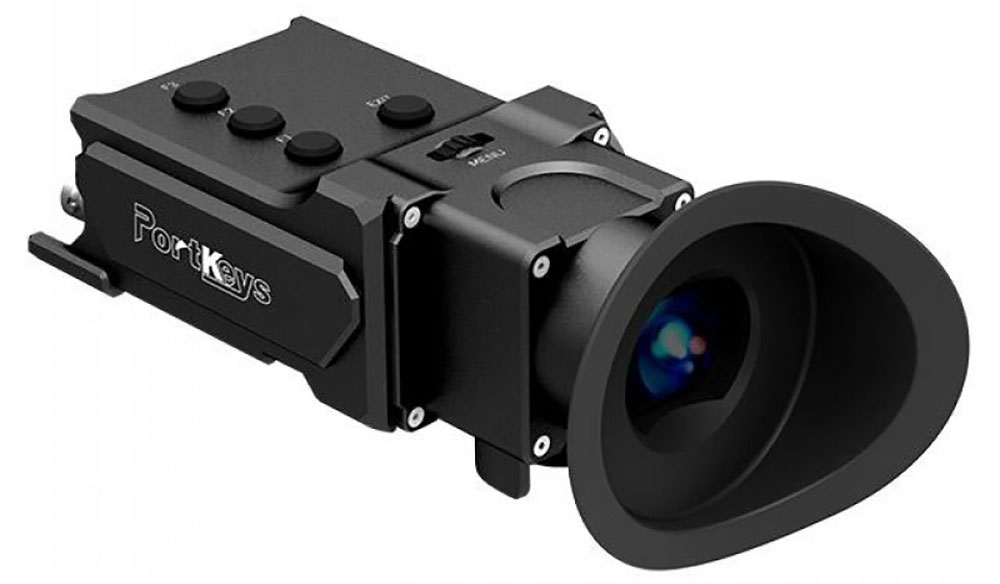
The Continued Evolution of the EVF Experience
The evolution of the EVF is far from over. Future innovations are likely to include even higher resolution displays, potentially reaching the equivalent of human eye perception. We may also see further integration of artificial intelligence to provide more intelligent shooting aids, such as predictive focus tracking or scene analysis. Advanced HDR (High Dynamic Range) capabilities within the EVF could offer an even more accurate representation of extreme tonal ranges. Furthermore, as battery technology advances, power consumption concerns will likely diminish further. The “digital feel” objection may also be addressed through even more sophisticated image processing that more closely mimics the aesthetic qualities of an optical view. Ultimately, the EVF is evolving from a necessary component to a powerful creative tool, offering photographers unprecedented levels of control and information directly at their eye.
aViewFromTheCave is a participant in the Amazon Services LLC Associates Program, an affiliate advertising program designed to provide a means for sites to earn advertising fees by advertising and linking to Amazon.com. Amazon, the Amazon logo, AmazonSupply, and the AmazonSupply logo are trademarks of Amazon.com, Inc. or its affiliates. As an Amazon Associate we earn affiliate commissions from qualifying purchases.