
The competitive gaming landscape is a vibrant, ever-evolving ecosystem. New titles emerge, capturing the attention of millions, while others, despite initial promise, fade into obscurity. Boom Arena, a unique real-time strategy (RTS) mobile game developed by Supercell, falls into the latter category. Launched with significant anticipation due to its developer’s pedigree, Boom Arena struggled to maintain its momentum, eventually leading to its quiet disappearance from app stores. Understanding its trajectory requires a deep dive into the challenges inherent in the mobile gaming market, the complexities of RTS game design for a mobile audience, and the competitive pressures that any new title faces.
The Allure of a Supercell RTS on Mobile
Supercell, the Finnish game developer, has a remarkable track record of creating globally successful mobile games. Titles like Clash of Clans, Clash Royale, and Brawl Stars have achieved monumental success, building massive player bases and generating substantial revenue. This reputation naturally created immense excitement for any new venture from the studio, especially one venturing into the RTS genre, a space where strategic depth and real-time decision-making are paramount.
Initial Hype and Strategic Ambitions
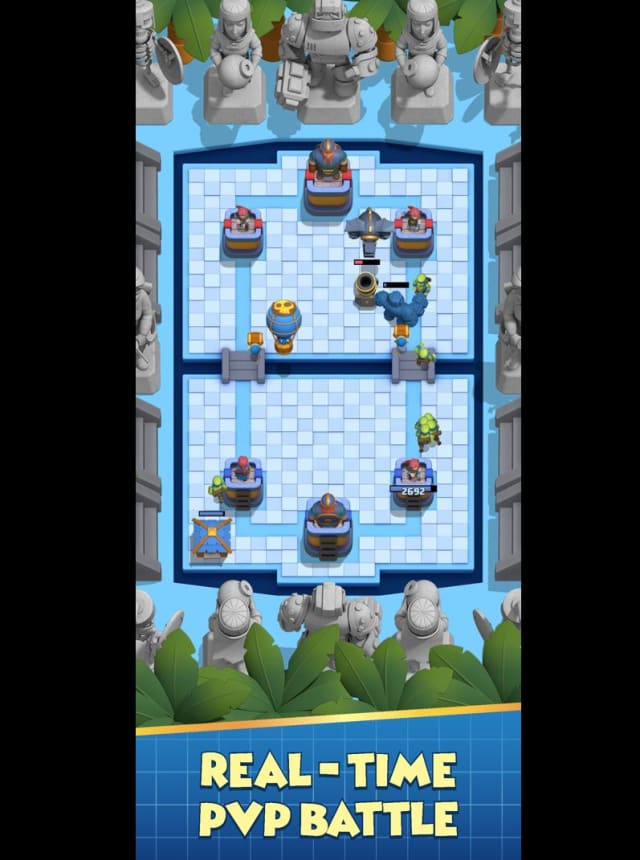
Boom Arena was envisioned as a distinct entry in Supercell’s portfolio. While Clash Royale blended RTS elements with collectible card game mechanics and direct combat, Boom Arena aimed for a more traditional RTS experience adapted for touchscreens. The promise was a game that could deliver the strategic nuances of PC RTS titles in a bite-sized, mobile-friendly format. Developers spoke of intuitive controls, fast-paced matches, and a focus on unit deployment and tactical maneuvering. The core gameplay revolved around building a base, training units, and engaging in real-time battles against other players. This blend of familiar Supercell polish with a fresh genre for the company fueled significant initial hype. Investors, players, and industry observers alike watched with keen interest, expecting another groundbreaking hit.
The RTS Genre: A Difficult Mobile Transition
The real-time strategy genre, while deeply beloved by a dedicated fanbase, has historically faced challenges in transitioning to mobile platforms. The precision and speed required for effective RTS gameplay often rely on the nuanced control offered by a mouse and keyboard. Adapting these mechanics to a touch interface is a significant hurdle. Developers must balance the need for strategic depth with accessibility, ensuring that controls are intuitive enough for casual players without alienating hardcore strategists.
Supercell’s previous successes, particularly Clash Royale, demonstrated a knack for simplifying complex genres for mobile. However, Boom Arena’s attempt at a more direct RTS experience presented a different set of design problems. The sheer number of units, buildings, and tactical options in traditional RTS games can quickly become overwhelming on a smaller screen. Players need to manage resource gathering, base building, unit production, and army movement simultaneously, a task that demands a high degree of multitasking and screen real estate. The success of Boom Arena, therefore, hinged on its ability to strike this delicate balance, a challenge that ultimately proved to be one of its major stumbling blocks.
Navigating the Unforgiving Mobile Market
Beyond the inherent design challenges of the RTS genre on mobile, Boom Arena had to contend with the fierce competition and rapid churn characteristic of the mobile gaming industry. Success in this space requires more than just a good game; it demands effective marketing, sustained player engagement, and a robust live-ops strategy.
The Saturation of the App Stores
The mobile gaming market is incredibly saturated. Thousands of new games are released every week across both the Apple App Store and Google Play Store. Standing out in this crowded digital marketplace is an immense challenge. Even for a well-established developer like Supercell, capturing and retaining player attention requires continuous innovation and significant marketing investment. For a new IP like Boom Arena, breaking through the noise and establishing a foothold was an uphill battle. Players have limited time and limited device storage, making them highly selective about which games they download and keep.
Competition and Player Retention
Boom Arena entered a market already populated by established RTS and strategy games, both on mobile and PC. While its Supercell branding provided an initial boost, long-term success depended on its ability to offer a compelling and differentiated experience that kept players engaged over time. Player retention in mobile games is notoriously difficult. Early adopters might be drawn in by novelty, but sustained engagement requires a compelling meta-game, regular content updates, competitive matchmaking, and a strong community.
The need for constant updates, balance changes, and new content to keep players engaged can be resource-intensive. If a game fails to capture a significant player base early on, it becomes harder to justify the ongoing development costs, leading to a vicious cycle where a lack of new content discourages existing players, further hindering growth. This is a challenge that even seasoned developers struggle with, and for Boom Arena, it appears to have been a significant factor in its eventual decline.
The Unfolding of Boom Arena’s Fate
While precise details surrounding Boom Arena’s development and eventual discontinuation are not widely publicized, the typical lifecycle of a mobile game that doesn’t achieve significant traction provides a clear picture of its probable trajectory. The story of Boom Arena is, in many ways, a cautionary tale about the realities of the mobile gaming industry and the specific difficulties of innovating within established genres on a new platform.
Soft Launch and Iterative Development
Like many mobile games, Boom Arena likely underwent a “soft launch” phase. This involves releasing the game in a limited number of geographical regions to test gameplay mechanics, monetization strategies, and server stability with a real player base before a global launch. During soft launch, developers gather crucial data on player behavior, engagement, and feedback. This feedback loop is vital for making necessary adjustments and improvements.
However, if the data from the soft launch indicated significant issues – perhaps low retention rates, poor monetization, or a lack of engagement with the core RTS mechanics – the developers would face difficult decisions. The RTS genre, as discussed, is challenging to adapt. If players weren’t finding the controls intuitive, the pace engaging, or the strategic depth compelling enough on mobile, these are fundamental problems that can be hard to fix without a significant redesign.
The Decision to Cease Development
Ultimately, if a game fails to meet its key performance indicators (KPIs) during soft launch or early global release – such as daily active users (DAU), monthly active users (MAU), retention rates, and revenue – developers must make a difficult business decision. Continuing to invest resources into a game that is unlikely to achieve profitability or its desired market position is unsustainable.
For Boom Arena, it appears that the game did not achieve the level of success Supercell was aiming for. This could be due to a multitude of factors: the game’s difficulty in attracting and retaining a broad audience due to its genre and platform challenges, fierce competition, or perhaps monetization issues. The decision to remove a game from app stores, often referred to as “sunsetting,” is usually a last resort. It signifies that the development team believes their resources would be better allocated to other projects with higher potential for success. The absence of Boom Arena from app stores is a clear indication that, despite its Supercell origins and ambitious goals, it did not resonate with the mobile gaming audience to the extent required for its continued existence. The legacy of Boom Arena, therefore, lies not in its market triumph, but in the lessons it offers about the intricate and demanding world of mobile game development.
aViewFromTheCave is a participant in the Amazon Services LLC Associates Program, an affiliate advertising program designed to provide a means for sites to earn advertising fees by advertising and linking to Amazon.com. Amazon, the Amazon logo, AmazonSupply, and the AmazonSupply logo are trademarks of Amazon.com, Inc. or its affiliates. As an Amazon Associate we earn affiliate commissions from qualifying purchases.