
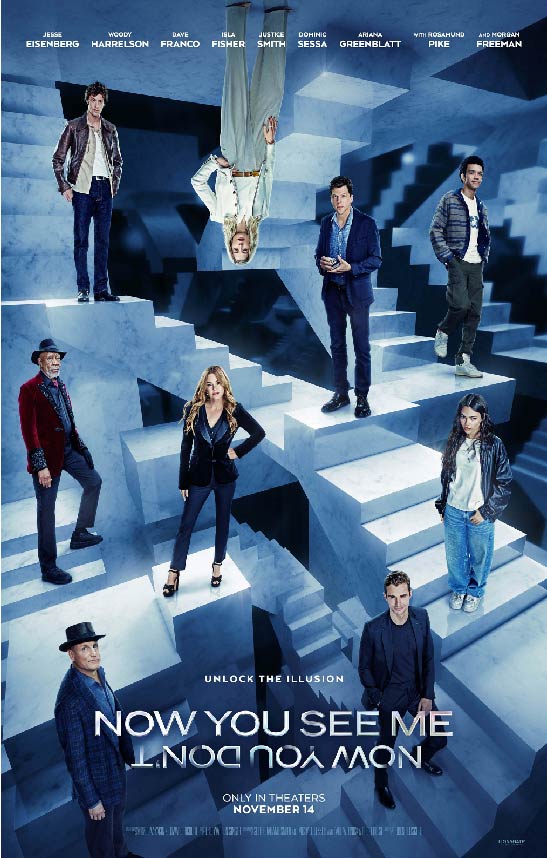
The question of “what is on theaters now” has evolved far beyond a simple list of film titles. In the current landscape, the theatrical experience is defined less by the narratives on screen and more by the sophisticated technological ecosystem that delivers them. As home streaming services offer high-definition content at the touch of a button, the cinema industry has been forced to innovate at an unprecedented pace. Today, “what is on theaters” refers to a premium suite of proprietary technologies—ranging from laser projection and object-based audio to AI-driven distribution software—that creates a sensory experience impossible to replicate in a domestic setting.

To understand the current state of the theatrical industry, we must look under the hood of the modern multiplex. The “tech stack” of a 21st-century cinema is a marvel of engineering, designed to justify the premium price of a ticket through immersion that pushes the boundaries of human perception.
1. The Revolution of Visual Fidelity: Beyond Traditional Projection
When audiences walk into a theater today, they are witnessing the pinnacle of optical engineering. The shift from 35mm film to digital was only the first step; the current era is defined by the transition from lamp-based digital projection to RGB Pure Laser technology.
The Rise of RGB Pure Laser Projection
Traditional digital projectors used Xenon lamps, which, while bright, suffered from rapid decay in color accuracy and luminance. What is currently on theaters’ premium screens is often powered by RGB (Red, Green, Blue) laser systems. These systems provide a significantly wider color gamut, reaching the Rec. 2020 color space, which provides colors that are closer to what the human eye can see in the real world. This technology allows for “true blacks” and a contrast ratio that makes the image pop with a three-dimensional quality, even in 2D formats.
High Frame Rate (HFR) and 4K Resolution
While 4K resolution has become a standard in the industry, the integration of High Frame Rate (HFR) technology is what truly differentiates modern theatrical releases. While traditional cinema runs at 24 frames per second (fps), many modern blockbusters are experimenting with 48, 60, or even 120 fps. This tech eliminates motion blur and provides a hyper-realistic clarity that is essential for high-action sequences. When we look at what is currently playing, the films that draw the largest crowds are often those optimized for these high-spec delivery systems.
IMAX and the Expansion of Aspect Ratios
The IMAX brand has become synonymous with the “Tech-First” cinema movement. Modern IMAX theaters utilize dual 4K laser projection systems and a unique 1.43:1 aspect ratio that provides up to 40% more image than standard screens. This isn’t just a bigger screen; it’s a different digital format that requires specific cameras and post-production software to execute, making it the gold standard for visual immersion in the current market.
2. The Architecture of Sound: Spatial Audio and Haptic Integration
If the visual elements provide the “what” of the cinematic experience, the audio technology provides the “where.” The current technological trend in theaters is the move away from channel-based sound (5.1 or 7.1) toward object-based audio environments.
Dolby Atmos and Object-Based Audio
In a traditional theater, sound is sent to a specific “channel” or speaker. In the high-tech theaters of today, sound is treated as an individual “object” within a 3D space. Dolby Atmos, the leader in this sector, allows sound engineers to place a sound effect at a specific coordinate in the room. With speakers placed overhead and behind the screen, the technology calculates exactly how to move that sound from one corner to another. This creates a “dome” of sound that anchors the audience inside the film’s environment.
Haptic Feedback and 4D Tech
Modern theater seats are no longer just furniture; they are integrated hardware components. Technologies like D-BOX and 4DX use haptic actuators and motion bases synchronized with the film’s metadata. This tech allows the seat to vibrate, tilt, and pitch in alignment with the on-screen action. Furthermore, environmental tech—including localized scent emitters, water misters, and high-speed fans—is integrated into the theater’s central control system to provide a multi-sensory experience that transcends traditional viewing.

Acoustic Engineering and Sound Isolation
The physical tech of the theater also involves advanced materials science. Modern theaters are built using “box-in-box” construction, utilizing specialized acoustic dampeners and decoupled walls to ensure that the massive decibel output of one screen does not bleed into the next. This high-level architectural tech ensures that the dynamic range of modern film scores is preserved, allowing for the “silence” in a movie to be just as impactful as the explosions.
3. The Backend Infrastructure: AI, Automation, and Digital Distribution
Beyond the auditorium, the technology that governs “what is on theaters now” involves a complex array of software and automated systems. The logistical feat of coordinating thousands of screenings across the globe is managed by a sophisticated digital backbone.
Predictive Analytics and Programming
Theater chains now use AI-driven predictive analytics to determine which films to play and at what times. By analyzing historical data, social media sentiment, and local demographic trends, software platforms can optimize showtimes to maximize occupancy. This “smart scheduling” ensures that high-demand tech-heavy films are allocated to the screens with the best hardware, such as IMAX or Dolby Cinema halls, during peak hours.
Automated Theater Management Systems (TMS)
The role of the traditional projectionist has been replaced by the Theater Management System (TMS). This software acts as the brain of the multiplex, centralizing the control of every projector and server in the building. A TMS can automatically ingest Digital Cinema Packages (DCPs), manage the complex “Keys” (KDM – Key Delivery Messages) required to unlock encrypted films, and even control the lighting and HVAC systems. This automation ensures that the technical quality of the presentation is consistent across every screening, with zero human error.
The Digital Cinema Package (DCP) and Satellite Distribution
The physical shipping of film reels is a thing of the past. Today, movies are delivered as massive, encrypted data files known as DCPs. Many modern theaters receive these files via high-speed satellite downlinks or fiber-optic terrestrial networks. This digital distribution pipeline allows for instantaneous updates, such as “day-and-date” global releases and the ability to stream live events—like concerts or gaming tournaments—directly into the theater with ultra-low latency.
4. The Future Horizon: LED Screens and Virtual Reality
As we look at the trajectory of theater technology, the next phase involves moving away from projection entirely and toward direct-view displays.
The Shift to Cinema LED
Samsung’s “Onyx” and LG’s “Miraclass” are pioneering the transition to Cinema LED screens. Instead of a projector throwing light at a screen, the screen itself is made of millions of self-emissive LEDs. This technology offers infinite contrast (true black) and brightness levels that far exceed any laser projector. Because there is no projection beam, theaters can be designed with more flexible seating arrangements, and the image remains perfectly crisp regardless of ambient light.
Augmented Reality (AR) Integration
Theaters are beginning to experiment with AR headsets or mobile integration that provides secondary-screen experiences. This could include real-time data overlays for documentaries, multi-language subtitling without distracting other viewers, or interactive elements for younger audiences. This represents the next frontier of “what is on theaters,” where the physical space and the digital layer become inextricably linked.
Conclusion: The Theater as a Tech Hub
The question of “what is on theaters now” is ultimately a question of how far we can push the boundaries of entertainment technology. We are currently in an era where the cinema is a high-performance laboratory for visual and auditory innovation. From the precision of RGB laser projection to the mathematical complexity of spatial audio and the efficiency of AI-driven management systems, the theater remains the primary venue for experiencing the cutting edge of media tech.
For the consumer, this means that going to the theater is no longer just about seeing a story; it is about experiencing a high-fidelity digital event that represents the absolute limit of current engineering. As the tech continues to evolve, the gap between the living room and the cinema will continue to widen, ensuring that “theaters” remain the ultimate destination for those seeking the pinnacle of the digital experience.
aViewFromTheCave is a participant in the Amazon Services LLC Associates Program, an affiliate advertising program designed to provide a means for sites to earn advertising fees by advertising and linking to Amazon.com. Amazon, the Amazon logo, AmazonSupply, and the AmazonSupply logo are trademarks of Amazon.com, Inc. or its affiliates. As an Amazon Associate we earn affiliate commissions from qualifying purchases.