
The word “mita” holds a profound and often somber place in the history of global economics and labor management. To understand what “mita” means in Spanish, one must look beyond a simple dictionary definition and delve into the complex financial structures of the 16th through 19th centuries. Derived from the Quechua word mit’a, meaning “turn” or “season,” the term was adopted by Spanish colonial administrators to describe a mandatory public service system.
In the context of modern finance and business history, the Mita represents one of the earliest and most massive examples of state-organized labor used to fuel a global currency. It was the backbone of the Spanish Empire’s wealth, facilitating the extraction of precious metals that would eventually stabilize European markets and facilitate trade with Asia. This article explores the economic mechanics of the Mita, its role in the birth of global silver markets, and the long-term institutional lessons it offers to today’s financial strategists.

The Origins of the Mita: From Incan Social Duty to Spanish Economic Tool
Before the Spanish arrival, the Incan Empire utilized the mit’a as a sophisticated form of social and economic reciprocity. It was essentially a labor tax where citizens contributed a set number of days to public works—building roads, bridges, and temples—in exchange for state-provided security and food during lean years. This was a non-monetary economic system built on communal stability.
The Spanish Transformation into a Labor Tax
When the Spanish crown established its colonies in the Americas, particularly in the Viceroyalty of Peru, they faced a significant economic hurdle: how to extract massive quantities of silver without a traditional wage-labor market. The colonial administrators, most notably Viceroy Francisco de Toledo in the 1570s, co-opted the Incan mit’a and transformed it into a rigid, mandatory labor system.
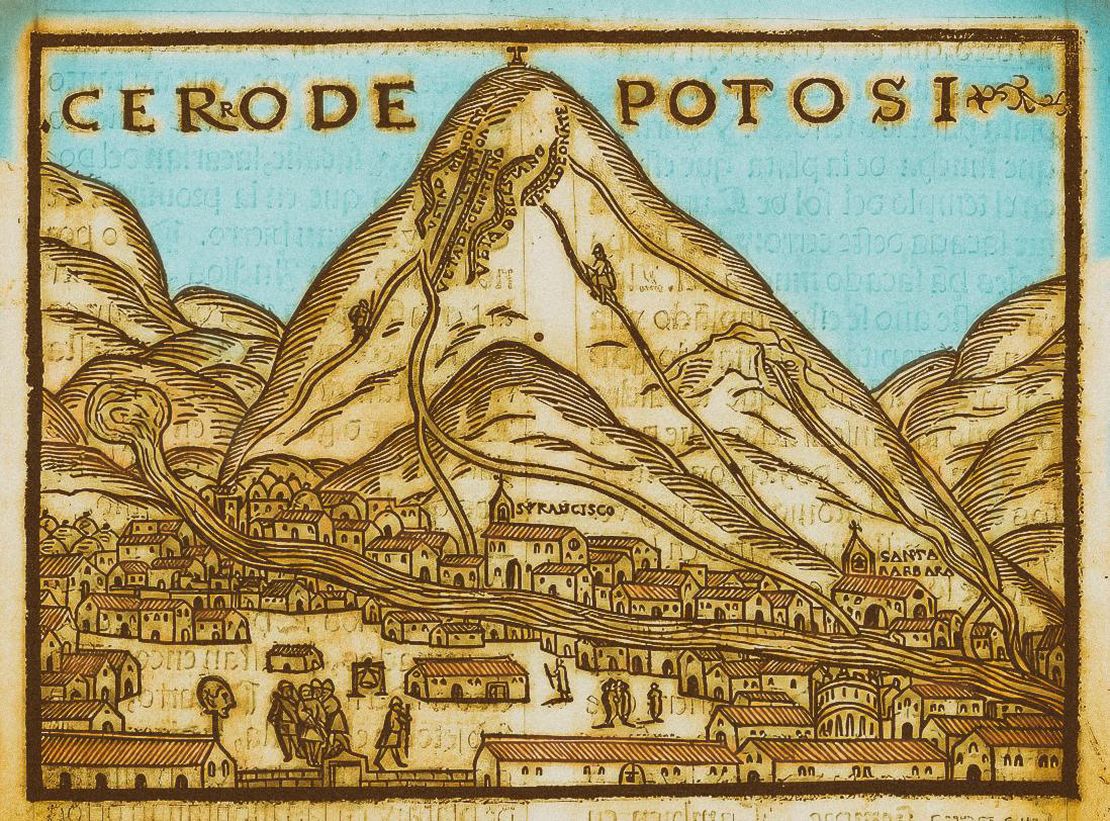
Under the Spanish “Mita,” indigenous communities were required to provide a certain percentage of their adult male population to work in the mines, primarily at the legendary Potosí in modern-day Bolivia. Unlike the Incan version, which focused on public utility, the Spanish Mita was a purely extractive economic mechanism designed to maximize the output of raw capital—silver.
The Logistics of Compulsory Labor
From a business operations perspective, the Mita was a masterpiece of logistical coordination, albeit a brutal one. Thousands of workers were moved across vast distances, creating a massive migratory labor force. This system ensured a steady supply of low-cost labor, which was essential for the profitability of the mining industry. The Spanish crown took a “fifth” (the Quinto Real) of all silver produced, making the Mita the primary driver of the Spanish treasury’s liquidity for centuries.
Potosí and the Silver Standard: How the Mita Fueled Global Finance
To understand the “Money” aspect of the Mita, one must look at the mountain of Cerro Rico in Potosí. At its height, Potosí was the largest industrial complex in the world and the source of approximately 60% of all silver circulating globally during the late 16th century.
The Mountain that Eats Men: Resource Extraction
The economic output of the Mita was staggering. The silver extracted by Mita laborers was minted into the Real de a Ocho (the Spanish Dollar). This coin became the world’s first truly global currency. Because of the low labor costs afforded by the Mita system, the Spanish crown could produce silver at a higher margin than any other power at the time. This gave Spain an unprecedented advantage in international trade, allowing them to purchase luxury goods from the East and fund their various European wars.
Impact on the Spanish Real and Global Trade
The influx of Mita-produced silver had a profound effect on global finance, leading to what historians call the “Price Revolution.” As the supply of silver increased, the value of the currency fluctuated, leading to high inflation across Europe. However, it also provided the necessary liquidity for the burgeoning markets of the Renaissance and the early modern era.
In Asia, particularly in China’s Ming Dynasty, silver was in high demand to satisfy a tax system that had shifted from paper money to a silver standard. The Mita system was, in effect, the remote engine that powered the trade routes of the Manila Galleons, linking the Americas, Europe, and Asia in a single financial web.
The Economic Legacy of the Mita System in Modern Latin America
The Mita was formally abolished in 1812, but its economic shadow persists in the modern financial landscape of the Andean region. Economists often point to the Mita as a primary example of an “extractive institution”—a system designed to pull wealth out of a region rather than reinvesting it locally.
Long-term Institutional Effects on Prosperity
Modern economic research, most notably by economists like Melissa Dell and those featured in “Why Nations Fail” (Acemoglu and Robinson), has shown a direct correlation between historical Mita districts and current levels of economic underdevelopment. Regions that were subjected to the Mita system historically show lower levels of household consumption, less developed infrastructure, and lower educational attainment today.
From a personal finance and investment perspective, this illustrates the “Resource Curse.” When an economy is built entirely on the extraction of a single commodity through forced labor, it fails to develop the diversified financial institutions, property rights, and human capital necessary for long-term growth.
Lessons for Modern Labor Markets and Resource Management
The Mita serves as a cautionary tale for modern corporate strategy and international investment. It demonstrates that while “cheap labor” can lead to short-term spikes in capital accumulation, it often results in long-term institutional fragility. Modern businesses operating in the global south now focus on “Environmental, Social, and Governance” (ESG) criteria specifically to avoid the systemic risks created by the type of extractive policies the Mita represented. Investors today look for sustainable labor practices, knowing that the exploitation of a workforce eventually leads to political instability and economic stagnation.
Applying “Mita” Logic to Contemporary Business Finance
While the Mita as a state-sanctioned labor draft is a thing of the past, its underlying economic principles—taxation through service and the centralization of resource control—can still be seen in modern fiscal policy and business structures.
Taxation vs. Forced Labor: The Evolution of Fiscal Policy
In modern business finance, we see echoes of the Mita in how governments structure corporate taxes and public service requirements. While we no longer use physical labor as a tax, the “Mita logic” remains in the way states demand a portion of a company’s “output” to fund the national treasury. The transition from the Mita to modern taxation represents the evolution of the state from a direct manager of labor to a regulator of capital. Understanding this transition is vital for anyone studying the history of business finance or international trade.
Ethical Investing and the Shadow of Colonial Economics
For the modern investor, the history of the Mita highlights the importance of ethical supply chains. Many of the world’s current silver and gold mines occupy the same geographic locations as the old Mita sites. Financial tools and indices that track “Ethical Sourcing” are designed specifically to ensure that the wealth generated from these mines does not replicate the exploitative structures of the 16th century.
When a financial analyst looks at a mining prospect in South America today, they are not just looking at geological data; they are looking at social license. The legacy of the Mita has made local communities highly sensitive to extractive industries. Therefore, successful business finance in these regions requires a model of “shared value”—where the community benefits directly from the resource extraction, a direct inversion of the Mita model.

Conclusion: The Enduring Meaning of Mita
What does “mita” mean in Spanish? Linguistically, it means a “turn” or a “period.” But in the world of money, finance, and history, it means the forced sacrifice of human labor for the creation of global wealth. It was a system that built the Spanish Empire, stabilized the global silver market, and inadvertently laid the groundwork for the modern interconnected economy.
For the professional in the financial or business sector, the Mita is a reminder of the power—and the peril—of extractive economic models. It teaches us that wealth generated at the expense of human capital and institutional health is rarely sustainable in the long run. As we move further into a global economy defined by digital assets and service-based labor, the lessons of the Mita remain: true economic prosperity is built not just on what we extract, but on how we invest in the people and systems that make that extraction possible.
aViewFromTheCave is a participant in the Amazon Services LLC Associates Program, an affiliate advertising program designed to provide a means for sites to earn advertising fees by advertising and linking to Amazon.com. Amazon, the Amazon logo, AmazonSupply, and the AmazonSupply logo are trademarks of Amazon.com, Inc. or its affiliates. As an Amazon Associate we earn affiliate commissions from qualifying purchases.