
The “poke” feature on Facebook, a relic from the platform’s early days, often sparks curiosity. While its utility has waned and its presence is less frequent today, understanding its original intent and potential modern interpretations offers a fascinating glimpse into the evolution of social media interaction. For those who encounter this subtle digital nudge, deciphering its meaning can range from a simple greeting to something more complex, depending on the context and the relationship between the individuals involved. This article will delve into the technical origins of the Facebook poke, explore its communicative functions, and consider how it might be perceived in the current social media landscape.
The Genesis of the Facebook Poke: A Technical and Social Experiment
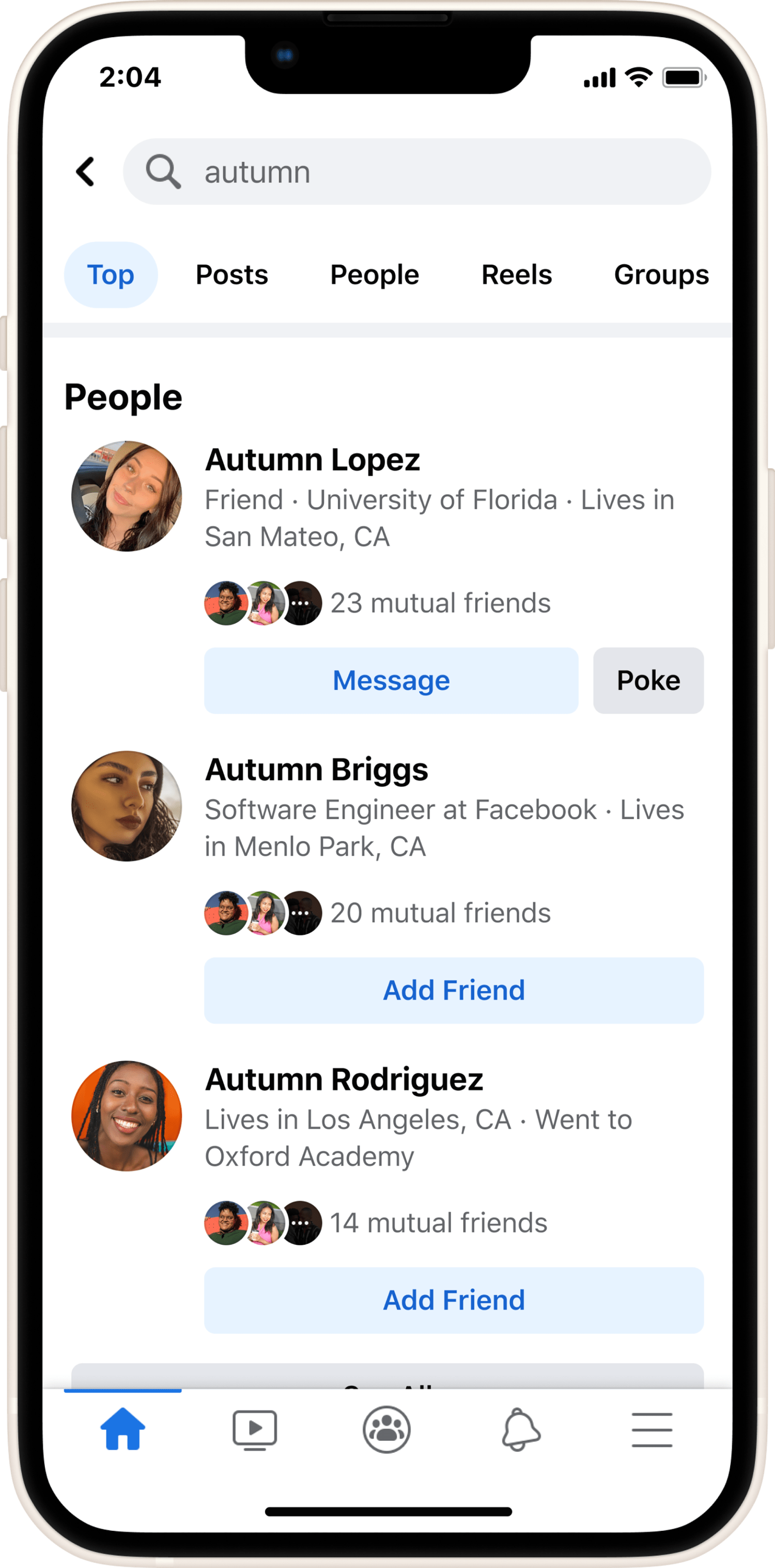
The poke feature was introduced on Facebook in August 2004, just months after the platform’s launch. At its core, it was designed as a straightforward, low-bandwidth way for users to get another user’s attention. Its inception was deeply rooted in the nascent stages of social networking, where the primary goal was to facilitate connections and interactions in a digital space that was still finding its footing.
Origins in Early Social Networking Concepts
Before the explosion of features like direct messaging, real-time chat, and a plethora of reaction emojis, communication tools were far more basic. Platforms like MySpace had similar features, such as “shout-outs” or “comments” on a profile, which served a similar purpose of drawing attention. The poke, however, was deliberately minimalist. It required no typing, no elaborate response, and was designed to be a quick, almost instantaneous signal. This simplicity was a key design choice, reflecting an era when user interfaces were less cluttered and interactions were more about acknowledgment than detailed conversation.
The technical implementation of the poke was also rather basic. It was a simple database flag or notification that indicated User A had “poked” User B. When User B received the notification, they could then choose to poke back, ignore it, or even block the user if the interaction was unwelcome. The absence of a message attached to the poke was intentional. It forced the receiver to infer the sender’s intent, making the interaction inherently ambiguous and, in turn, more engaging for early adopters who were experimenting with new forms of online communication.
Evolution of Functionality and User Perception
Over time, as Facebook grew and introduced more sophisticated communication tools, the poke’s perceived utility diminished. Direct messaging became the primary mode of private communication, and comments sections and wall posts offered more ways to engage publicly. Despite this, the poke persisted, morphing from a functional tool into something with a more symbolic or even nostalgic meaning.
Its initial design allowed for a broad spectrum of interpretations, which is why, even today, its meaning isn’t fixed. It could be a friendly hello, a way to say “I’m thinking of you,” or even a subtle way to re-engage with someone you haven’t spoken to in a while. The ambiguity was, in a way, its strength. It allowed users to inject their own intentions into the action, making it a more personal form of digital interaction than a generic “like.” The very fact that it still exists, albeit less frequently used, speaks to a certain enduring charm and a connection to the platform’s origins.
Decoding the Intent: The Multifaceted Meanings of a Facebook Poke
The ambiguity of the Facebook poke is precisely why it can be confusing. Without a direct message or accompanying context, the user receiving the poke is left to interpret the sender’s motive. This interpretation is heavily influenced by the existing relationship between the two individuals and the broader social media context.
A Simple Greeting or Acknowledgement
In its most benign and common interpretation, a poke is simply a way to say “hello” or “I’m here.” It’s a low-effort method of acknowledging someone’s presence on the platform without initiating a full conversation. This is particularly relevant when the sender knows the receiver but doesn’t necessarily have a pressing reason to start chatting. Think of it as a digital equivalent of a friendly nod or a wave across a crowded room.
For friends you haven’t spoken to in a while, a poke can be a gentle nudge to remind them you exist and are still connected. It’s a way to maintain a passive connection without the obligation of a conversation. This is especially true for users who are less active on Facebook or who primarily use it to keep up with acquaintances rather than for deep social engagement.
Re-engagement and Rekindling Connections
Another common interpretation is that a poke is an attempt to re-engage with someone. Perhaps the sender saw your profile, noticed a recent post, or simply remembered you and decided to reach out. This can be a way to initiate contact with someone with whom communication has lapsed.
For example, if you haven’t interacted with a person in months or even years, a poke might be their way of testing the waters. It’s a subtle inquiry to see if you’re still open to communication. They might be considering reconnecting on a deeper level or simply want to see if you’re still active on Facebook. The poke serves as a low-stakes entry point, allowing them to gauge your reaction without committing to a more involved interaction.
Beyond Friendship: Potential Romantic or Playful Intent
While less common and highly dependent on the relationship, a poke can sometimes carry a more playful or even flirtatious undertone. In the early days of online dating and social networking, ambiguous gestures like pokes were sometimes used to gauge interest or initiate a more intimate form of communication. If the poke comes from someone you have a romantic history with, or someone you suspect has romantic feelings for you, it could be interpreted as a signal of that interest.
This interpretation is highly contextual. It’s more likely to be considered when there’s an existing chemistry or a history of playful banter between the individuals. However, it’s crucial to remember that this is not the primary or intended use of the poke feature. Most users will likely not interpret it this way, so it’s important to consider all other possibilities before jumping to this conclusion.
Navigating the Poke: Responding and Managing Digital Interactions
The act of receiving a poke on Facebook, while perhaps less common now, still requires a decision on how to respond. The best approach depends on your relationship with the sender, your own comfort level, and your intentions. Understanding the options available can help you manage these digital interactions effectively.
To Poke Back or Not to Poke Back?
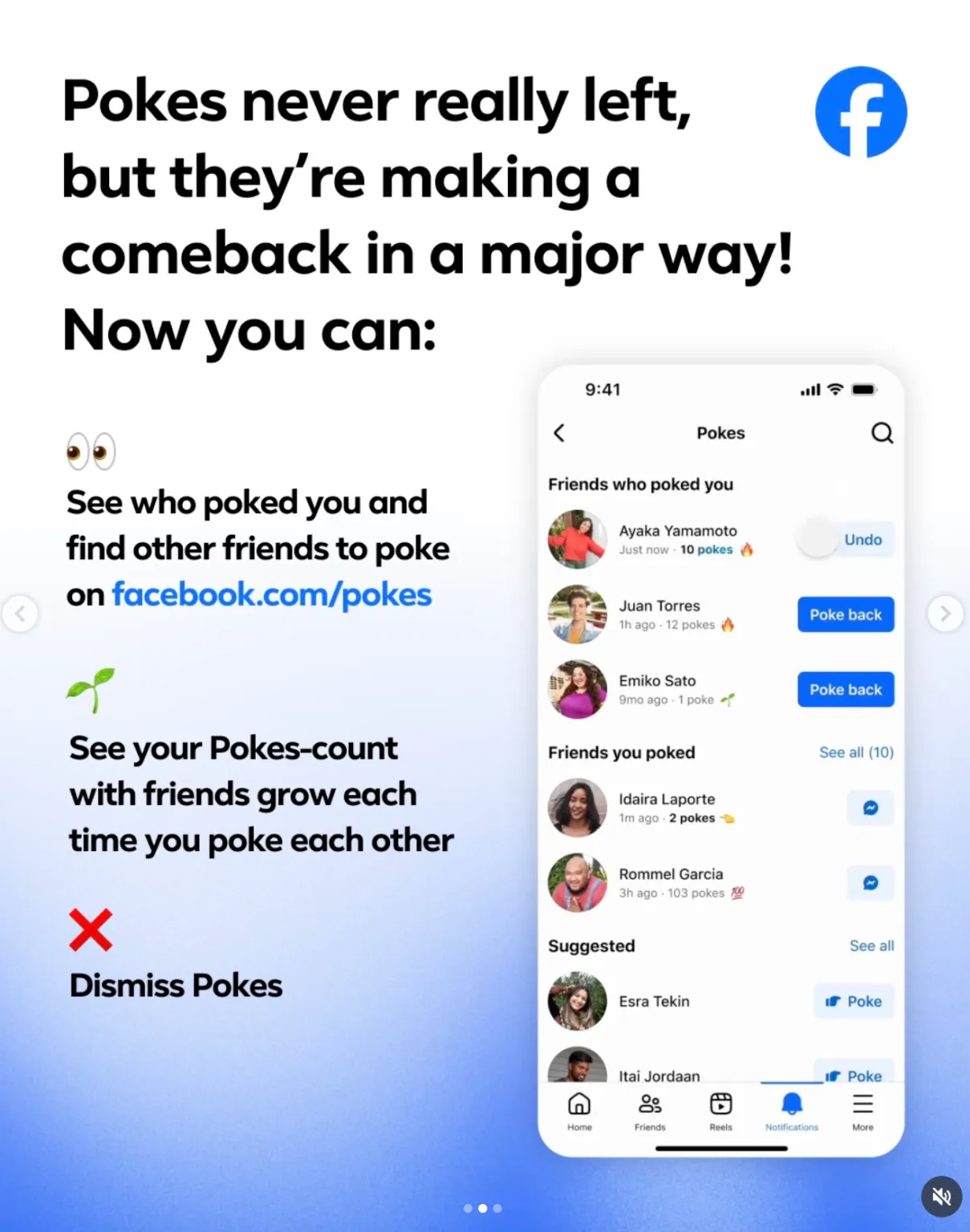
The most immediate decision is whether to reciprocate the poke. Poking back is the most common and straightforward response. It signals that you’ve seen their poke and are acknowledging their presence. This is generally a safe and friendly option, especially if you have a positive relationship with the sender. It maintains the lighthearted nature of the interaction and signifies mutual acknowledgment.
However, there are instances where you might choose not to poke back. If you don’t know the person, or if you find their behavior intrusive or unwelcome, ignoring the poke is perfectly acceptable. Facebook allows you to ignore pokes, which simply dismisses the notification. If the pokes are persistent or unwanted from a specific individual, you have the option to block them altogether. This is an important aspect of digital security and maintaining a positive online experience.
Utilizing Other Communication Channels
If a poke from someone sparks a desire for a deeper interaction, or if you want to clarify their intent, it’s often best to use more direct communication methods. A simple message through Facebook Messenger can quickly bridge any ambiguity. You can ask directly, “Hey, saw you poked me! How are you doing?” This opens the door for a genuine conversation and bypasses the guesswork associated with the poke.
For example, if someone you haven’t spoken to in a while pokes you, and you’re curious about what they’re up to, sending them a message is a more effective way to rekindle a connection. It shows initiative and a genuine interest in engaging beyond a fleeting digital nudge. Similarly, if you suspect a romantic or playful intent but are unsure, a direct message allows for a clearer understanding and avoids misinterpretation.

Managing Unwanted Pokes and Digital Boundaries
In today’s digital landscape, maintaining personal boundaries is crucial. While the poke feature is often harmless, it can, in rare instances, become a form of unwanted attention. If you are receiving repeated pokes from someone you do not wish to interact with, or if the pokes make you feel uncomfortable, Facebook provides tools to manage these situations.
Ignoring pokes from unknown or unwanted individuals is a primary step. If the unwanted interaction continues, you can choose to hide the person from your news feed, which limits their ability to interact with you. The ultimate recourse for persistent or inappropriate pokes is to block the user. Blocking a user prevents them from seeing your profile, contacting you, or interacting with you on Facebook in any way. This is a powerful tool for ensuring your digital well-being and maintaining control over your online social environment. Ultimately, the poke, like any social media feature, should serve to enhance connections, not detract from them.
aViewFromTheCave is a participant in the Amazon Services LLC Associates Program, an affiliate advertising program designed to provide a means for sites to earn advertising fees by advertising and linking to Amazon.com. Amazon, the Amazon logo, AmazonSupply, and the AmazonSupply logo are trademarks of Amazon.com, Inc. or its affiliates. As an Amazon Associate we earn affiliate commissions from qualifying purchases.