
The Earth’s crust is a dynamic and constantly shifting entity, a complex mosaic of tectonic plates that glide, grind, and collide over geological timescales. These immense forces build up stress, and when that stress is finally released, we experience an earthquake. However, the seismic narrative is rarely as simple as a single, dramatic event. Often, the main rupture is preceded by a series of smaller tremors, and understanding these seismic precursors, particularly foreshocks, is crucial for advancing our knowledge of earthquake behavior and potentially, in the future, for improving our ability to predict them.
Foreshocks are, in essence, earthquakes that occur before a larger earthquake. They are seismic events of smaller magnitude that happen in the same general area and at the same time as the main shock, or “aftershock sequence.” While the term “foreshock” might imply a direct and predictable precursor, the reality is more nuanced and complex. Identifying a foreshock definitively as such can often only be done in hindsight, after the main, larger earthquake has occurred. This retrospective classification is a significant challenge in seismological research.
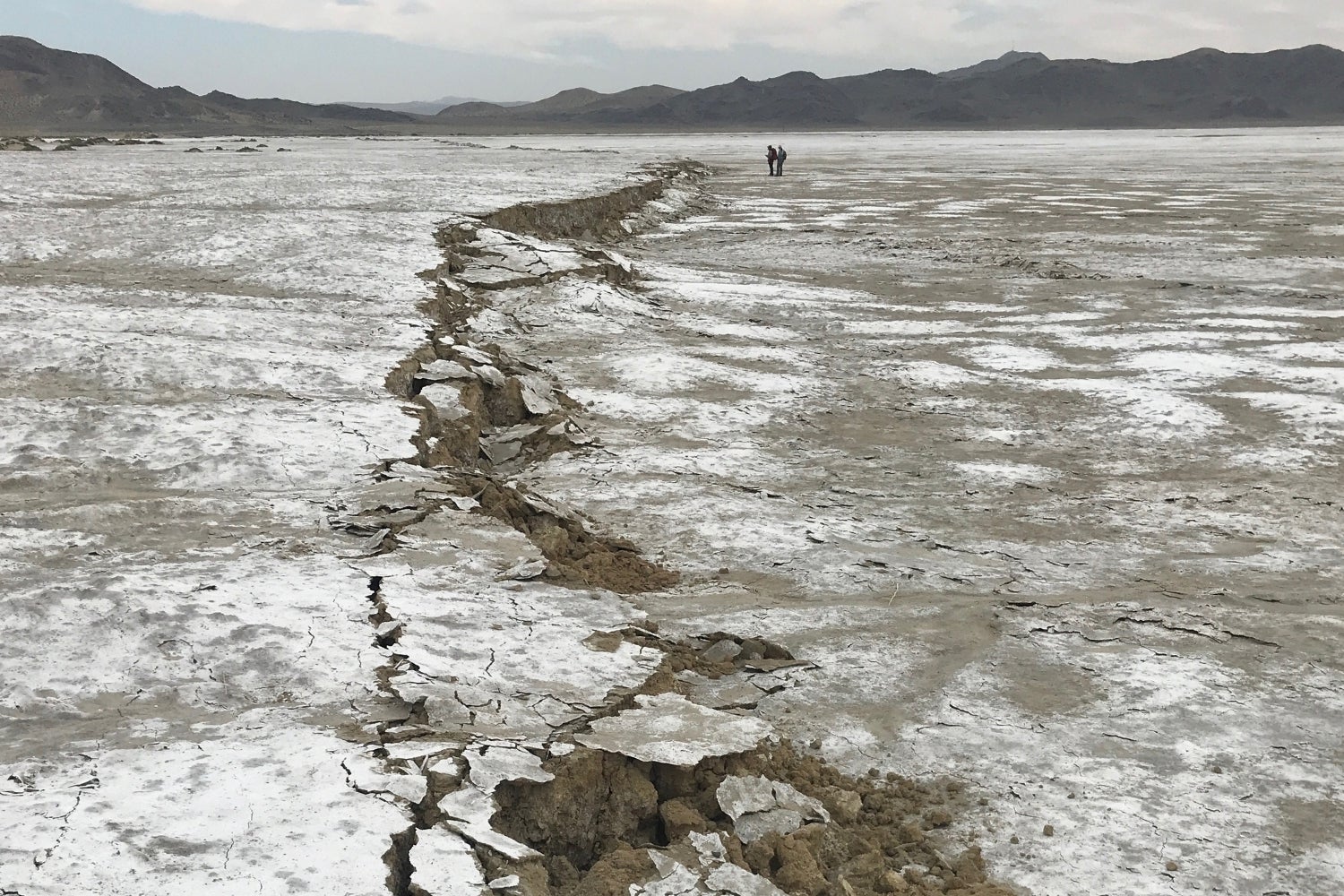
The study of foreshocks is not merely an academic pursuit. It delves into the intricate physics of fault rupture, the distribution of stress within the Earth’s crust, and the subtle ways in which seismic energy is released. By analyzing the patterns, magnitudes, and locations of foreshocks, seismologists aim to unravel the mechanisms that lead to catastrophic seismic events. This endeavor holds the potential for profound implications, from improving seismic hazard assessments to, perhaps one day, providing early warnings that can save lives and mitigate damage.
The Elusive Nature of Foreshock Identification
The primary challenge in understanding foreshocks lies in their inherent ambiguity. Imagine a series of tremors occurring in a region. Any one of these could be the main shock, or any one could be a foreshock to a future, larger event. It’s only when a significantly larger earthquake strikes that seismologists can look back at the preceding smaller events and classify them as foreshocks. This makes real-time identification incredibly difficult, as a seemingly minor tremor could be the harbinger of a major disaster or simply an isolated seismic event.
Defining Foreshocks: A Retrospective Classification
Formally, a foreshock is defined as a seismic event that occurs prior to a larger earthquake (the main shock) in the same general region. The critical element is the subsequent occurrence of a significantly larger earthquake. Without this subsequent event, a smaller earthquake is simply classified as a minor earthquake or, if it’s part of a sequence, an early event within that sequence. This retrospective labeling highlights the difficulty in distinguishing foreshocks from random seismic activity before the main event happens.
The Magnitude Threshold and Its Limitations
While there’s no universally agreed-upon fixed magnitude difference, a foreshock is generally understood to be smaller than the main shock. However, the exact magnitude gap can vary. Sometimes, a foreshock can be almost as large as the main shock, blurring the lines of distinction. This lack of a rigid, predefined magnitude threshold adds another layer of complexity to foreshock identification. Furthermore, the seismic energy released by even slightly larger tremors can be significantly greater due to the logarithmic nature of the Richter scale.
Spatial and Temporal Proximity: Key Indicators
Beyond magnitude, the spatial and temporal proximity of preceding small earthquakes to the main shock are crucial factors in classifying them as foreshocks. Foreshocks typically occur in the same fault zone or vicinity as the subsequent main shock, often within a few days or weeks. This spatial clustering suggests that the stress conditions leading to the main rupture are already developing in that specific area. Temporal proximity is also key; while some foreshock sequences can be long, the most indicative ones tend to occur relatively close in time to the main event.
The Physics Behind Foreshocks: Unraveling Stress Accumulation and Release
Foreshocks are not random occurrences. They are believed to be a manifestation of the complex processes of stress accumulation and release within the Earth’s crust leading up to a major earthquake. Understanding these processes is central to seismology and the quest for earthquake prediction.
Stress Accumulation and Fault Creep
Tectonic plates are constantly in motion, driven by the powerful currents within the Earth’s mantle. This movement generates immense stress along the boundaries between these plates, known as fault lines. This stress doesn’t always release in one sudden burst. Instead, it can build up gradually, causing the rocks along the fault to deform. In some cases, faults may exhibit slow, steady movement called “creep,” which can release small amounts of stress without generating large earthquakes. However, in locked sections of faults, stress can accumulate for decades or even centuries.
Micro-Fracturing and Nucleation
As stress builds, it can cause micro-fractures to form within the rocks surrounding the fault zone. These micro-fractures can propagate and coalesce, initiating a process that is thought to lead to the main rupture. Foreshocks are believed to be the seismic signatures of these initial micro-fracturing processes. They represent the early stages of the fault becoming unstable and the initiation of the rupture process. The energy released by these small events can, in turn, influence the stress distribution in the surrounding rock, potentially triggering further micro-fractures and leading to the larger main shock.

The Role of Fluid Pressure
Another important factor potentially influencing foreshock activity is the presence of fluids within the Earth’s crust. Water, for instance, can seep into fault zones and alter the frictional properties of the rock. Increased fluid pressure can effectively reduce the normal stress across a fault, making it easier for it to slip. This phenomenon, known as “hydrofracturing,” could play a role in initiating micro-quakes and contributing to foreshock sequences. Variations in fluid pressure, perhaps due to deep-seated geological processes or even human activities like wastewater injection, are areas of active research in understanding earthquake nucleation.
Foreshocks in the Context of Earthquake Sequences
Foreshocks are not isolated events but are typically part of a broader earthquake sequence. Understanding their relationship with other seismic events in a sequence provides a more complete picture of earthquake behavior.
Foreshocks vs. Aftershocks: A Temporal Distinction
The most crucial distinction between foreshocks and aftershocks lies in their timing relative to the main shock. Foreshocks occur before the main shock, while aftershocks occur after the main shock. Aftershocks are the result of the main rupture readjusting the stress field in the surrounding crust. They are generally smaller than the main shock and their frequency and magnitude decrease over time. The identification of foreshocks relies on the subsequent occurrence of a main shock, whereas aftershocks are identified by their occurrence after a clearly defined main shock.
The Foreshock-Main Shock-Aftershock Continuum
Seismologists often conceptualize earthquakes as a continuum of seismic events. A foreshock represents an early stage in this continuum, where the fault is beginning to fail. The main shock is the primary rupture event, releasing the majority of the accumulated stress. The aftershocks are the ongoing adjustments and readjustments of the fault system as it settles into a new stress state following the main shock. In some cases, particularly with very large earthquakes, the distinction between foreshocks and the initial stages of the main rupture can become blurred, making precise classification challenging.
Statistical Analysis of Foreshock Sequences
Statistical analysis of foreshock sequences can reveal patterns that might be indicative of impending larger earthquakes. Researchers examine the rate of foreshock occurrence, their distribution in space, and their magnitude-frequency relationships. Certain statistical models suggest that an increase in the rate of smaller earthquakes preceding a larger one could be a potential precursor. However, the predictive power of these statistical patterns is still under investigation, and no definitive, universally applicable foreshock signature has been identified.
The Significance of Foreshock Research for Earthquake Preparedness and Prediction
The study of foreshocks, despite the inherent challenges, holds immense importance for improving our understanding of earthquakes and our ability to prepare for them. While definitive earthquake prediction remains an elusive goal, foreshock research contributes to building a more robust picture of seismic hazard.
Enhancing Seismic Hazard Assessment
By studying historical earthquake sequences and identifying foreshocks, seismologists can refine their models of seismic hazard. Understanding the frequency and characteristics of foreshocks in specific regions can help in assessing the likelihood of future large earthquakes and the potential for significant ground shaking. This information is vital for urban planning, building codes, and the development of disaster preparedness strategies.
Towards Early Warning Systems
The ultimate goal of foreshock research, in conjunction with other seismic monitoring techniques, is to contribute to the development of effective early warning systems. If reliable indicators of an impending main shock could be identified in real-time, even a few seconds or minutes of warning could allow for critical actions, such as shutting down power grids, stopping trains, and providing public alerts, potentially saving lives and reducing catastrophic damage. The challenge lies in differentiating true foreshocks from random seismic noise with high accuracy.

Advancing Our Understanding of Fault Mechanics
Beyond prediction, foreshock studies offer invaluable insights into the fundamental physics of how faults rupture. They provide real-world data that can be used to test and refine theoretical models of rock mechanics, fracture propagation, and stress transfer. This deeper understanding of the Earth’s inner workings is crucial for a comprehensive scientific grasp of our planet’s dynamic processes. The ongoing collection and analysis of seismic data, particularly from dense networks of seismometers, continue to shed light on the intricate dance of tectonic forces that shape our world.
aViewFromTheCave is a participant in the Amazon Services LLC Associates Program, an affiliate advertising program designed to provide a means for sites to earn advertising fees by advertising and linking to Amazon.com. Amazon, the Amazon logo, AmazonSupply, and the AmazonSupply logo are trademarks of Amazon.com, Inc. or its affiliates. As an Amazon Associate we earn affiliate commissions from qualifying purchases.