
The seemingly simple question of “what happens to frogs in the winter” belies a complex interplay of biological adaptation and environmental factors. While the common perception might be of frogs hibernating in a dormant state, the reality is far more nuanced and, from a technological perspective, presents fascinating avenues for research and innovation. This article delves into the remarkable strategies frogs employ to survive the harsh winter months, examining the biological underpinnings and highlighting how technological advancements are enhancing our understanding of these processes. We will explore how digital tools, advanced imaging, and bio-monitoring are transforming our ability to observe, analyze, and even replicate these natural wonders, offering insights that extend beyond zoology into fields like materials science and artificial intelligence.
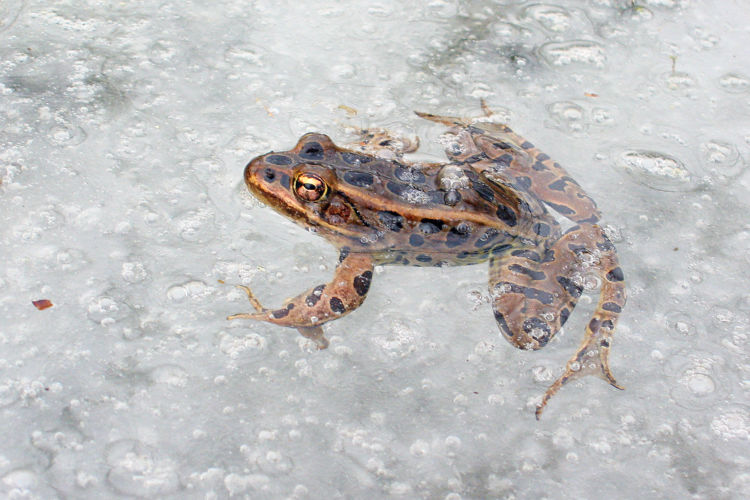
The Science of Winter Survival: Biological Adaptations
Frogs, being ectotherms (cold-blooded animals), are intrinsically linked to their environment’s temperature. Unlike endotherms (warm-blooded animals) that generate their own body heat, a frog’s internal temperature fluctuates with the ambient temperature. This dependency necessitates ingenious survival mechanisms when temperatures plummet and food sources dwindle.
Cryoprotection: Nature’s Antifreeze
One of the most astonishing adaptations observed in some frog species, particularly in colder climates, is their ability to tolerate freezing. This phenomenon is not akin to simple dormancy but involves physiological processes that prevent lethal ice crystal formation within their cells.
Glucose and Urea as Natural Cryoprotectants
When faced with impending freezing temperatures, certain frog species, such as the wood frog (Lithobates sylvaticus), begin to synthesize and accumulate high concentrations of cryoprotectant compounds in their tissues. Glucose and urea are the primary players in this biological antifreeze system. As temperatures drop, the liver of these frogs dramatically increases glucose production. This glucose is then released into the bloodstream and permeates cells, effectively lowering the freezing point of the cytoplasm. Similarly, urea, synthesized from the breakdown of proteins, also contributes to cryoprotection. These molecules bind to water molecules, hindering the formation of ice crystals and preventing the damage they would inflict on cellular structures.
Ice Formation Management
While these compounds prevent widespread intracellular freezing, some extracellular ice formation is often inevitable. However, frogs have evolved mechanisms to manage this. They often accumulate ice in specific extracellular spaces, such as the abdominal cavity, effectively creating a zone where ice can form without directly damaging vital organs. The skin also plays a crucial role, acting as a barrier to contain ice formation and allowing for a controlled thaw when temperatures rise. The ability of these frogs to survive being frozen for extended periods, sometimes with as much as 65% of their body water frozen, is a testament to evolutionary ingenuity.
Brumation: The Amphibian Equivalent of Hibernation
For many frog species that do not exhibit extreme freezing tolerance, the winter months are characterized by brumation, a state of metabolic depression analogous to hibernation in mammals. This is a period of greatly reduced activity and metabolic rate, allowing them to conserve energy when food is scarce and temperatures are unfavorable.
Location and Behavior During Brumation
The specific location and behavior of frogs during brumation vary significantly depending on the species and their habitat. Many terrestrial frogs will burrow into the soil, leaf litter, or under logs and rocks, seeking insulation from the extreme cold. Aquatic species, on the other hand, might burrow into the mud at the bottom of ponds, lakes, or streams. In these submerged locations, the water temperature is generally more stable than the air temperature, and the mud provides a protective, oxygen-rich environment. During brumation, their heart rate slows dramatically, their breathing becomes shallow, and their metabolic processes are significantly reduced, sometimes to only a few percent of their normal rate. They essentially enter a state of suspended animation, waiting for warmer temperatures to signal the return of activity.
Technological Interventions: Observing and Understanding Frog Wintering
The intricate biological processes that enable frogs to survive winter have long been a subject of scientific fascination. However, directly observing these often secretive and deeply buried animals during their brumation or freezing periods presents significant challenges. Fortunately, advancements in technology are providing unprecedented tools to unlock these secrets.
Bio-logging and Remote Sensing Technologies
Modern bio-logging devices, miniaturized and increasingly sophisticated, are revolutionizing our ability to track and monitor the behavior and physiological states of frogs in their natural habitats, even during winter.
Miniature Tagging and GPS Tracking
Tiny, lightweight tags can be attached to frogs, equipped with sensors that record temperature, activity levels, and even heart rate. When combined with GPS technology, these tags allow researchers to pinpoint the exact locations of frogs throughout the winter, revealing their chosen brumation sites and movements, if any. This data can then be downloaded wirelessly or upon retrieval of the tag, providing a detailed, individual-level understanding of their winter ecology. For species that burrow deep underground or remain submerged, traditional visual observation is impossible, making these tracking technologies invaluable.
Thermal Imaging and Non-invasive Monitoring

Thermal imaging cameras, originally developed for military and industrial applications, are proving to be powerful tools in herpetology. By detecting infrared radiation, these cameras can reveal temperature differences and patterns, allowing researchers to identify the presence of frogs even when they are hidden beneath snow, soil, or water. This is particularly useful for locating brumation sites or detecting the subtle temperature signatures of frogs undergoing freezing. Furthermore, advancements in acoustic monitoring are also being explored to detect subtle vocalizations or movements associated with frog activity during transitional periods.
Genetic and Molecular Analysis: Unraveling Cryoprotectant Mechanisms
While direct observation is crucial, understanding the how of frog winter survival requires delving into the molecular and genetic mechanisms at play. Technological advancements in genomics and molecular biology are enabling scientists to unravel these complex processes.
Gene Sequencing and Expression Analysis
High-throughput gene sequencing allows researchers to identify the genes responsible for the production of cryoprotectant compounds like glucose and urea. By comparing gene expression levels in frogs before, during, and after winter, scientists can pinpoint which genes are activated or deactivated in response to cold stress. This can involve analyzing RNA to understand which proteins are being synthesized, providing a dynamic picture of the molecular machinery involved in cryoprotection. Technologies like quantitative PCR (qPCR) and RNA sequencing (RNA-Seq) are standard tools in this field.
Proteomics and Metabolomics: Identifying Key Biomolecules
Beyond genes, understanding the actual proteins and metabolites present in frog tissues during winter is essential. Proteomics, the study of the entire set of proteins expressed by an organism, and metabolomics, the study of small molecules within an organism, are providing detailed insights. Techniques like mass spectrometry can identify and quantify specific proteins and metabolites, revealing the precise cocktail of cryoprotectants and other protective molecules that accumulate in frog cells. This level of detail allows for a comprehensive understanding of how these animals manage cellular damage and maintain vital functions in extreme conditions.
The Future of Frog Winter Research: AI and Biomimicry
The confluence of biological understanding and technological innovation points towards an exciting future for the study of frog winter survival. Artificial intelligence (AI) and biomimicry are poised to play increasingly significant roles.
Artificial Intelligence in Data Analysis and Predictive Modeling
The vast amounts of data generated by bio-logging, imaging, and molecular analyses can be overwhelming. AI offers powerful solutions for processing and interpreting this data.
Machine Learning for Pattern Recognition
Machine learning algorithms can be trained to recognize subtle patterns in temperature data, activity logs, and even acoustic signals that might indicate the presence or physiological state of a frog. For instance, AI can analyze thermal imaging data to automatically identify potential brumation sites or detect minute changes in an animal’s thermal signature indicative of stress or metabolic shifts. This automates and accelerates the analysis of data that would otherwise require painstaking manual review.
Predictive Modeling of Winter Survival Success
By integrating diverse datasets – environmental variables, genetic profiles, and physiological measurements – AI can be used to build predictive models for winter survival success. These models could help identify populations that are more vulnerable to climate change or habitat degradation, enabling targeted conservation efforts. Understanding the complex interactions between environmental cues and the frog’s internal biological responses is a prime candidate for AI-driven simulation and prediction.
Biomimicry: Learning from Nature’s Frost Resistance
The remarkable frost resistance of certain frog species has significant implications beyond zoology, offering valuable lessons for human technology and engineering.
Advanced Materials Science Inspired by Cryoprotection
The natural cryoprotective strategies employed by frogs, particularly their ability to manage ice formation and protect cellular structures, are inspiring the development of new materials. Researchers are investigating ways to replicate these biological mechanisms in the design of advanced antifreeze solutions for industrial applications, medical cryopreservation, and even food science. Understanding the precise molecular interactions of glucose and urea could lead to more effective and less toxic cryoprotective agents.

Engineering Cold-Hardy Technologies
The principles behind frog winter survival could also inform the design of technologies that need to operate in extreme cold. This might include developing more resilient electronic components, more efficient de-icing systems, or even new methods for preserving biological samples without damage. The ability of a frog to freeze solid and then revive is a biological feat that engineers can only dream of replicating in artificial systems. Exploring the cellular and molecular architecture that allows this survival could provide blueprints for robust, cold-resistant engineering solutions.
In conclusion, the question of what happens to frogs in the winter, while rooted in basic biology, opens a gateway to understanding sophisticated natural adaptations. Through the lens of technology, we are gaining deeper insights into these processes. Bio-logging, advanced imaging, genomics, and AI are transforming our ability to observe, analyze, and ultimately, learn from these resilient amphibians. The ongoing research promises not only to enhance our conservation efforts for frog populations but also to inspire innovations in materials science, medicine, and engineering, demonstrating that even the most ancient biological strategies can hold the keys to future technological breakthroughs.
aViewFromTheCave is a participant in the Amazon Services LLC Associates Program, an affiliate advertising program designed to provide a means for sites to earn advertising fees by advertising and linking to Amazon.com. Amazon, the Amazon logo, AmazonSupply, and the AmazonSupply logo are trademarks of Amazon.com, Inc. or its affiliates. As an Amazon Associate we earn affiliate commissions from qualifying purchases.