
The phenomenon of sleep paralysis has haunted human culture for millennia, inspiring tales of “Old Hags,” “shadow people,” and extraterrestrial abductors. However, in the modern era, the question of “what a sleep paralysis demon looks like” is no longer confined to folklore or religious interpretation. We are now entering a phase where technology—specifically Generative AI, high-resolution neuro-imaging, and Virtual Reality (VR)—is being used to externalize, visualize, and analyze these internal “system glitches.”
From a technological standpoint, a sleep paralysis demon is a byproduct of a biological software error: a desynchronization between the brain’s motor control and its sensory processing. As we dive into the intersection of sleep science and digital innovation, we can begin to see how technology is transforming a terrifying subjective experience into a quantifiable, visual data point.

The Digital Lens on Ancient Nightmares: AI and Generative Visualization
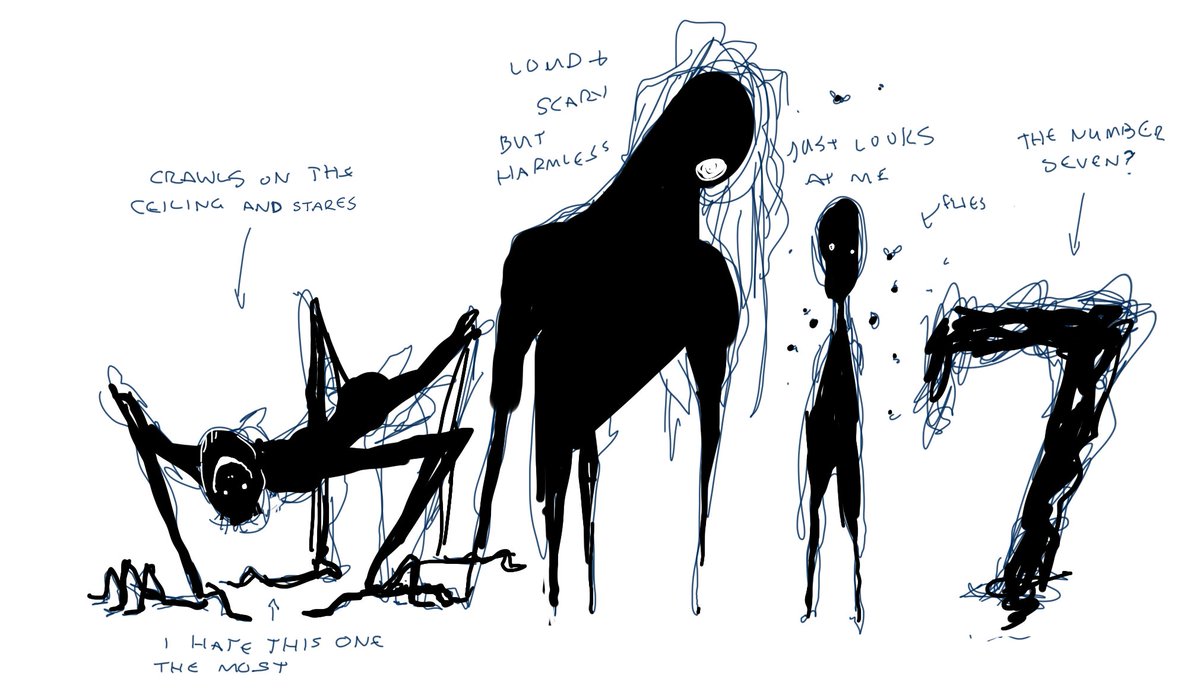
For centuries, the description of a sleep paralysis demon was limited by the descriptive power of the sufferer. Today, Generative Artificial Intelligence (AI) and Large Language Models (LLMs) are providing a new medium for victims to “print” their nightmares into reality.
Training Algorithms on Human Fear
Generative AI tools like Midjourney, DALL-E 3, and Stable Diffusion work by processing massive datasets of human art and photography. When users prompt these systems with descriptions of sleep paralysis—mentioning heavy pressure on the chest, tall shadowy figures, or distorted facial features—the AI synthesizes a visual representation based on collective human psychology.
The resulting images often share striking similarities across different cultures, suggesting that the “demon” has a consistent aesthetic structure that AI can now map. These digital renderings often feature high-contrast shadows, elongated limbs, and “uncanny valley” facial distortions. By using AI to visualize these entities, technologists are essentially creating a visual database of human neurological glitches, allowing researchers to see patterns in how the brain interprets threat during a REM-atonia state.
From Folklore to Prompt Engineering
The transition from verbal storytelling to “prompt engineering” allows for a more granular analysis of the hallucination. A user can specify the lighting, the texture of the “demon’s” skin, and the exact spatial relationship between the entity and the observer. This level of digital fidelity helps sleep technologists understand the “threat detection” mechanics of the brain. When a prompt results in a visual that triggers a physiological response in the user, it provides a benchmark for how the amygdala (the brain’s fear center) constructs imagery when the body is paralyzed.
Bio-Tech and the Visualization of the Hypnagogic State
While AI visualizes the output of sleep paralysis, bio-technology and neuro-imaging allow us to visualize the process. Understanding what the demon looks like requires looking at the neural pathways that are firing when the hallucination occurs.
Mapping the Brain’s “Threat Detection” Software
Modern fMRI (Functional Magnetic Resonance Imaging) and EEG (Electroencephalogram) technology have allowed scientists to observe the brain in real-time during sleep transitions. Sleep paralysis occurs during the transition into or out of REM sleep, where the brain is highly active but the body is in a state of atonia (paralysis).
Technologically speaking, the “demon” is the brain’s attempt to resolve a logic error. The brain senses it is awake but notices it cannot move. To resolve this discrepancy, the amygdala enters a state of hyper-vigilance. Using advanced neuro-imaging software, researchers can see the exact moment the threat-detection system “overclocks,” creating a hallucination to explain the physical sensation of paralysis. The “demon” is effectively a visual UI (User Interface) error generated by an overloaded limbic system.
The Role of Wearable Tech in Sleep Data Analysis
The rise of consumer-grade sleep tech—such as the Oura Ring, Whoop strap, and various Apple Watch applications—has democratized the collection of sleep data. While these gadgets cannot yet “see” the demon, they can identify the physiological signatures of a sleep paralysis episode. Sudden spikes in heart rate (tachycardia) and rapid eye movement during a period of perceived wakefulness are digital footprints of the encounter. As these wearables become more sophisticated, integrating GSR (Galvanic Skin Response) sensors, they will be able to provide a 3D biometric profile of the body’s reaction to the hallucination, further narrowing down the environmental triggers that cause the “demon” to appear.
Virtual Reality: Stepping Into the Nightmare
One of the most provocative applications of technology in this field is the use of Virtual Reality (VR) to simulate the sleep paralysis experience. If we want to know what the demon looks like, we can now build it in a controlled, 360-degree digital environment.
Immersive Tech as a Diagnostic and Therapeutic Tool
VR developers and medical tech companies are collaborating to create simulations of sleep paralysis for two primary reasons: empathy and exposure therapy. By recreating the visual and auditory hallmarks of a sleep paralysis episode—the shadowy figure, the buzzing sound (tinnitus), and the restricted field of vision—VR allows clinicians to experience what their patients go through.
Furthermore, Virtual Reality Exposure Therapy (VRET) is being explored as a way to “de-mystify” the demon. By allowing a user to confront a digital representation of their fear in a controlled environment, the brain can be retrained to recognize the hallucination as a benign technical error rather than a supernatural threat. In this context, the “demon” is transformed from a terrifying mystery into a manageable digital asset.
UI/UX Design in Horror Gaming and Sleep Research
The aesthetics of sleep paralysis have heavily influenced the User Experience (UX) design of modern horror games and simulators. Developers use “liminal space” design and specific lighting techniques to mimic the visual distortions of a hypnagogic state. This cross-pollination between entertainment tech and sleep science has led to a more sophisticated understanding of how visual stimuli—such as peripheral motion and low-frequency sound—can be used to trigger specific neurological responses.
Data Security and the Privacy of the Subconscious
As technology becomes more integrated into our sleep cycles, the visualization of our nightmares raises significant questions regarding digital security and the privacy of neural data. If we can use tech to see what a sleep paralysis demon looks like, who owns that image, and how is that data protected?
The Rise of Sleep-Tech Surveillance
The “Sleep-Tech” industry is currently valued at billions of dollars, and it relies on the collection of incredibly intimate data. When we use apps to track our sleep or AI to visualize our hallucinations, we are feeding our subconscious patterns into private servers. The “demon” we visualize is a reflection of our deepest fears and physiological vulnerabilities.
From a digital security perspective, this creates a new frontier of “Neural Privacy.” If a hacker or a third-party entity gains access to a user’s sleep-tech data, they aren’t just getting a password; they are getting a blueprint of that individual’s neurological triggers. As we move toward more advanced Brain-Computer Interfaces (BCIs) like Neuralink, the protection of this data becomes paramount.
Protecting Neural Data in the Era of AI
As AI models become better at interpreting brain waves to reconstruct images (a feat already being prototyped in research labs), the possibility of “recording” a sleep paralysis episode becomes real. This brings us to a critical juncture in tech ethics. We must develop robust encryption protocols for biometric and neural data to ensure that our internal visualizations—no matter how terrifying—remain our own.
The future of “what a sleep paralysis demon looks like” may be a high-definition, AI-reconstructed video file. Ensuring that this technology is used for therapeutic growth rather than invasive data harvesting is the next great challenge for the tech industry.

Conclusion: The Demon as a Digital Construct
In the final analysis, technology has reframed the sleep paralysis demon from a creature of the night to a creature of the “glitch.” Through AI, we are mapping its visual DNA; through neuro-imaging, we are identifying its source code in the amygdala; and through VR, we are learning to navigate the environments where it dwells.
As we continue to develop sophisticated tools to visualize the invisible, we find that the “demon” is a unique intersection of biology and technology. It is a visual representation of the brain’s struggle to make sense of a sensory-motor mismatch. By looking at this phenomenon through the lens of technology, we don’t just find a way to see the demon—we find the tools to understand, secure, and ultimately master the most mysterious software in existence: the human mind.
aViewFromTheCave is a participant in the Amazon Services LLC Associates Program, an affiliate advertising program designed to provide a means for sites to earn advertising fees by advertising and linking to Amazon.com. Amazon, the Amazon logo, AmazonSupply, and the AmazonSupply logo are trademarks of Amazon.com, Inc. or its affiliates. As an Amazon Associate we earn affiliate commissions from qualifying purchases.