
The United States Army Rangers are a name synonymous with unparalleled bravery, rigorous training, and a relentless pursuit of mission success. While the public often pictures them as highly skilled warriors executing daring raids, the reality of their operations is deeply intertwined with advanced technology. In today’s complex global landscape, technological superiority is not just an advantage; it’s a fundamental requirement for the success of any special operations force. This article delves into the technological underpinnings of what the Army Rangers do, exploring the cutting-edge tools, systems, and digital strategies that empower these elite soldiers to operate effectively in the most challenging environments.
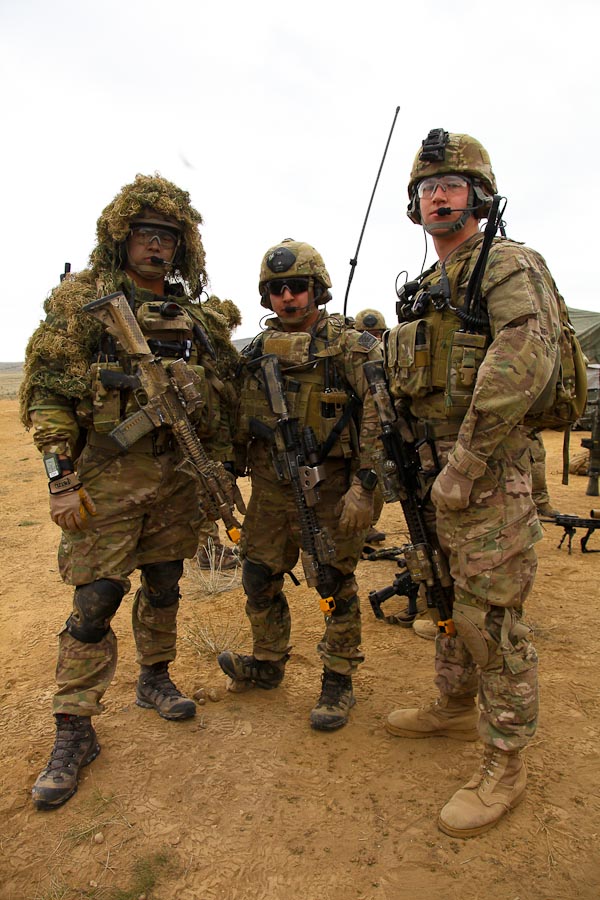
The Digital Battlefield: Information Dominance and Situational Awareness
In the realm of modern warfare, information is power. For Army Rangers, this translates to a constant, real-time understanding of their operational environment, often referred to as situational awareness. Technology plays a pivotal role in achieving and maintaining this critical advantage.
Real-Time Intelligence, Surveillance, and Reconnaissance (ISR) Platforms
The Ranger operational tempo demands immediate and accurate intelligence. This is facilitated by a suite of advanced ISR platforms. Drones, ranging from small, man-portable unmanned aerial systems (UAS) to larger, more sophisticated fixed-wing and rotary-wing variants, provide invaluable aerial reconnaissance. These platforms are equipped with high-definition cameras, thermal imagers, and even signals intelligence (SIGINT) sensors, allowing Rangers to gather intelligence on enemy positions, movements, and capabilities without exposing their own personnel to undue risk.
Beyond aerial assets, Rangers also leverage ground-based sensors and dismounted ISR capabilities. Motion detectors, seismic sensors, and even advanced acoustic sensors can be deployed to monitor areas of interest, providing early warning of enemy presence. Furthermore, the integration of SIGINT capabilities, often through specialized handheld devices or vehicle-mounted systems, allows Rangers to intercept enemy communications and electronic emissions, providing a crucial layer of intelligence.
Networked Communication and Data Fusion
The raw data generated by these ISR platforms is useless without effective communication and processing. Army Rangers operate within highly secure, resilient, and often ad-hoc communication networks. This includes tactical satellite communication (SATCOM) systems for long-range connectivity, line-of-sight radios for shorter distances, and increasingly, sophisticated mesh networking technologies that allow devices to communicate with each other, creating redundant communication pathways.
Data fusion is another critical technological component. Sophisticated software platforms, often integrated into ruggedized tablets and mobile devices carried by Ranger leaders, aggregate data from various ISR sources. This fused data is then presented in a coherent, easy-to-understand format, providing a comprehensive operational picture. This might include maps overlaid with enemy locations, friendly forces, terrain analysis, and real-time weather data, allowing for rapid decision-making and course-of-action planning. The ability to quickly share this fused information across the team, and with higher echelons, is paramount.
Advanced Navigation and Geolocation Technologies
Precision is non-negotiable for Ranger operations. Beyond traditional compass and map skills, advanced navigation technologies are indispensable. Global Navigation Satellite Systems (GNSS), such as the U.S. GPS, are the backbone of modern military navigation, providing accurate positional data to individual soldiers and vehicles. However, in denied environments where GPS signals may be jammed or spoofed, Rangers rely on a combination of inertial navigation systems (INS), which use accelerometers and gyroscopes to track movement, and terrain contour matching (TERCOM) systems.
Furthermore, digital mapping software, pre-loaded with detailed topographical and satellite imagery, allows for sophisticated route planning, mission rehearsal, and precise execution of movements. Augmented reality (AR) is also beginning to play a role, with some systems capable of overlaying navigation data, target designations, and friendly force locations onto the soldier’s field of view, further enhancing situational awareness and operational efficiency.
Lethal and Non-Lethal Technological Applications
The effectiveness of Army Rangers is ultimately measured by their ability to achieve mission objectives, which often involves the application of force. Technology plays a crucial role in both lethal and non-lethal applications, enhancing precision, minimizing collateral damage, and providing versatile options for engagement.
Precision-Guided Munitions and Advanced Weapon Systems
The Ranger arsenal is continually evolving to incorporate the latest advancements in weaponry. This includes a range of precision-guided munitions (PGMs) for indirect fire support, such as guided mortars and artillery shells, which can accurately strike targets from significant distances. For direct fire, Rangers utilize advanced assault rifles and machine guns equipped with sophisticated optics, laser rangefinders, and ballistic computers that automatically adjust for range, wind, and even atmospheric conditions, significantly increasing first-round hit probability.

Beyond conventional firearms, Rangers also employ specialized weapons systems. This can include advanced anti-materiel rifles for disabling enemy equipment, advanced grenade launchers with programmable fuses for airburst or delayed detonation, and even specialized weapons for close-quarters battle (CQB) scenarios. The emphasis is on accuracy, effectiveness, and minimizing unintended consequences.
Non-Lethal Technologies for Force Application and Control
In situations where lethal force is not desirable or permissible, Rangers have access to a growing array of non-lethal technologies. This can include advanced less-lethal munitions such as beanbag rounds, rubber bullets, and directed energy weapons designed to incapacitate without causing permanent injury. Advanced crowd control technologies, such as acoustic devices that emit disorienting sound waves, or even highly specialized chemical agents for incapacitation, can also be part of the Ranger toolkit, depending on the mission profile. The strategic use of these technologies allows Rangers to de-escalate situations, control populations, or apprehend targets with a reduced risk of fatalities or serious injury.
Advanced Optics and Night Vision Capabilities
Operating under the cover of darkness or in low-visibility conditions is a hallmark of special operations. Army Rangers are equipped with some of the most advanced optical and night vision (NVG) systems available. These include multi-spectrum goggles that allow soldiers to see in visible light, infrared, and even ultraviolet spectrums, providing unparalleled visibility in any lighting condition. Advanced thermal imagers can detect the heat signatures of individuals and vehicles, even through smoke or foliage.
These technologies are not limited to personal gear. Advanced targeting pods on aircraft, as well as sophisticated scopes and sights for individual weapons, integrate these imaging capabilities. This allows Rangers to identify, track, and engage targets with precision, day or night, further enhancing their operational flexibility and survivability.
The Future of Ranger Technology: Innovation and Adaptation
The technological landscape is constantly shifting, and the Army Rangers are at the forefront of adapting to and integrating these innovations. Their role demands continuous evaluation and adoption of new technologies that can enhance their capabilities and maintain their edge.
Artificial Intelligence (AI) and Machine Learning (ML) Integration
Artificial intelligence and machine learning are poised to revolutionize military operations, and Army Rangers are prime candidates for leveraging these advancements. AI can be employed for advanced data analysis, helping to sift through vast amounts of intelligence data to identify patterns, predict enemy actions, and flag potential threats far faster than human analysts alone. ML algorithms can be used to optimize logistical planning, improve predictive maintenance for equipment, and even enhance training simulations.
Furthermore, AI is being explored for autonomous systems, such as unmanned ground vehicles (UGVs) or drones that can conduct reconnaissance, deliver supplies, or even perform hazardous tasks under the remote supervision of Ranger operators. The potential for AI to augment human decision-making and automate repetitive or dangerous tasks is immense, promising to free up Rangers to focus on higher-level strategic thinking and execution.
Cyber Warfare and Digital Defense
In the 21st century, conflict extends beyond the physical battlefield into the digital domain. Army Rangers are increasingly involved in cyber operations, both offensive and defensive. This can include disrupting enemy communications networks, protecting friendly networks from cyberattacks, and gathering intelligence from digital sources. Specialized cyber warfare units within the broader special operations community work closely with Rangers, providing expertise and tools for operating in this critical domain.
The ability to secure their own digital infrastructure is paramount. This involves robust cybersecurity protocols, encrypted communications, and continuous monitoring of their networks for any signs of compromise. As adversaries increasingly weaponize cyber capabilities, Ranger operations will continue to demand a sophisticated understanding of and proficiency in digital defense.
Wearable Technology and Human Performance Optimization
The demands placed on an Army Ranger are extreme, both physically and mentally. Wearable technology is emerging as a key area for enhancing human performance and safety. This includes advanced biometric sensors that monitor vital signs, fatigue levels, and even cognitive load, providing real-time feedback to the soldier and their command. Smart fabrics and advanced materials are being developed to improve environmental protection, thermal regulation, and even provide integrated communication capabilities.
Furthermore, virtual reality (VR) and augmented reality (AR) are transforming training methodologies. Rangers can now undergo highly realistic mission simulations in a virtual environment, allowing them to practice complex scenarios, hone their skills, and build muscle memory without the risks and costs associated with live training. These immersive technologies provide a safe and effective platform for continuous skill development and adaptation to new threats and tactics.
In conclusion, the role of the Army Ranger is multifaceted and demanding. While their courage and dedication remain their most potent weapons, the technological advancements they employ are what enable them to operate effectively in the most complex and dangerous environments. From real-time intelligence gathering and advanced communication networks to precision weaponry and the burgeoning potential of AI, technology is not merely a tool for the Army Ranger; it is an integral and evolving component of their mission success, ensuring they remain the nation’s premier direct action force.
aViewFromTheCave is a participant in the Amazon Services LLC Associates Program, an affiliate advertising program designed to provide a means for sites to earn advertising fees by advertising and linking to Amazon.com. Amazon, the Amazon logo, AmazonSupply, and the AmazonSupply logo are trademarks of Amazon.com, Inc. or its affiliates. As an Amazon Associate we earn affiliate commissions from qualifying purchases.