
The seemingly simple question, “What color is octopus blood?” opens a gateway into a fascinating realm where biology and cutting-edge technology intersect. Far from being a mere biological curiosity, the unique characteristics of an octopus’s circulatory system, particularly the color of its blood, represent a triumph of evolutionary adaptation and a rich source of inspiration for technological innovation. Understanding these biological marvels often relies on sophisticated technological tools and methodologies that push the boundaries of scientific exploration.
The distinctiveness of octopus blood is not just a matter of aesthetic interest; it is a testament to nature’s ingenious solutions to complex environmental challenges. This biological anomaly has spurred scientific inquiry, leading to the development and application of advanced technologies in fields ranging from biomimicry to medical diagnostics. As we delve into the science behind octopus blood, we are simultaneously witnessing and benefiting from the technological progress that makes such deep dives into the natural world possible.

The Biomolecular Symphony: Unpacking the Technological Lens on Octopus Hemocyanin
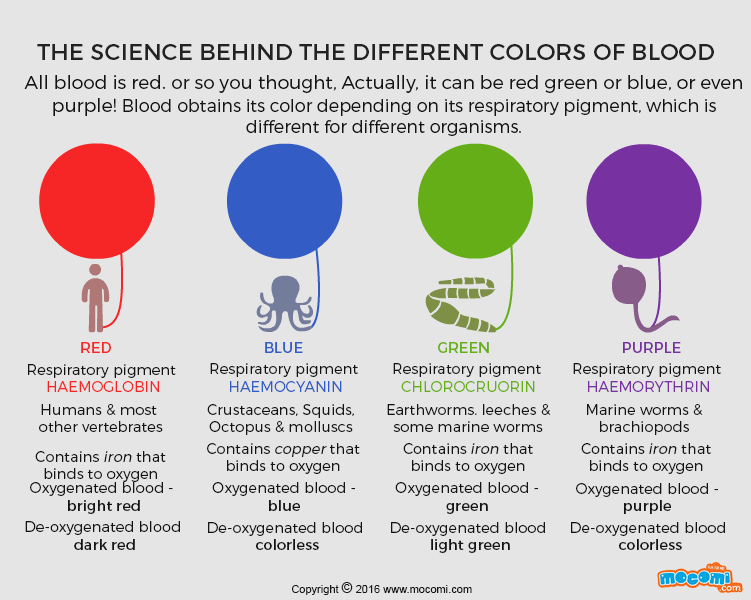
The most striking characteristic of octopus blood, and indeed of many cephalopods, is its unusual color: blue. This blue hue is a direct consequence of the protein responsible for oxygen transport, hemocyanin, which is fundamentally different from the hemoglobin found in vertebrates. While hemoglobin uses iron to bind oxygen, leading to a red color, hemocyanin utilizes copper. The presence and arrangement of copper atoms within the hemocyanin molecule are what bestow its distinctive blue coloration when oxygenated.
Decoding Molecular Structures with Advanced Spectroscopy
The identification and characterization of hemocyanin as the oxygen-carrying pigment have been a significant achievement of biochemical and biophysical research, heavily reliant on sophisticated technological instruments. Techniques such as X-ray crystallography and Nuclear Magnetic Resonance (NMR) spectroscopy have been instrumental in elucidating the intricate three-dimensional structure of hemocyanin. These methods allow scientists to visualize the precise arrangement of amino acids and the copper ions, providing atomic-level detail about how the protein binds and releases oxygen.
X-ray crystallography, a cornerstone of structural biology, involves crystallizing the protein and then bombarding it with X-rays. The diffraction pattern produced reveals the electron density, from which the atomic structure can be deduced. This process, while chemically intensive, is technologically dependent on powerful X-ray sources (often synchrotron radiation) and sophisticated detectors that capture and process the diffraction data. The computational power required to analyze these complex datasets and reconstruct the 3D model is immense, showcasing the synergistic relationship between biological inquiry and advanced computing.
Similarly, NMR spectroscopy provides information about the structure and dynamics of molecules in solution. For large proteins like hemocyanin, specialized NMR techniques, coupled with high-field magnets and sensitive receiver coils, are necessary. This allows researchers to study the protein’s conformation under various conditions, including the presence of oxygen, providing insights into the functional mechanism of oxygen binding. The development of cryoprobes and advanced pulse sequences in NMR has dramatically increased sensitivity and resolution, enabling the study of increasingly complex biological macromolecules.
The Role of Bioinformatics and Computational Biology
Beyond direct structural analysis, the study of hemocyanin and its evolutionary lineage is heavily indebted to bioinformatics and computational biology. With the advent of high-throughput sequencing technologies, genomes of various octopus species and other invertebrates are being sequenced at an unprecedented rate. Bioinformatic tools are then employed to analyze these vast datasets, identify the genes encoding hemocyanin, compare their sequences across different species, and infer evolutionary relationships.
Computational modeling further aids in understanding the functional properties of hemocyanin. By simulating the interaction of oxygen molecules with the copper centers in hemocyanin, researchers can predict binding affinities and reaction rates. These simulations, often run on powerful supercomputers, allow for hypotheses to be tested virtually before embarking on laborious laboratory experiments. This iterative process of computational prediction and experimental validation accelerates the pace of scientific discovery.
The ability to digitally model and simulate molecular interactions is a direct product of advancements in computing hardware and algorithm development. From the algorithms that process crystallographic data to the machine learning models that predict protein function from sequence, technology is the indispensable engine driving our understanding of these complex biological molecules.
Evolutionary Adaptations and Technological Inspiration: The Octopus as a Bio-Inspired Design Paradigm
The blue blood of octopuses is not merely an oddity; it is a highly effective adaptation to their environment, particularly their oxygen-deprived or cold habitats. Hemocyanin is more efficient at transporting oxygen at low temperatures and in low-oxygen conditions compared to hemoglobin. This remarkable efficiency has not gone unnoticed by the technological world, serving as a potent source of bio-inspired design and innovation.
Advancements in Oxygen Delivery Systems
The principles behind hemocyanin’s oxygen-binding capabilities are being explored for potential applications in artificial blood substitutes and improved oxygen delivery systems. Researchers are investigating how to mimic the copper-binding sites of hemocyanin to create synthetic molecules that can carry oxygen efficiently. This research has implications for developing novel treatments for conditions like anemia, hypoxia, and even for supporting organ preservation during transplants.

The technological challenge lies in synthesizing molecules that replicate the stability and reversible oxygen-binding properties of hemocyanin. This involves intricate chemical synthesis, precise control over material properties, and rigorous testing for biocompatibility and efficacy. The development of nanotechnology plays a crucial role here, with researchers exploring the use of nanoparticles as scaffolds for synthetic oxygen carriers, aiming to improve solubility, circulation time, and targeted delivery within the body.
Furthermore, the efficiency of hemocyanin in cold, low-oxygen environments can inform the design of advanced refrigeration and oxygenation systems for various industrial and medical applications. For instance, understanding how hemocyanin functions in such conditions could lead to more energy-efficient cooling technologies or enhanced life support systems for extreme environments.
Biomimicry in Materials Science and Robotics
The octopus itself, with its decentralized nervous system, remarkable dexterity, and camouflage abilities, is a significant source of inspiration for robotics and materials science. While not directly related to blood color, the octopus’s overall biological sophistication, enabled by its unique physiology, drives technological advancements in these fields.
The concept of soft robotics, for example, draws heavily from the flexible and adaptable nature of octopus tentacles. These advancements in soft robotics are facilitated by the development of novel actuators, sensors, and control systems that can replicate the octopus’s fluid movements. The materials used in these robots often mimic the elasticity and durability of octopus tissue, requiring innovations in polymer science and additive manufacturing (3D printing).
The ability of octopuses to change skin color and texture for camouflage has also inspired the development of dynamic display technologies and smart materials. Researchers are working on creating materials that can alter their optical properties in response to external stimuli, potentially leading to advancements in adaptive camouflage, electronic displays, and even energy-efficient building materials.
The Future of Biological Exploration: Technological Tools for Deeper Understanding
The study of octopus blood color and its underlying molecular mechanisms is a microcosm of the broader scientific endeavor, which is increasingly dependent on sophisticated technological infrastructure. As our technological capabilities advance, so too does our capacity to explore and understand the intricate wonders of the natural world.
High-Throughput Screening and Automation
The sheer volume of biological data generated today necessitates the use of high-throughput screening (HTS) and automation. In the study of proteins like hemocyanin, HTS platforms can rapidly test thousands of chemical compounds for their ability to interact with or modify the protein’s function. Robotic systems handle sample preparation, analysis, and data collection, significantly accelerating research workflows.
These automated systems, often powered by artificial intelligence (AI) and machine learning (ML) algorithms, can identify patterns and anomalies that might be missed by human observation. For example, AI can be used to predict the potential function of newly discovered hemocyanin-like proteins or to optimize the conditions for crystallizing proteins for structural analysis.
Advances in Microscopy and Imaging
Beyond structural determination, advanced microscopy techniques are providing unprecedented views into biological processes in real-time. Confocal microscopy, super-resolution microscopy, and electron microscopy allow scientists to observe cellular structures and molecular interactions with remarkable clarity. While directly imaging the color of blood in vivo might be challenging due to its location, these techniques are vital for understanding the cellular environment where oxygen transport occurs and how hemocyanin is synthesized and utilized.
The development of fluorescence microscopy has been particularly transformative, allowing researchers to label specific molecules within cells and track their movement and interactions. This has been crucial in understanding the cellular uptake and release of oxygen by hemocyanin-containing cells.
The Role of Cloud Computing and Big Data Analytics
The ever-increasing volume of biological data, from genomic sequences to structural models and experimental results, requires robust cloud computing infrastructure and sophisticated big data analytics tools. Researchers can store, share, and process massive datasets remotely, fostering collaboration and enabling complex analyses that would be impossible on individual workstations.
Cloud platforms provide the computational power needed for simulations, data mining, and the deployment of AI/ML models. This accessibility democratizes advanced research capabilities, allowing smaller institutions or individual labs to participate in cutting-edge scientific endeavors. The ability to analyze these “big data” sets allows us to draw more comprehensive conclusions about the evolutionary pressures that led to the development of hemocyanin and its unique properties.
In conclusion, the question of “what color is octopus blood” is far more than a simple biological query. It is a prompt that leads us through the intricate landscape of biomolecular science, evolutionary adaptation, and, crucially, the technological innovations that illuminate these complex phenomena. From the atomic resolution provided by X-ray crystallography to the predictive power of bioinformatics and the bio-inspired designs emerging from these studies, technology is the indispensable partner in unraveling nature’s most fascinating secrets. As we continue to push the boundaries of what technology can achieve, our understanding of the natural world, including the vibrant blue blood of the octopus, will only deepen, potentially unlocking solutions to some of humanity’s most pressing challenges.
aViewFromTheCave is a participant in the Amazon Services LLC Associates Program, an affiliate advertising program designed to provide a means for sites to earn advertising fees by advertising and linking to Amazon.com. Amazon, the Amazon logo, AmazonSupply, and the AmazonSupply logo are trademarks of Amazon.com, Inc. or its affiliates. As an Amazon Associate we earn affiliate commissions from qualifying purchases.