
The Great Pyramid of Giza, a colossal testament to ancient engineering and human ingenuity, has captivated imaginations for millennia. Its sheer scale, precise construction, and enduring mystery have led to countless theories and debates. While its purpose and construction methods remain subjects of ongoing scholarly inquiry, the fundamental question of its composition – “What is the Great Pyramid made of?” – delves into the very materials that have allowed this wonder to stand the test of time. Understanding these materials is not just an academic exercise; it offers profound insights into the ancient Egyptians’ resourcefulness, their understanding of geology, and their mastery of large-scale construction.
The primary materials used in the Great Pyramid are remarkably simple yet were ingeniously employed. These core components, primarily limestone and granite, were quarried, transported, and meticulously placed by an immense labor force. However, the specific types of these materials, their geological origins, and the methods of their extraction and utilization reveal a sophisticated understanding of the available resources and a remarkable ability to harness them for monumental purposes. This exploration will uncover the foundational elements of this iconic structure, examining the types of stone, their geographical sources, and the implications of their use.
The Cornerstone: Limestone – The Bulk of the Beast
The overwhelming majority of the Great Pyramid is constructed from locally quarried limestone. This ubiquitous sedimentary rock, formed over geological epochs from the accumulation of organic debris and mineral precipitation, provided an abundant and relatively accessible building material for the ancient Egyptians. However, not all limestone is created equal, and the specific types used in the Great Pyramid offer clues about the quarrying and construction processes.
Local Limestone Quarries: The Immediate Resource
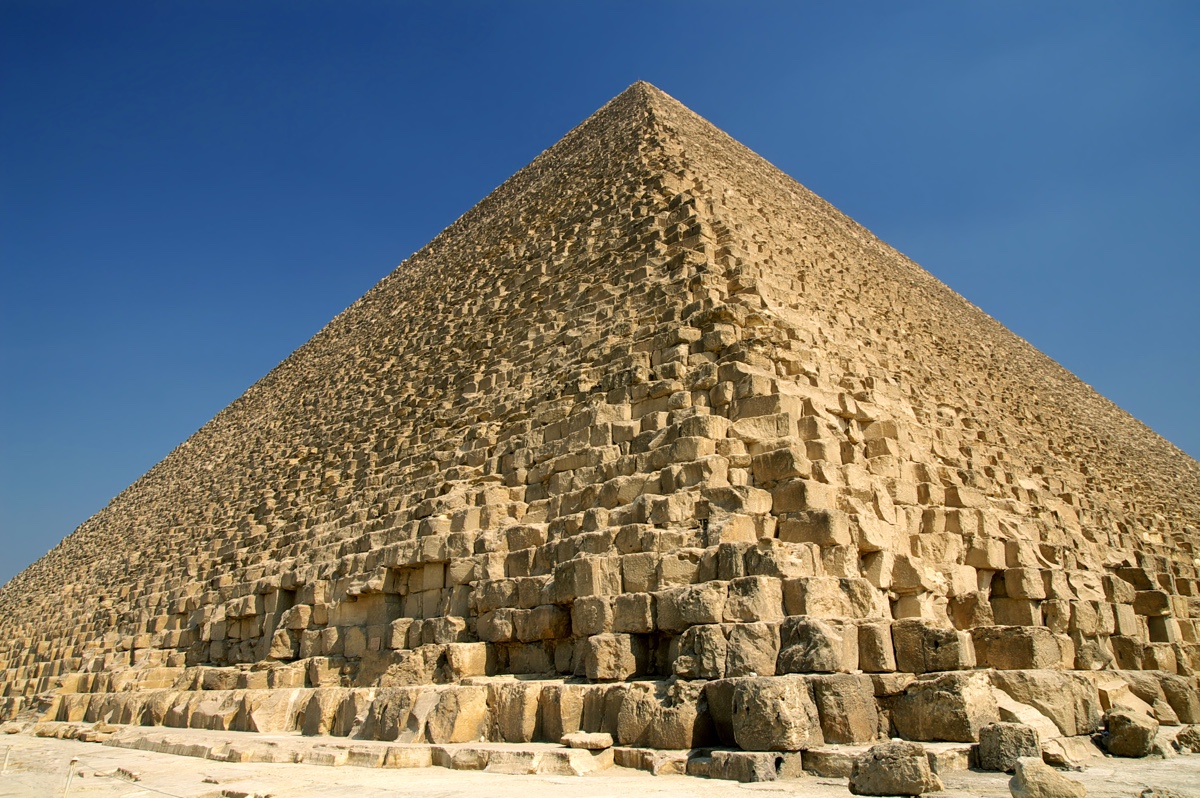
The vast majority of the pyramid’s casing stones and core blocks were sourced from limestone quarries located on the Giza Plateau itself. This strategic advantage of proximity cannot be overstated. Transporting massive stone blocks over long distances would have been an exponentially more challenging undertaking. The development of these local quarries, therefore, was a critical first step in the pyramid’s construction.
The limestone from these Giza quarries is primarily of the Middle Eocene period, characterized by its relatively soft, porous, and easily workable nature. This “nummulitic” limestone, named for the fossilized disc-shaped foraminifera (nummulites) found within it, was ideal for shaping and dressing into the precise dimensions required for pyramid construction. The uniform grain and consistent texture of this local limestone made it easier for stone masons to cut and smooth, contributing to the remarkably even faces of the pyramid’s lower courses.
The sheer volume of limestone extracted from these quarries would have been staggering. Estimates suggest that over 2.3 million blocks of limestone, each weighing an average of 2.5 tons, were used in the pyramid’s construction. The scale of these quarrying operations implies a highly organized system of labor management, tool development, and resource allocation. Sophisticated understanding of the rock strata, stress points, and optimal extraction techniques would have been essential to avoid cave-ins and ensure a consistent supply of usable material.
Fine White Limestone Casing: The Polished Exterior
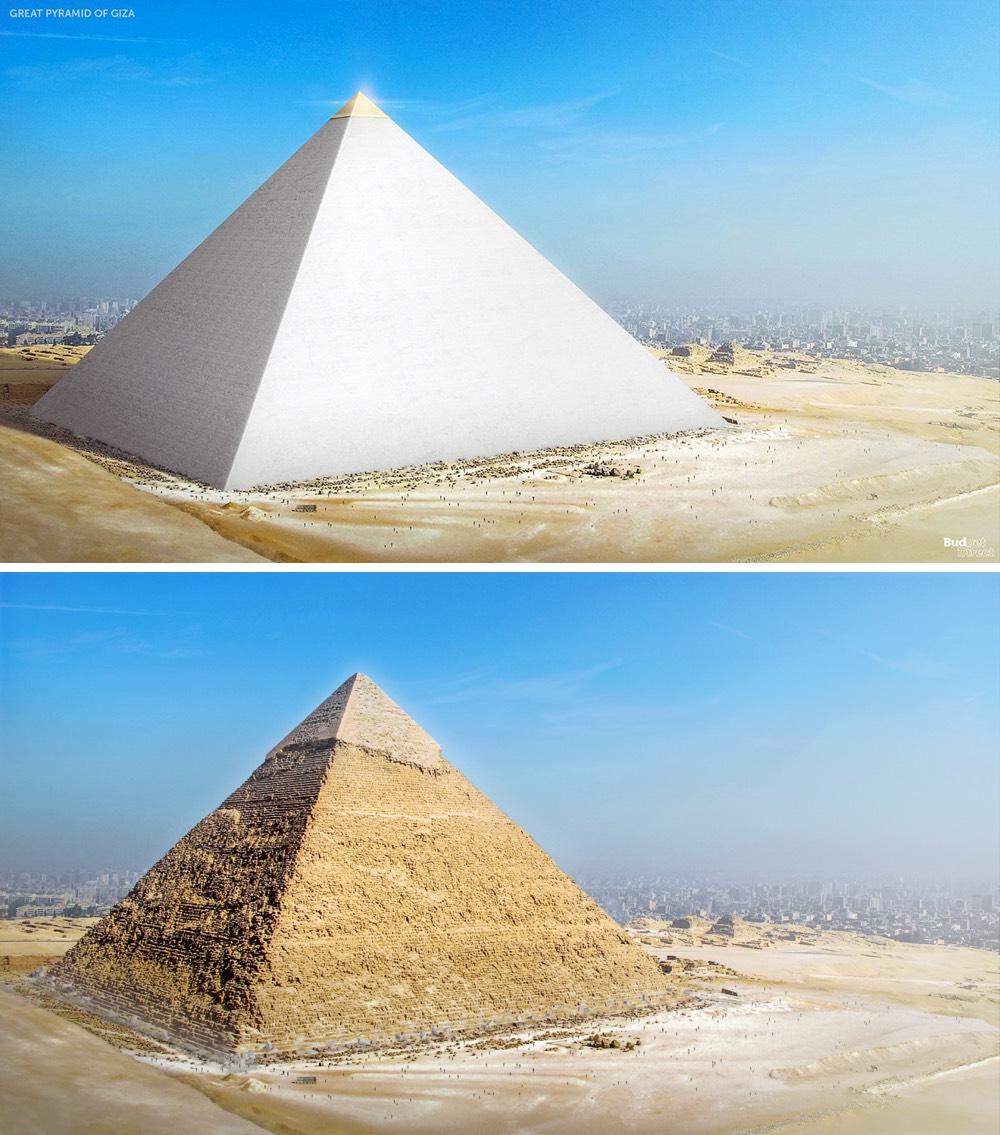
While the core of the pyramid is made of rougher, locally quarried limestone, its original gleaming exterior was clad in finely dressed, high-quality white limestone. This exceptional material was not quarried on the Giza Plateau but was brought from Tura, a quarry site located across the Nile River. The Tura limestone is renowned for its purity, fine grain, and brilliant white appearance, qualities that would have made the Great Pyramid shimmer in the Egyptian sun, a truly awe-inspiring spectacle.
The transportation of these casing stones from Tura was a significant logistical feat. It involved quarrying the stone, transporting it to the Nile, loading it onto barges during the annual inundation (when the river’s floodwaters would have reached closer to the plateau), and then hauling them from the riverbank to the construction site. This process highlights the Egyptians’ deep understanding of the Nile’s seasonal cycles and their ability to leverage natural phenomena for engineering purposes.
The Tura limestone was meticulously dressed and polished to an almost mirror-like finish. This precision in shaping and fitting the casing stones is a testament to the advanced skills of the ancient stonemasons. It is believed that these casing stones were precisely fitted, leaving virtually no gaps between them, which contributed to the pyramid’s structural integrity and its smooth, impenetrable surface. Unfortunately, most of this fine casing stone was plundered over the centuries for use in building projects in Cairo, leaving only a small portion visible at the pyramid’s apex.
The Inner Sanctum: Granite – For Strength and Significance

While limestone forms the bulk of the Great Pyramid, select areas, particularly within the King’s Chamber and its associated structures, are composed of much harder and more distinctive granite. The use of granite signifies a deliberate choice for strength, durability, and perhaps even symbolic importance, setting these internal chambers apart from the general structure.
Aswan Granite: The Source of Durability
The granite used in the Great Pyramid originates from the granite quarries at Aswan, located hundreds of miles south of Giza on the Nile. This red granite, known for its exceptional hardness and strength, was quarried and then transported northwards, again utilizing the Nile as a vital artery for transportation. The journey from Aswan to Giza was a considerably more arduous undertaking than the movement of Tura limestone, underscoring the Egyptians’ commitment to employing this robust material for specific, critical purposes.
The Aswan granite quarries themselves are marvels of ancient engineering. The massive obelisks and sarcophagi found there demonstrate the Egyptians’ ability to work with this incredibly hard stone, a task that would have required specialized tools, immense patience, and a deep understanding of the material’s properties. The techniques likely involved using dolerite pounders, copper tools, and possibly even heat and wedging to extract enormous blocks of granite.
The King’s Chamber and Above: Engineered for Eternity
The most prominent use of Aswan granite is in the construction of the King’s Chamber within the Great Pyramid. The walls and the massive sarcophagus within this chamber are carved from solid blocks of granite. The sheer weight and density of these granite blocks would have been formidable, presenting significant challenges for their placement.
Furthermore, above the King’s Chamber lie a series of five “relieving chambers.” These chambers, also constructed from massive granite beams, were designed to relieve the immense weight of the masonry above from pressing down directly onto the ceiling of the King’s Chamber. The engineering ingenuity behind these relieving chambers, utilizing the strength of granite to protect the burial chamber, is a remarkable demonstration of ancient problem-solving and structural understanding. The precision with which these enormous granite slabs were quarried, transported, and positioned is a testament to the sophisticated logistical and engineering capabilities of the pyramid builders.
Beyond the Stone: Mortar and Other Elements
While limestone and granite are the primary building materials, the construction of the Great Pyramid also involved other elements, most notably mortar, which played a crucial role in binding the blocks and ensuring structural integrity.
Gypsum Mortar: The Ancient Adhesive
A form of gypsum mortar was used extensively throughout the pyramid, particularly between the core limestone blocks. This mortar, made by heating gypsum to create plaster of Paris, which then mixed with sand and water, acted as a binding agent. It helped to fill any small gaps between the irregularly shaped core blocks, providing a stable bedding and contributing to the overall cohesion of the structure.
The quality and consistency of the gypsum mortar used indicate a well-understood process of material preparation. It was not merely a filler but an essential component that contributed to the pyramid’s stability. While it may not possess the grandeur of the stone itself, the mortar played a vital, albeit often overlooked, role in the pyramid’s enduring strength.
The Apex: A Glimpse of the Original Grandeur
While not a material in the same sense as the stone, the original capping stone, or pyramidion, that sat atop the Great Pyramid is thought to have been made of a finer, perhaps even gilded, material. While its exact composition is debated and it is now lost, it would have been a final, symbolic element completing the monumental structure. Theories suggest it could have been made of granite or even basalt, possibly covered in electrum (a mixture of gold and silver) or gold leaf, further enhancing its visibility and symbolic significance as a connection to the sun god Ra.
In conclusion, the Great Pyramid of Giza is primarily a monumental construction of limestone, sourced locally for its core and from Tura for its exquisite casing, with select internal chambers and load-bearing elements made from the robust granite of Aswan. The masterful utilization of these geological resources, combined with sophisticated quarrying, transportation, and construction techniques, allowed for the creation of a structure that has withstood the ravages of time and continues to inspire awe and wonder. The stones of the Great Pyramid tell a story not just of monumental architecture, but of an ancient civilization’s deep understanding of their natural world and their unparalleled capacity for large-scale, enduring construction.
aViewFromTheCave is a participant in the Amazon Services LLC Associates Program, an affiliate advertising program designed to provide a means for sites to earn advertising fees by advertising and linking to Amazon.com. Amazon, the Amazon logo, AmazonSupply, and the AmazonSupply logo are trademarks of Amazon.com, Inc. or its affiliates. As an Amazon Associate we earn affiliate commissions from qualifying purchases.