
In the realm of finance, numbers are the language of progress. Whether you are an individual investor tracking the growth of your portfolio, a business owner evaluating quarterly revenue, or a consumer trying to understand the impact of inflation on your purchasing power, one mathematical tool stands above the rest: the percentage increase.
Understanding how to calculate percentage increase is more than just a classroom exercise; it is a vital skill for financial literacy. It allows us to strip away the raw data and look at the “velocity” of our money. While a $1,000 profit sounds excellent, its significance changes dramatically if it represents a 1% increase versus a 100% increase. This article explores the mechanics of calculating percentage increase within the niche of money management, business strategy, and personal wealth.
The Fundamental Formula: Why Percentage Increase Matters in Money Management
At its core, the percentage increase represents the relative change between an old value and a new value. In financial terms, this is often the difference between “where we started” and “where we are now.” This calculation is essential because it provides a standardized way to compare different types of assets or business periods.
The Basic Mathematical Steps
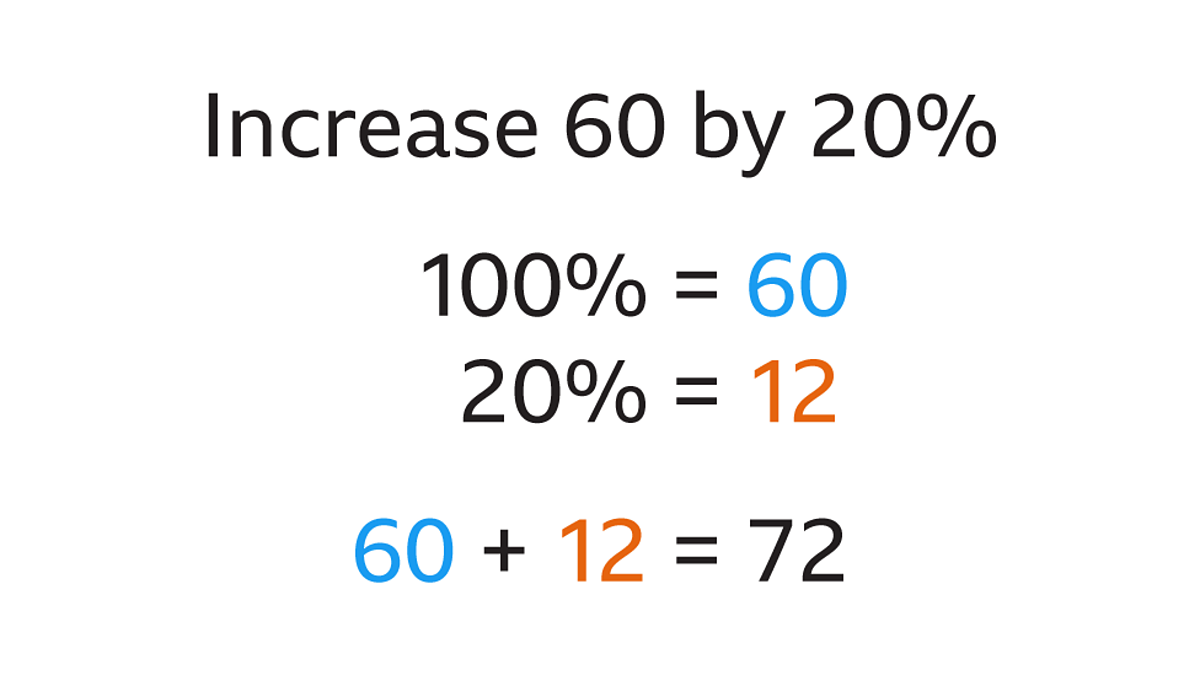
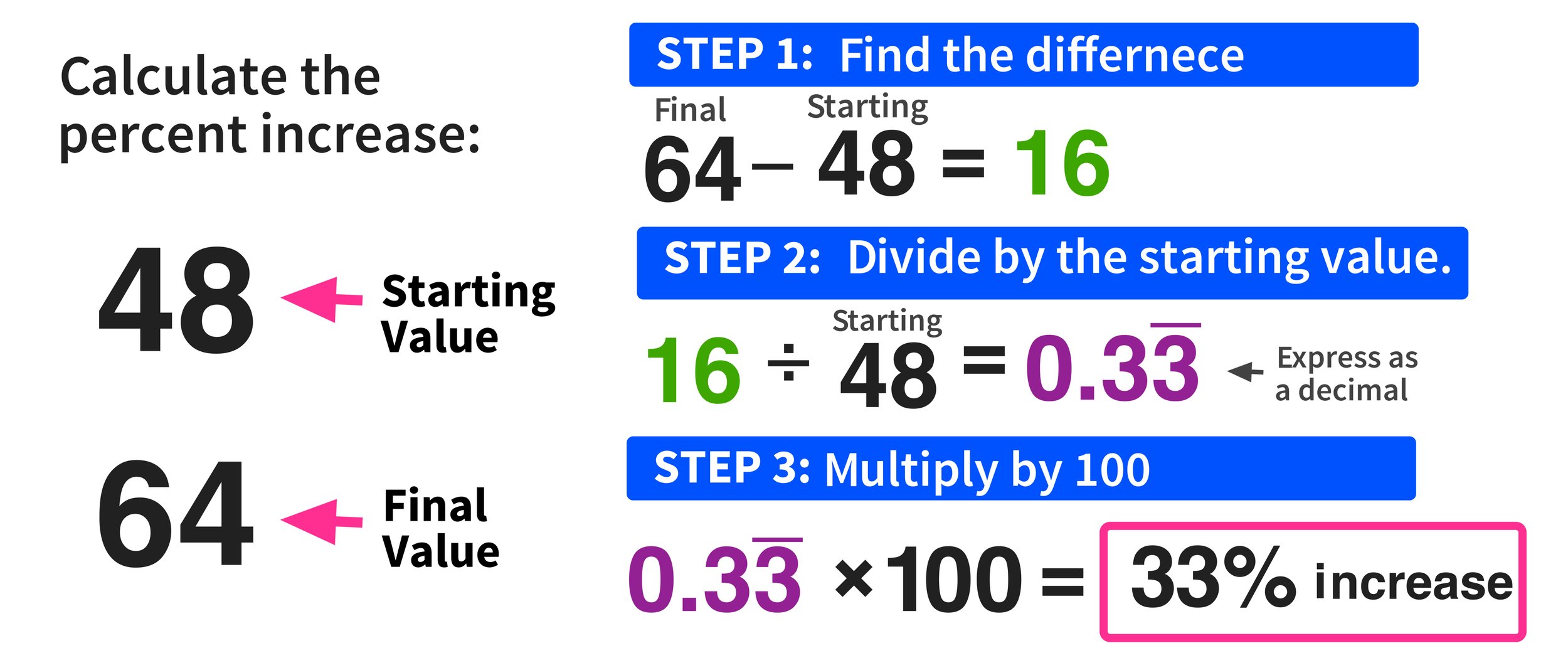
The formula for calculating percentage increase is straightforward, yet its applications are vast. To find the percentage increase, follow these three steps:
- Subtract the original value from the new value to find the absolute increase.
- Divide that increase by the original value.
- Multiply the result by 100 to convert it into a percentage.
Mathematically, it looks like this:
((New Value - Old Value) / Old Value) x 100 = Percentage Increase
For example, if you purchased a share of stock for $150 (Old Value) and it is now worth $180 (New Value), your absolute increase is $30. Dividing $30 by the original $150 gives you 0.2. Multiplying by 100 reveals a 20% increase.
Real-World Example: Tracking Investment Gains
In personal finance, the percentage increase is the primary metric for Return on Investment (ROI). Investors use it to determine which assets in their portfolio are overperforming or underperforming. If an investor sees that their real estate holdings increased by 5% while their index fund increased by 12%, the percentage increase provides a clear signal for capital reallocation. Without this calculation, it is impossible to measure the efficiency of one’s capital. Professional wealth managers rely on this metric to communicate value to clients, as it cuts through the noise of fluctuating market prices to show the actual growth trajectory of an account.
Analyzing Business Performance: Using Percentage Increase for Growth Strategy
For entrepreneurs and corporate executives, calculating percentage increase is a daily necessity. It serves as the “pulse” of a company’s health. Businesses do not just want to make money; they want to see consistent, scalable growth over time.
Revenue and Profit Margin Scaling
When a business reports its “Year-over-Year” (YoY) or “Quarter-over-Quarter” (QoQ) growth, they are using the percentage increase formula. If a SaaS company generated $1 million in revenue in 2022 and $1.5 million in 2023, they have achieved a 50% revenue increase.
However, savvy business owners look beyond top-line revenue. They apply the percentage increase formula to profit margins and operating costs. If your revenue increases by 20% but your operating expenses increase by 30%, your business is actually becoming less efficient. By calculating the percentage increase across different departments, management can identify “leaks” in the budget or identify which product lines are scaling most effectively.
Assessing Market Share Expansion
Market share is another critical area where percentage increase dictates strategy. In a competitive landscape, a company’s total sales might be growing, but if the total market is growing faster, the company might actually be losing ground. By calculating the percentage increase of their market share relative to competitors, brands can determine if their marketing and sales strategies are gaining traction. This data is vital for securing venture capital or bank loans, as lenders look for a positive percentage trend as a sign of a “moat” or competitive advantage.

Personal Finance and Purchasing Power: The Role of Inflation
While we often use percentage increase to celebrate gains, it is also a tool used to measure the erosion of wealth. In the context of the broader economy, the most common application of this formula is the Consumer Price Index (CPI), which measures inflation.
Calculating the Rise in Cost of Living
Inflation is essentially the percentage increase in the average price of goods and services. For the average household, understanding this calculation is the difference between staying afloat and falling into debt. If the price of a gallon of milk rises from $3.50 to $4.20, that represents a 20% increase.
When you apply this logic to a total monthly budget—including rent, fuel, and groceries—you can determine how much your “cost of living” has increased. If the cost of living increases by 7% in a year, but your salary only increases by 3%, you have effectively taken a 4% pay cut in terms of “real” purchasing power. Being able to calculate these percentages empowers individuals to negotiate raises or adjust their lifestyle before a financial crisis occurs.
Adjusting Your Budget for Price Hikes
Financial planning requires a forward-looking approach. By looking at the percentage increase of various expenses over the last three years, an individual can project future costs. If utility bills have shown a consistent 5% increase annually, a smart budgeter will bake that 5% increase into their emergency fund and future savings goals. This proactive use of the percentage increase formula ensures that one’s financial foundation remains resilient against the inevitable rising costs of a modern economy.
Investment Metrics: Compound Growth and Annualized Returns
For those focused on long-term wealth building, the simple percentage increase is often the starting point for more complex calculations, such as the Compound Annual Growth Rate (CAGR). While a simple percentage increase tells you how much you gained over a specific period, compound growth tells you the “smoothed” rate of return over multiple years.
Beyond Simple Increase: The Power of Compounding
In finance, the “magic” of wealth comes from the percentage increase being applied to an already increased base. This is compound interest. If you have $10,000 and it increases by 10%, you have $11,000. The following year, a 10% increase isn’t $1,000; it’s $1,100.
Understanding the percentage increase formula allows an investor to see the “snowball effect” in action. By calculating the percentage increase of their net worth annually, they can visualize how small, incremental gains lead to exponential wealth over decades. This insight is what encourages disciplined saving; when you realize that a 7% average annual increase can double your money roughly every ten years (the Rule of 72), the motivation to invest becomes much stronger.
Comparing Asset Performance
Not all “increases” are created equal. An investor might see a 50% increase in a volatile cryptocurrency over one month and a 10% increase in a blue-chip stock over one year. Using percentage increase as a standardized metric allows the investor to calculate “risk-adjusted returns.”
By comparing the percentage increase of an asset against a benchmark, like the S&P 500, an investor can determine if they are being compensated fairly for the risk they are taking. If the market increased by 15% and your managed fund only increased by 8%, the percentage increase calculation has just provided you with the necessary evidence to fire your fund manager or move your money into a low-cost index fund.
Conclusion: The Strategic Value of the Percentage Increase
The ability to calculate percentage increase is a fundamental pillar of financial mastery. It transcends simple arithmetic to become a diagnostic tool for business health, a compass for investment strategy, and a shield against the pressures of inflation.
In the world of money, those who cannot calculate their growth are destined to stagnate. By consistently applying the percentage increase formula to your revenue, your expenses, and your investments, you gain a level of clarity that raw numbers alone can never provide. Whether you are aiming to scale a multinational corporation or simply trying to maximize your retirement savings, the percentage increase is the definitive metric of your success. It tells you not just that you are moving, but how fast and in what direction your financial future is headed.
aViewFromTheCave is a participant in the Amazon Services LLC Associates Program, an affiliate advertising program designed to provide a means for sites to earn advertising fees by advertising and linking to Amazon.com. Amazon, the Amazon logo, AmazonSupply, and the AmazonSupply logo are trademarks of Amazon.com, Inc. or its affiliates. As an Amazon Associate we earn affiliate commissions from qualifying purchases.