
In the ever-evolving landscape of digital communication, few platforms have integrated themselves as deeply into our daily lives as WhatsApp. From casual chats with friends to critical business updates, this ubiquitous messaging app has become a cornerstone of modern connectivity. As users navigate its features, they often encounter visual cues that convey important information about their messages. Among these, the seemingly simple “two blue checks” hold a significant meaning, signaling a crucial step in message delivery and acknowledgment.
This article delves into the world of WhatsApp’s checkmark system, aiming to demystify what those two blue ticks truly represent. Beyond the immediate understanding of message delivery, we’ll explore the nuances, implications, and the broader technological and user experience considerations that underpin this feature. Drawing on themes from technology trends, digital security, and the user-centric design that drives app development, we will provide a comprehensive understanding of this common yet vital communication indicator.
The Anatomy of WhatsApp’s Checkmarks: A Visual Language of Delivery
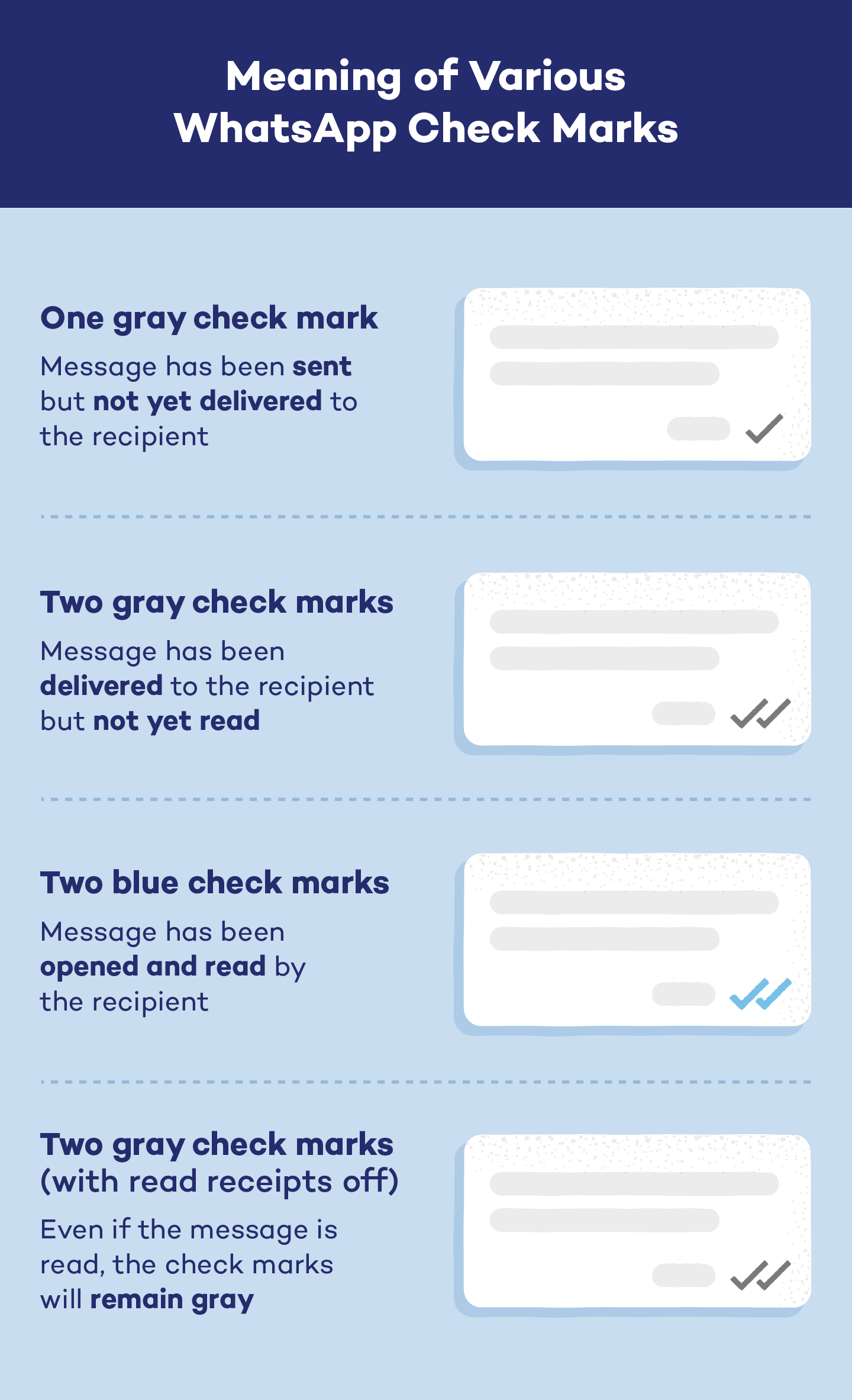
WhatsApp employs a clear and intuitive system of checkmarks to provide users with real-time feedback on the status of their sent messages. This visual language is fundamental to building trust and managing expectations within the app’s communication flow. Understanding each stage is key to interpreting the true meaning of the blue ticks.
The Single Gray Check: Sent, But Not Delivered
The journey of a WhatsApp message begins with a single, gray checkmark. This is the initial confirmation that your message has been successfully transmitted from your device to WhatsApp’s servers. Think of it as the digital equivalent of handing a letter to the post office – it’s in their system, but it hasn’t reached the recipient’s mailbox yet.
This single gray check indicates that the message has left your phone, but it doesn’t guarantee it has reached the intended recipient’s device. Several factors can contribute to this status:
- Recipient’s Device Offline: The most common reason for a message to remain at the single gray check stage is that the recipient’s phone is turned off, has no internet connection (Wi-Fi or mobile data), or is in airplane mode.
- App Not Running: While less common for modern smartphones, if the WhatsApp application on the recipient’s device is not actively running in the background, the message might not be immediately delivered even if the device is online.
- Server Delays: Although rare, temporary issues with WhatsApp’s servers could also cause delays in message delivery, keeping the checkmark in its initial gray state.
From a technological perspective, this single check is a testament to the robust infrastructure WhatsApp has built. It ensures that even if there are network hiccups or temporary device unavailability, your messages are safely stored and will be delivered as soon as the recipient’s device comes back online and connects to the internet. It’s a fundamental aspect of the app’s reliability, ensuring that no message is lost in transit between sender and receiver.
The Double Gray Check: Delivered to the Recipient’s Device
The appearance of two gray checkmarks is a significant milestone. It signifies that your message has not only been sent from your device and processed by WhatsApp’s servers but has also been successfully delivered to the recipient’s device. This means the message has reached their phone, regardless of whether they have opened and read it yet.
This double gray check is a confirmation of successful delivery to the destination. However, it’s crucial to understand what it doesn’t mean:
- It does not mean the message has been read. The recipient might be busy, might not have their phone with them, or might have received the message but hasn’t had a chance to look at it yet.
- It does not mean the recipient has seen the notification. Even if the message is delivered, the recipient might have notifications turned off, or the notification might have been dismissed.
From a user experience standpoint, the double gray check provides a valuable sense of assurance. You know your message has reached its intended destination, and the onus is now on the recipient to engage with it. This is particularly important in professional contexts where timely delivery is crucial, or in personal situations where you want to ensure your loved ones have received your communication.
From a technical standpoint, this confirmation relies on acknowledgments sent back from the recipient’s device to WhatsApp’s servers, and then relayed to your device. It’s a sophisticated handshake that confirms the data has arrived at its intended digital address.
The Double Blue Check: Read and Acknowledged by the Recipient
Finally, the coveted “two blue checks” appear. This is the ultimate confirmation within WhatsApp’s standard messaging system: your message has been delivered to the recipient’s device, and the recipient has opened the chat and read your message.
This is the point where you can be confident that your communication has been seen and acknowledged. The transition from double gray to double blue is instantaneous once the recipient opens the chat window containing your message.
The introduction of read receipts (the blue ticks) was a significant feature that enhanced transparency in digital conversations. However, it also sparked considerable debate. While many appreciate the certainty it provides, others find it intrusive, feeling a pressure to respond immediately upon seeing that their message has been read. This highlights a core tension in digital communication design: balancing the need for clarity and confirmation with the user’s desire for privacy and control over their time and attention.
The Significance of Blue Checks in Digital Communication and Privacy
The double blue check, while seemingly a minor detail, carries significant weight in how we perceive and engage with digital communication. It touches upon aspects of user experience, digital security, and even the subtle art of managing expectations in our online interactions.
User Experience and Expectations Management

For senders, the blue ticks offer peace of mind. Knowing that a message has been read can alleviate anxiety about whether communication has been received or if there’s a misunderstanding. This is especially true in situations where a prompt response is expected or when confirming important information.
However, this clarity can also create pressure. Receiving blue ticks can imply an obligation to respond immediately, which may not always be feasible or desired by the recipient. This can lead to a cycle of digital expectation and obligation, where users feel compelled to be constantly available and responsive. This is a key consideration in the ongoing development of communication technologies – how can we provide useful feedback without creating undue stress or pressure?
Digital Security and Privacy Controls
WhatsApp has recognized the varying preferences regarding read receipts. For this reason, users have the ability to disable read receipts. This feature is a testament to WhatsApp’s commitment to user privacy and control.
Disabling Read Receipts: A Matter of Choice
When a user disables read receipts, the following occurs:
- You will not see blue ticks for messages you send to others. Others will only see the double gray checks, indicating delivery but not that you have read their message.
- Others will not see blue ticks when you read their messages. Your read status will remain hidden from them.
This option is found within the app’s privacy settings. It allows users to manage their visibility and control when and how they communicate their engagement with messages. This is a crucial aspect of digital security, as it empowers users to dictate their digital footprint and avoid unwanted scrutiny or pressure.
It’s important to note that disabling read receipts has certain limitations:
- Group Chats: Read receipts are always sent in group chats, regardless of individual privacy settings. This is because in a group setting, the sender needs to know if the message has been seen by at least one participant, and the system is designed for broader acknowledgment.
- Voice and Video Calls: The read receipt feature does not apply to voice or video calls. Their status is indicated by different cues (e.g., “Connecting,” “Ringing,” “Call Ended”).
- “View All” Status in Groups: While you won’t see blue ticks for individual messages in a group chat if read receipts are off, you can still tap on a sent message in a group to see who has viewed it if you’re the sender. This provides a different layer of delivery confirmation within the group context.
From a brand perspective, offering granular privacy controls like disabling read receipts is a smart move. It builds user trust and loyalty by demonstrating a commitment to individual autonomy and data protection. This can be a significant differentiator in a competitive app market, showcasing a user-centric approach to product development.
Beyond the Tick: Technical Considerations and Future Trends
The seemingly simple checkmark system on WhatsApp is a product of sophisticated engineering and plays a vital role in the app’s overall functionality. Understanding the underlying technology and potential future developments can provide further insight.
The Technical Backbone of Message Delivery
The entire checkmark system relies on a robust and scalable messaging infrastructure. When you send a message, it travels through several stages:
- Encryption: WhatsApp messages are end-to-end encrypted by default, meaning only you and the recipient can read them. This encryption is a cornerstone of digital security and privacy.
- Server Handshake: Your message is sent to WhatsApp’s servers, which then attempt to deliver it to the recipient’s device.
- Device Acknowledgment: Once the recipient’s device receives the message, it sends an acknowledgment back to WhatsApp’s servers.
- Sender Notification: WhatsApp’s servers then relay this acknowledgment to your device, changing the checkmarks from gray to blue.
This process, while invisible to the user, involves complex protocols and network management to ensure reliability and speed. The system is designed to be resilient, handling millions of messages simultaneously across the globe.
Evolving Communication and the Future of Read Receipts
As technology advances, so too do user expectations and the capabilities of communication platforms. The concept of “read receipts” is not static and may evolve further:
- AI-Powered Read Status: Imagine AI that can infer your engagement with a message without explicit acknowledgment. For instance, if your device has actively processed the message content, an AI could potentially flag it as “seen” to the sender, even if you haven’t manually opened the chat. This could offer a more nuanced understanding of message engagement, though it also raises significant privacy concerns.
- Customizable Read Receipt Settings: Future iterations might offer more granular control. Perhaps users could choose to enable read receipts only for specific contacts or groups, or set time-limited read receipt visibility.
- Alternative Forms of Acknowledgment: As communication becomes more multimedia-rich, new forms of acknowledgment might emerge. For example, a brief voice reaction or a visual emoji response could serve as a read receipt, providing feedback without requiring a full textual reply.
From a business and marketing perspective, understanding these trends is crucial. For brands, the way they communicate and receive acknowledgment impacts their reputation and customer engagement. Offering clear, yet controllable, communication feedback mechanisms can enhance trust and brand loyalty. For app developers, staying ahead of these trends means innovating in ways that enhance user experience, privacy, and functionality.

Conclusion: The Enduring Significance of the Double Blue Tick
The double blue check on WhatsApp is more than just a visual indicator; it’s a crucial element of the modern digital communication ecosystem. It signifies successful message delivery and recipient acknowledgment, providing clarity and managing expectations. Understanding its meaning, its technological underpinnings, and the privacy controls available allows users to navigate their digital interactions with greater confidence and control.
As technology continues to shape how we connect, the principles of clear communication, user privacy, and intuitive design, embodied by features like the read receipts, will remain paramount. Whether you appreciate the certainty of the blue ticks or prefer the privacy of disabling them, their presence on WhatsApp underscores the continuous effort to refine our digital communication experiences, making them more reliable, more transparent, and ultimately, more human.
aViewFromTheCave is a participant in the Amazon Services LLC Associates Program, an affiliate advertising program designed to provide a means for sites to earn advertising fees by advertising and linking to Amazon.com. Amazon, the Amazon logo, AmazonSupply, and the AmazonSupply logo are trademarks of Amazon.com, Inc. or its affiliates. As an Amazon Associate we earn affiliate commissions from qualifying purchases.