
In our daily lives, we often use the terms “mass” and “weight” interchangeably. We step on a scale and say we “weighed” a certain amount, or we talk about a package having a significant “weight.” However, from a scientific perspective, mass and weight are two distinct concepts, with fundamental differences that impact our understanding of the physical world. This distinction is not merely an academic exercise; it has practical implications across various fields, from engineering and space exploration to even how we might interpret data from the burgeoning realm of AI-driven physics simulations.
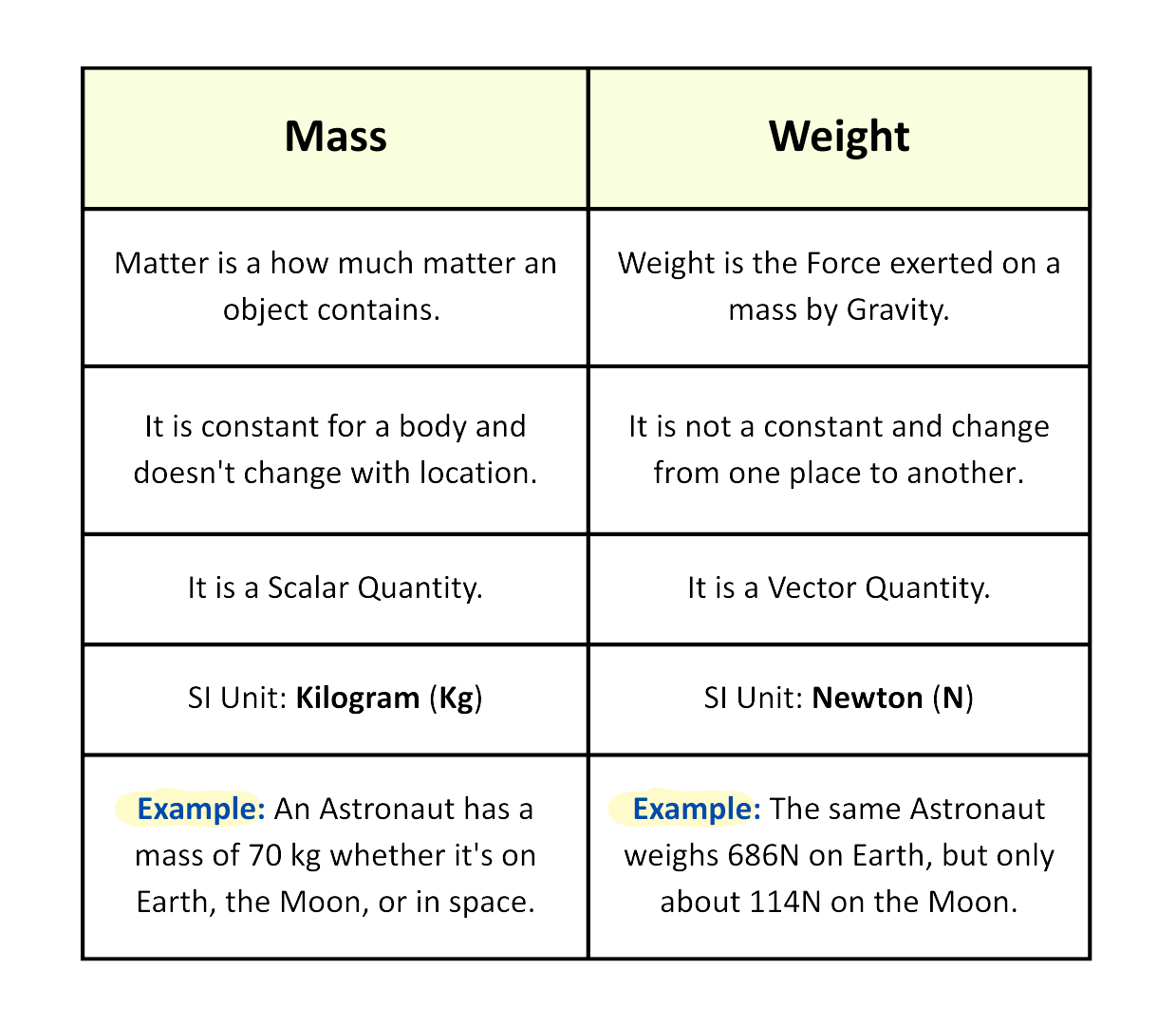
While often confused, mass and weight are governed by different principles and have different units of measurement. Understanding this divergence is crucial for anyone delving into science, technology, or even just seeking a clearer grasp of the forces that shape our environment. Let’s break down what mass is, what weight is, and why the difference matters.
The Essence of Mass: An Intrinsic Property
At its core, mass is a fundamental property of matter. It represents the amount of “stuff” – the atoms and molecules – that make up an object. Think of it as the inherent resistance an object has to changes in its motion. This resistance is quantified by the concept of inertia. The more mass an object has, the more difficult it is to accelerate it (i.e., to start it moving, stop it, or change its direction).
Inertia: The Measure of Resistance
The principle of inertia, famously articulated by Isaac Newton in his first law of motion, states that an object at rest will stay at rest, and an object in motion will stay in motion with the same speed and in the same direction unless acted upon by an unbalanced force. Mass is the direct measure of this inertial property. A bowling ball has more mass than a tennis ball, and therefore, it requires more force to get the bowling ball moving and more force to stop it once it’s in motion.
Units of Mass: Kilograms and Beyond
The standard international unit for mass is the kilogram (kg). This unit is defined by a specific amount of matter, historically based on a physical artifact but now defined by fundamental physical constants. Other units of mass include grams (g), milligrams (mg), and in the imperial system, slugs and pounds (mass). It’s important to note that while “pound” can also refer to a unit of force (weight), when used to measure mass, it signifies the amount of matter.
Mass in a Gravitational Context: A Constant
Crucially, an object’s mass remains constant regardless of its location in the universe. Whether you are on Earth, the Moon, or floating in the vacuum of space, the number of atoms that constitute your body, or any other object, does not change. Your mass is a fixed quantity. This constancy is a defining characteristic of mass and distinguishes it sharply from weight.
The Nature of Weight: A Force of Attraction
Weight, on the other hand, is not an intrinsic property of an object. Instead, it is a force that arises from the interaction between an object’s mass and a gravitational field. Specifically, weight is the force of gravity pulling an object towards the center of a celestial body, such as a planet or moon.
The Role of Gravity
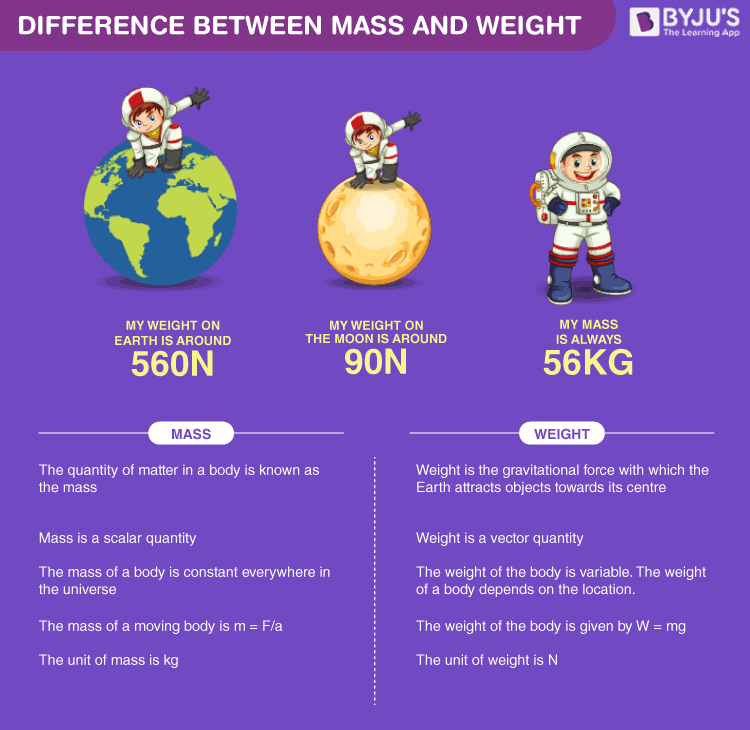
The strength of gravity varies depending on the mass of the celestial body and the distance from its center. Earth has a significant gravitational pull, which is why we feel a downward force. The Moon, being less massive than Earth, has a weaker gravitational pull. This means that an object will weigh less on the Moon than it does on Earth, even though its mass remains the same.
The Formula for Weight
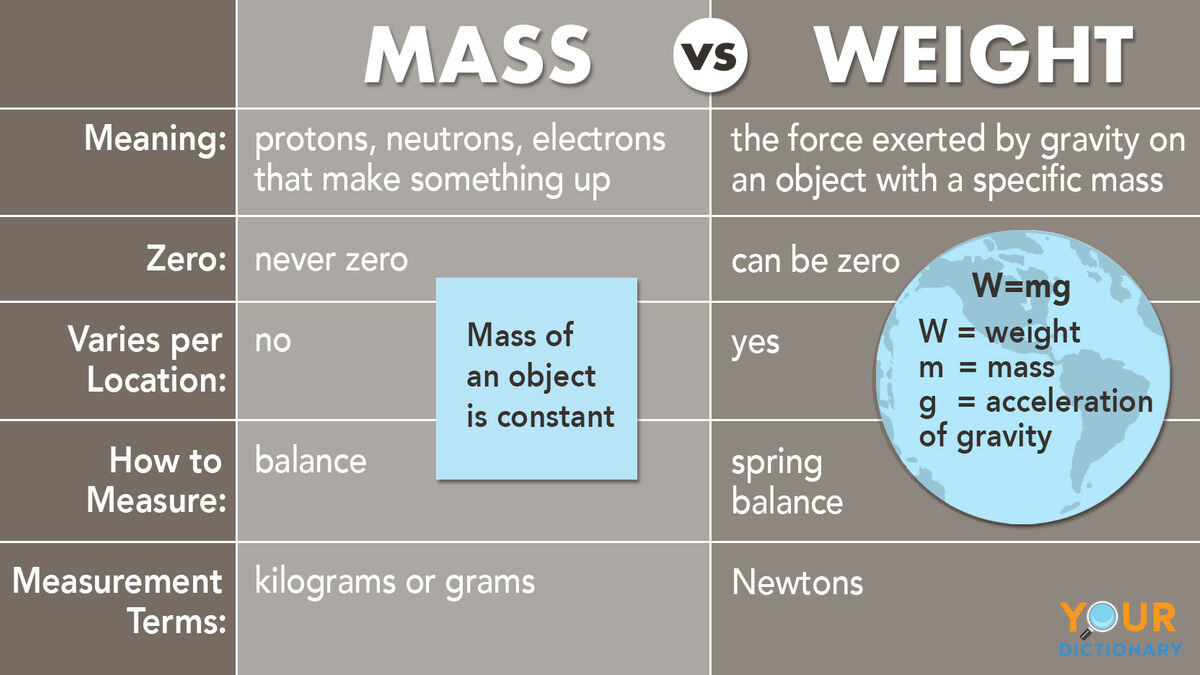
Mathematically, weight (W) is calculated by multiplying an object’s mass (m) by the acceleration due to gravity (g) at its location:
W = m * g
On Earth, the average acceleration due to gravity is approximately 9.8 meters per second squared (m/s²). So, an object with a mass of 1 kilogram will have a weight of approximately 9.8 Newtons (N) on Earth.
Units of Weight: Newtons and Pounds (Force)
The standard international unit for force, and therefore for weight, is the Newton (N). In the imperial system, weight is often measured in pounds (lbs), which in this context refers to pounds-force. It’s this variation in the ‘g’ factor that leads to the perceived difference in weight from one location to another.
Key Distinctions Summarized
To solidify the understanding, let’s outline the core differences between mass and weight:
- Definition: Mass is the amount of matter in an object; weight is the force of gravity acting on that mass.
- Constancy: Mass is constant everywhere; weight varies with the strength of gravity.
- Measurement: Mass is measured in kilograms (kg), grams (g), etc.; weight is measured in Newtons (N) or pounds-force (lbs).
- Nature: Mass is an intrinsic property; weight is an extrinsic force.
- Inertia: Mass directly relates to inertia; weight is a consequence of gravitational acceleration.
The Everyday Scale: A Misnomer
When you step on a bathroom scale, it’s technically measuring your weight. However, because these scales are calibrated to assume Earth’s gravitational pull, they display a reading in kilograms or pounds that corresponds to your mass under those specific conditions. If you were to take that same scale to the Moon, it would show a much lower reading, not because your mass has changed, but because the gravitational force is weaker.
Why the Distinction Matters: Practical and Scientific Implications
The difference between mass and weight might seem subtle, but it has profound implications across various disciplines:
1. Space Exploration and Engineering
Understanding mass and weight is critical for space agencies. When launching rockets, engineers need to account for the mass of the payload and the rocket itself, as well as the varying gravitational forces they will encounter. Astronauts experience a significant reduction in weight in space due to microgravity, but their mass remains the same. This means they can still exert force and move objects with the same effort, but the sensation of “heaviness” is absent. Designing spacecraft, predicting trajectories, and ensuring the structural integrity of equipment all rely on accurate calculations involving mass and the forces of gravity.
2. Manufacturing and Product Design
In manufacturing, especially for precision instruments or consumer electronics, the mass of components is a crucial factor. It affects shipping costs, the feel and portability of a device, and its performance characteristics. While weight might be a secondary consideration for some applications, mass is a fundamental specification. For instance, in automotive design, reducing the mass of a vehicle directly impacts fuel efficiency and performance.
3. Scientific Research and Physics
At the forefront of scientific inquiry, the distinction is paramount. In particle physics, experiments measure the mass of subatomic particles with extreme precision. These measurements are independent of any gravitational field. In astrophysics, understanding the mass of celestial objects is fundamental to comprehending their behavior, evolution, and the gravitational forces they exert. The development of advanced technologies, like sophisticated sensors for detecting gravitational waves, directly relies on a deep understanding of mass and its gravitational interactions.
4. The Rise of AI and Digital Simulations
As artificial intelligence and sophisticated simulation tools become more prevalent in scientific research and engineering, the accurate representation of physical principles is vital. AI models trained to predict material properties, simulate fluid dynamics, or even design new molecular structures must correctly differentiate between mass and weight. For example, an AI tasked with designing a new aerospace component would need to understand how its mass affects its inertia and how its weight influences its behavior under different gravitational conditions during flight and in orbit. Errors in understanding this fundamental distinction could lead to flawed designs and inaccurate predictions.
Conclusion: Clarity in Concepts
In essence, mass is a measure of how much “stuff” an object contains, a fundamental property of matter that dictates its inertia. Weight, conversely, is a force that arises from the interaction of that mass with gravity, a force that can change depending on where the object is in the universe. By understanding and respecting this distinction, we gain a clearer perspective on the physical forces that govern our world, enabling more precise scientific inquiry, robust engineering, and a deeper appreciation for the universe around us. Whether you’re designing a spacecraft, building a product, or simply trying to understand a physics textbook, remembering that mass is constant and weight is variable will illuminate many concepts.
aViewFromTheCave is a participant in the Amazon Services LLC Associates Program, an affiliate advertising program designed to provide a means for sites to earn advertising fees by advertising and linking to Amazon.com. Amazon, the Amazon logo, AmazonSupply, and the AmazonSupply logo are trademarks of Amazon.com, Inc. or its affiliates. As an Amazon Associate we earn affiliate commissions from qualifying purchases.