
Tax season is often met with a mixture of anxiety and procrastination. However, viewing tax preparation not merely as a legal obligation but as a critical component of your overall financial strategy can transform the experience. Understanding “how to do taxes” involves more than just filling out forms; it requires a grasp of your financial ecosystem, an awareness of the ever-changing tax code, and a proactive approach to wealth preservation.
In this guide, we will break down the complexities of tax preparation into actionable steps, ensuring that you remain compliant while maximizing the potential for refunds or minimizing liabilities.
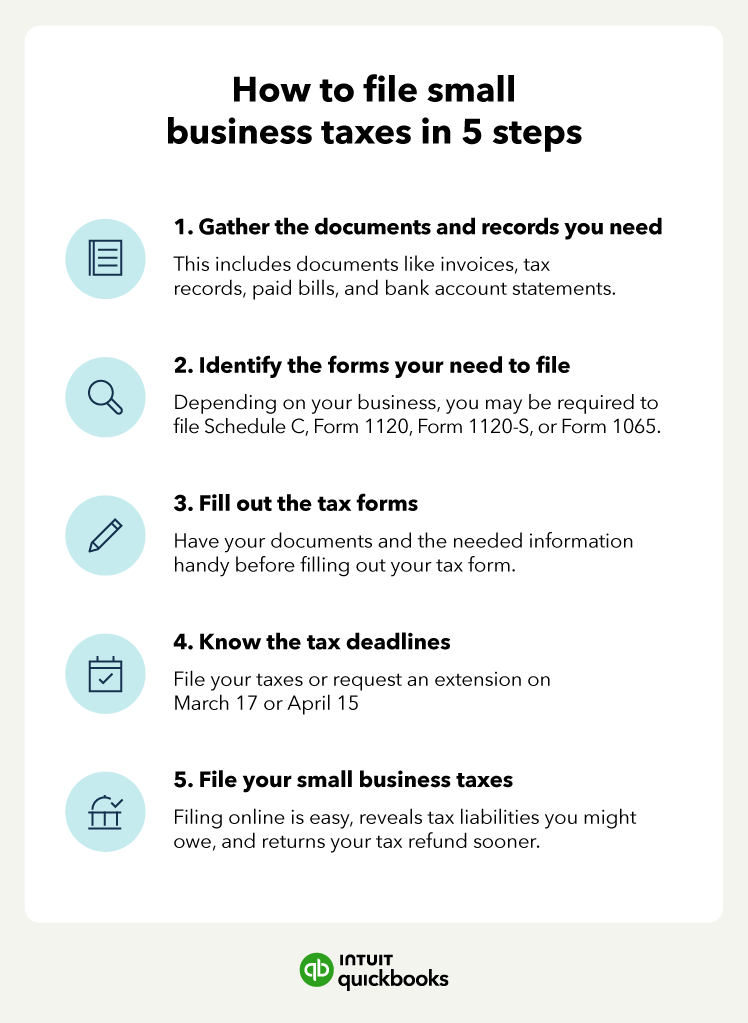
The Foundation of Filing: Understanding Your Tax Identity
Before you type a single number into a spreadsheet or software, you must define your tax identity for the year. Your filing status is the cornerstone of your tax return, as it determines your standard deduction, your tax brackets, and your eligibility for certain credits.
Determining Your Filing Status
The IRS recognizes five basic filing statuses: Single, Married Filing Jointly, Married Filing Separately, Head of Household, and Qualifying Widow(er). Choosing the right one is paramount. For many, “Married Filing Jointly” offers the most significant tax breaks, but for those providing for a dependent while being unmarried, “Head of Household” offers more favorable rates and a higher standard deduction than the “Single” status. Misidentifying your status is one of the most common errors that can lead to audits or missed financial opportunities.
Understanding the Progressive Tax System
Many taxpayers harbor the misconception that moving into a higher tax bracket means all their income is taxed at that higher rate. In reality, the U.S. uses a progressive tax system. This means your income is divided into “chunks,” and only the portion of income within a specific bracket is taxed at that bracket’s rate. Understanding this helps in financial planning, particularly when deciding whether to pursue a year-end bonus or realize capital gains.
The Paperwork Trail: Organizing Documents for Accuracy
The efficiency of your tax preparation is directly proportional to the organization of your financial records. Attempting to hunt down documents in mid-April is a recipe for errors. A professional approach involves maintaining a “tax folder”—either physical or digital—throughout the year.
Identifying Income Sources
Income is the primary variable in the tax equation, and it comes in various forms. For traditional employees, the W-2 is the gold standard. However, the modern economy has seen a surge in “1099” workers.
- 1099-NEC: For non-employee compensation (freelance or side hustle work).
- 1099-INT and 1099-DIV: For interest and dividends earned from investments.
- 1099-B: For gains or losses from the sale of stocks or assets.
- 1099-K: For payments received through third-party processors like PayPal or Venmo for business transactions.
Record-Keeping for Expenses and Adjustments
If you plan to move beyond the standard deduction, or if you are self-employed, your expense records are vital. This includes receipts for charitable contributions, records of mortgage interest (Form 1098), and documentation for student loan interest. For business owners, tracking “ordinary and necessary” expenses—ranging from home office utilities to professional software subscriptions—is essential for lowering your taxable net income.
Maximizing Your Return: Navigating Deductions and Credits

The ultimate goal for most taxpayers is to reduce their “Taxable Income.” This is achieved through deductions and credits. While both are beneficial, they function differently within your financial landscape.
Standard vs. Itemized Deductions
The standard deduction is a flat dollar amount that reduces the income on which you’re taxed. Since the Tax Cuts and Jobs Act of 2017, the standard deduction has nearly doubled, leading the vast majority of taxpayers to choose it over itemizing. However, if your total itemizable deductions (mortgage interest, state and local taxes up to $10,000, medical expenses exceeding a certain threshold, and charity) exceed the standard deduction amount, itemizing will save you more money. This is a critical calculation that requires reviewing your total annual expenditures.
Leveraging High-Value Tax Credits
Tax credits are even more powerful than deductions because they provide a dollar-for-dollar reduction of your actual tax bill.
- The Child Tax Credit (CTC): A significant boon for families with qualifying children.
- Earned Income Tax Credit (EITC): A credit for low-to-moderate-income working individuals and couples, particularly those with children.
- Education Credits: The American Opportunity Tax Credit (AOTC) and the Lifetime Learning Credit (LLC) can help offset the costs of higher education.
- Energy Credits: Incentives for making your home more energy-efficient or purchasing an electric vehicle.
The Mechanics of Filing: Selecting the Right Tools and Professionals
Once your data is gathered and your strategy is set, the next step is the actual filing. The “how” of filing has evolved significantly with technology, offering options that range from fully automated software to high-touch professional consultation.
Utilizing Tax Preparation Software
For the average taxpayer with a straightforward income, DIY software (such as TurboTax, H&R Block, or FreeTaxUSA) is often the most cost-effective route. These platforms use interview-style interfaces to guide you through the process, flagging potential errors and ensuring you don’t miss common credits. Furthermore, many software options offer “IRS Free File” versions for those whose income falls below a certain threshold, making compliance accessible to all.
When to Hire a Certified Public Accountant (CPA)
While software is powerful, it lacks the nuanced judgment of a human expert. You should consider hiring a professional if:
- You own a complex business or have multiple employees.
- You have significant international assets or income.
- You are dealing with complex estate or trust issues.
- You have experienced a major life event, such as a complicated divorce or the sale of a primary residence with high capital gains.
A CPA doesn’t just “do your taxes”; they provide year-round tax planning that can save you far more than their service fee.
Strategic Tax Planning: Shifting from Reactive to Proactive
The most successful financial minds don’t think about taxes once a year; they think about them every time they make a financial decision. Effective tax management is a year-round discipline that integrates with your investment and retirement goals.
Retirement Accounts as Tax Shields
One of the most effective ways to lower your tax bill is to contribute to tax-advantaged retirement accounts. Contributions to a Traditional 401(k) or a Traditional IRA are typically tax-deductible (depending on income levels and employer plans), meaning every dollar you save for your future reduces your taxable income today. Conversely, while Roth IRA contributions are made with after-tax dollars, the growth and future withdrawals are tax-free—a massive advantage for those who expect to be in a higher tax bracket later in life.
Adjusting Withholdings and Estimated Payments
If you find yourself with a massive tax bill or an oversized refund, it’s time to adjust your W-4 form with your employer. A large refund is essentially an interest-free loan you’ve given to the government; that money could have been invested or used to pay down high-interest debt throughout the year. For the self-employed, staying on top of Quarterly Estimated Tax Payments is non-negotiable. Failing to pay as you earn can result in underpayment penalties and a stressful cash-flow crunch in April.

The Importance of Tax-Loss Harvesting
For investors, “tax-loss harvesting” is a sophisticated strategy used to offset capital gains. By selling investments that are at a loss, you can use those losses to cancel out the taxes owed on investments you sold for a profit. You can even use up to $3,000 of excess capital losses to offset ordinary income. This turns a market downturn into a strategic tax advantage.
In conclusion, learning how to do taxes is an evolution from a compliance-based mindset to an optimization-based mindset. By staying organized, understanding the nuances of credits and deductions, and utilizing the right tools, you can ensure that you are paying exactly what you owe—and not a penny more. Taxes are a permanent fixture of the financial landscape, but with the right approach, they become a manageable and even beneficial part of your wealth-building journey.
aViewFromTheCave is a participant in the Amazon Services LLC Associates Program, an affiliate advertising program designed to provide a means for sites to earn advertising fees by advertising and linking to Amazon.com. Amazon, the Amazon logo, AmazonSupply, and the AmazonSupply logo are trademarks of Amazon.com, Inc. or its affiliates. As an Amazon Associate we earn affiliate commissions from qualifying purchases.