
CNC programming is the backbone of modern automated manufacturing. It’s the invisible hand that guides complex machinery, transforming raw materials into precisely engineered products. For anyone looking to understand the inner workings of factories, the rise of automation, or the intricate world of digital manufacturing, grasping CNC programming is essential. This article delves into what CNC programming entails, its significance across various industries, and how it intersects with the broader themes of technology, brand building, and financial implications.
The Genesis of Precision: Understanding CNC and its Programming
CNC stands for Computer Numerical Control. At its core, CNC refers to the automation of machine tools through the use of computers. Instead of manual operation and intricate hand controls, CNC machines are directed by pre-written programs containing precise instructions. These machines can range from milling machines and lathes to plasma cutters, laser engravers, and even 3D printers. The “programming” aspect is the process of creating these instructions that the CNC machine’s controller interprets and executes.
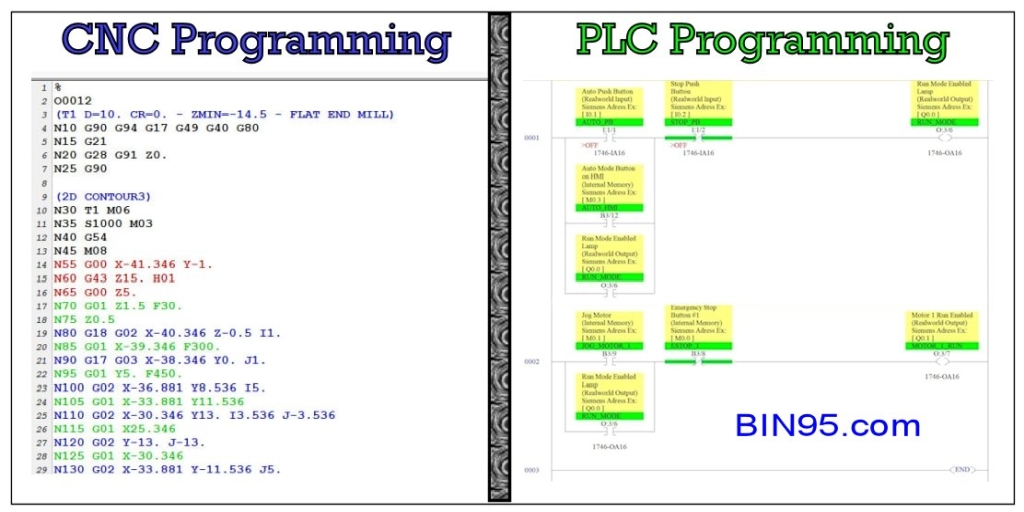
How CNC Programming Works: From Code to Creation
The fundamental concept behind CNC programming is translating a desired shape or component into a series of commands that a machine can understand. This process typically involves several stages:
-
Design (CAD): The journey begins with a Computer-Aided Design (CAD) software. Designers and engineers create a digital 3D model or 2D drawing of the part they wish to manufacture. This model defines the exact dimensions, geometry, and features of the final product. Popular CAD software includes AutoCAD, SolidWorks, Fusion 360, and SketchUp.
-
Toolpath Generation (CAM): Once the design is finalized, it’s imported into Computer-Aided Manufacturing (CAM) software. The CAM software analyzes the CAD model and, based on user-defined parameters (tool selection, cutting speeds, depth of cut, coolant usage, etc.), generates the optimal “toolpath.” This toolpath is essentially a series of movements the cutting tool will follow to remove material and shape the workpiece according to the design.
-
G-Code Generation: The CAM software then translates these toolpaths into a machine-readable language, most commonly G-code. G-code is a standardized programming language that consists of alphanumeric characters and codes. Each code represents a specific instruction for the CNC machine. For example:
- G00/G01: Rapid traverse and linear interpolation (straight-line movement).
- G02/G03: Circular interpolation (arc movements, clockwise and counter-clockwise).
- M03/M04: Spindle start, clockwise/counter-clockwise rotation.
- M05: Spindle stop.
- M06: Tool change.
- X, Y, Z: Coordinates for movement along the respective axes.
- F: Feed rate (speed at which the tool moves).
- S: Spindle speed.
-
Machine Operation: The generated G-code is then uploaded to the CNC machine’s controller. The controller reads the G-code line by line and sends electrical signals to the machine’s motors and actuators, precisely controlling every movement – the position of the cutting tool, its speed, spindle rotation, coolant flow, and more – to create the designed part.
Types of CNC Programming Languages and Methods
While G-code is the most prevalent, other programming methods and variations exist:
-
Manual Programming: This involves directly writing G-code line by line using a text editor or the machine’s onboard programming interface. It’s suitable for simpler parts or repetitive tasks where a CAM system might be overkill. It requires a deep understanding of G-code and the machine’s capabilities.
-
CAD/CAM Programming: As described above, this is the dominant method today. It leverages specialized software to automate the design and toolpath generation, significantly increasing efficiency and reducing errors.
-
Conversational Programming: Some CNC machines offer conversational interfaces that allow operators to input parameters in a more user-friendly, menu-driven format. The machine then internally generates the G-code. This is often found on simpler or more specialized machines.
-
M-Code (Miscellaneous Functions): Alongside G-code, M-codes are used for ancillary machine functions like coolant control, program stops, tool changes, and spindle activation.

The Pervasive Impact of CNC Programming Across Industries
The precision, repeatability, and efficiency offered by CNC programming have made it indispensable across a vast spectrum of industries. Its influence is felt from the microchip powering your smartphone to the wings of an airplane.
Manufacturing and Machining: The Traditional Domain
This is the most obvious arena for CNC programming.
- Automotive: CNC machines are used to create intricate engine parts, chassis components, molds for body panels, and precision tools for assembly lines. The demand for high tolerances and mass production makes CNC programming vital.
- Aerospace: The stringent safety and performance requirements of the aerospace industry demand the utmost precision. CNC machines are used to manufacture aircraft components, engine parts, and structural elements from high-strength alloys.
- Medical Devices: From surgical instruments to prosthetic limbs and implants, the medical field relies heavily on CNC machining for biocompatible materials and precise anatomical fits. Sterilization and material integrity are paramount, all facilitated by controlled CNC processes.
- Consumer Goods: Almost every manufactured good, from furniture and electronics to kitchenware and toys, involves components made using CNC technology. This includes the molds for plastics, the precise cutting of wood or metal, and the engraving of details.
Beyond Traditional Machining: Emerging Applications
CNC programming’s adaptability extends far beyond basic material removal:
- Woodworking: CNC routers are used for intricate furniture designs, custom cabinetry, signage, and architectural elements.
- Textiles and Apparel: While not always termed “CNC programming” in the traditional sense, automated cutting machines that follow digital patterns are a form of numerical control, optimizing fabric usage and precision in garment production.
- Signage and Display Manufacturing: CNC routers and laser cutters are used to create detailed signs, displays, and promotional materials from various materials like acrylic, wood, and metal.
- Art and Sculpture: Artists and sculptors utilize CNC machines to create complex forms and detailed pieces that would be challenging or impossible to achieve manually.
The Interplay of CNC Programming with Technology, Brand, and Money
Understanding CNC programming isn’t just about machines; it’s also about its broader implications in today’s interconnected world.
Tech: The Engine of Innovation
CNC programming is at the forefront of technological advancements:
- AI and Machine Learning: AI is increasingly being integrated into CAM software to optimize toolpaths, predict tool wear, and even automate the programming process itself. Machine learning algorithms can analyze historical data to improve efficiency and reduce cycle times.
- The Internet of Things (IoT) in Manufacturing: Connected CNC machines can transmit real-time performance data, allowing for predictive maintenance, remote monitoring, and integration into larger smart factory ecosystems. This data can inform programming adjustments for optimal performance.
- Advanced Materials: As new materials with unique properties emerge, CNC programming must adapt. Machining exotic alloys, composites, or advanced ceramics requires specialized tools, cutting strategies, and consequently, sophisticated G-code.
- Digital Twin Technology: Creating virtual replicas of CNC machines and their operations allows for simulation and testing of programming changes without risking actual production time or equipment. This speeds up the optimization process.
Brand: The Mark of Quality and Innovation
The quality and efficiency derived from CNC programming directly impact a brand’s reputation:
- Product Quality and Consistency: Brands that utilize CNC programming can consistently deliver high-quality products with tight tolerances. This reliability builds trust and strengthens brand perception. Inconsistent or poorly manufactured goods can quickly damage a brand’s reputation.
- Innovation and Customization: CNC technology enables brands to offer bespoke or highly customized products. The ability to rapidly prototype and produce unique items allows brands to differentiate themselves in competitive markets and cater to niche demands, fostering a perception of innovation and customer focus.
- Efficiency and Cost-Effectiveness: While initial investment in CNC technology can be significant, the long-term gains in efficiency, reduced waste, and lower labor costs contribute to better pricing and profitability, reinforcing a brand’s value proposition.
- Sustainable Manufacturing: Optimized toolpaths and reduced material waste through precise CNC programming contribute to more sustainable manufacturing practices, which is increasingly important for brand image and corporate social responsibility.
Money: The Financial Landscape of Automation
CNC programming has profound financial implications for businesses and individuals:
- Capital Investment and ROI: Implementing CNC technology requires a substantial upfront investment in machines, software, and training. Businesses need to carefully analyze the return on investment (ROI) based on increased production, reduced scrap, and labor savings.
- Skilled Workforce and Salaries: There is a high demand for skilled CNC programmers and operators. This scarcity drives competitive salaries for individuals with expertise in CAD/CAM software, G-code, and machine operation.
- Production Efficiency and Profitability: The ability to produce more parts faster, with fewer errors, directly translates to increased revenue and profitability. Reduced material waste also minimizes costs.
- On-Demand Manufacturing and Gig Economy: CNC services can be offered on a freelance or on-demand basis, creating new income streams for individuals with the necessary skills and equipment. This aligns with the rise of side hustles and online income opportunities.
- Global Competitiveness: Companies that embrace advanced CNC programming can produce goods more competitively, both domestically and internationally, impacting global supply chains and market dynamics.
The Future of CNC Programming: Intelligence and Accessibility
The evolution of CNC programming is not slowing down. We can anticipate further integration of AI for more autonomous operations, making complex tasks more accessible. The continued development of user-friendly software will lower the barrier to entry for smaller businesses and even hobbyists. As technology advances, CNC programming will remain a critical skill and a driving force behind the innovation and efficiency that shape our manufactured world. Whether you’re an aspiring engineer, a business owner looking to optimize production, or simply curious about how things are made, understanding “what CNC programming” is a valuable step into the future of industry.
aViewFromTheCave is a participant in the Amazon Services LLC Associates Program, an affiliate advertising program designed to provide a means for sites to earn advertising fees by advertising and linking to Amazon.com. Amazon, the Amazon logo, AmazonSupply, and the AmazonSupply logo are trademarks of Amazon.com, Inc. or its affiliates. As an Amazon Associate we earn affiliate commissions from qualifying purchases.