
Before the landmark year of 1984, the United States presented a complex and often contradictory landscape when it came to the legal drinking age. Unlike the unified 21-year-old minimum we know today, the nation was a patchwork of varying state laws, a vestige of a time when states held primary control over alcohol regulation. This fragmented approach led to a host of social, economic, and safety challenges, ultimately paving the way for federal intervention and the standardization of the drinking age. To understand the profound shift that occurred in 1984, we must first delve into the historical context that shaped America’s evolving relationship with alcohol and its young adults.
The journey to a national minimum drinking age is not merely a tale of legal reform; it’s a narrative intertwined with public health concerns, economic incentives, and evolving societal norms. It touches upon the very fabric of state autonomy versus federal oversight, and implicitly, it offers insights into how consumer behavior, brand strategies, and even early forms of data analysis played a role in shaping national policy. This period serves as a fascinating case study, not just in legislative history, but in understanding the interplay of diverse societal forces that led to a significant national consensus.
A Patchwork of Laws: The Pre-1984 Landscape
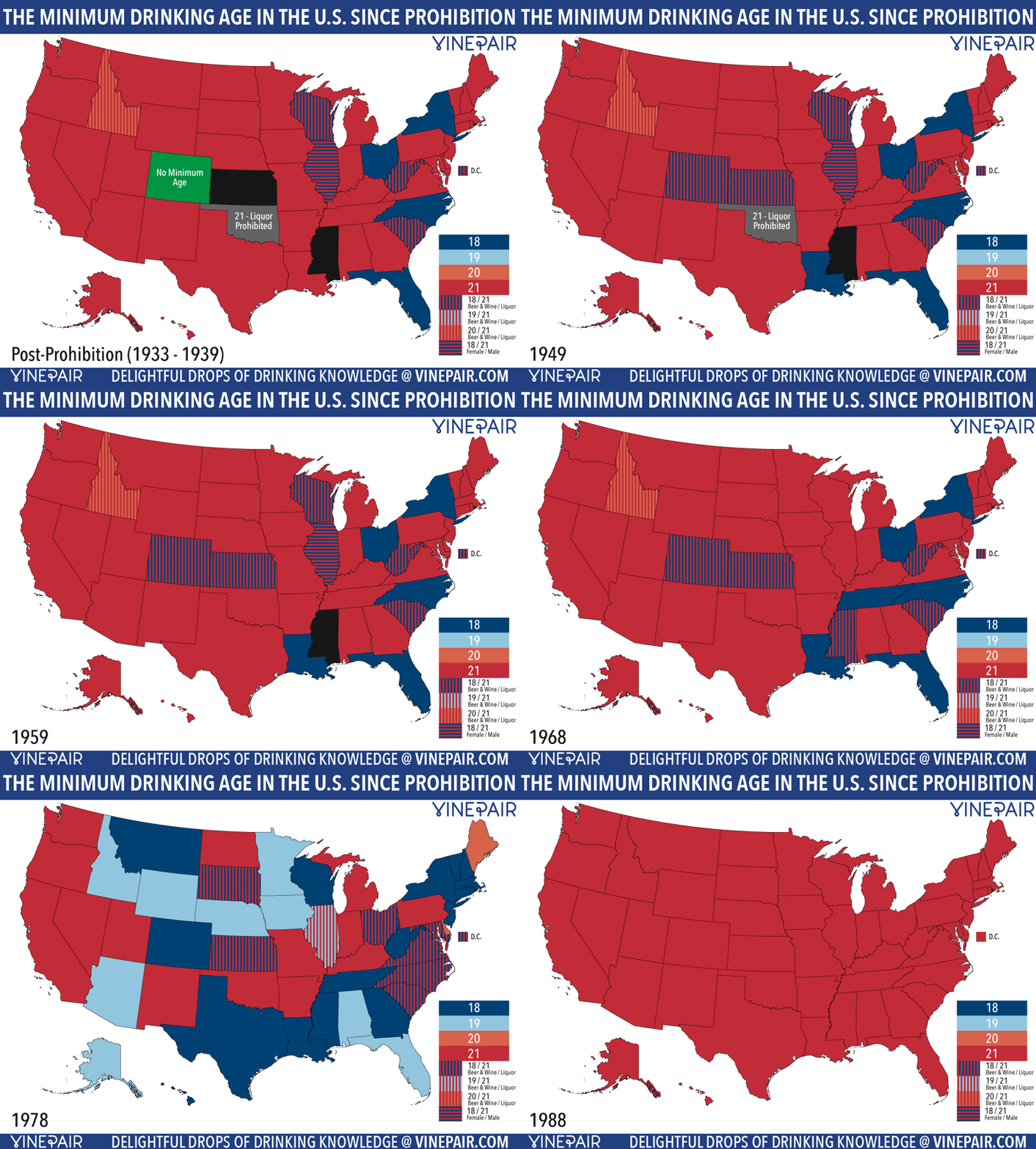
The era preceding 1984 was characterized by a lack of uniformity in alcohol laws across the United States. Following the repeal of Prohibition in 1933, the power to regulate alcohol sales largely reverted to individual states. This led to a diverse range of policies, with most states initially setting the drinking age at 21, echoing the traditional common law age of majority. However, this uniformity began to unravel in the latter half of the 20th century, particularly influenced by a significant constitutional amendment.
Post-Prohibition and the Vietnam Era Shift
For decades after Prohibition, the age of 21 remained the predominant legal drinking age across most of the U.S. This was seen as the age at which an individual gained full adult responsibilities, including the right to vote and enter into contracts. However, the social and political climate of the 1960s and 1970s brought about significant changes. The Vietnam War played a pivotal role in challenging the 21-year-old threshold. Young men, aged 18, were drafted and sent to fight for their country, yet they were legally prohibited from purchasing alcohol. This glaring inconsistency fueled the “Old Enough to Fight, Old Enough to Vote” movement, which successfully pushed for the 26th Amendment in 1971, lowering the national voting age to 18.
This amendment sparked a broader movement to lower the age of majority in general. Many states, responding to this sentiment, began to reduce their legal drinking ages to 18, 19, or 20, aligning it with the new voting age and other adult rights. Between 1970 and 1975, nearly half of the states lowered their drinking ages. This progressive shift was seen by many as a logical extension of granting full adult rights and responsibilities. From a brand perspective, alcohol companies saw a significant expansion of their potential market, leading to new marketing strategies targeting this younger adult demographic, albeit within the confines of state-specific regulations.
The States’ Rights Approach and Its Consequences
The consequence of this decentralized approach was a highly fragmented system. By the early 1980s, the legal drinking age varied significantly from state to state. Some states maintained 21, others dropped to 18, 19, or 20. This created what became known as “blood borders” or “booze borders.” Young people living in a state with a higher drinking age would simply drive to a neighboring state with a lower age to purchase and consume alcohol legally. This cross-border traffic was not merely an inconvenience; it had severe and tragic consequences.
The “blood borders” phenomenon led to a documented increase in drunk driving fatalities among young adults, as impaired drivers attempted to return home from states where they could legally drink. This put immense strain on law enforcement and public health systems, which, in the pre-digital era, lacked sophisticated technology for real-time data sharing across state lines regarding traffic incidents or alcohol-related offenses. The economic implications were also clear: states with lower drinking ages often saw an influx of revenue from alcohol sales and related hospitality, while their neighbors faced increased social costs without the corresponding financial benefit. This dynamic highlighted the inherent inefficiencies and dangers of a disunified regulatory framework, setting the stage for a dramatic federal intervention.
The Road to Uniformity: The National Minimum Drinking Age Act of 1984
The growing number of alcohol-related traffic fatalities among young people, particularly those stemming from the “blood border” phenomenon, became a pressing national concern in the early 1980s. Advocacy groups, most notably Mothers Against Drunk Driving (MADD), brought widespread public attention to the issue, galvanizing support for a national solution. It became increasingly clear that a state-by-state approach was insufficient to tackle a problem that transcended geographical boundaries.
The Problem of “Blood Borders” and Highway Fatalities
The varying drinking ages created a perverse incentive for young people to drive across state lines to consume alcohol. This often meant driving longer distances, sometimes under the influence, to return home. The result was a tragic spike in motor vehicle accidents, injuries, and fatalities involving young drivers, particularly in border regions. Data, though often manually compiled and less sophisticated than today’s tech-driven analytics, began to show a clear correlation between lower drinking ages in adjacent states and higher rates of drunk driving incidents. Public sentiment, fueled by the devastating personal stories shared by victims’ families, began to strongly favor a uniform drinking age of 21 across the nation.
Politicians, initially hesitant to infringe on states’ rights, faced mounting pressure. The debate wasn’t just about public safety; it was also about the perceived brand of America as a nation that valued its youth. Allowing a situation where young lives were disproportionately lost due to an easily preventable regulatory loophole was seen by many as a national failing. The fragmented legal system was effectively undermining public trust and creating a negative perception of national unity on a critical safety issue.
Federal Incentives and State Compliance
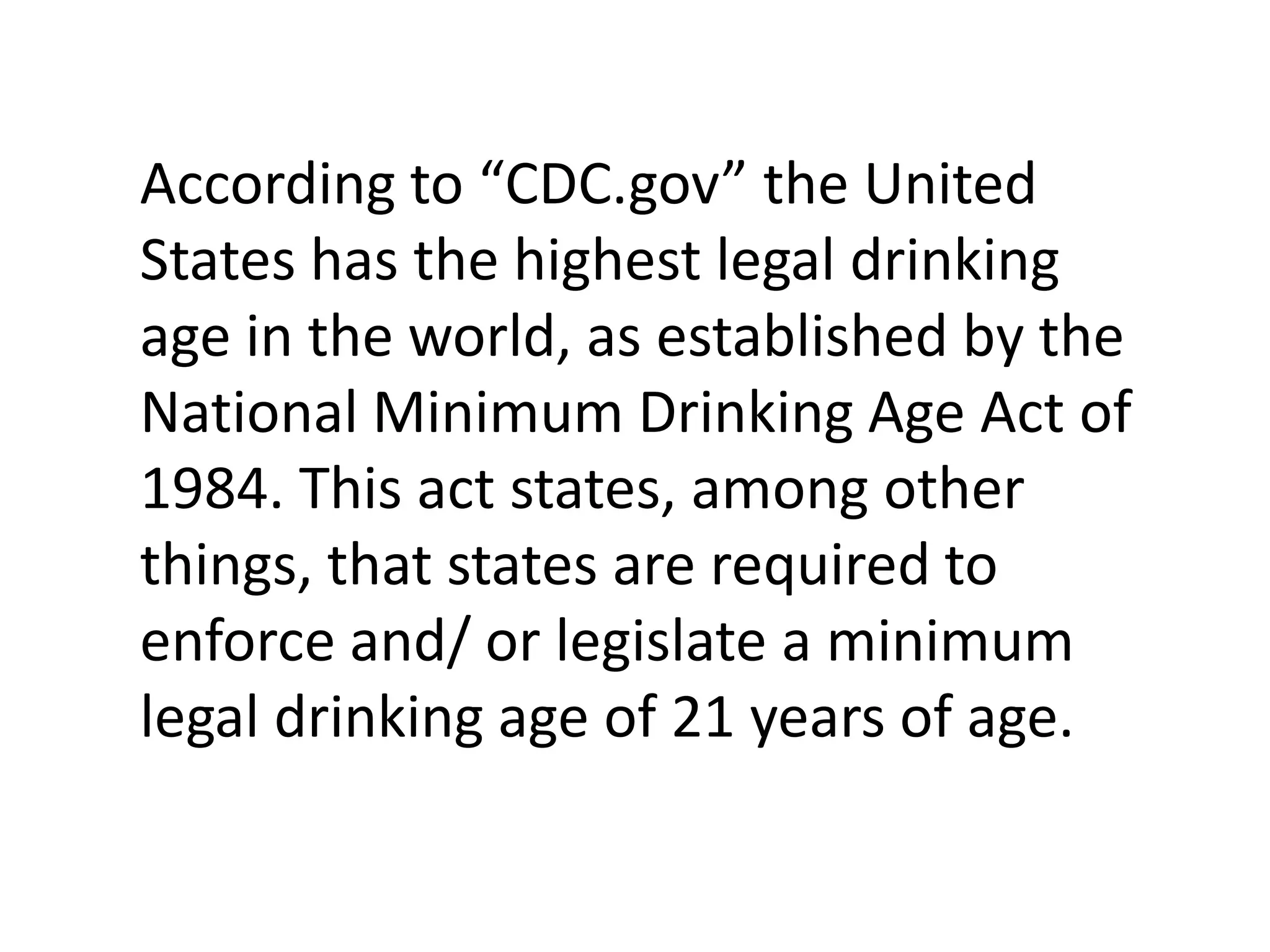
Given the constitutional principle of states’ rights in alcohol regulation, the federal government could not directly mandate a national drinking age. Instead, it employed a powerful fiscal leverage. Under the leadership of President Ronald Reagan, Congress passed the National Minimum Drinking Age Act of 1984. This act did not directly impose a 21-year-old drinking age on the states. Instead, it stipulated that any state failing to raise its minimum drinking age to 21 by October 1, 1986, would lose a portion (initially 5%, later 10%) of its federal highway funds.
This was a significant financial incentive that proved virtually irresistible for most states. Highway funds are a vital source of money for infrastructure projects, and the prospect of losing millions of dollars was enough to prompt compliance, even among states that had previously resisted. South Dakota, for example, challenged the constitutionality of this act, but the Supreme Court upheld it in South Dakota v. Dole (1987), affirming Congress’s power to attach conditions to federal spending for the general welfare.
Within a few years, all states had complied. By 1988, every state had raised its minimum drinking age to 21, effectively creating the national standard we know today. This act demonstrated a powerful instance of federal power, not through direct legislation, but through financial coercion, to achieve a national public health objective. It underscored how money can be a decisive tool in shaping policy, even in areas traditionally reserved for state control.

The Aftermath and Enduring Debates: Impact and Evolution
The implementation of the National Minimum Drinking Age Act of 1984 marked a pivotal moment in American public health and social policy. Its effects were immediate and far-reaching, transforming not only the legal landscape but also societal norms around alcohol consumption and the responsibilities of young adulthood.
Public Health and Safety Outcomes
The most significant and widely cited outcome of the 1984 Act was a dramatic reduction in alcohol-related traffic fatalities among young people. Studies by organizations like the National Highway Traffic Safety Administration (NHTSA) consistently showed a decline in drunken driving deaths involving drivers under 21. For instance, data indicates that the 21-year-old drinking age is credited with saving thousands of lives annually. This positive impact solidified the perception that the uniform drinking age was a successful public health intervention, reinforcing the idea that federal coordination, even through financial incentives, could yield substantial societal benefits.
Beyond traffic safety, the change also had broader public health implications. It contributed to a cultural shift towards greater awareness of responsible drinking and the dangers of underage alcohol consumption. While debates persist about the effectiveness of prohibition-style policies, the empirical evidence regarding reduced fatalities largely supports the efficacy of the 21-year-old minimum drinking age in its primary objective. The brand of “safe driving” and “responsible choices” gained significant traction, becoming an integral part of public education campaigns.
Economic Shifts and Market Adaptation
The shift to a national drinking age of 21 also had significant economic repercussions. For the alcohol industry, it meant a contraction of the immediate market for consumers aged 18-20. Alcohol brands had to adapt their marketing and sales strategies, focusing more explicitly on the 21+ demographic and emphasizing responsible consumption. This also led to increased investment in age verification technologies and training for retailers to avoid violations.
On the other hand, the reduction in alcohol-related accidents translated into substantial cost savings. Lower healthcare costs for accident victims, reduced property damage, and decreased strain on emergency services and the legal system represented significant economic benefits. For individuals, avoiding DUI charges meant saving thousands in fines, legal fees, increased insurance premiums, and potential career repercussions—a direct impact on personal money and future financial stability. The hospitality industry, particularly bars and clubs, also had to adjust their business models, with some establishments that previously catered to younger crowds needing to rebrand or refocus their offerings.
Modern Challenges and Technological Solutions
Despite its successes, the 21-year-old drinking age continues to face modern challenges, particularly in the digital age. Underage drinking persists, often facilitated by fake IDs or social procurement. However, technology is playing an increasingly crucial role in enforcement and prevention.
- Digital ID Verification: Advancements in scanner technology and digital identification apps make it harder to use fake IDs. Businesses can quickly verify age using sophisticated software that reads barcodes and cross-references data, enhancing compliance and reducing liability.
- Data Analytics and AI: Public health organizations and law enforcement now use advanced data analytics and Artificial Intelligence (AI) tools to track alcohol consumption patterns, identify high-risk areas, and predict trends in underage drinking. This allows for more targeted intervention strategies and resource allocation.
- Ride-Sharing Apps: Services like Uber and Lyft have inadvertently become a major tool in preventing drunk driving. The ease of access to a safe ride home has reduced the temptation for impaired individuals, including young adults, to get behind the wheel, significantly contributing to the spirit of the 1984 Act’s goals.
- Social Media and Awareness Campaigns: Social media platforms are now critical for both alcohol brands (for responsible marketing) and public health campaigns. Organizations can reach vast audiences with messages about responsible drinking, the dangers of underage consumption, and the financial and personal consequences of violations. Conversely, monitoring online activity can also provide insights into new trends in underage access.
- Digital Security and Privacy: The debate around age verification also touches upon digital security and privacy concerns, especially with the rise of digital identities and the potential for data breaches. Balancing effective enforcement with individual privacy is a growing challenge for policymakers and tech developers.
Beyond 1984: A Look at Contemporary Perspectives and Future Trends
While the 1984 Act successfully established a uniform drinking age, the debate surrounding it has never entirely ceased. Contemporary discussions often revolve around questions of individual liberty, international comparisons, and the evolving role of technology and money in shaping behavior and policy.
The “Maturity” Argument and International Comparisons
One of the most persistent arguments against the 21-year-old drinking age is the “maturity argument.” Critics point out the inconsistency that 18-year-olds can vote, serve in the military, sign contracts, and own firearms, yet are denied the right to purchase alcohol. They argue that if an individual is deemed mature enough for these significant responsibilities, they should also be entrusted with the right to drink responsibly. This argument often highlights international precedents, where many developed nations (e.g., in Europe) have legal drinking ages of 18 or 19, often coupled with stricter enforcement against public intoxication and a cultural emphasis on moderation rather than prohibition. These differing global brands of alcohol regulation offer a contrast to the American approach, prompting ongoing discussion.
The Digital Age and Alcohol Marketing Ethics
The proliferation of online platforms and social media presents new challenges for alcohol brands and regulators. Marketing, once confined to traditional media with clearer age gates, can now be inadvertently exposed to underage audiences through viral content, influencer marketing, or poorly targeted ads. This necessitates ethical considerations in digital advertising, employing sophisticated tech like age-gating, demographic targeting, and AI-driven content moderation to ensure compliance and prevent underage exposure. Companies are increasingly investing in money and resources to maintain a responsible corporate identity online, understanding that missteps can lead to significant reputational damage and legal penalties.
Financial Literacy and Responsibility at the Legal Drinking Age
For young adults reaching the legal drinking age today, the context extends beyond merely acquiring alcohol. It also intertwines with broader themes of financial literacy and personal responsibility. Understanding the money implications of alcohol consumption – from the cost of drinks to the financial penalties of irresponsible behavior (DUIs, public intoxication fines) – becomes part of their entry into full adulthood. Moreover, the economic landscape now includes services that promote responsible choices, such as ride-sharing, which cost money but prevent far greater financial and personal losses. Integrating education about the financial consequences of alcohol misuse into broader financial literacy programs can empower young adults to make more informed decisions as they navigate their newfound freedoms.
In conclusion, the journey from a fragmented legal drinking age before 1984 to the uniform 21-year-old standard was a complex interplay of social advocacy, public health concerns, and federal leverage. While the Act of 1984 achieved its primary goal of reducing youth drunk driving fatalities, the conversation surrounding alcohol and young adults continues to evolve. In an era dominated by rapid technological advancement, sophisticated brand strategies, and ever-present financial considerations, understanding this historical pivot point offers valuable lessons for how societies grapple with complex issues, adapt to changing circumstances, and strive for both individual liberty and collective well-being. The pre-1984 era serves as a stark reminder of the challenges posed by disunity, while the post-1984 landscape underscores the enduring impact of well-intentioned policy, continuously refined by new tools and perspectives.
aViewFromTheCave is a participant in the Amazon Services LLC Associates Program, an affiliate advertising program designed to provide a means for sites to earn advertising fees by advertising and linking to Amazon.com. Amazon, the Amazon logo, AmazonSupply, and the AmazonSupply logo are trademarks of Amazon.com, Inc. or its affiliates. As an Amazon Associate we earn affiliate commissions from qualifying purchases.