
In the modern landscape of personal finance, few line items in a household budget are as ubiquitous—or as frequently debated—as the Amazon Prime membership. What began in 2005 as a simple $79-per-year “all-you-can-eat” express shipping service has morphed into a sprawling financial ecosystem. Today, determining “how much is Amazon Prime” requires looking beyond the sticker price and examining the membership through the lens of return on investment (ROI), opportunity cost, and consumer behavior.
For the disciplined budgeter, Amazon Prime can be a powerful tool for cost-cutting and efficiency. For the impulsive spender, it can serve as a frictionless conduit for lifestyle creep. This article provides a deep dive into the current pricing tiers, the financial value of its constituent parts, and a strategic framework to decide if the membership fee earns its keep in your portfolio.

1. Understanding the Current Pricing Tiers and Entry Points
Amazon has incrementally raised the price of its flagship service over the last two decades, reflecting both inflation and the massive expansion of its digital library. To evaluate the cost, one must first identify which tier fits their specific demographic and financial situation.
The Standard Consumer Rates
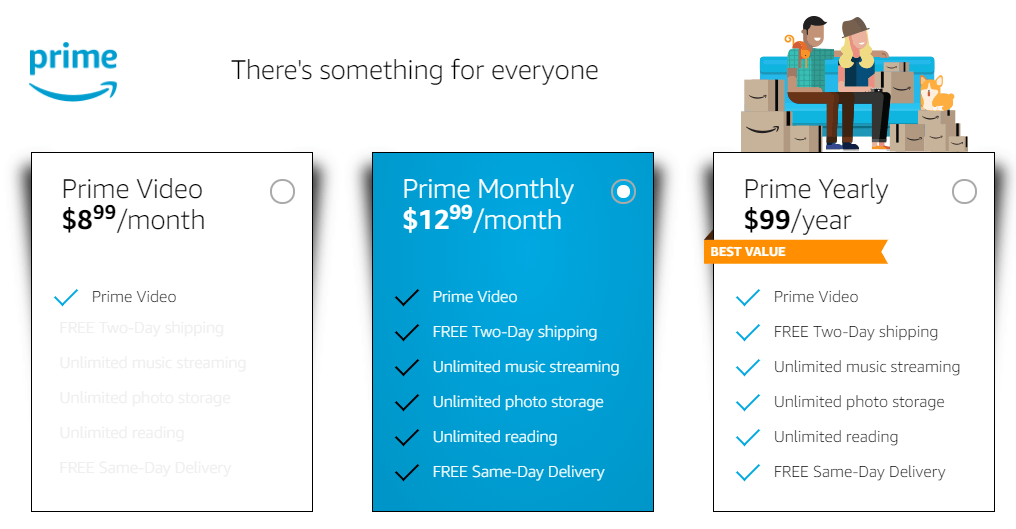
As of 2024, the standard Amazon Prime membership is priced at $14.99 per month or $139 per year. From a pure cash-flow perspective, the annual option is the superior financial choice, costing approximately $11.58 per month—a savings of about $41 annually compared to the month-to-month commitment. For those with stable liquid assets, the annual payment represents a 23% “discount” on the service, providing an immediate internal rate of return.
Targeted Discounts: Prime Student and Prime Access
Amazon employs a tiered pricing strategy to capture different market segments. Prime Student is currently priced at $7.49 per month or $69 per year. This is a high-value entry point for young adults looking to minimize expenses while gaining access to academic tools and entertainment.
More significantly, from a social finance perspective, is Prime Access. Designed for recipients of government assistance (such as SNAP, WIC, or TANF), this tier costs $6.99 per month. For lower-income households, this reduced fee can be offset quickly through the access it provides to lower-cost bulk goods and the elimination of transportation costs associated with physical grocery shopping.
The Hidden Cost of “Add-on” Channels
While the base fee is transparent, the financial trap for many consumers lies in “Prime Video Channels” and “Kindle Unlimited.” These are not included in the standard membership. A professional financial audit of one’s Amazon account often reveals “subscription stacking,” where a $139 annual fee ballooning into $400 or $500 due to recurring monthly charges for premium networks like Paramount+ or Max integrated through the Prime interface.
2. Calculating the ROI: Assigning Monetary Value to Prime Perks
To determine if the $139 annual fee is a sound investment, a consumer must unbundle the services and compare them to the market rate of standalone competitors. If you are already paying for these services elsewhere, consolidating them into Prime can yield significant annual savings.
Logistics and Shipping Economics
The core value proposition remains “free” shipping. If we estimate the average cost of ground shipping at $7 to $10 per order, a member needs to place roughly 14 to 20 orders per year to break even on the membership fee through shipping costs alone. For households that have transitioned to an “online-first” procurement model for consumables, this break-even point is often reached within the first quarter.
The Entertainment Offset: Video and Music
Prime Video and Amazon Music Prime are the two largest contributors to the membership’s value proposition. A standalone streaming service like Netflix or Hulu costs between $10 and $20 per month. If a household cancels a $15.99/month Netflix subscription in favor of Prime Video, the membership has paid for itself twice over before a single package is even shipped. Similarly, for casual listeners, the inclusion of 100 million songs (ad-supported or in shuffle mode) can eliminate the need for a $10.99/month Spotify subscription.
Digital Storage and Security Assets
Amazon Photos offers unlimited, full-resolution photo storage for members. Comparable services, such as Google One or Apple’s iCloud+, charge monthly fees for high-capacity storage (typically $1.99 to $9.99 depending on the tier). By migrating a digital archive to Amazon Photos, a user can reclaim roughly $24 to $120 per year in their digital budget, effectively neutralizing the cost of the Prime membership.
3. Strategic Financial Tools: The Prime Visa and Cashback Ecosystem
For those focused on maximizing every dollar, the Amazon Prime membership acts as a gateway to high-yield financial products. The most prominent among these is the Prime Visa, issued by Chase.
The 5% Cashback Strategy
The Prime Visa offers 5% back on all Amazon.com and Whole Foods Market purchases for Prime members (non-members typically receive only 3%). For a family that spends $500 a month on groceries at Whole Foods and household essentials on Amazon, that 5% back totals $300 per year. In this scenario, the rewards not only cover the $139 membership fee but also provide a $161 “profit” back into the household budget.
Financing vs. Rewards
The card also offers “Equal Monthly Payments” on larger purchases, allowing members to finance electronics or furniture at 0% APR for 6 to 18 months. While financial purists often advise against debt, a 0% interest offer allows a consumer to keep their cash in a High-Yield Savings Account (HYSA) earning 4-5% interest while slowly paying down the balance. This “arbitrage” strategy is only available to those who maintain a Prime membership.
Amazon Pharmacy and RxPass
One of the most overlooked financial benefits is the Amazon Pharmacy RxPass. For an additional $5 per month, members can get all their eligible generic medications delivered for free. For individuals managing multiple chronic conditions, this can replace co-pays that often total hundreds of dollars per month, representing a massive net gain in personal disposable income.
4. The “Prime Tax”: Psychological Pitfalls and Overspending
While the mathematical ROI of Prime can be impressive, any financial analysis is incomplete without accounting for consumer psychology. The “Prime Tax” refers to the tendency of members to spend more money simply because the friction of the transaction has been removed.
Frictionless Spending and Impulse Buys
The “Buy Now” button and one-click ordering are designed to bypass the prefrontal cortex—the part of the brain responsible for rational financial planning. Studies have consistently shown that Prime members spend significantly more per year on Amazon than non-members (often cited as more than double). The perceived “free” shipping often lures consumers into buying small, unnecessary items they would have ignored if they had to pay for delivery or drive to a store.
The Opportunity Cost of Not Comparison Shopping
The convenience of Prime creates a “walled garden” effect. Members often assume Amazon has the lowest price and fail to check competitors like Walmart, Target, or specialized retailers. Over a year, paying a 5-10% “convenience premium” on items because they are available for next-day Prime delivery can erode the savings gained from the membership fee itself.
Subscription Inertia
Amazon Prime is a “set-it-and-forget-it” expense. Many households continue to pay the annual fee despite a shift in their lifestyle—perhaps they moved to a city where local shops are more convenient, or they no longer use the streaming service. From a wealth-building perspective, recurring subscriptions are “budget leaks” that must be plugged if the utility of the service drops below its cost.
5. Decision Matrix: Is Prime a Sound Financial Asset for You?
To conclude whether the cost of Amazon Prime is justified, you must perform a personalized audit. The membership is not a universal “win” or “loss”; it is a variable that depends on your spending volume and service utilization.
You should keep (or get) Prime if:
- You spend more than $3,000 annually on Amazon/Whole Foods: The 5% cashback via the Prime Visa will fully subsidize the membership.
- You utilize at least two digital services: If you use Prime Video and Amazon Photos, you are saving roughly $200/year compared to standalone alternatives.
- You lack reliable transportation: The cost of gas, vehicle wear-and-tear, and time spent commuting to physical stores often exceeds the $139 annual fee.

You should cancel Prime if:
- You are prone to “boredom shopping”: If the ease of Prime leads to more than two impulse purchases a month, the membership is a net negative for your net worth.
- You rarely use the streaming library: If you only care about shipping, you can often get free shipping on orders over $35 without a membership, provided you are willing to wait 3–5 days for delivery.
- You are a minimalist consumer: If you order fewer than 15 times a year and don’t use the digital perks, the “per-order” cost of your membership is too high to justify.
In final analysis, the cost of an Amazon Prime membership is a deceptive figure. While the bank statement shows $139, the true financial impact is a combination of subscription offsets, cashback rewards, and the potential for increased consumption. By treating Prime as a financial tool rather than a default lifestyle choice, savvy consumers can ensure they are on the profitable side of the Amazon ecosystem.
aViewFromTheCave is a participant in the Amazon Services LLC Associates Program, an affiliate advertising program designed to provide a means for sites to earn advertising fees by advertising and linking to Amazon.com. Amazon, the Amazon logo, AmazonSupply, and the AmazonSupply logo are trademarks of Amazon.com, Inc. or its affiliates. As an Amazon Associate we earn affiliate commissions from qualifying purchases.