
The phrase “solve for y” is a cornerstone of algebra, a fundamental skill learned in early mathematics education. Yet, its relevance extends far beyond the classroom, permeating the very fabric of the digital world we inhabit. From the algorithms that power search engines to the complex financial modeling that drives markets, the ability to isolate and determine the value of an unknown variable like ‘y’ is a crucial concept. This article delves into the art and science of solving for ‘y’, exploring its foundational principles and its pervasive influence in various technological applications. We’ll break down the systematic approach to tackling these equations and highlight how these seemingly simple mathematical maneuvers are the bedrock of sophisticated digital systems.
The Fundamental Principles of Isolating a Variable
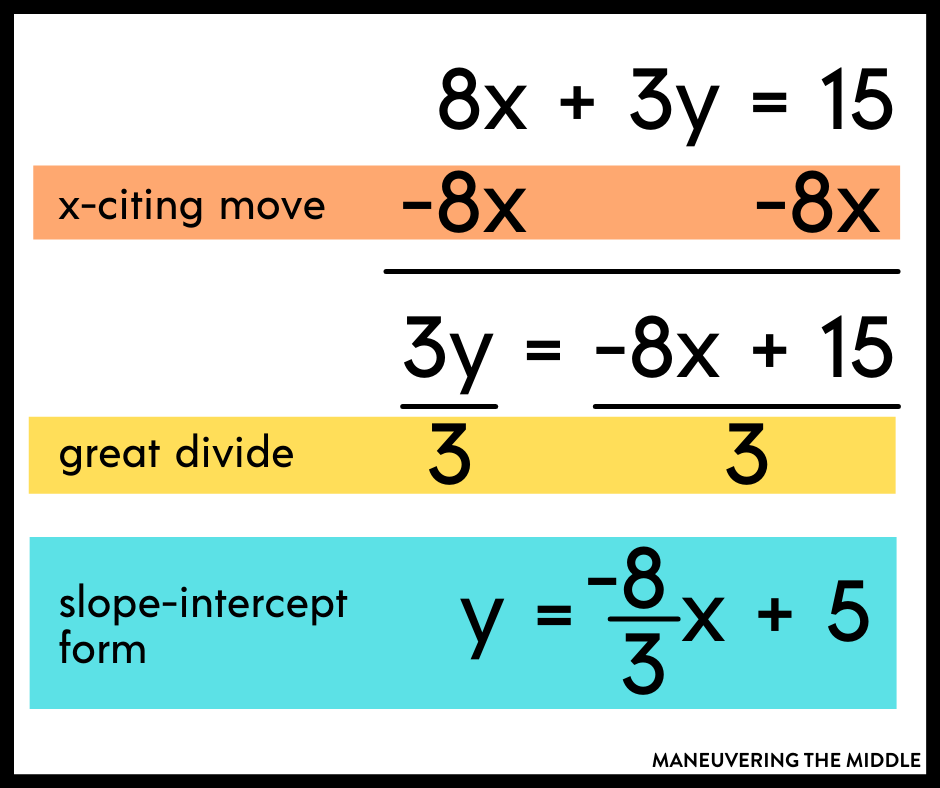
At its core, solving for ‘y’ involves a systematic process of isolating that variable on one side of an equation. This is achieved by applying inverse operations to both sides of the equation, maintaining the equality. The key is to perform operations that cancel out the terms surrounding ‘y’ until it stands alone.
Understanding Inverse Operations
Every mathematical operation has an inverse that undoes it. This principle is the engine that drives algebraic manipulation.
-
Addition and Subtraction: These are inverse operations. If a number is added to ‘y’, you subtract it from both sides to isolate ‘y’. Conversely, if a number is subtracted from ‘y’, you add it to both sides. For example, in the equation $y + 5 = 10$, to isolate ‘y’, we subtract 5 from both sides: $(y + 5) – 5 = 10 – 5$, which simplifies to $y = 5$.
-
Multiplication and Division: These are also inverse operations. If ‘y’ is multiplied by a number, you divide both sides by that number. If ‘y’ is divided by a number, you multiply both sides by that number. Consider the equation $2y = 12$. To solve for ‘y’, we divide both sides by 2: $(2y) / 2 = 12 / 2$, resulting in $y = 6$.
-
Exponents and Roots: For equations involving exponents, the inverse operation is taking the root. If ‘y’ is squared ($y^2$), you take the square root of both sides. If ‘y’ is cubed ($y^3$), you take the cube root, and so on. For instance, in $y^2 = 25$, taking the square root of both sides gives us $y = sqrt{25}$, which results in $y = 5$ (and also $y = -5$, though in many technological contexts, we might be concerned with a principal or positive root).
The Order of Operations (PEMDAS/BODMAS)
When equations become more complex, involving multiple operations, the order in which you perform these inverse operations becomes critical. The order of operations, often remembered by acronyms like PEMDAS (Parentheses, Exponents, Multiplication and Division, Addition and Subtraction) or BODMAS (Brackets, Orders, Division and Multiplication, Addition and Subtraction), dictates the standard sequence for evaluating expressions. When solving for a variable, we often reverse this order to undo the operations performed on the variable.
This means that addition and subtraction are typically addressed before multiplication and division, and exponents are handled before their inverse (roots) are applied. This systematic approach ensures that we correctly unravel the equation to reveal the value of ‘y’.
Tackling Multi-Step Equations and Beyond
Many real-world scenarios present equations that require more than a single step to solve for ‘y’. These multi-step equations, while appearing more daunting, are simply extensions of the fundamental principles already discussed.
Combining Like Terms and Distributive Property
Before isolating ‘y’, it’s often necessary to simplify both sides of the equation. This can involve combining ‘like terms’ – terms that have the same variable raised to the same power. For example, in $3y + 2y + 5 = 20$, we first combine $3y$ and $2y$ to get $5y$. The equation then becomes $5y + 5 = 20$.
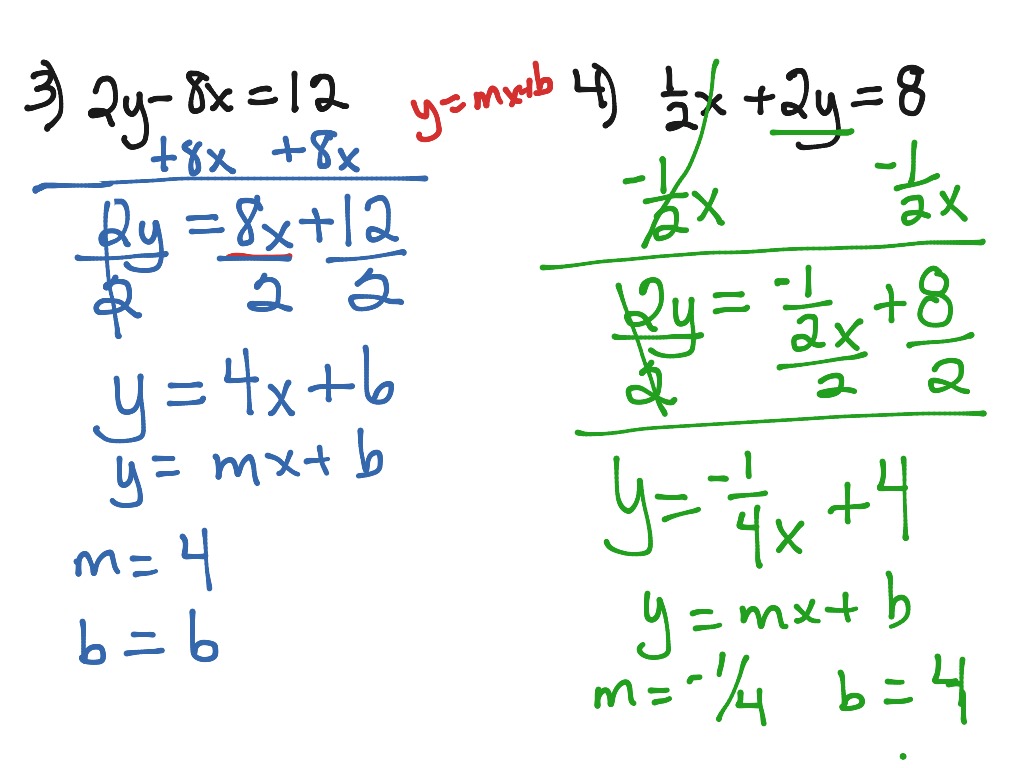
The distributive property is another powerful tool for simplification. If you encounter an expression like $2(y + 3) = 10$, you first distribute the 2 to both terms inside the parentheses: $2y + 23 = 10$, which simplifies to $2y + 6 = 10$. From here, you can proceed with the standard inverse operations to solve for ‘y’.
Equations with Variables on Both Sides
A common challenge in algebra is when the variable ‘y’ appears on both sides of the equation. For instance, consider $5y – 3 = 2y + 9$. The strategy here is to consolidate all terms containing ‘y’ onto one side and all constant terms onto the other. We can achieve this by subtracting $2y$ from both sides: $(5y – 3) – 2y = (2y + 9) – 2y$, which simplifies to $3y – 3 = 9$. Subsequently, we add 3 to both sides: $3y – 3 + 3 = 9 + 3$, leading to $3y = 12$. Finally, dividing by 3 yields $y = 4$.
Introduction to Inequalities
While this article focuses on solving equations, it’s worth noting that the principles of isolating a variable extend to inequalities as well. Instead of an equals sign (=), inequalities use symbols like < (less than), > (greater than), ≤ (less than or equal to), and ≥ (greater than or equal to). The process of solving for ‘y’ in an inequality is largely the same, with one crucial exception: if you multiply or divide both sides of an inequality by a negative number, you must reverse the direction of the inequality sign.

The Role of “Y” in Computational Thinking and Programming
The abstract concept of solving for ‘y’ is deeply embedded in the world of computing. Variables, represented by letters like ‘x’, ‘y’, or ‘z’, are fundamental building blocks in programming languages. When we “solve for y” in a program, we’re often referring to the process of calculating a value for a variable based on a given formula or set of conditions.
Variables and Data Types in Programming
In programming, variables are symbolic names given to data storage locations. These variables can hold various types of data, including numbers (integers, floating-point numbers), text (strings), and boolean values (true/false). When we declare a variable like y in a programming language (e.g., Python: y = 10), we are assigning it a specific value. However, in more complex programs, the value of y might be determined through calculations, user input, or data retrieved from external sources.
Algorithmic Problem Solving
Algorithms are sets of step-by-step instructions designed to perform a specific task or solve a particular problem. Many algorithms involve manipulating variables, including finding the value of an unknown. For example, in a physics simulation, you might have an equation to calculate the trajectory of a projectile, where ‘y’ represents the vertical position at a given time. The program would then “solve for y” repeatedly as time progresses, updating the simulation’s state.
Debugging and Error Handling
The process of debugging, or identifying and fixing errors in code, often involves tracing the values of variables. If a program is producing unexpected results, a developer might need to “solve for y” at various points in the execution to understand how its value is being calculated and whether it deviates from the intended outcome. This mirrors the diagnostic approach used in solving algebraic equations to pinpoint where an error might have occurred.
The Foundation of Complex Systems
From machine learning models that predict outcomes to graphics rendering engines that create visual experiences, the ability to perform rapid and accurate calculations involving variables is paramount. The principles of solving for ‘y’ provide the logical foundation for these intricate computational processes. Even when a programmer doesn’t explicitly write “solve for y” in their code, the underlying operations they employ are based on the same mathematical rules that govern algebraic manipulation.
Practical Applications of Solving for “Y” in Technology
The abstract exercise of isolating ‘y’ has tangible and far-reaching implications across various technological domains. Its principles are not confined to academic exercises but are actively employed in creating, optimizing, and troubleshooting the digital tools we use daily.
Data Analysis and Visualization
In data science, ‘y’ often represents the dependent variable – the outcome or phenomenon we are trying to understand or predict. When analyzing datasets, researchers and analysts use statistical models and equations to find relationships between different variables. For instance, in a linear regression model, the equation $y = mx + b$ is used, where ‘y’ is the predicted value, ‘x’ is the independent variable, ‘m’ is the slope, and ‘b’ is the y-intercept. The process of fitting the model involves “solving for” the optimal values of ‘m’ and ‘b’ that best describe the data, allowing for predictions and visualizations of trends.
Financial Modeling and Algorithmic Trading
The world of finance relies heavily on mathematical models. In algorithmic trading, complex algorithms constantly monitor market conditions and execute trades based on predefined rules. These rules often involve equations where ‘y’ might represent a stock price, an indicator value, or a profit margin. The algorithms are designed to “solve for y” in real-time to make instantaneous trading decisions, aiming to maximize returns or minimize risks. Similarly, in personal finance applications, calculating loan interest, mortgage payments, or investment growth often involves solving algebraic equations where the unknown variable is crucial for understanding financial outcomes.
Game Development and Simulation
Creating realistic and engaging virtual environments requires extensive use of mathematical principles. In game development, equations are used to model physics, motion, and interactions between objects. For example, to calculate the trajectory of a projectile in a game, the engine will solve equations of motion where ‘y’ represents the vertical position at any given time, taking into account gravity, initial velocity, and air resistance. This continuous calculation allows for dynamic and believable gameplay. Simulations, whether for scientific research, engineering design, or training purposes, also rely on these principles to model complex systems and predict their behavior.
User Interface Design and Responsiveness
Even in seemingly simpler aspects of technology, like user interface (UI) design, the ability to dynamically adjust elements is rooted in algebraic concepts. Responsive web design, for instance, ensures that websites adapt to different screen sizes. This often involves calculations to determine element positioning, sizing, and spacing based on the available viewport. While not always explicitly framed as “solving for y,” the underlying logic of adjusting parameters to fit constraints is a direct application of mathematical problem-solving.
In conclusion, the humble act of “solving for y” is far more than just an academic exercise. It is a fundamental skill that underpins the logic, functionality, and innovation of the digital age. By mastering these algebraic principles, we gain a deeper appreciation for the complex systems that shape our technological landscape and equip ourselves with the tools to understand and contribute to its future evolution.
aViewFromTheCave is a participant in the Amazon Services LLC Associates Program, an affiliate advertising program designed to provide a means for sites to earn advertising fees by advertising and linking to Amazon.com. Amazon, the Amazon logo, AmazonSupply, and the AmazonSupply logo are trademarks of Amazon.com, Inc. or its affiliates. As an Amazon Associate we earn affiliate commissions from qualifying purchases.