
In the world of finance, percentages are the primary language. Whether you are calculating the return on a stock market investment, determining the interest rate on a high-yield savings account, or figuring out the profit margin for your side hustle, understanding how to calculate percentages is not just a mathematical necessity—it is a foundational pillar of financial literacy.
To the uninitiated, percentages can seem like abstract figures. However, in the context of money, they represent the velocity of your wealth. Knowing how to figure the percentage of a number allows you to strip away the noise of raw data and see the actual performance of your capital. This guide explores the essential methods for calculating percentages and applies them across the spectrum of personal finance, investing, and business management.

1. The Core Formulas: Transforming Numbers into Financial Insights
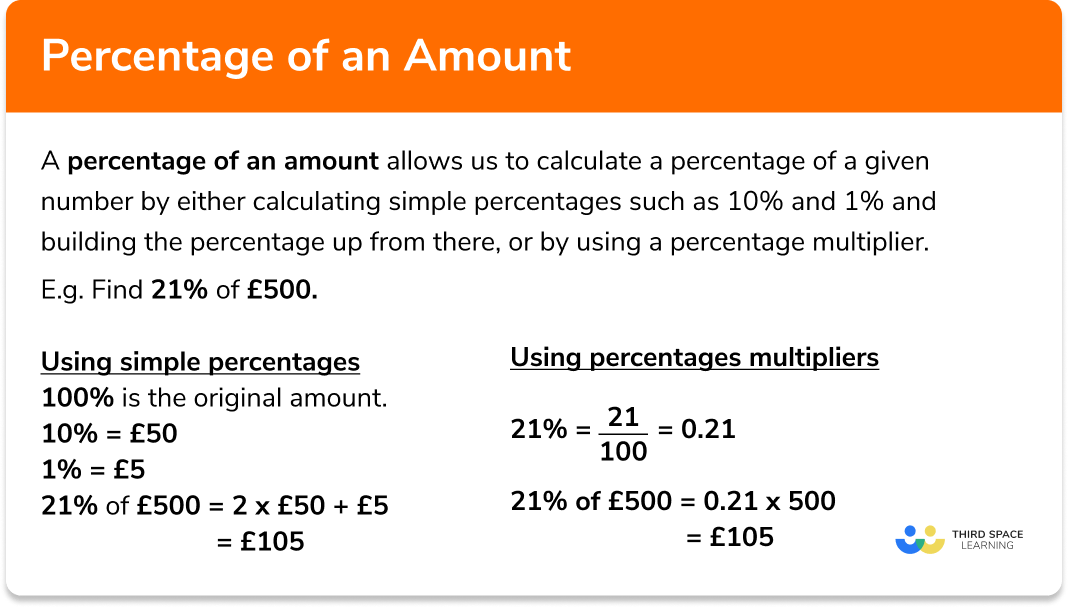
Before diving into complex financial strategies, one must master the basic mechanics of percentage calculation. In a financial context, a percentage represents a “part” of a “whole” expressed in hundredths.
The Basic Percentage Formula
To find the percentage of a number, the simplest formula is:
Result = (Percentage / 100) × Total Amount
For example, if you want to set aside 15% of a $5,000 monthly paycheck for retirement, you would calculate:
(15 / 100) × 5,000 = 0.15 × 5,000 = $750.
Calculating Percentage Increase and Decrease
In investing, you rarely care about the absolute number; you care about the change. To calculate the percentage growth of an asset, use the following formula:
((New Value – Old Value) / Old Value) × 100
If you bought a share of a tech company at $150 and it is now worth $180:
(($180 – $150) / $150) × 100 = (30 / 150) × 100 = 20%.
Understanding this allows you to compare the performance of different assets regardless of their starting price.
Mental Math for Financial Decisions
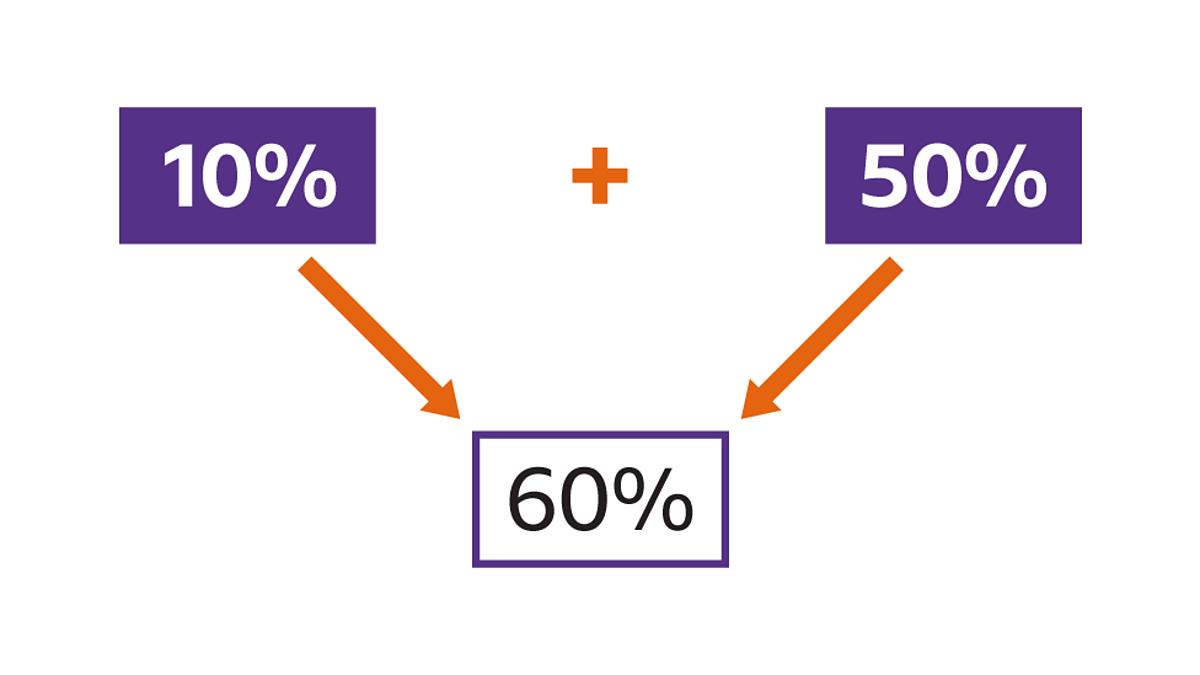
In fast-paced business environments, you may not always have a calculator. A professional tip is the “10% rule.” To find 10% of any number, simply move the decimal point one place to the left. Once you have 10%, you can easily find 5% (half of 10%) or 20% (double 10%). This is invaluable when calculating tips, discounts, or immediate commission cuts.
2. Percentages in Personal Finance and Budgeting
Budgeting is essentially the art of dividing 100% of your income into various “buckets.” Without the ability to figure percentages, a budget is merely a list of expenses rather than a strategic financial plan.
The 50/30/20 Rule
One of the most popular frameworks in personal finance is the 50/30/20 rule. This suggests that:
- 50% of your income should go to “Needs” (housing, utilities, groceries).
- 30% should go to “Wants” (lifestyle, dining out, hobbies).
- 20% should go to “Financial Goals” (debt repayment, savings, investments).
To apply this, you must be able to take your net income and calculate these specific percentages. If your net income is $6,200, knowing that your “Wants” bucket is $1,860 (30%) helps prevent the lifestyle creep that often sabotages long-term wealth.
Understanding Interest Rates: APR vs. APY
When dealing with debt or savings, percentages take the form of interest rates. The Annual Percentage Rate (APR) represents the simple interest charged on a loan, while the Annual Percentage Yield (APY) accounts for compound interest.
Understanding how to calculate the impact of a 1% difference in a mortgage rate can save you tens of thousands of dollars over thirty years. On a $400,000 loan, the difference between a 6% and 7% interest rate is not just “one percent”—it is a significant increase in the total interest paid over the life of the loan.
Tax Brackets and Effective Tax Rates
Many people mistakenly believe that moving into a higher tax bracket means all their income is taxed at that higher percentage. By understanding how to calculate percentages within a progressive tax system, you can determine your Effective Tax Rate—the actual percentage of your total income that goes to the government. This is calculated by dividing your total tax paid by your total taxable income.
3. Mastering Percentages for Investing and Wealth Building
For investors, percentages are the ultimate scorecard. They allow for an apples-to-apples comparison between a high-dividend stock, a rental property, and a cryptocurrency asset.
Calculating Return on Investment (ROI)
ROI is the most common metric in the financial world. It tells you how much profit or loss you’ve made on an investment relative to its cost.
ROI = (Net Profit / Cost of Investment) × 100
If you flip a house and make a $50,000 profit on a $250,000 investment, your ROI is 20%. If you make the same $50,000 profit on a $500,000 investment, your ROI is only 10%. The percentage tells you the efficiency of your capital.
Dividend Yields and Passive Income
For income-focused investors, the dividend yield is a crucial percentage. It is calculated by taking the annual dividend per share and dividing it by the current share price.
If a stock pays $2.00 in annual dividends and costs $50.00, the yield is 4%. By calculating this percentage, you can determine if the income generated justifies the risk of holding the equity compared to a risk-free Treasury bond.
Asset Allocation and Rebalancing
A sophisticated portfolio is built on percentages, not dollar amounts. An investor might decide on an allocation of 70% stocks and 30% bonds. Over time, if stocks perform well, they might grow to represent 80% of the portfolio. To “rebalance,” the investor must calculate the percentage deviation and sell enough stocks to return to the original 70/30 ratio. This disciplined approach ensures you are “buying low and selling high” automatically.
4. Business Finance: Margins, Markups, and Scaling
In business, percentages determine whether a company is thriving or slowly bleeding capital. Entrepreneurs must move beyond “gross revenue” and focus on percentage-based metrics.
Gross and Net Profit Margins
The health of a business is often measured by its margins.
- Gross Profit Margin: ((Revenue – Cost of Goods Sold) / Revenue) × 100.
- Net Profit Margin: (Net Income / Revenue) × 100.
A business making $1 million in revenue with a 5% net margin is arguably in a more precarious position than a business making $500,000 with a 25% margin. The latter has more “breathing room” to handle economic downturns.
Markup vs. Margin: A Common Financial Pitfall
Many new business owners confuse markup with margin. If you buy a product for $80 and sell it for $100, your markup is 25% ($20 is 25% of $80). However, your profit margin is only 20% ($20 is 20% of the $100 selling price). Miscalculating this percentage can lead to pricing errors that erase your profitability.
Scaling and Year-over-Year (YoY) Growth
When seeking investors or tracking a side hustle’s progress, YoY growth percentages are standard. This involves comparing the current period’s performance to the same period in the previous year. If your online store made $10,000 in July 2023 and $15,000 in July 2024, you have a 50% YoY growth rate. This percentage is a powerful indicator of market traction and future potential.
5. Modern Financial Tools for Percentage Calculations
While understanding the manual formulas is vital for financial intuition, the modern professional utilizes digital tools to ensure accuracy and speed in complex scenarios.
Using Spreadsheets (Excel and Google Sheets)
Excel is the gold standard for financial analysis. To figure the percentage of a number in a spreadsheet, you don’t even need to multiply by 100 if you use the “Percentage” format.
Simply use the formula =A1/B1 and click the % button.
For more complex tasks, such as calculating the percentage impact of a variable (like an interest rate hike) on a loan repayment, the PMT function combined with percentage cell references is indispensable.
Financial Calculators and Apps
For real estate investors, apps like BiggerPockets or specialized CAP rate calculators use percentages to determine the viability of a property. These tools automate the “One Percent Rule”—the idea that a rental property should gross 1% of its purchase price in monthly rent—allowing for rapid screening of potential deals.
Automation in Online Income
For those generating income through digital platforms, dashboards often provide “Conversion Rates.” This is the percentage of visitors who take a specific action (like buying a product). If 1,000 people visit your site and 20 buy something, your conversion rate is 2%. By focusing on increasing this percentage through A/B testing rather than just increasing traffic, you can exponentially grow your income without increasing your marketing spend.
Conclusion: The Percentage Mindset
Figuring the percentage of a number is more than a schoolroom exercise; it is the fundamental logic of the financial world. It allows you to see the “why” behind the “what” in your bank account. Whether you are optimizing your personal budget, evaluating a complex investment portfolio, or pricing a new product in your business, the ability to think in percentages provides clarity and control. By mastering these calculations and utilizing the right tools, you move from being a passive observer of your finances to an active, strategic manager of your wealth.
aViewFromTheCave is a participant in the Amazon Services LLC Associates Program, an affiliate advertising program designed to provide a means for sites to earn advertising fees by advertising and linking to Amazon.com. Amazon, the Amazon logo, AmazonSupply, and the AmazonSupply logo are trademarks of Amazon.com, Inc. or its affiliates. As an Amazon Associate we earn affiliate commissions from qualifying purchases.