
In the world of entrepreneurship, a business plan is often mistaken for a mere creative exercise or a formal requirement for a bank loan. However, from a financial perspective, a business plan is the architectural blueprint for wealth creation. It is the document that bridges the gap between a conceptual idea and a profitable reality. Drawing up a business plan requires a meticulous focus on fiscal viability, capital allocation, and risk mitigation.
Whether you are launching a side hustle or scaling a major corporate venture, the “money” aspect of your plan dictates your survival. This guide explores the essential components of a business plan through the lens of business finance and investment strategy, ensuring that your roadmap is not just visionary, but economically sound.

Phase One: The Economic Foundation and Market Valuation
Before a single dollar is spent, a founder must understand the economic landscape of their chosen industry. This section of the business plan is dedicated to quantifying the opportunity. It is about moving beyond “I have a good idea” to “I have identified a profitable gap in a high-value market.”
Identifying the Total Addressable Market (TAM)
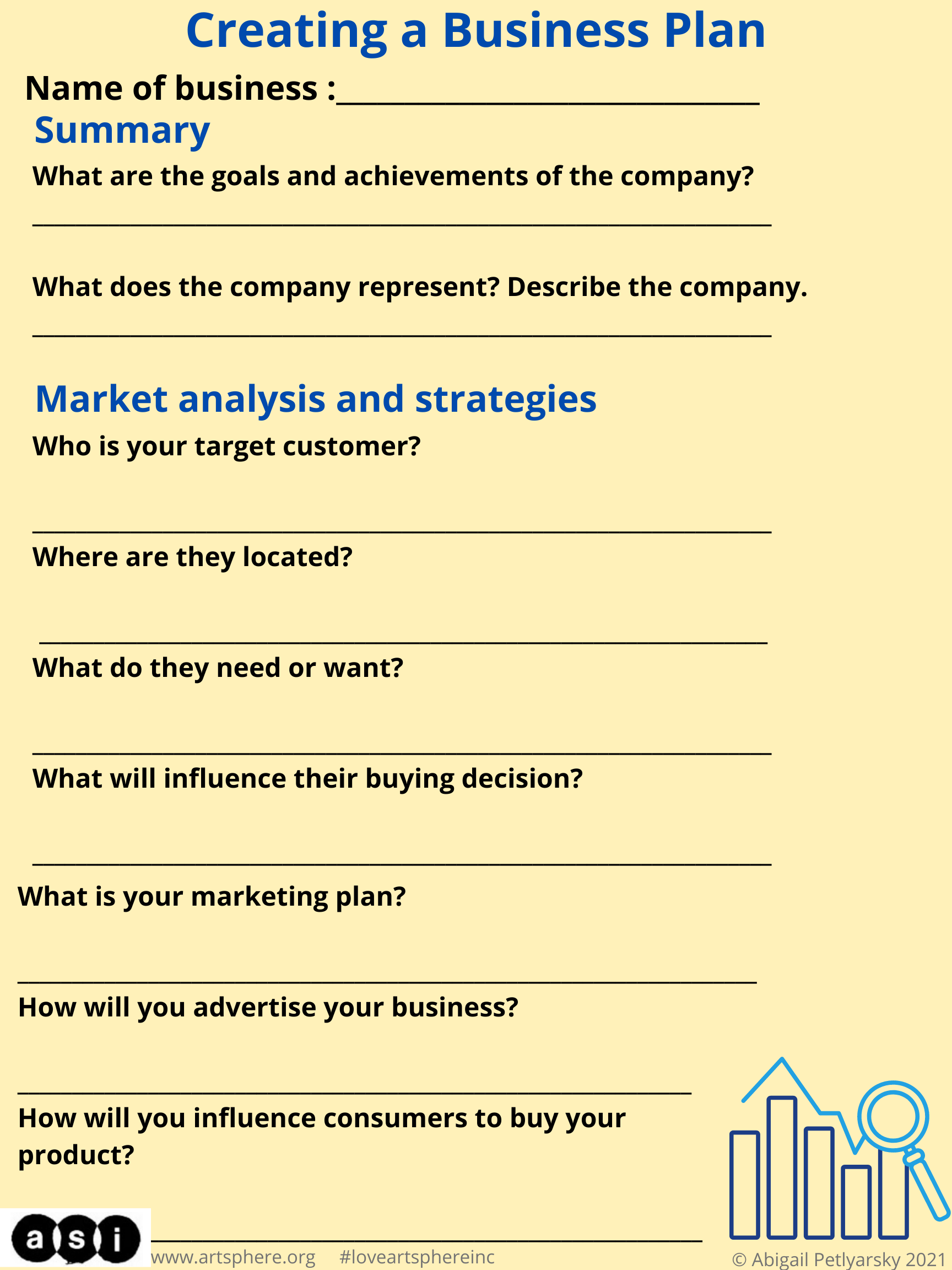
From a financial standpoint, your market analysis must be rooted in data. You need to calculate the Total Addressable Market (TAM), which represents the total revenue opportunity available if your product or service achieved 100% market share. Investors and financial analysts look for this to gauge the ceiling of your business. Following this, you must define your Serviceable Addressable Market (SAM) and your Serviceable Obtainable Market (SOM). These figures allow you to create realistic revenue projections based on the segment of the population you can actually reach and convert.
Financial Forecasting and Revenue Modeling
A robust business plan details exactly how the company intends to generate cash. Will you operate on a high-volume, low-margin model, or a boutique, high-margin model? This section should outline your pricing strategy and justify it against competitor benchmarks. Are you using a subscription model to ensure recurring monthly revenue (MRR), or a transactional model? Financial forecasting involves projecting these earnings over a three-to-five-year period, allowing for seasonal fluctuations and market volatility.
Building the Core Financial Statements
The heart of any professional business plan is the financial appendix. This is where the narrative ends and the math begins. To draw up an effective plan, you must produce three fundamental documents that provide a transparent view of the venture’s health.
The Profit and Loss (P&L) Statement
The P&L statement, or income statement, summarizes the revenues, costs, and expenses incurred during a specific period. It is the ultimate litmus test for a business’s ability to generate profit. In your plan, your projected P&L should account for the Cost of Goods Sold (COGS) and operating expenses (OPEX). By analyzing these margins, you can demonstrate to stakeholders that the business is capable of scaling without the costs outstripping the revenue growth.
Managing Cash Flow and Liquidity
Cash flow is the lifeblood of a startup. Many businesses fail not because they lack profit on paper, but because they run out of liquid cash to cover immediate obligations. Your business plan must include a cash flow forecast that tracks the timing of cash inflows and outflows. This helps identify “the valley of death”—the period where initial capital is being spent faster than revenue is being generated—and allows you to plan your capital raises accordingly.
The Balance Sheet and Asset Management
A balance sheet provides a snapshot of what the business owns (assets) versus what it owes (liabilities). For a business plan to be credible, it must show a clear understanding of capital structure. How much of the business is financed by debt versus equity? Effective asset management—such as inventory turnover ratios and the depreciation of equipment—shows that the management team understands how to utilize company resources to maximize shareholder value.
Capital Acquisition and Funding Structures

Once the financial needs are identified, the business plan must address where the money will come from. This section is a strategic analysis of funding sources and the long-term cost of capital.
Bootstrapping vs. External Investment
Drawing up a business plan involves making a pivotal choice: do you grow slowly using your own savings (bootstrapping), or do you seek external capital to accelerate growth? Each has different financial implications. Bootstrapping preserves equity and control but limits the speed of expansion. Seeking Venture Capital (VC) or Angel Investment provides a surge of liquidity but requires giving up a percentage of future profits and decision-making power. Your plan should argue why your chosen path is the most fiscally responsible for your specific industry.
Preparing for the Investor Pitch: The Valuation Equation
If your plan is intended for investors, you must include a section on valuation. How much is the company worth today (pre-money valuation), and how much will it be worth after the investment (post-money valuation)? This requires a deep dive into Discounted Cash Flow (DCF) analysis or comparable company analysis. By presenting a logical valuation, you signal to investors that you are a sophisticated financial operator who understands the “yield” they expect on their investment.
Operational Finance and Break-Even Analysis
A business plan is not just about getting the money; it is about how you manage it once it is in the bank. This involves setting strict parameters for spending and identifying the exact moment the business becomes self-sustaining.
Calculating the Break-Even Point
The break-even analysis is one of the most critical figures in a business plan. It tells you exactly how many units you need to sell, or how many billable hours you must record, to cover all your fixed and variable costs. Knowing this number allows a business owner to set sales targets that are rooted in financial necessity rather than optimistic guesswork. It also dictates the “burn rate”—the speed at which the company consumes its initial capital before reaching profitability.
Resource Allocation and Cost Optimization
Effective business plans detail how every dollar will be allocated. This is often categorized into Research and Development (R&D), Marketing and Sales (Customer Acquisition Cost – CAC), and General and Administrative (G&A) expenses. A sophisticated plan will also discuss the Lifetime Value (LTV) of a customer. If your LTV to CAC ratio is healthy (typically 3:1 or higher), it proves that for every dollar spent on growth, the business is generating three dollars in value, making it an attractive proposition for further investment.
Risk Assessment and Financial Exit Strategies
The final component of a money-centric business plan is a cold, hard look at what could go wrong and how the investors will eventually get their money back.
Sensitivity Analysis and Contingency Planning
Financial markets are unpredictable. A professional business plan includes a “Sensitivity Analysis,” which tests how changes in variables—such as a 10% increase in raw material costs or a 20% decrease in sales volume—affect the bottom line. By presenting a “Best Case,” “Expected Case,” and “Worst Case” scenario, you demonstrate fiscal prudence. This section should also outline your contingency funds and insurance strategies to protect the business’s capital from unforeseen disasters.
Understanding ROI and Long-Term Wealth Creation
Ultimately, the purpose of drawing up a business plan is to outline a path to a high Return on Investment (ROI). This section should discuss the “Exit Strategy.” Will the company be a “lifestyle business” that provides a steady dividend to its owners? Or is the goal an Initial Public Offering (IPO) or an acquisition by a larger competitor? Detailing the exit strategy shows that you are focused on the end goal of all business finance: the realization of value and the successful distribution of wealth to the stakeholders.
Conclusion
Drawing up a business plan is an exercise in financial discipline. It forces an entrepreneur to move away from the excitement of a new idea and into the rigorous reality of margins, cash flow, and capital structures. By focusing on the “Money” niche—emphasizing market valuation, detailed financial statements, funding strategies, and risk management—you create a document that does more than just describe a business; it proves its worth.
A plan built on solid financial pillars is the most persuasive tool an entrepreneur can possess. It transforms a vision into a bankable asset, providing a clear roadmap for navigating the complexities of the modern economy and ensuring that the venture is not just a dream, but a sustainable, profit-generating machine.
aViewFromTheCave is a participant in the Amazon Services LLC Associates Program, an affiliate advertising program designed to provide a means for sites to earn advertising fees by advertising and linking to Amazon.com. Amazon, the Amazon logo, AmazonSupply, and the AmazonSupply logo are trademarks of Amazon.com, Inc. or its affiliates. As an Amazon Associate we earn affiliate commissions from qualifying purchases.