
In the modern financial landscape, technology stocks have long been viewed as the primary engine of global wealth creation. From the meteoric rise of artificial intelligence to the ubiquity of cloud computing, the “Tech” sector—often represented by the Nasdaq 100—frequently dictates the pulse of the broader market. However, even the most robust growth engines experience periods of intense cooling. When investors log into their portfolios and see a sea of red concentrated in the software, semiconductor, and internet services sectors, the immediate question is: “Why are tech stocks down today?”
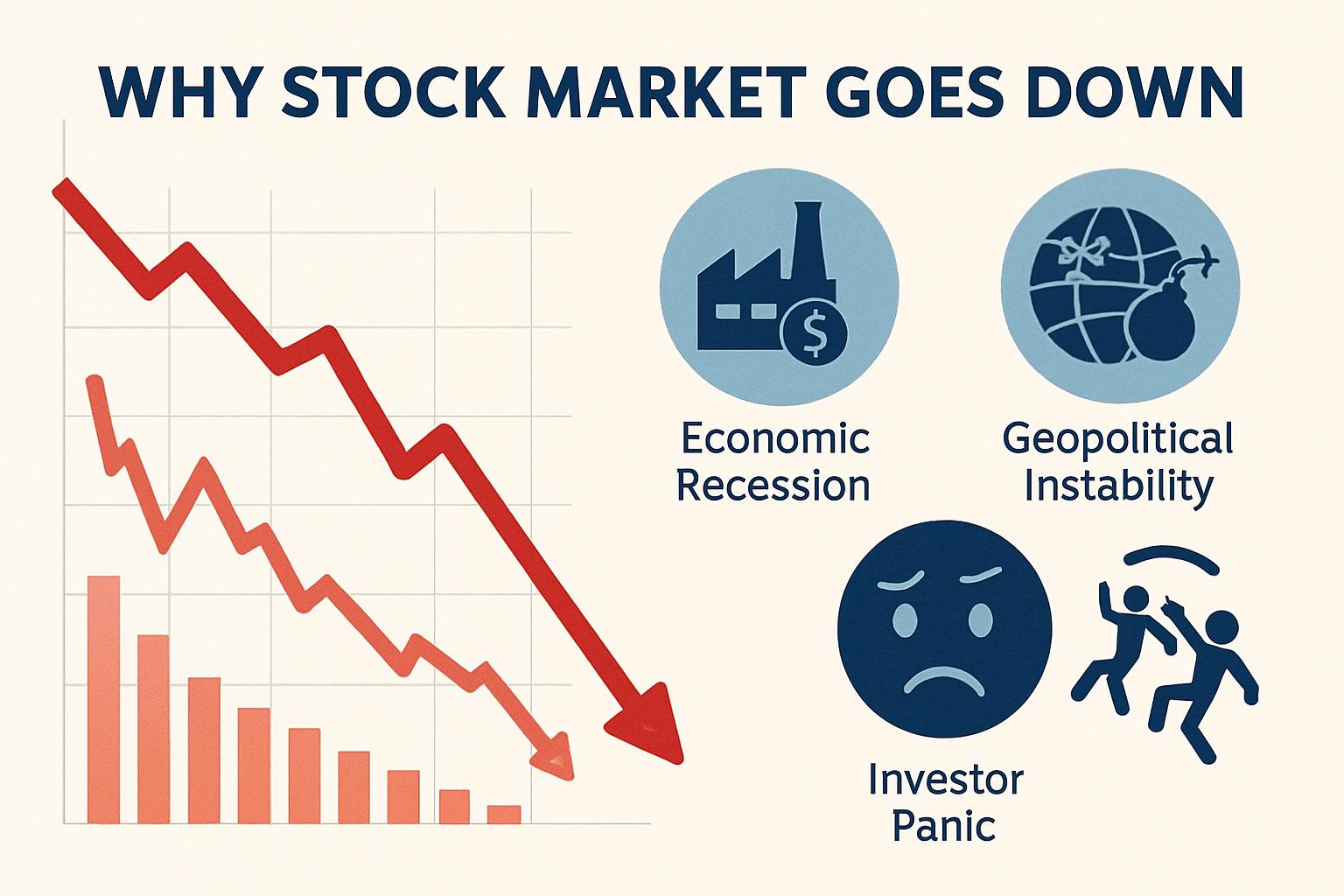
Understanding the decline requires looking beyond simple price action and delving into the intricate web of macroeconomic indicators, investor psychology, and sector-specific fundamentals. This article explores the primary drivers behind downward pressure in the technology sector and provides a framework for understanding how these forces interact to influence your investment strategy.
1. The Macroeconomic Pressure Cooker: Interest Rates and Inflation
The relationship between the technology sector and the Federal Reserve’s monetary policy is perhaps the most significant factor in daily price fluctuations. To understand why tech stocks suffer when interest rates rise or remain “higher for longer,” one must understand the mechanics of equity valuation.
The Impact of the Discounted Cash Flow (DCF) Model
Most professional investors value technology companies based on their future earnings. Many high-growth tech firms are not currently optimized for maximum profit; instead, they reinvest capital to dominate future markets. In financial modeling, these future cash flows are “discounted” back to their present value using a discount rate, which is heavily influenced by the yield on government bonds (like the 10-year Treasury note).
When interest rates rise, the discount rate increases. This mathematically reduces the “present value” of those future earnings. Because tech stocks have a higher proportion of their value tied to the distant future compared to “value” stocks like utilities or consumer staples, they are disproportionately sensitive to rate hikes.
Inflation and the Cost of Innovation
Inflation acts as a double-edged sword for the tech sector. While software companies often enjoy high gross margins, they are not immune to the rising costs of specialized labor and hardware. Furthermore, persistent inflation forces the central bank to maintain restrictive monetary policies. When the Consumer Price Index (CPI) data comes in higher than expected, the market immediately prices in a “hawkish” response from the Fed, leading to an immediate sell-off in growth-oriented assets.
2. The Earnings Paradox: Managing Sky-High Expectations
In the world of technology investing, meeting expectations is often not enough. Because many tech giants trade at high Price-to-Earnings (P/E) ratios, the market expects nothing short of perfection.
The “Beat and Raise” Requirement
During earnings season, a technology company might report record-breaking revenue and profits, yet see its stock price tumble by 5% or 10% in after-hours trading. This occurs because the market had already “priced in” the success. If the company fails to “beat and raise”—meaning they beat the current quarter’s estimates and raise their guidance for the next quarter—investors may perceive the company as reaching a growth plateau.
AI Fatigue and the ROI Question
Recently, the primary driver of tech valuations has been Artificial Intelligence (AI). However, as the initial hype cycle matures, institutional investors are beginning to demand proof of Return on Investment (ROI). When tech companies report massive increases in Capital Expenditure (CapEx) to build out AI data centers without showing a corresponding surge in net income, the market often reacts with skepticism. Today’s downturn may simply be a reflection of investors questioning whether the massive spending on GPUs and infrastructure will translate into bottom-line growth in the near term.

3. Sector Rotation and the Search for Value
Market movements are often dictated by “rotation,” a process where institutional fund managers move capital out of one sector and into another to manage risk or chase better relative value.
Profit Taking After a Rally
Technology often leads market rallies. After a period of significant outperformance, it is common for hedge funds and institutional investors to “take chips off the table.” This profit-taking creates downward pressure. When a large number of participants decide to lock in gains simultaneously, it can trigger a cascading sell-off, even in the absence of negative news. This is often described as a “technical correction” rather than a fundamental shift in the business’s health.
The Flight to Defensive Assets
When geopolitical tensions rise or economic data suggests a looming recession, the “risk-on” sentiment that fuels tech stocks evaporates. Investors move their capital into “defensive” sectors—such as healthcare, utilities, or gold—which are perceived as safer havens during volatility. Because the technology sector is the definition of a “risk-on” asset class, it is usually the first to be liquidated when the market’s collective anxiety spikes.
4. Regulatory and Geopolitical Headwinds
The technology sector operates in a complex global environment where policy decisions can have an overnight impact on valuations.
Antitrust Scrutiny and Big Tech
The “Magnificent Seven” and other mega-cap tech firms are under constant surveillance by regulatory bodies like the FTC in the United States and the European Commission. Announcements regarding antitrust lawsuits, probes into App Store fees, or new data privacy regulations can wipe billions off a sector’s market cap in hours. Investors fear that regulatory intervention will lead to forced divestitures or a fundamental change in high-margin business models.
Supply Chain Vulnerabilities and Trade Wars
The tech industry is uniquely dependent on a globalized supply chain, particularly regarding semiconductors. Tensions in the Taiwan Strait or new export restrictions on high-end AI chips to foreign markets can disrupt the entire ecosystem. If a key supplier warns of a delay or a government announces new trade barriers, the uncertainty alone is enough to drive tech stocks down as investors move to avoid potential supply-chain-induced earnings misses.
5. Navigating the Tech Slump: An Investor’s Perspective
Seeing red in your brokerage account is never pleasant, but for the disciplined investor, tech sector volatility is a feature, not a bug. Understanding how to manage your capital during these downturns is crucial for long-term financial success.
Assessing Fundamentals vs. Sentiment
The most important question to ask during a tech sell-off is: “Has the fundamental story changed?” If a stock is down because interest rates ticked up by 0.25%, the company’s ability to innovate and capture market share remains intact. However, if the stock is down because its core product is being disrupted by a competitor, the decline may be justified. Distinguishing between sentiment-driven noise and fundamental decay is what separates successful investors from the rest.
The Role of Diversification and Dollar-Cost Averaging
For those focused on long-term wealth building, “timing the bottom” of a tech sell-off is notoriously difficult. Instead, many financial professionals advocate for Dollar-Cost Averaging (DCA). By investing a fixed amount at regular intervals, you naturally buy more shares when prices are low and fewer when prices are high. Additionally, ensuring that your portfolio isn’t overly concentrated in a single sector (like tech) can help buffer the impact of days when the Nasdaq underperforms the broader S&P 500.

Conclusion: The Price of Innovation
Technology stocks are down today due to a convergence of high interest rates, rigorous earnings expectations, and a general shift in market sentiment. While the volatility can be jarring, it is the price investors pay for the high potential returns that the tech sector has historically provided. By understanding the underlying “Money” mechanics—from DCF models to sector rotation—investors can maintain a level head, viewing today’s red charts not as a signal to panic, but as a period of market recalibration in the ongoing story of digital transformation.
aViewFromTheCave is a participant in the Amazon Services LLC Associates Program, an affiliate advertising program designed to provide a means for sites to earn advertising fees by advertising and linking to Amazon.com. Amazon, the Amazon logo, AmazonSupply, and the AmazonSupply logo are trademarks of Amazon.com, Inc. or its affiliates. As an Amazon Associate we earn affiliate commissions from qualifying purchases.