
Navigating the financial markets often feels like deciphering a complex, ever-shifting puzzle. For the individual investor, seeing a “green day” on the dashboard—where major indices like the S&P 500, the Dow Jones Industrial Average, and the Nasdaq Composite are all climbing—provides a sense of relief and optimism. However, experienced participants know that market surges are rarely the result of a single event. Instead, they are the product of a delicate interplay between macroeconomic data, corporate health, and the psychological state of millions of global investors.
Understanding why markets are up today requires looking beneath the surface of the price action. Whether it is a cooling inflation report, a surprisingly resilient earnings season, or a shift in central bank rhetoric, the drivers of a rally offer critical clues about where the economy is headed. In this deep dive, we explore the primary pillars that support market upswings and how investors can interpret these signals to refine their personal finance and investment strategies.
1. The Power of Macroeconomic Indicators and Monetary Policy
The most significant driver of broad market movements is almost always the macroeconomic landscape. Markets do not trade in a vacuum; they react to the environment created by central banks and government fiscal policy. When the “macro” looks favorable, it acts as a tailwind for nearly every asset class.
The Influence of the Federal Reserve and Interest Rate Expectations
In the current financial era, the Federal Reserve (the “Fed”) is the single most influential entity for market direction. When markets are up, it is often because investors perceive a “dovish” shift in monetary policy. This means the market believes the Fed is either finished raising interest rates or is preparing to cut them. Lower interest rates reduce the cost of borrowing for corporations and consumers alike, stimulating spending and investment. Furthermore, lower rates make the future cash flows of companies more valuable today, which naturally pushes stock valuations higher.
Inflation Data and the Consumer Price Index (CPI)
Markets crave stability, and nothing disrupts stability like runaway inflation. When “markets are up today,” it is frequently a response to favorable inflation data, such as a lower-than-expected Consumer Price Index (CPI) or Producer Price Index (PPI) report. When inflation shows signs of cooling, it signals to the market that the central bank’s previous tightening measures are working. This reduces the “inflation premium” that investors demand and allows for a more aggressive allocation into equities, as the fear of a currency-eroding environment begins to fade.
Employment Strength and Economic Resilience
While it may seem counterintuitive, markets often rally on strong labor data—provided it doesn’t signal an overheating economy that would force more rate hikes. Low unemployment and consistent job creation suggest that the consumer remains healthy. Since consumer spending accounts for roughly 70% of the U.S. GDP, a robust labor market ensures that companies will continue to have a customer base for their products and services. When investors see a “Goldilocks” jobs report—not too hot, not too cold—market indices often react with a sustained upward move.
2. Corporate Earnings: The Bedrock of Market Valuation
While macroeconomic factors set the stage, corporate earnings are the actual performance that determines whether a rally is sustainable. Stock prices, in the long run, are a reflection of a company’s ability to generate profits.
The Impact of “Earnings Beats” and Positive Guidance
Four times a year, during earnings season, the market receives a reality check. When markets are up today, it may be because a significant percentage of S&P 500 companies have reported earnings that exceeded analyst expectations. However, it isn’t just about the past quarter; it’s about “guidance.” If CEOs and CFOs express optimism about the coming months, investors are quick to price in that future growth. A positive outlook from a “bellwether” company—a corporation seen as a leader in its industry—can lift an entire sector or even the whole market.
The Role of Mega-Cap Tech Growth
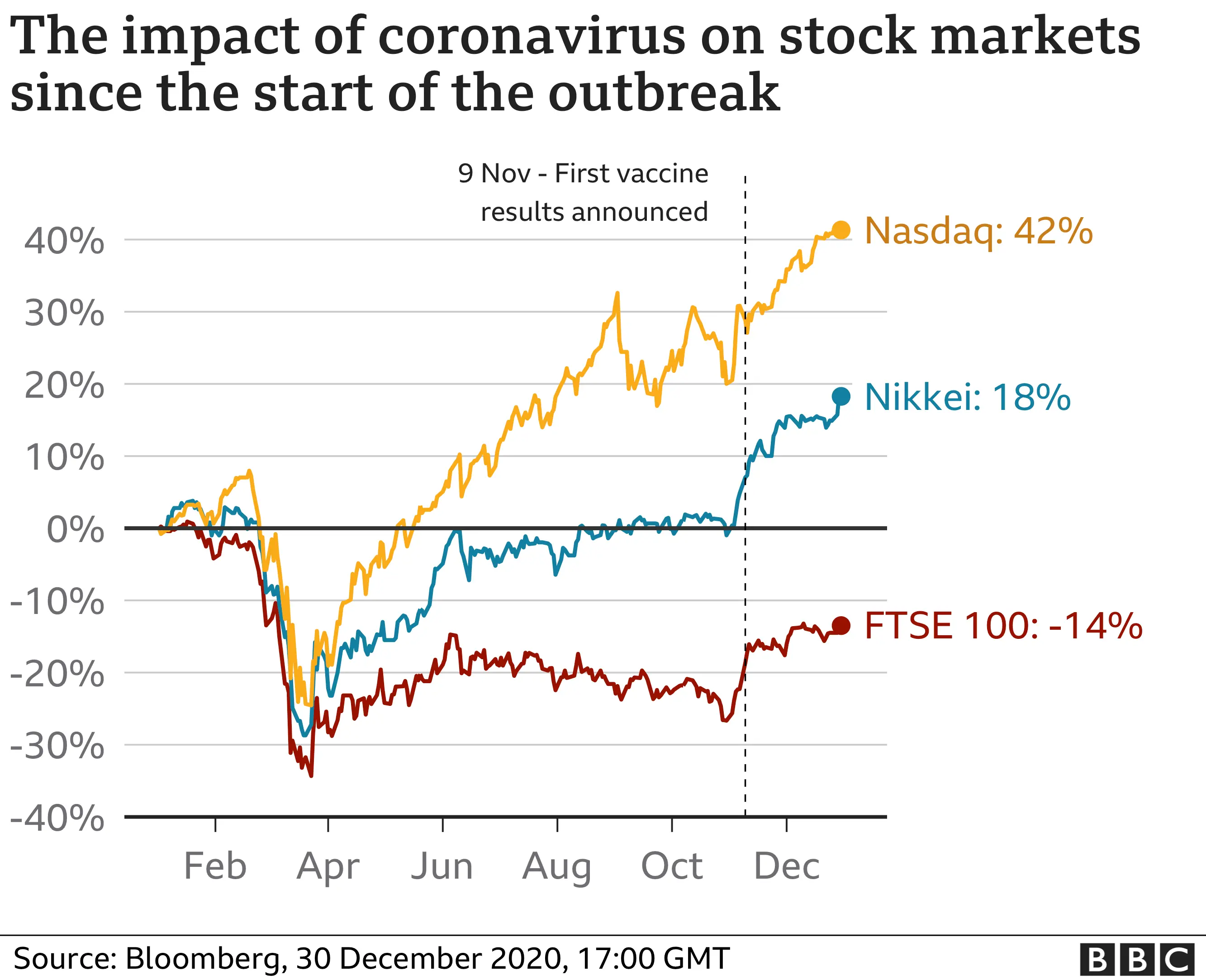
In the modern market, a handful of massive technology and growth companies—often referred to as the “Magnificent Seven”—hold disproportionate weight in market indices. Because these companies have such high market capitalizations, when they trade up, they pull the entire index with them. A surge in the Nasdaq is often driven by advancements in specialized sectors like Artificial Intelligence (AI) or cloud computing. When these tech giants prove they can monetize new technologies effectively, it creates a “halo effect” that boosts investor confidence across the board.

Profit Margins and Cost Management
Investors also look at how companies are managing their bottom line. In periods where markets are rising, it often reflects a trend of improving profit margins. This could be due to companies successfully passing on costs to consumers or utilizing new technologies to increase operational efficiency. When companies demonstrate that they can grow profits even in a challenging environment, the market rewards them with higher multiples, contributing to the day’s upward momentum.
3. Investor Psychology and the Mechanics of the Rally
Markets are driven by data, but they are executed by humans (and their algorithms). This means that psychology, sentiment, and technical “market mechanics” play a massive role in why a market might be up on any given day.
The “Fear of Missing Out” (FOMO) and Momentum Trading
Price action itself can be a catalyst for further gains. When a market starts to move up, it often triggers a psychological response known as FOMO. Investors who have been sitting on the sidelines in cash begin to worry that they are missing out on a recovery. As they jump back into the market, their buying pressure drives prices even higher. This creates a self-reinforcing cycle of momentum where “buying begets buying.” Professional traders often use momentum-based financial tools to identify these trends, adding fuel to the fire as they ride the wave.
Short Covering Rallies
Sometimes, markets move up not because of good news, but because the “bears” are being forced to exit their positions. When many investors bet against the market (short selling) and the market starts to rise unexpectedly, those investors must buy back shares to limit their losses. This is known as a “short squeeze” or “short covering.” This forced buying can lead to rapid, vertical moves in stock prices that might seem disconnected from the underlying fundamentals but are very real in terms of price action.
Technical Breakouts and Support Levels
Traders and institutional algorithms often watch specific price levels, such as the 50-day or 200-day moving averages. If a major index breaks above a significant “resistance” level, it signals to the market that the path of least resistance is now higher. This technical confirmation brings in a new wave of buyers who trade based on charts and patterns. When these technical signals align with positive fundamental news, the resulting rally can be particularly powerful and sustained.
4. Global Context and Geopolitical Stability
In an interconnected global economy, events halfway across the world can dictate why the domestic markets are up today. Financial markets hate uncertainty, and the resolution or stabilization of global conflicts often leads to a “relief rally.”
Easing Geopolitical Tensions
When geopolitical risks—such as trade wars, regional conflicts, or diplomatic standoffs—show signs of de-escalation, markets tend to react positively. Stability in global relations ensures that supply chains remain functional and that international trade can continue without the threat of sudden tariffs or sanctions. A day of gains is often the market’s way of breathing a sigh of relief that a major global risk has been neutralized or at least factored into the current price.
Currency Fluctuations and the Strength of the Dollar
For multi-national corporations, the strength of the U.S. Dollar is a critical factor. When the dollar weakens slightly against other major currencies, it makes American goods cheaper abroad and increases the value of international sales when converted back into dollars. If the dollar index (DXY) retreats, it often provides a boost to large-cap stocks that derive a significant portion of their revenue from overseas. This currency tailwind is a frequent, though sometimes overlooked, reason why markets trend upward.

Conclusion: Synthesizing the Move
A green day in the markets is rarely the result of a single headline. Instead, it is a confluence of factors: a central bank that seems less aggressive, corporations that remain profitable despite headwinds, and a collective investor psychology that has shifted from fear to appetite.
For the disciplined investor, understanding why the markets are up today is more than just a matter of curiosity. It is about identifying whether the rally is built on a solid foundation of economic growth and corporate health, or if it is a temporary bounce driven by technical factors and short covering. By paying attention to interest rate trends, earnings quality, and technical support levels, you can better position your portfolio to capitalize on these upward movements while maintaining the balance necessary to weather the inevitable volatility of the financial world. Investing is a marathon, and while every up day is a welcome milestone, the true goal is understanding the mechanics of wealth creation over the long term.
aViewFromTheCave is a participant in the Amazon Services LLC Associates Program, an affiliate advertising program designed to provide a means for sites to earn advertising fees by advertising and linking to Amazon.com. Amazon, the Amazon logo, AmazonSupply, and the AmazonSupply logo are trademarks of Amazon.com, Inc. or its affiliates. As an Amazon Associate we earn affiliate commissions from qualifying purchases.