
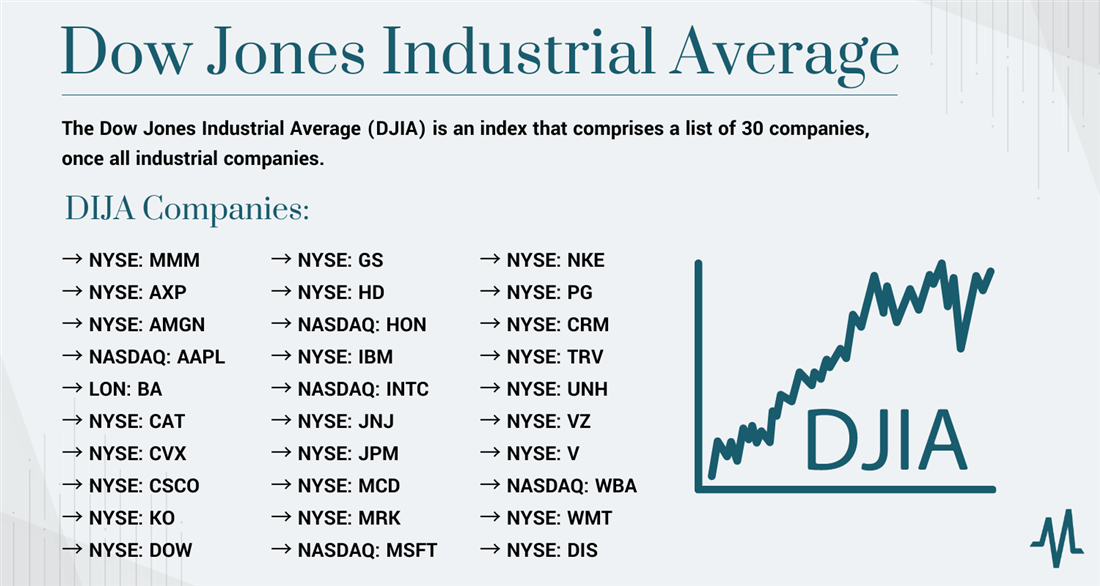
When investors speak about “the market” being up or down, they are most often referring to the Dow Jones Industrial Average (DJIA). Despite being one of the most cited financial metrics in the world, there is often confusion regarding its internal structure. The answer to the question “How many stocks are in the Dow?” is simple yet profound: there are exactly 30 stocks.
However, the number 30 is only the beginning of the story. Unlike broader indices like the S&P 500 or the Russell 2000, the Dow is a curated selection of “Blue Chip” companies designed to represent the pulse of the American economy. To understand why there are only 30 stocks and how they impact your portfolio, one must dive into the mechanics, history, and strategic selection process of this elite financial club.

The History and Selection of the 30 Components
The Dow Jones Industrial Average was created by Charles Dow and Edward Jones in 1896. At its inception, it contained only 12 stocks, primarily involved in heavy industry—railroads, cotton, gas, and sugar. As the American economy evolved from an industrial powerhouse to a service and technology-oriented giant, the index expanded to 20 stocks in 1916 and finally to 30 stocks in 1928. It has remained at 30 ever since.
From 12 to 30: A Brief History of Evolution
The decision to cap the index at 30 stocks was intended to provide a snapshot of the “industrial leaders” without becoming overly diluted. In the early 20th century, calculating an index in real-time was a manual, labor-intensive process. Maintaining a smaller list allowed for more frequent updates. While modern computing makes it easy to track thousands of stocks, the Dow maintains its 30-stock structure to preserve its historical continuity and prestige.
The Selection Process: Who Joins the Elite?
Unlike many other indices that use a purely quantitative approach based on market capitalization, the Dow is managed by the Averages Committee at S&P Dow Jones Indices. There are no rigid rules for inclusion, but the committee looks for companies that:
- Have an excellent reputation.
- Demonstrate sustained growth.
- Command interest from a wide range of investors.
- Are incorporated and headquartered in the United States.
Because there are only 30 slots, the removal of one company and the addition of another is a major financial event. It signals a shift in the global economy, such as when industrial mainstays are replaced by tech giants or healthcare innovators.
The Unique Weighting System: Why the Price Matters
Perhaps the most distinctive—and controversial—aspect of the Dow’s 30 stocks is how they are weighted. Most modern indices use market-cap weighting, meaning larger companies (by total dollar value) have a bigger impact. The Dow, however, is a price-weighted index.
Price-Weighted vs. Market-Cap Weighted
In a price-weighted index, the stock with the highest price per share has the most influence on the index’s daily movement, regardless of the company’s actual size. For example, if a stock priced at $200 moves by 1%, it will have a much greater impact on the Dow than a stock priced at $50 moving by 1%. This creates a unique dynamic where a company like UnitedHealth Group (often one of the highest-priced stocks in the Dow) can move the needle more than a company with a larger market cap but a lower share price.
The Role of the Dow Divisor
You might wonder how 30 stocks with varying prices can result in an index value in the tens of thousands. This is achieved through the “Dow Divisor.” Since the index is price-weighted, things like stock splits or dividends would artificially “drop” the value of the index. To prevent this, the sum of the 30 stock prices is divided by the Dow Divisor—a continuously adjusted number that ensures continuity over time. As of recent years, the divisor is a small decimal (less than 1), which effectively acts as a multiplier for the sum of the stock prices.
Analyzing the Current List of Stocks
The 30 stocks in the Dow are often referred to as “Blue Chips.” These are established, dividend-paying companies that are leaders in their respective fields. While the name still includes the word “Industrial,” the current components span across technology, healthcare, finance, and consumer goods.

Major Sectors Represented
The Dow is designed to mirror the current U.S. GDP. Therefore, you will find a heavy concentration in:
- Information Technology: Companies like Microsoft, Apple, and Salesforce.
- Healthcare: Giants such as UnitedHealth Group and Johnson & Johnson.
- Financials: Leading institutions like JPMorgan Chase and Goldman Sachs.
- Consumer Staples and Discretionary: Examples include Walmart, Coca-Cola, and Home Depot.
Recent Changes: Reflecting the Modern Economy
The Dow is not a static list. To remain relevant, the committee frequently swaps out companies that no longer represent the “prime” of the economy. A notable recent change occurred in February 2024, when Amazon was added to the index, replacing Walgreens Boots Alliance. This move was seen as a necessary step to increase the index’s exposure to the burgeoning e-commerce and retail tech sectors, acknowledging that the American consumer landscape has fundamentally shifted away from traditional brick-and-mortar pharmacies toward digital ecosystems.
The Dow vs. Other Major Indices: Which Should You Follow?
Investors often debate whether the Dow’s 30 stocks are enough to truly represent the “market.” When you compare the Dow to the S&P 500 (which tracks 500 large-cap stocks) or the Nasdaq Composite (which focuses on tech), clear differences emerge in terms of volatility and representation.
The S&P 500 Comparison
The S&P 500 is generally considered a better benchmark for professional fund managers because it covers approximately 80% of the available market capitalization in the U.S. However, the Dow and the S&P 500 are highly correlated. Because the 30 stocks in the Dow are also among the largest in the S&P 500, the two indices tend to move in the same direction over long periods. The Dow is often seen as “more conservative” because its components are generally older, more stable companies.
Why the Dow Remains a Global Benchmark
Despite its small sample size and “quirky” weighting system, the Dow remains the most famous index in the world for a simple reason: psychology. Because it contains only 30 names, it is easier for the average person to grasp. People recognize names like Boeing, Disney, and Visa. When the Dow moves 500 points, it resonates with the public in a way that a percentage move in a broader index might not. For many, the Dow is the “scoreboard” for American capitalism.
How to Invest in the Dow Jones Industrial Average
Understanding that there are 30 stocks in the Dow is the first step toward using it as an investment vehicle. While you could technically buy all 30 individual stocks, most investors prefer more efficient methods to gain exposure to these industrial leaders.
ETFs and Mutual Funds
The most common way to invest in the Dow is through an Exchange-Traded Fund (ETF). The most famous of these is the SPDR Dow Jones Industrial Average ETF Trust (Ticker: DIA), often referred to as “Diamonds.” By purchasing shares of DIA, an investor owns a fractional piece of all 30 companies in the index. The fund is designed to track the performance of the price-weighted average as closely as possible, inclusive of dividends.
Pros and Cons of an Index-Focused Strategy
Investing in the Dow offers several advantages:
- Stability: Blue-chip stocks are generally less volatile than small-cap or speculative tech stocks.
- Dividends: Most Dow components pay regular dividends, making it a favorite for income-focused investors.
- Simplicity: Tracking 30 companies is far more manageable for a retail investor than tracking hundreds.
On the downside, because the Dow only contains 30 stocks, it lacks exposure to the “stars of tomorrow”—smaller, high-growth companies that haven’t yet reached blue-chip status. If you only invest in the Dow, you might miss out on the explosive growth found in the mid-cap or small-cap sectors.
Conclusion
The Dow Jones Industrial Average remains a cornerstone of the financial world, not because it is the largest index, but because it is a curated collection of the most influential companies in history. Knowing that there are 30 stocks in the Dow is more than a trivia fact; it is an insight into a specific philosophy of investing that prioritizes stability, reputation, and leadership.
Whether you are a seasoned investor or just starting your journey into personal finance, understanding the Dow’s composition—from its price-weighting to its periodic reshuffling—allows you to better interpret market news and build a more resilient portfolio. As the American economy continues to innovate, these 30 seats will continue to be held by the giants that shape our daily lives.
aViewFromTheCave is a participant in the Amazon Services LLC Associates Program, an affiliate advertising program designed to provide a means for sites to earn advertising fees by advertising and linking to Amazon.com. Amazon, the Amazon logo, AmazonSupply, and the AmazonSupply logo are trademarks of Amazon.com, Inc. or its affiliates. As an Amazon Associate we earn affiliate commissions from qualifying purchases.