
In the world of finance, few questions are as ubiquitous as “What is the S&P today?” For the casual observer, it is a flashing green or red number on a news ticker. For the institutional investor, it is the ultimate benchmark of corporate health and economic vitality. The S&P 500, or the Standard & Poor’s 500 Index, represents approximately 80% of the available market capitalization of the U.S. stock market. Consequently, when people ask about the state of “the market,” they are almost always referring to this specific index. Understanding what the S&P 500 is today requires more than just looking at a price quote; it requires an analysis of the underlying companies, the macroeconomic environment, and the mechanics of modern equity markets.

Decoding the S&P 500: More Than Just a Number
To understand what the S&P 500 represents in today’s financial landscape, one must first grasp its architecture. Managed by S&P Dow Jones Indices, the index is not a simple average of 500 stocks. Instead, it is a market-capitalization-weighted index, meaning the companies with the highest total market value have the greatest influence on the index’s daily movement. This structure reflects the reality of the American economy, where a handful of trillion-dollar behemoths carry more weight than hundreds of smaller entities.
The Mechanics of a Market-Cap Weighted Index
In a market-cap-weighted system, the “price” of the S&P 500 is calculated by summing the market caps of all 500 constituent companies and dividing that sum by a proprietary “index divisor.” This divisor is adjusted for corporate actions like stock splits and spinoffs to ensure that the index level remains consistent over time. Because of this weighting, when tech giants like Apple, Microsoft, or Nvidia experience significant gains or losses, the entire S&P 500 moves in tandem. For investors, this means that “today’s S&P” is often a reflection of the sentiment surrounding a few key sectors rather than a broad consensus across all 500 firms.
Selection Criteria: What Makes a Company “S&P 500 Worthy”?
Not every large company makes it into the index. The S&P Index Committee follows a strict set of eligibility criteria. To be included, a company must be a U.S. corporation, have a market cap of at least several billion dollars, and, perhaps most importantly, demonstrate liquidity and financial viability. Specifically, the sum of the company’s earnings over the most recent four consecutive quarters must be positive. This “profitability filter” distinguishes the S&P 500 from other indices like the Russell 2000, ensuring that the index represents the “blue-chip” standard of the American corporate world.
Why “Today’s Price” Matters to Your Portfolio
When an investor asks what the S&P is doing today, they are seeking a pulse check on their own financial health. Because the S&P 500 is the most popular benchmark for mutual funds and ETFs, most retirement accounts—including 401(k)s and IRAs—are heavily tethered to its performance. The daily fluctuation of the index is a snapshot of global confidence, reacting in real-time to geopolitical events, earnings reports, and central bank policies.
The S&P 500 as an Economic Barometer
The index is widely considered a leading economic indicator. Because stock prices are forward-looking, “today’s S&P” reflects the market’s collective expectation for corporate profits six to nine months into the future. If the index is trending upward, it suggests that investors are optimistic about economic growth, consumer spending, and corporate margins. Conversely, a sharp decline in the S&P often precedes a broader economic slowdown. By monitoring the index daily, investors can gauge whether the “smart money” is bracing for a recession or preparing for an expansion.
Volatility and the Psychological Impact of Daily Fluctuations
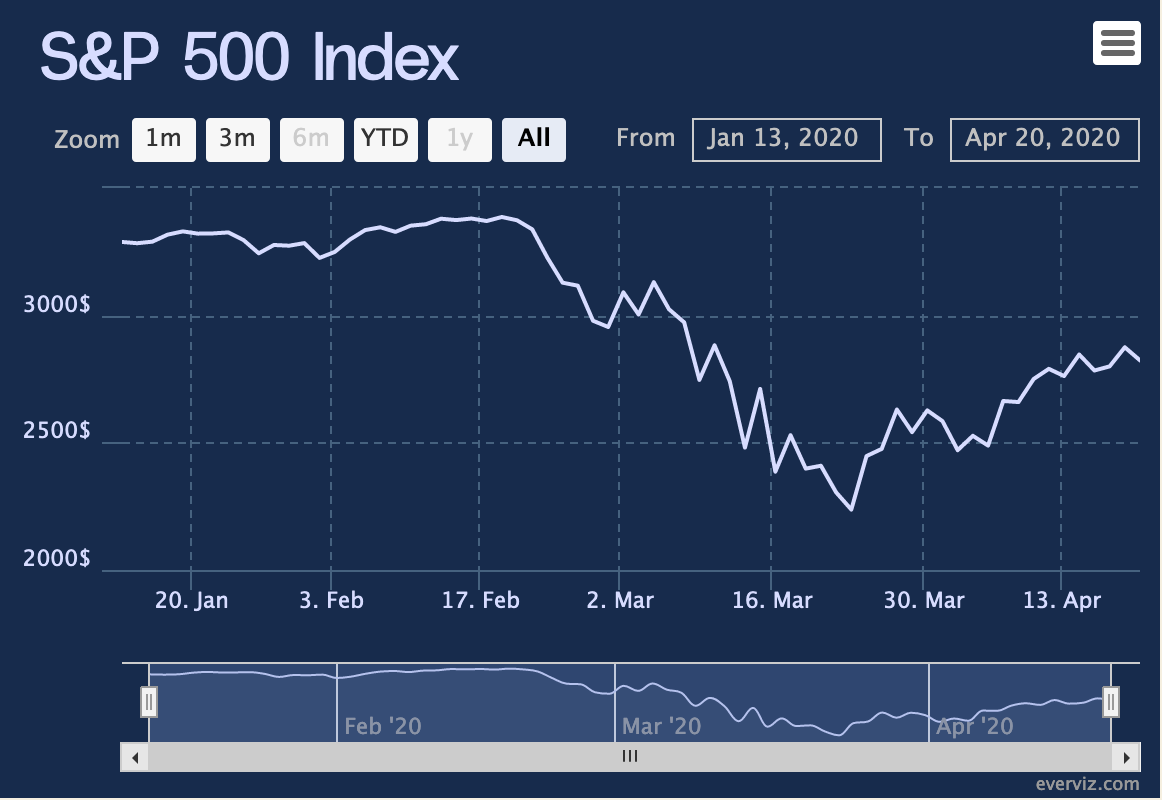
The daily movement of the S&P 500 is often measured by the VIX, or the CBOE Volatility Index, frequently referred to as the “fear gauge.” High volatility in the S&P 500 can trigger emotional responses in retail investors, leading to reactionary selling or “FOMO” (fear of missing out) buying. Understanding that the S&P 500 typically experiences several 5% to 10% pullbacks in any given year helps investors maintain a long-term perspective. Today’s price is a data point, but the long-term trend is what builds generational wealth.
Interpreting Market Movements and Sector Performance
To truly understand what the S&P 500 is “today,” one must look under the hood at the 11 Global Industry Classification Standard (GICS) sectors. The index is not a monolith; it is a collection of diverse industries ranging from Information Technology and Healthcare to Energy and Utilities. Often, the index may be flat while significant rotations are happening beneath the surface.
The Influence of “The Magnificent Seven” and Tech Weighting
In the modern era, the Information Technology sector, along with tech-adjacent companies in Communication Services and Consumer Discretionary, dominates the S&P 500. A group often called “The Magnificent Seven”—including companies like Alphabet, Amazon, and Tesla—now accounts for a disproportionate share of the index’s total value. This concentration means that “the S&P today” is heavily influenced by trends in artificial intelligence, cloud computing, and digital advertising. If these sectors are thriving, the index can mask weakness in other areas like regional banking or brick-and-mortar retail.
Cyclical vs. Defensive Sectors in Today’s Market
When interpreting the S&P’s daily performance, it is helpful to observe which sectors are leading. On days when “Cyclical” sectors (like Industrials, Materials, and Financials) are up, it indicates a “risk-on” environment where investors are betting on robust economic activity. On the other hand, if the S&P is being buoyed by “Defensive” sectors (like Consumer Staples, Healthcare, and Utilities), it suggests that investors are seeking safety amidst uncertainty. Monitoring these internal rotations provides a much deeper understanding of the market’s mood than the headline index number alone.
Strategies for Navigating the S&P 500 in Modern Finance
Given its importance, the S&P 500 has become the primary vehicle for wealth creation for millions of people. Understanding how to interact with the index is the cornerstone of modern personal finance. Whether you are a day trader or a “buy-and-hold” enthusiast, the S&P 500 offers various avenues for participation.
Passive vs. Active Management: The Rise of Indexing
For decades, the goal of many investors was to “beat the market.” However, historical data shows that the vast majority of active fund managers fail to outperform the S&P 500 over long periods, especially after accounting for fees. This realization led to the rise of passive investing. Today, investors can “buy the S&P” through low-cost Exchange Traded Funds (ETFs) like the SPDR S&P 500 ETF Trust (SPY) or the Vanguard S&P 500 ETF (VOO). These instruments allow individuals to capture the total return of the 500 largest U.S. companies with minimal overhead, making the S&P 500 the most accessible financial tool in history.
Using Today’s Data for Long-Term Wealth Accumulation
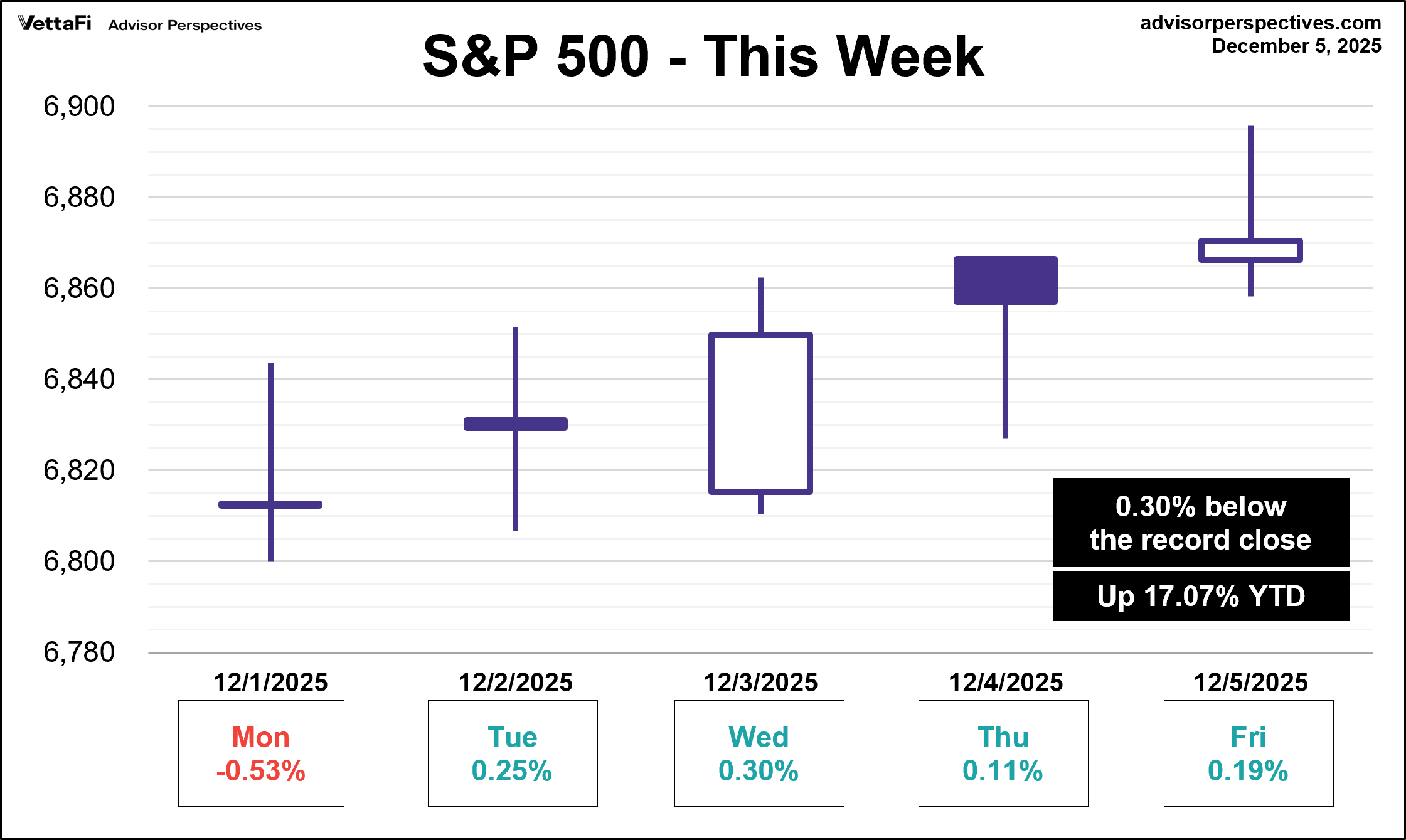
While checking “what the S&P is today” provides immediate context, the most successful investors use this information to inform a disciplined strategy like Dollar Cost Averaging (DCA). By investing a fixed amount into an S&P 500 index fund at regular intervals, regardless of the daily price, investors can mitigate the risk of timing the market. Over long horizons, the S&P 500 has historically provided an annualized return of approximately 10% before inflation. By viewing today’s price as just one entry point in a decades-long journey, investors can harness the power of compounding to achieve financial independence.
In conclusion, the S&P 500 is far more than a ticker symbol; it is a living, breathing representation of the American capitalist machine. It distills the efforts of millions of workers and the innovations of the world’s most powerful corporations into a single, digestible number. Whether you are looking at the S&P 500 today to check your net worth, gauge the health of the economy, or decide on your next investment move, understanding its structure and its role as a benchmark is essential for any participant in the modern financial world. As the index continues to evolve with the rise of new technologies and shifting economic cycles, it remains the gold standard for measuring the pulse of global finance.
aViewFromTheCave is a participant in the Amazon Services LLC Associates Program, an affiliate advertising program designed to provide a means for sites to earn advertising fees by advertising and linking to Amazon.com. Amazon, the Amazon logo, AmazonSupply, and the AmazonSupply logo are trademarks of Amazon.com, Inc. or its affiliates. As an Amazon Associate we earn affiliate commissions from qualifying purchases.