
For many investors, the stock market can feel like an impenetrable fortress of acronyms, fluctuating charts, and complex jargon. Yet, amid the noise of daily trading, one term consistently rises to the top: the S&P 500. Often cited by news anchors as a shorthand for “the market,” the Standard & Poor’s 500 Index is much more than just a list of companies. It is the most widely followed barometer of the U.S. economy and the foundational cornerstone of millions of retirement accounts and investment portfolios worldwide.

Understanding what the S&P 500 is, how it functions, and how to harness its power is essential for anyone looking to build long-term wealth. In this guide, we will break down the mechanics of the index, its historical significance, and the practical ways you can incorporate it into your financial strategy.
Understanding the Mechanics of the S&P 500 Index
At its core, the S&P 500 is a stock market index that tracks the performance of 500 of the largest publicly traded companies in the United States. Unlike the Dow Jones Industrial Average, which only tracks 30 companies and uses a price-weighted system, the S&P 500 offers a much broader and more accurate representation of the equity market.
Market Capitalization Weighting Explained
The S&P 500 is a “float-adjusted market-capitalization-weighted” index. This means that companies with the largest market values have the greatest impact on the index’s performance. “Market cap” is calculated by multiplying a company’s stock price by the number of its outstanding shares.
In a market-cap-weighted system, a 1% move in a trillion-dollar company like Apple or Microsoft affects the index far more than a 1% move in a company ranked at 450. This reflects the reality of the business landscape, where the largest players drive the lion’s share of economic activity. The “float-adjusted” aspect ensures that only shares available to the public—not those held by insiders or governments—are counted in the weighting.
The Selection Process: Who Gets In?
Not every large company makes the cut. The index is maintained by the S&P Dow Jones Indices, and a committee follows strict eligibility criteria to ensure the index remains a high-quality representation of the market. To be considered for inclusion, a company must:
- Be based in the United States.
- Have a market capitalization of at least $15.8 billion (this threshold is adjusted periodically).
- Maintain high liquidity, meaning its shares are easily traded.
- Report positive earnings over the most recent quarter and the sum of the previous four quarters.
This “quality filter” is one reason why the S&P 500 is often viewed as a “best-of-the-best” list of American enterprise.
Sector Diversification and Representation
While technology often dominates the headlines, the S&P 500 is designed to cover all 11 major sectors of the Global Industry Classification Standard (GICS). These include Information Technology, Health Care, Financials, Consumer Discretionary, Communication Services, Industrials, Consumer Staples, Energy, Utilities, Real Estate, and Materials. By spreading across these sectors, the index provides a diversified snapshot of the entire U.S. corporate landscape, from oil refineries to software developers.
Why the S&P 500 is the Gold Standard of Performance
Professional money managers and retail investors alike use the S&P 500 as the primary “benchmark” against which they measure their own success. If a portfolio manager earns an 8% return in a year when the S&P 500 earns 12%, they are considered to have underperformed the market.
Comparing Individual Stocks to the Index
For the average investor, picking individual stocks is a high-risk endeavor. A single company can fail due to poor management, scandals, or shifting consumer tastes. The S&P 500 mitigates this “idiosyncratic risk.” When you own the index, the failure of one company is offset by the success of others. Historically, the vast majority of active fund managers fail to beat the S&P 500 over long periods (10–20 years), which has led to a massive shift toward “passive” investing in the index itself.
Historical Returns and Long-Term Reliability
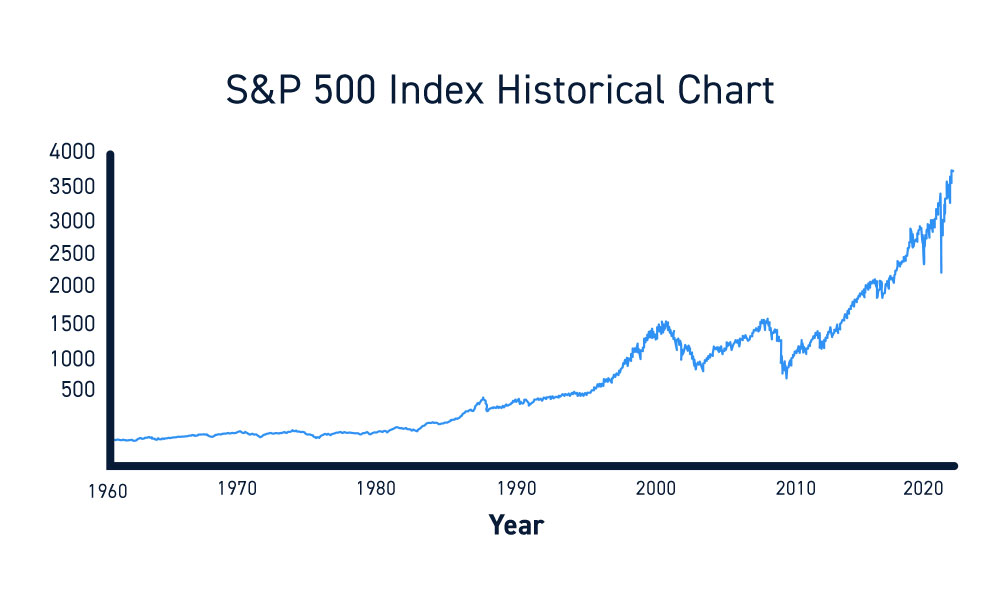
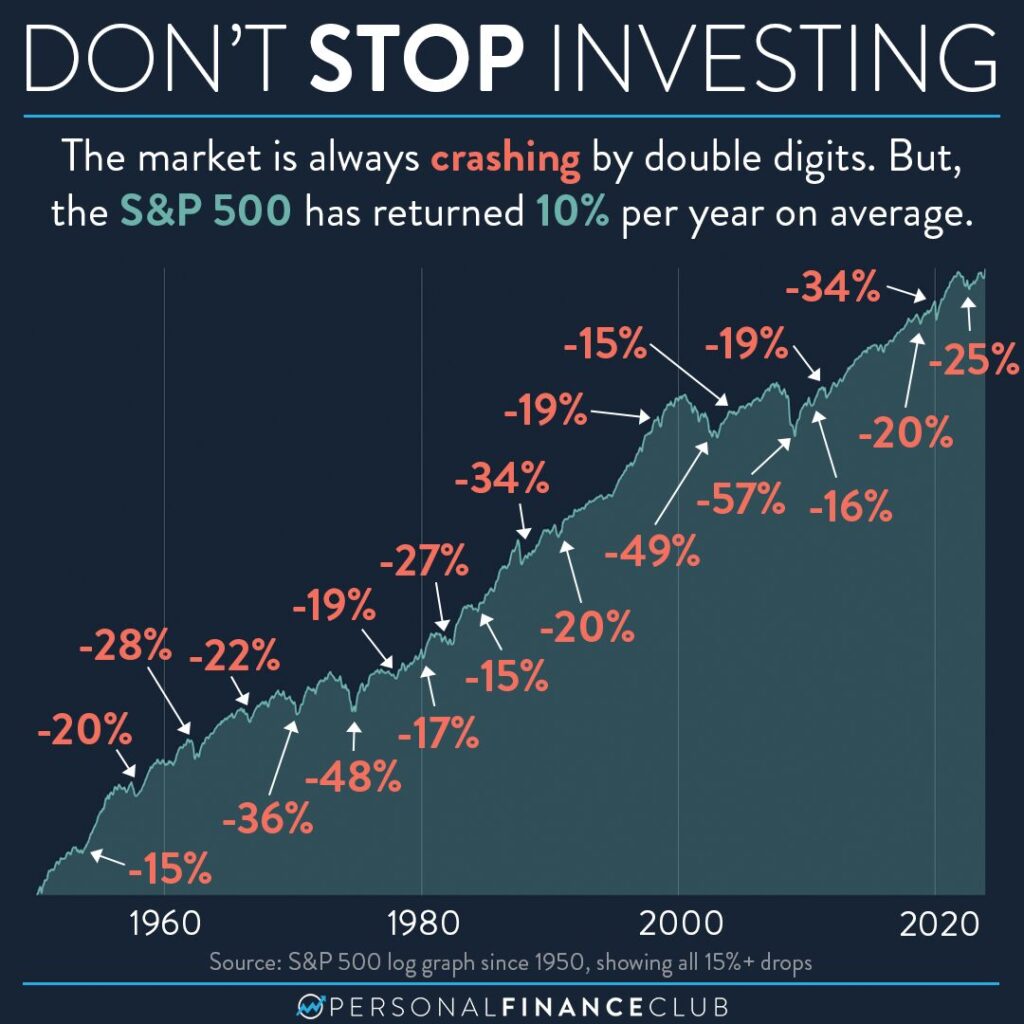
Since its inception in its modern form in 1957, the S&P 500 has delivered an average annual return of approximately 10% before inflation. While there are years where the index drops by 20% or more (bear markets), it has historically recovered and reached new highs over time. This reliability makes it an attractive vehicle for long-term wealth accumulation, such as saving for retirement or a child’s education.
The Index as an Economic Indicator
The S&P 500 is often considered a “leading indicator” for the U.S. economy. Because stock prices reflect investors’ expectations for future corporate earnings, the movement of the index can signal shifts in economic health before they show up in GDP data or unemployment reports. When the index is rising, it generally indicates confidence in corporate growth and consumer spending.
How to Invest in the S&P 500: Strategies for Wealth Building
You cannot “buy” the S&P 500 index directly, as it is simply a mathematical calculation. However, you can invest in funds that are designed to track the index with near-perfect precision.
Index Funds vs. ETFs (Exchange-Traded Funds)
There are two primary ways to gain exposure to the S&P 500:
- Mutual Index Funds: These are purchased directly through a brokerage (like Vanguard or Fidelity). They are priced once at the end of the trading day. They are ideal for automated, recurring investments.
- Exchange-Traded Funds (ETFs): These trade on the stock exchange just like individual stocks. Popular examples include SPY (SPDR S&P 500 ETF Trust) and VOO (Vanguard S&P 500 ETF). They offer high liquidity and can be bought or sold throughout the trading day.
The Power of Compound Interest and Passive Investing
The most effective way to invest in the S&P 500 is through a strategy called Dollar-Cost Averaging (DCA). By investing a fixed amount of money every month, regardless of whether the market is up or down, you buy more shares when prices are low and fewer when prices are high. Over decades, the power of compound interest—earning returns on your previous returns—can turn modest monthly contributions into a substantial nest egg.
Cost Efficiency: Low Expense Ratios
One of the greatest advantages of S&P 500 funds is their low cost. Because the fund simply mimics an index rather than paying a team of expensive analysts to pick stocks, the “expense ratio” (the annual fee) is often as low as 0.03%. In contrast, actively managed funds may charge 1% or more. Over 30 years, that small difference in fees can save an investor hundreds of thousands of dollars.
Risks, Limitations, and Considerations for Modern Investors
While the S&P 500 is an incredible wealth-building tool, it is not without risks. Investors must understand the nuances of the current market to maintain a realistic perspective.
Concentration Risk and the “Magnificent Seven”
In recent years, the S&P 500 has become increasingly “top-heavy.” A small group of mega-cap tech companies (often called the “Magnificent Seven,” including Apple, Microsoft, Amazon, and Nvidia) now account for nearly 30% of the entire index’s value. This means that if the tech sector experiences a downturn, the entire S&P 500 will suffer, even if the other 493 companies are doing well. This concentration risk is something investors should monitor when considering their overall diversification.
Market Volatility and Bear Markets
Investing in the S&P 500 is not a “get rich quick” scheme. The market moves in cycles. Investors must be prepared for “corrections” (10% drops) and “bear markets” (20% or more drops). The psychological challenge of seeing your portfolio value decrease during a recession is the “price of admission” for the long-term gains the market provides. If you need your money within the next 3 to 5 years, the S&P 500 may be too volatile for your needs.
The Importance of a Balanced Portfolio
For many, the S&P 500 is a perfect core holding, but it shouldn’t necessarily be the only holding. It lacks exposure to small-cap American companies, international markets, and emerging economies. Furthermore, as an all-equity index, it does not provide the stability of bonds or cash. A well-rounded financial plan often combines an S&P 500 fund with other asset classes to match the investor’s specific risk tolerance and time horizon.
Conclusion: The Foundation of Financial Freedom
The S&P 500 index remains the most efficient and time-tested vehicle for the average person to participate in the growth of the American economy. By owning a piece of the 500 most successful companies in the U.S., you move from being a consumer of products to a part-owner of the engines of innovation.
While the market will always have its seasons of turbulence, the history of the S&P 500 suggests that patience, discipline, and low-cost investing are the keys to long-term prosperity. Whether you are just starting your career or looking to optimize your retirement strategy, understanding the S&P 500 is a vital step toward achieving financial independence. By focusing on the long-term horizon and ignoring the daily fluctuations, you can leverage the collective power of corporate America to build a secure financial future.
aViewFromTheCave is a participant in the Amazon Services LLC Associates Program, an affiliate advertising program designed to provide a means for sites to earn advertising fees by advertising and linking to Amazon.com. Amazon, the Amazon logo, AmazonSupply, and the AmazonSupply logo are trademarks of Amazon.com, Inc. or its affiliates. As an Amazon Associate we earn affiliate commissions from qualifying purchases.