
In an era defined by subscription fatigue, Amazon Prime remains the undisputed titan of recurring services. For the average consumer, the question “how much is it?” is often followed closely by “is it worth it?” As household budgets tighten under the pressure of inflation, every line item in a monthly statement must be scrutinized. Amazon Prime has evolved from a simple free-shipping service into a sprawling financial ecosystem that encompasses entertainment, grocery discounts, and even healthcare. To determine the true cost of a Prime membership, one must look beyond the sticker price and evaluate the membership through the lens of personal finance, opportunity cost, and return on investment (ROI).
The Current Cost Structure: Breaking Down the Price Points
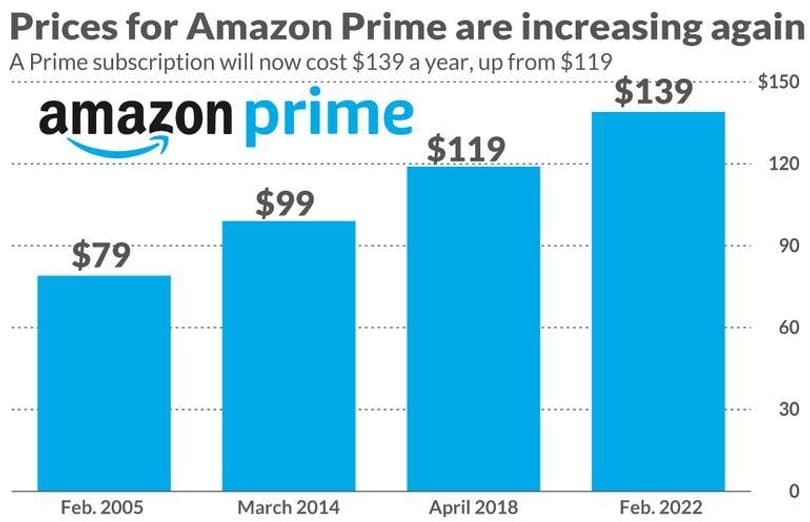
Before evaluating the value, we must establish the baseline expenditures. Amazon has historically adjusted its pricing every few years to account for rising logistics costs and expanded service offerings. Currently, the pricing structure is tiered to accommodate different demographics and payment preferences.
Monthly vs. Annual Plans: Which Saves You More?
The standard Amazon Prime membership is offered at two primary price points: $14.99 per month or $139 per year. From a cash-flow perspective, the monthly plan is more accessible for those who do not wish to commit to a large upfront payment. However, from a wealth-management perspective, the annual plan is the clear winner. By paying $139 upfront, members effectively pay roughly $11.58 per month, representing a savings of approximately $40 per year—nearly a 22% discount over the monthly rate. For those who know they will use the service year-round, the annual commitment acts as a simple but effective way to reduce fixed recurring expenses.
Discounted Tiers: Student and Government Assistance Rates
Amazon offers significant subsidies for specific demographics, which changes the financial calculus entirely. Prime Student is available for $7.49 per month or $69 per year, providing the same benefits at half the cost. Additionally, recipients of certain government assistance programs (such as SNAP or EBT) can access “Prime Access” for $6.99 per month. For these individuals, the “break-even” point is significantly lower, making the membership a much more powerful tool for budget optimization.
The Hidden Costs: Add-on Channels and Services
While the base membership fee is transparent, consumers must be wary of “subscription creep” within the platform. Services like Prime Video Channels (Paramount+, Max, etc.), Kindle Unlimited, and Amazon Music Unlimited often require additional monthly fees. From a financial planning standpoint, it is essential to distinguish between the core membership and these peripheral “add-ons” that can quickly double or triple your monthly Amazon-related outflows.
The Return on Investment (ROI): Is the Membership Fee Justified?
To determine if the $139 annual fee is a sound investment, we must quantify the benefits in dollar terms. If the tangible savings exceed the cost of the membership, the “investment” has a positive ROI.
Quantifying Shipping Savings in the E-commerce Era
The original value proposition of Prime—free two-day shipping—remains its most measurable financial benefit. Without Prime, the average cost of standard shipping for a single order is roughly $7 to $10. For a household that places just two orders per month, the annual shipping costs would exceed $160. In this scenario, the membership pays for itself through logistics alone. Furthermore, the introduction of Same-Day and One-Day delivery on millions of items provides a “time-value” benefit, reducing the need for emergency trips to brick-and-mortar stores, which saves both fuel and time.
Digital Content Valuation: Streaming, Music, and Books
To accurately assess the Prime fee, one must compare it to the cost of standalone digital services. A standard Netflix or Hulu subscription can cost between $10 and $20 per month. If a Prime member uses Prime Video as their primary streaming service, they are effectively neutralizing the entire cost of the membership. When you factor in Prime Reading (a rotating library of e-books) and Amazon Music (a limited but functional streaming service), the “entertainment bundle” value of Prime can be estimated at upwards of $25 per month if purchased as separate services elsewhere.
Exclusive Financial Perks: Prime Day and Early Access
For disciplined shoppers, Prime Day and seasonal “Big Smile” sales events offer the potential for significant savings on high-ticket items like electronics and appliances. Members also receive “Early Access” to Lightning Deals. While these events are designed to encourage spending, a strategic consumer can use them to purchase necessary household upgrades at 30% to 50% below market value. The savings from a single well-timed purchase—such as a laptop or a vacuum cleaner—can often cover the membership fee for the entire year.

Maximizing the Prime Ecosystem for Personal Finance
A Prime membership is more than a shopping tool; it is a platform that, when used correctly, can enhance a user’s broader financial strategy.
The Amazon Prime Rewards Visa: Cashback Strategies
One of the most potent financial tools associated with the membership is the Amazon Prime Rewards Visa Signature Card. This card offers 5% cashback on all Amazon and Whole Foods Market purchases for Prime members. For a family that spends $500 a month on groceries and household essentials through Amazon, that 5% return equates to $25 per month, or $300 per year. This cashback alone pays for the membership twice over, turning the Prime fee from an expense into a net-positive revenue generator.
Grocery Savings: Leveraging the Whole Foods Connection
Amazon’s acquisition of Whole Foods Market integrated the Prime membership into the grocery sector. Members receive an additional 10% off sale items and exclusive weekly discounts. In the current inflationary environment, grocery costs are a significant portion of the average household budget. By strategically shopping “Prime Deals” at Whole Foods or utilizing Amazon Fresh for staples, members can shave hundreds of dollars off their annual food expenditure.
Household Sharing: Splitting the Cost with Amazon Household
From a budgeting perspective, the “Amazon Household” feature is an underutilized gem. Amazon allows two adults to share a single Prime membership and its benefits. By splitting the $139 annual fee between two roommates or partners, the individual cost drops to $69.50. This “shared economy” approach within the household allows for full access to shipping and streaming services while halving the financial burden on each individual’s personal budget.
Strategic Alternatives: When Should You Cancel?
Despite the numerous benefits, a Prime membership is not a universal financial win. There are specific scenarios where the “Money” logic dictates that you should opt out.
Evaluating Spending Habits: Are You Buying More Just to “Save”?
The greatest risk of a Prime membership is the psychological “nudge” it provides to overspend. The ease of “1-Click” ordering and the promise of free shipping can lead to impulsive purchases of items you don’t actually need. If the convenience of Prime leads to an extra $50 a month in “frivolous” spending, the $139 membership is actually costing you over $700 a year in lost capital. Financial discipline is required to ensure the membership serves your budget rather than draining it.
The Rise of Competitors: Walmart+ and Target Circle 360
The retail landscape is more competitive than ever. Walmart+ offers a similar suite of benefits, including free delivery and fuel discounts at thousands of stations, often at a slightly lower price point or with different bundled perks (like Paramount+). Target Circle 360 has also entered the fray. Consumers should conduct a “competitive audit” of their own shopping habits. if you live closer to a Walmart and find their grocery prices lower, the financial ROI of Walmart+ may exceed that of Amazon Prime.
The “Subscribe and Save” Trap vs. Benefit
Amazon’s “Subscribe and Save” feature offers up to 15% off recurring deliveries. While this is a great way to automate savings on consumables like detergent or pet food, it can become a “set it and forget it” trap. Prices on Amazon fluctuate daily; a product that was a bargain six months ago might now be more expensive than the local grocery store’s generic brand. To maintain the financial integrity of the membership, users must periodically audit their subscriptions to ensure they are still getting the best market price.

Final Verdict: The Bottom Line on Prime
Is Amazon Prime membership worth the cost? From a purely financial standpoint, the answer depends on your “utilization rate.” For a household that utilizes the 5% cashback card, shops at Whole Foods, and watches Prime Video, the membership is an extraordinary bargain, providing hundreds of dollars in annual surplus value. However, for a minimalist consumer who only places a few orders a year and prefers physical media or other streaming services, the $139 fee is a sunk cost that provides little to no return.
The key to mastering the “money” aspect of Amazon Prime is to stop viewing it as a “fee” and start viewing it as a financial tool. By calculating your break-even point and leveraging the ecosystem’s cashback and discount features, you can ensure that your membership is an asset to your net worth rather than a liability.
aViewFromTheCave is a participant in the Amazon Services LLC Associates Program, an affiliate advertising program designed to provide a means for sites to earn advertising fees by advertising and linking to Amazon.com. Amazon, the Amazon logo, AmazonSupply, and the AmazonSupply logo are trademarks of Amazon.com, Inc. or its affiliates. As an Amazon Associate we earn affiliate commissions from qualifying purchases.