
Travel is often one of the most significant line-item expenses in a household budget, yet it remains one of the most volatile in terms of pricing. For the financially conscious individual, mastering the art of securing cheap plane tickets is not merely about “finding a deal”; it is a sophisticated exercise in financial optimization, market timing, and capital management. In the world of personal finance, every dollar saved on an airline ticket is a dollar that can be redirected into an investment portfolio, a high-yield savings account, or a business venture.
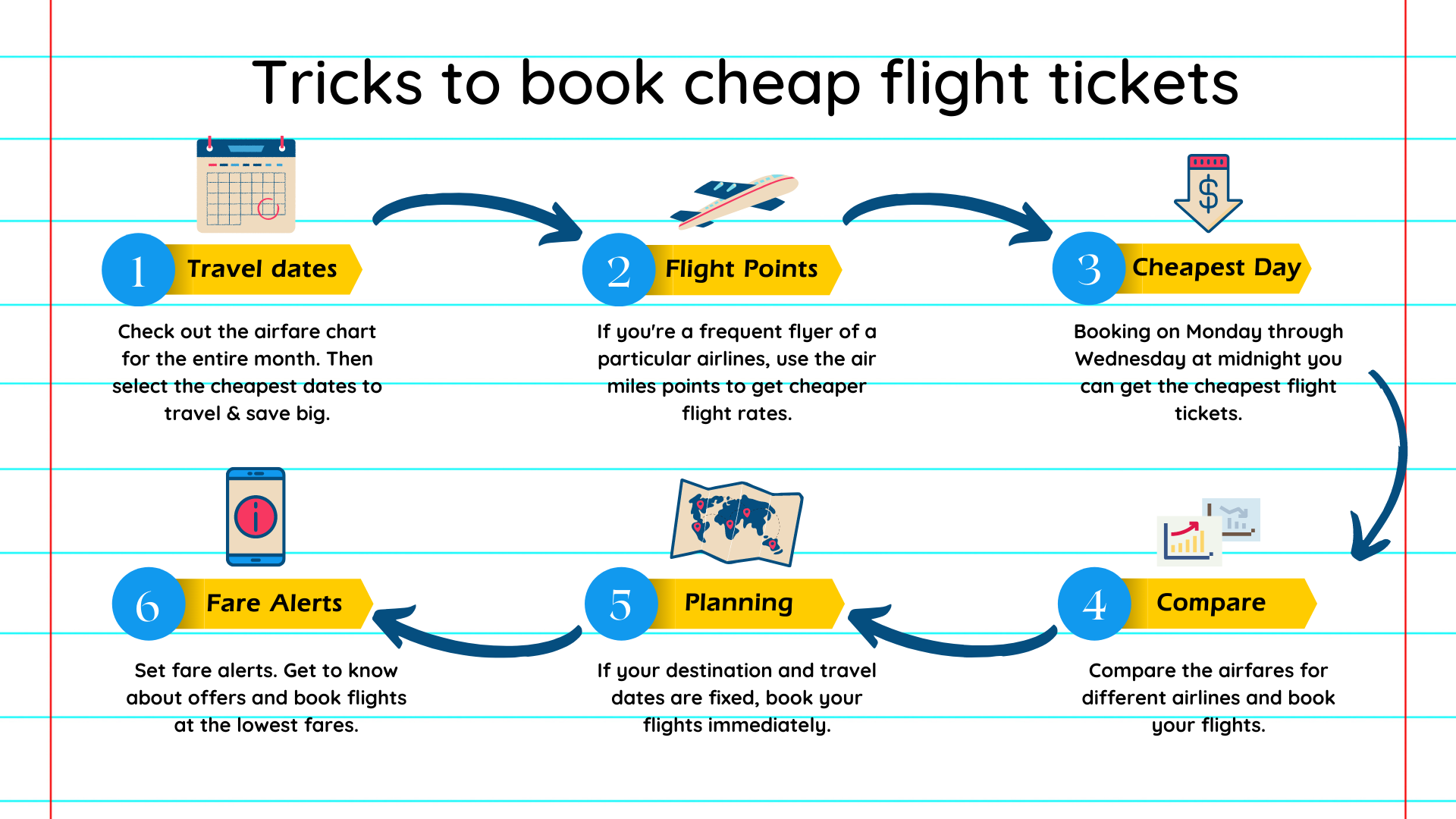
To navigate the complex ecosystem of global aviation pricing, one must view airfare through the lens of economic theory and financial strategy. This guide breaks down the methodology of securing low-cost airfare as a critical component of a robust personal finance plan.
1. Understanding the Macroeconomics of Airline Pricing Algorithms
The airline industry is a pioneer of dynamic pricing—a system where prices fluctuate in real-time based on supply, demand, and consumer behavior. To get cheap tickets, a consumer must understand the financial forces at play.
The Role of Yield Management in Personal Finance
Airlines utilize “Yield Management” systems to maximize the revenue generated from every seat. From a financial perspective, an airplane seat is a “perishable asset.” Once the plane takes off, the value of an empty seat drops to zero. Consequently, airlines adjust prices to ensure maximum occupancy at the highest possible price point. By understanding that prices are not fixed but are instead reflections of market volatility, you can approach ticket purchasing as you would a stock trade: looking for the “dip” in the market.
Hedging Against Seasonal Volatility
Just as an investor hedges against market downturns, a traveler must hedge against seasonal price spikes. Traveling during “shoulder seasons”—the periods between peak and off-peak times—is a form of geographic and temporal arbitrage. By shifting your consumption of travel services to periods of lower demand, you drastically increase your purchasing power without sacrificing the quality of the experience.
The Myth of Incognito Browsing vs. Real Economic Data
While many claim that “incognito mode” is the secret to cheap flights, modern financial analysts suggest that pricing is more closely tied to global distribution systems (GDS) and fare buckets. Rather than focusing on browser cookies, focus on the “fare class.” Each cabin (Economy, Business, First) is divided into sub-buckets with different price points. As the cheapest buckets sell out, the price automatically moves to the next tier. Therefore, early entry into the market is your strongest financial defense.
2. Leveraging Credit Strategy and Rewards Arbitrage
In the modern financial landscape, currency is not limited to fiat money. Points, miles, and credit rewards function as a secondary currency that can be leveraged to offset travel costs. This is often referred to as “travel hacking,” but from a professional finance perspective, it is “rewards arbitrage.”
Maximizing Return on Spend (ROS)
Every dollar you spend on daily necessities should be working for you. By utilizing premium travel credit cards, you convert standard liabilities (like groceries and utility bills) into travel assets. A high-tier rewards card might offer 3x to 5x points on specific categories. When these points are redeemed for international business class flights, the “cent-per-point” (CPP) value often exceeds the interest rate of even the most aggressive index funds, representing a massive return on spend.
Strategic Sign-up Bonuses as Capital Influx
Sign-up bonuses (SUBs) are the quickest way to inject significant “travel capital” into your budget. For a business owner or a high-spender, meeting a minimum spend requirement can yield enough points for a round-trip international flight. This is essentially a tax-free rebate on money you were already obligated to spend, effectively lowering your cost of living and increasing your net savings rate.
Transfer Partners and Value Maximization
The true sophisticated investor in the travel space does not use “fixed-value” points (where 10,000 points always equals $100). Instead, they utilize transferable points programs. By transferring points to airline partners during “transfer bonus” windows, you can achieve a 20-30% increase in your purchasing power instantly. This is the travel equivalent of a dividend reinvestment program, where your assets grow through strategic movement rather than just accumulation.

3. Tactical Budgeting: Timing and Geographic Arbitrage
Securing cheap flights requires a departure from the “fixed-destination” mindset. In personal finance, flexibility is a form of liquidity. The more flexible your dates and destinations, the more liquid your travel budget becomes.
The “Flight First, Destination Second” Methodology
Most people pick a destination and then look for a price. From a wealth-building perspective, this is inefficient. Instead, use “reverse search” tools to find where the market is currently undervalued. If a flight to Tokyo is $1,200 but a flight to Seoul is $600, a savvy financial manager recognizes the $600 difference as a significant saving that can be used to fund the actual vacation or be invested.
Utilizing Geographic Arbitrage and VPNs
Airlines often charge different prices for the same route depending on where the ticket is purchased. This is a form of price discrimination based on the local economy’s purchasing power. By using a VPN to set your location to a country with a weaker currency or lower cost of living, you can sometimes access “local” fares that are not advertised in wealthier markets. While the savings might range from $50 to $200, across a family of four, this represents a significant reduction in travel overhead.
Hidden-City Ticketing: A Risk-Reward Analysis
“Hidden-city” ticketing—where you book a flight with a layover in your actual destination and skip the second leg—can be much cheaper than a direct flight. In finance, this is a “gray market” strategy. While it offers high immediate returns (lower costs), it carries risks, such as potential penalties from the airline or issues with checked luggage. For the risk-tolerant traveler, this is an advanced tactic to minimize capital expenditure on transit.
4. Cost-Benefit Analysis of Low-Cost Carriers (LCCs)
The sticker price of a ticket is rarely the final cost. A disciplined financial approach requires a full “Total Cost of Ownership” (TCO) analysis when comparing legacy carriers to low-cost carriers (LCCs).
Deconstructing the “Unbundled” Fare Model
Low-cost carriers like Spirit, Ryanair, or AirAsia use an unbundled pricing model. While the base fare might be $20, the “all-in” cost including baggage, seat selection, and boarding priority might exceed that of a full-service airline. A professional budgeter calculates these variables beforehand. If you are a minimalist traveler, the LCC model offers a massive advantage; if you require amenities, the LCC may actually be a poor financial choice.
Factoring in Opportunity Cost and Logistics
A cheap flight that lands at an airport two hours away from your actual destination incurs secondary costs: train tickets, Ubers, and, most importantly, time. In the world of finance, time is a non-renewable asset. If a flight saves you $100 but costs you five hours of travel time, and your hourly earning rate (or the value you place on your leisure time) is $50/hour, you have effectively lost $150 in value. Always calculate the “True Cost” of a flight, not just the ticket price.
5. Building a Sustainable Travel Fund and Long-Term Strategy
The ultimate goal of finding cheap plane tickets is to ensure that travel remains a sustainable part of your lifestyle without compromising your long-term financial goals, such as retirement or home ownership.
Automating Your Travel Savings
Treat travel as a recurring expense rather than a one-time luxury. By setting up a “Sinking Fund”—a separate savings account where a small portion of your income is automated every month—you ensure that when a “deal” appears, you have the liquidity to act immediately. The best flight prices often last only a few hours; having a dedicated fund allows you to “buy the dip” without disrupting your primary cash flow.
Utilizing Price Trackers and AI-Driven Financial Tools
Technology has democratized access to market data. Tools that use machine learning to predict whether a fare will rise or fall are essential for the modern traveler. Using these tools is akin to using a robo-advisor for your investments. They remove the emotional stress of “when to buy” and replace it with data-driven decision-making.

The Macro Impact: Travel as an Investment in Human Capital
Finally, it is important to view the savings found on plane tickets as a means to an end. Lowering the cost of global mobility allows for greater exposure to new markets, cultures, and networking opportunities. In the modern economy, “Human Capital”—your knowledge, experiences, and connections—is one of your most valuable assets. By mastering the mechanics of cheap travel, you are not just saving money; you are investing in a more globalized, informed, and versatile version of yourself.
In conclusion, getting cheap plane tickets is a multifaceted financial strategy. It requires an understanding of market mechanics, the disciplined use of credit as a tool for arbitrage, and a constant analysis of cost versus value. When you stop viewing airfare as a static cost and start seeing it as a volatile market to be navigated, you unlock a level of financial freedom that makes the world significantly more accessible.
aViewFromTheCave is a participant in the Amazon Services LLC Associates Program, an affiliate advertising program designed to provide a means for sites to earn advertising fees by advertising and linking to Amazon.com. Amazon, the Amazon logo, AmazonSupply, and the AmazonSupply logo are trademarks of Amazon.com, Inc. or its affiliates. As an Amazon Associate we earn affiliate commissions from qualifying purchases.