
In the modern subscription economy, few services have permeated the household budget as thoroughly as Amazon Prime. What began in 2005 as a simple $79-per-year loyalty program designed to offer unlimited two-day shipping has evolved into a multi-faceted financial ecosystem. Today, for tens of millions of consumers, the question is no longer just “how much does it cost,” but rather “what is the tangible return on investment?”
From a personal finance perspective, Amazon Prime represents a significant recurring expense that requires periodic auditing. As the cost of living fluctuates and subscription fatigue sets in, understanding the direct costs, the hidden savings, and the potential for increased spending is essential for any disciplined financial plan.
Understanding the Pricing Structure: The Direct Investment
To evaluate Amazon Prime through a financial lens, one must first break down the current entry costs. Amazon has transitioned from a flat-rate model to a tiered pricing strategy designed to capture different demographic segments, from students to low-income households.
Monthly vs. Annual Plans: The Opportunity Cost of Convenience
As of 2024, the standard price for Amazon Prime in the United States stands at $14.99 per month or $139 per year. For a consumer focusing on cash flow management, the monthly option offers flexibility, allowing one to toggle the service on and off based on seasonal shopping needs (such as the December holidays).
However, from a wealth-building perspective, the annual plan is the clear winner. At $139 per year, the effective monthly cost is approximately $11.58. This results in an annual saving of $40.88 compared to the month-to-month commitment—a nearly 23% discount. In the world of personal finance, finding a guaranteed 23% return on a “saved” expense is a rare and powerful move.
Student and Government Assistance Discounts
Amazon employs a sophisticated customer acquisition strategy by offering heavily subsidized rates to specific groups.
- Prime Student: At $7.49 per month or $69 per year, this tier is half the price of a standard membership. It includes a six-month trial, which represents a massive front-loaded value for young adults looking to minimize their overhead.
- Qualified Government Assistance: For individuals receiving EBT, SNAP, or Medicaid, the cost is reduced to $6.99 per month. This is a vital financial tool for low-income households, as the savings on shipping and access to competitive grocery pricing can significantly offset the monthly fee.
The ROI of Convenience: Quantifying the Prime Ecosystem
A membership is only a “deal” if the utility derived exceeds the capital expended. To determine the true value of Prime, we must assign a dollar amount to its various features and compare them against the market rate for standalone services.
Logistics and Shipping Savings
The cornerstone of Prime is free shipping. To calculate your personal ROI, consider that the average non-Prime shipping fee for small orders ranges from $5.99 to $9.99. If a household places just 20 orders per year, the shipping savings alone (estimated at $120 to $200) can justify the $139 annual fee. Furthermore, the introduction of “Same-Day” and “One-Day” delivery adds a layer of time-value. In financial terms, time is a non-renewable asset; reducing the hours spent commuting to physical retailers can be viewed as an indirect financial gain.
Digital Content and Entertainment Assets
The financial impact of Prime extends into the “Entertainment” line item of a household budget.
- Prime Video: A standalone Netflix or Max subscription can cost between $10 and $23 per month. By utilizing Prime Video as a primary streaming source, a consumer can potentially eliminate another streaming bill, saving upwards of $180 annually.
- Prime Music and Gaming: While perhaps less utilized, these services offer alternatives to Spotify or Twitch subscriptions.
- Prime Reading and First Reads: For avid readers, the access to a rotating library of e-books and one free pre-release Kindle book per month can save an estimated $10–$15 monthly compared to purchasing individual titles.
Grocery Savings: The Whole Foods and Amazon Fresh Factor
For many, the most significant financial leverage within Prime is found in the kitchen. Prime members receive an additional 10% discount on sale items at Whole Foods Market, alongside exclusive weekly deals. For a family spending $200 a week on groceries, even a modest 5% total saving through Prime-exclusive discounts results in $520 of annual savings—nearly four times the cost of the membership itself.
Strategic Financial Planning: Is Prime Worth the Investment?
Despite the numerous perks, a Prime membership is not a guaranteed financial win for everyone. To maintain a healthy balance sheet, a consumer must perform a “Break-Even Analysis” and be wary of the psychological triggers that lead to overspending.
The Break-Even Analysis
To determine if Prime fits your financial goals, ask the following questions:
- Do I order more than 20 times a year? If the answer is no, and you don’t use the streaming services, you are likely losing money.
- Am I using the “Add-on” services? If you pay for Amazon Prime but still maintain active subscriptions to Netflix, Spotify, and Audible, you are likely over-subscribing. Consolidation is the key to maximizing the Prime ROI.
- What is my proximity to physical retail? If you live in an urban center where goods are easily accessible at lower prices, the “convenience fee” of Prime may be an unnecessary luxury.
Avoiding the “Prime Trap” (Impulse Spending)
There is a darker side to the Prime financial equation: behavioral economics. Studies have shown that Amazon Prime members spend significantly more on average than non-members—estimates suggest $1,400 per year versus $600. The “sunk cost fallacy” often drives members to shop more frequently to “get their money’s worth” from the membership.
From a professional finance standpoint, if the existence of a Prime account causes you to make three $20 impulse purchases a month, the service is costing you $720 a year in unnecessary outflow, far outweighing any shipping savings. To combat this, disciplined investors often use the “Wait 24 Hours” rule for any item in their Amazon cart.
Future Outlook: Inflation and the Cost of Convenience
As we look toward the future of personal finance, we must recognize that the cost of Prime is likely on an upward trajectory. Amazon has historically raised the price of Prime every four to five years to account for rising fuel costs, labor wages, and content acquisition fees.
Historical Price Hikes and Budgeting for Increases
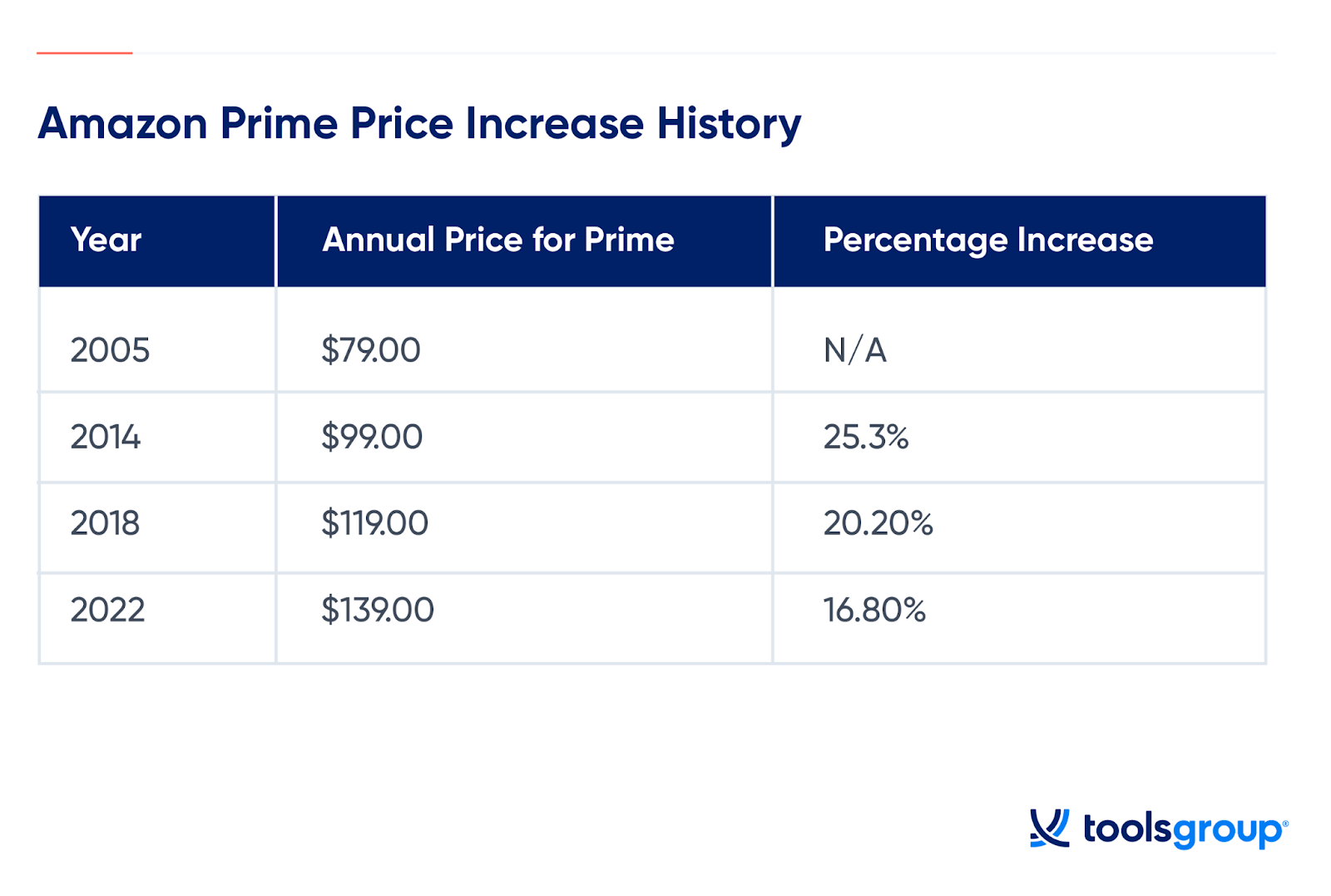
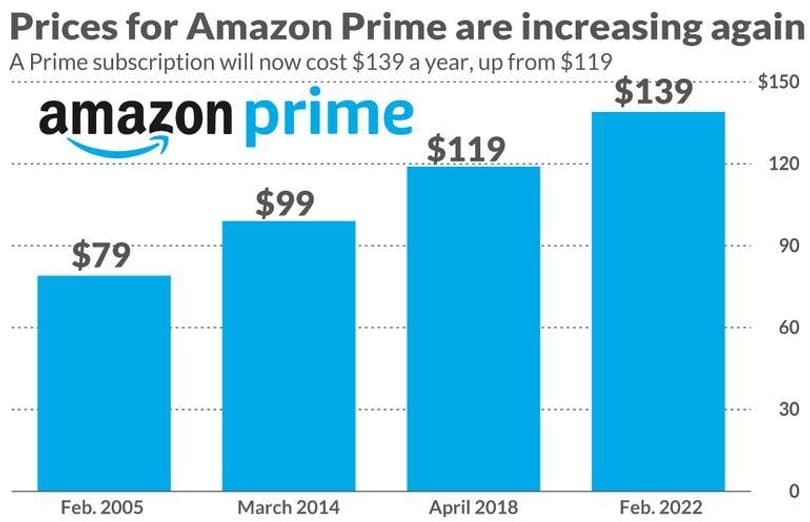
In 2014, Prime was $99. In 2018, it rose to $119. In 2022, it hit $139. Investors and budget-conscious consumers should anticipate another price hike within the next 24 months. When your subscription renewal comes up, it is prudent to reassess. If the price reaches $159 or $179, the “Break-Even” point shifts, requiring even higher usage to justify the expense.
Comparing Prime to Competitor Financial Models
Amazon is no longer the only player in the “Paid Loyalty” space. Walmart+ ($98/year) and Target 360 are aggressive competitors. Walmart+ includes Paramount+ and fuel discounts, which might offer a better ROI for those who commute long distances. Evaluating these alternatives is a hallmark of a sophisticated financial strategy. If your primary goal is reducing grocery costs and fuel expenses, a pivot to a competitor might yield a higher net-positive impact on your monthly budget.

Conclusion: The Bottom Line
Ultimately, Amazon Prime is a powerful financial tool, but it is not a “set it and forget it” asset. At $139 per year, it requires a conscious effort to extract maximum value. For the savvy consumer, the membership pays for itself through consolidated entertainment costs, grocery discounts at Whole Foods, and the elimination of shipping fees.
However, the true cost of Prime is often hidden in the ease of spending it facilitates. To ensure Prime remains a benefit to your net worth rather than a drain, you must treat it like any other business investment: track the output, audit the usage, and never be afraid to “divest” if the cost-to-value ratio no longer aligns with your financial freedom goals. By viewing Amazon Prime as a strategic line item rather than a passive utility, you can master the subscription economy and keep your personal finances on a trajectory of growth.
aViewFromTheCave is a participant in the Amazon Services LLC Associates Program, an affiliate advertising program designed to provide a means for sites to earn advertising fees by advertising and linking to Amazon.com. Amazon, the Amazon logo, AmazonSupply, and the AmazonSupply logo are trademarks of Amazon.com, Inc. or its affiliates. As an Amazon Associate we earn affiliate commissions from qualifying purchases.