
For any investor, whether a seasoned portfolio manager or a newcomer to the equities market, the question of “what is the stock price of Amazon” represents more than just a numerical value on a ticker tape. It is a reflection of global consumer health, the growth of cloud computing, and the shifting dynamics of the digital economy. Amazon.com, Inc. (ticker: AMZN) has evolved from a niche online bookseller into a diversified behemoth, and its share price acts as a barometer for the broader tech-heavy Nasdaq and the S&P 500.
To understand the stock price of Amazon, one must look beyond the daily fluctuations and delve into the fundamental financial principles that drive its valuation. This article explores the mechanics of Amazon’s market position, the drivers of its share price, and the strategic considerations for those looking to include this titan in their investment portfolio.
The Mechanics of Amazon’s Market Valuation
When discussing the price of a stock, it is essential to distinguish between the share price and the total market capitalization of the company. The stock price of Amazon is the cost of a single unit of ownership, but that number is shaped by corporate actions and investor sentiment.
Market Capitalization vs. Share Price
As of the current market cycle, Amazon is one of the few elite companies to consistently maintain a trillion-dollar market capitalization. While the share price might sit at a few hundred dollars, the market cap—calculated by multiplying the share price by the total number of outstanding shares—tells the true story of the company’s size. For investors, the “price” is often secondary to the “valuation.” A high stock price does not necessarily mean a stock is expensive, just as a low price does not mean it is a bargain. Investors look at valuation multiples, such as Price-to-Earnings (P/E) and Price-to-Sales (P/S), to determine if the current stock price accurately reflects the company’s earning potential.
The Impact of Stock Splits
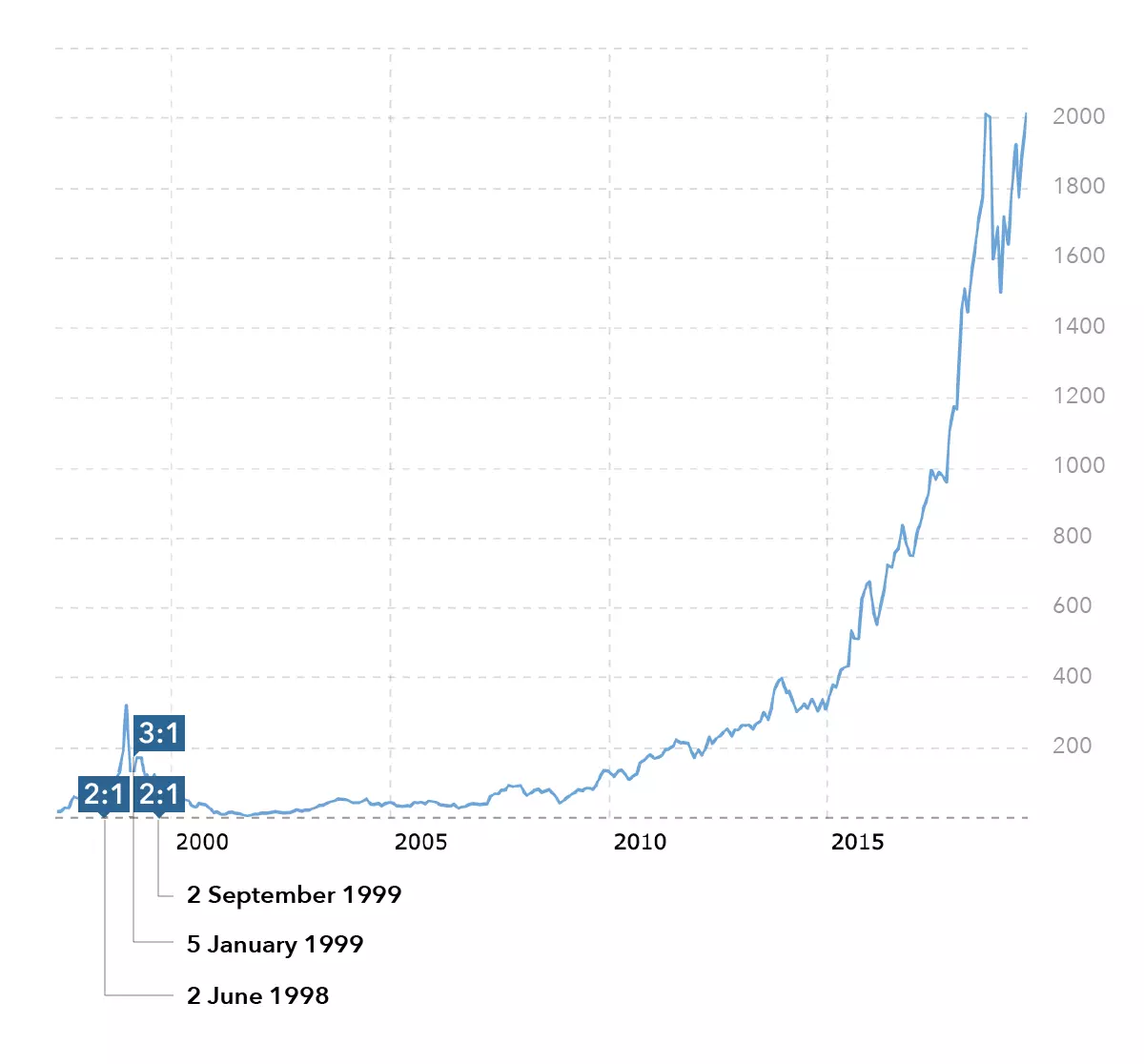
In mid-2022, Amazon executed a 20-for-1 stock split. This is a critical historical context for anyone looking at Amazon’s price charts. Before the split, a single share was trading for over $2,000. While the split did not change the intrinsic value of the company or the total value of an investor’s holdings, it significantly lowered the “per-share” price. This move was designed to make the stock more accessible to retail investors and to facilitate the granting of stock-based compensation to employees. Understanding these corporate actions is vital when comparing today’s price to historical data.
Key Drivers Influencing Amazon’s Share Price
The stock price of Amazon does not move in a vacuum. It is propelled by specific business segments that contribute varying levels of revenue and profit. For an investor, analyzing the price requires a deep dive into the “engine” of the company.
E-commerce Dominance and Operating Margins
While Amazon is synonymous with online shopping, the retail division is a high-volume, low-margin business. The stock price is highly sensitive to consumer spending trends, inflation, and logistics costs. When fuel prices rise or labor markets tighten, Amazon’s shipping costs increase, which can compress margins and lead to a dip in the stock price. Conversely, during peak shopping seasons like Prime Day or the Q4 holiday rush, positive sales data often acts as a catalyst for share price appreciation.
AWS: The Profit Engine
The single most important factor for many institutional investors when evaluating Amazon’s stock price is Amazon Web Services (AWS). As the global leader in cloud infrastructure, AWS provides the lion’s share of the company’s operating income. Because cloud services have significantly higher margins than retail, the growth rate of AWS often dictates the direction of the stock. If AWS shows signs of slowing growth due to competition from Microsoft Azure or Google Cloud, the stock price typically faces downward pressure, regardless of how many packages the retail side delivers.
Advertising and Subscription Growth
In recent years, Amazon has quietly become a juggernaut in digital advertising. By leveraging its vast trove of consumer data, Amazon allows sellers to promote products directly at the point of purchase. This high-margin revenue stream has become a vital component of the company’s bottom line. Additionally, the recurring revenue from Amazon Prime subscriptions provides a “moat” that stabilizes the company’s cash flow, making the stock price less volatile than that of pure-play retail competitors.

Analyzing Historical Performance and Volatility
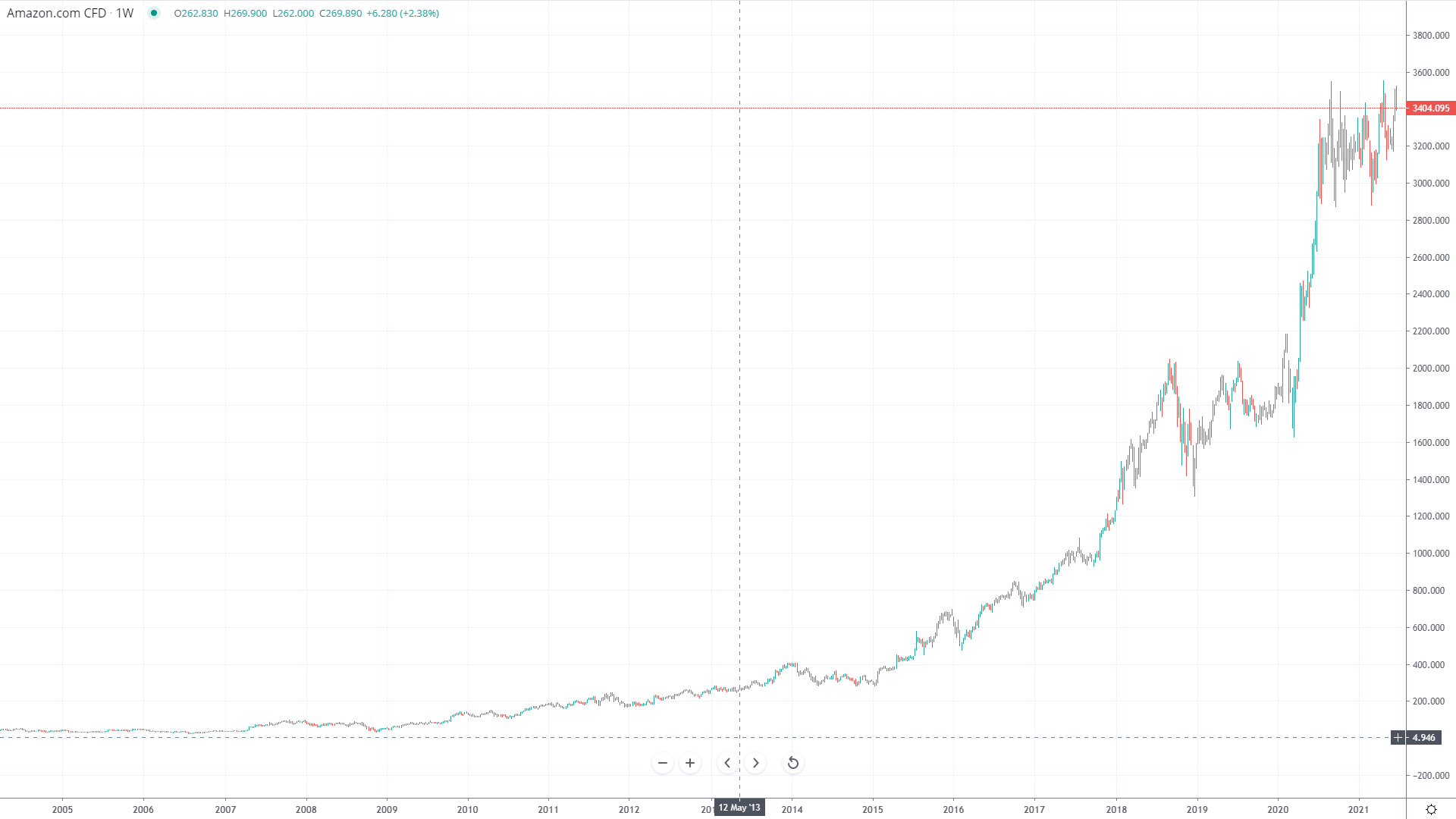
To predict where Amazon’s stock price might go, we must look at where it has been. Amazon’s history is a masterclass in long-term capital appreciation, but it has not been a smooth ride.
From Dot-Com Darling to Trillion-Dollar Giant
Amazon’s IPO in 1997 was priced at $18 per share (pre-split). Since then, it has weathered the dot-com bubble burst, the 2008 financial crisis, and the post-pandemic inflationary period. The stock price has historically been characterized by high volatility, often trading at a high P/E ratio because investors are willing to pay a premium for its relentless growth. The company’s philosophy of reinvesting almost all profits back into the business meant that for years, the stock price rose based on revenue growth rather than net income.
Dealing with Market Corrections
Like all growth stocks, Amazon is sensitive to interest rate changes. When the Federal Reserve raises rates, the “discount rate” applied to future earnings increases, which can lead to a contraction in the stock price. We saw this clearly in 2022, when the tech sector faced a significant correction. However, Amazon has historically shown a remarkable ability to recover from these dips, often emerging stronger as it optimizes its cost structure during lean years.
Investment Strategies: How to Approach AMZN Stock
For those asking “what is the stock price of Amazon” with the intent to buy, it is important to have a strategic framework. Investing in a mega-cap tech stock requires a different mindset than trading speculative penny stocks.
Fundamental Analysis and Valuation Metrics
Professional investors often look at Free Cash Flow (FCF) as the gold standard for valuing Amazon. Because the company spends so heavily on capital expenditures (warehouses, data centers, satellites), net income can be deceptive. A healthy FCF indicates that the company can fund its own growth without needing to take on excessive debt. When the stock price drops while FCF remains strong, value investors often see it as a “buy the dip” opportunity.
Long-term Growth vs. Short-term Fluctuations
Amazon is rarely a “get rich quick” stock in the modern era due to its massive size. Instead, it is often viewed as a “core” holding for a long-term portfolio. Investors who focus on the daily price movements of Amazon may miss the forest for the trees. The strategy for many successful AMZN investors has been “dollar-cost averaging”—buying a set dollar amount of the stock at regular intervals regardless of the price—to mitigate the impact of volatility.
The Future Outlook for Amazon Investors
The future trajectory of Amazon’s stock price will be determined by its ability to innovate and expand into new sectors. The company is no longer just an e-commerce or cloud player; it is an infrastructure player for the modern age.
Emerging Markets and Logistics Expansion
Amazon continues to invest heavily in its own logistics network, including its airline (Amazon Air) and its “last-mile” delivery fleet. By reducing its reliance on third-party carriers like UPS or FedEx, Amazon increases its efficiency. Furthermore, its expansion into international markets like India and Latin America represents a massive “TAM” (Total Addressable Market) that could fuel the stock price for the next decade.
Regulatory Risks and Macroeconomic Headwinds
No analysis of Amazon’s stock price would be complete without mentioning the risks. The company is under constant scrutiny from antitrust regulators in the United States and Europe. Any legal ruling that forces a breakup of the company—such as spinning off AWS from the retail business—would have a seismic impact on the stock price. While some argue a spinoff could unlock value, the uncertainty of litigation usually acts as a “drag” on the share price.
In conclusion, the stock price of Amazon is a complex figure derived from a multitude of variables. It represents a combination of current profitability in the cloud, future potential in AI and logistics, and the general appetite for risk in the global financial markets. For the savvy investor, the price is not just a number to be watched, but a story to be understood. By focusing on the fundamentals of the “Money” niche—cash flow, valuation, and market dynamics—one can navigate the fluctuations of AMZN with confidence and clarity.
aViewFromTheCave is a participant in the Amazon Services LLC Associates Program, an affiliate advertising program designed to provide a means for sites to earn advertising fees by advertising and linking to Amazon.com. Amazon, the Amazon logo, AmazonSupply, and the AmazonSupply logo are trademarks of Amazon.com, Inc. or its affiliates. As an Amazon Associate we earn affiliate commissions from qualifying purchases.