
In the early days of cryptocurrency, “farming” or mining Bitcoin was a hobbyist endeavor that could be performed on a standard personal computer. As the network has matured, the technical requirements have scaled exponentially. Today, “farming” Bitcoin—more accurately described as Proof-of-Work (PoW) mining—requires a sophisticated blend of specialized hardware, robust infrastructure, and optimized software. This guide explores the technical architecture required to establish a Bitcoin mining operation, focusing on the hardware, environmental controls, and software stacks necessary to participate in the global decentralized network.
Understanding the Mechanics of Bitcoin Mining
Before assembling hardware, it is essential to understand the underlying technical protocol that governs the Bitcoin network. Bitcoin mining is the process of verifying transactions and adding them to the public ledger (the blockchain) by solving complex cryptographic puzzles.
The Proof-of-Work Protocol
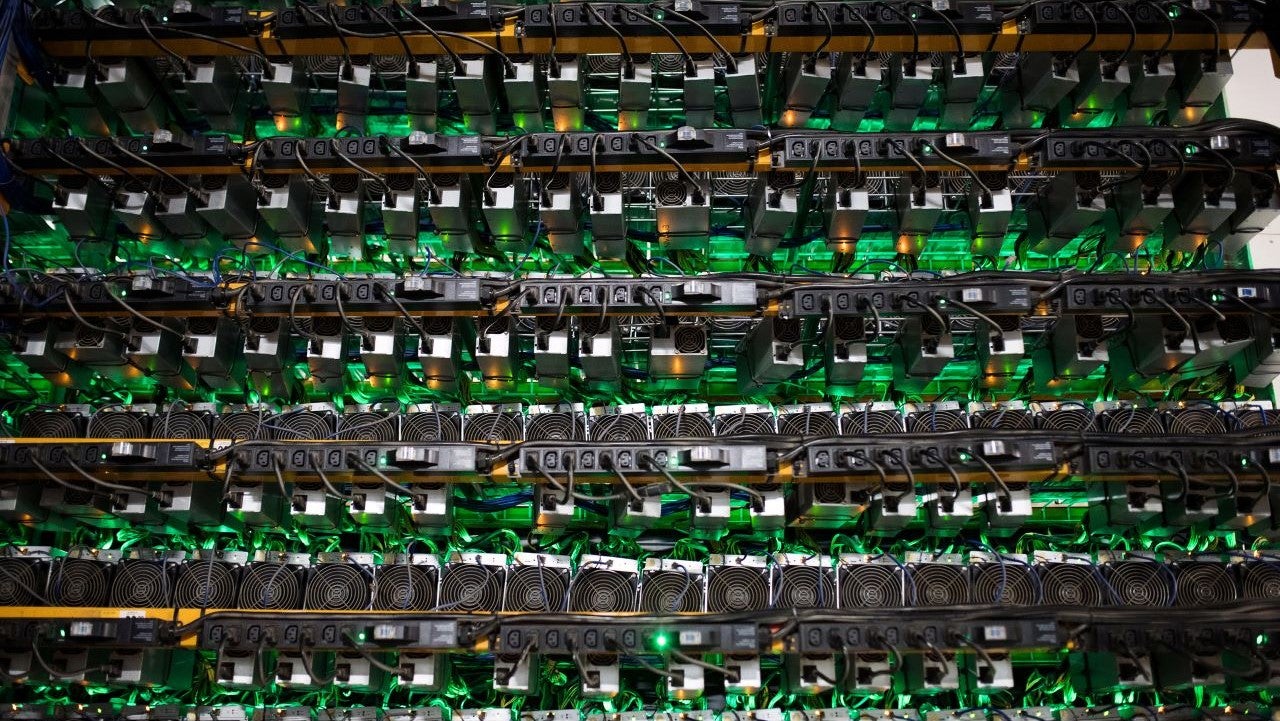
At the heart of Bitcoin is the SHA-256 hashing algorithm. Mining “farming” involves the use of computational power to find a hash—a digital fingerprint—that is lower than a specific target set by the network. This process, known as Proof-of-Work, ensures that the network remains secure and decentralized. Technically, miners are competing to find a “nonce” (a random number) that, when combined with the block data and hashed, results in a string of leading zeros. This requires trillions of calculations per second.
Hash Rates and Network Difficulty
The “Hash Rate” is the primary metric of a miner’s performance, measured in hashes per second (H/s). As more miners join the network, the cumulative hash rate increases, which triggers a “Difficulty Adjustment.” Every 2,016 blocks (approximately every two weeks), the network evaluates how long it took to mine those blocks. If the mining was too fast, the difficulty increases; if it was too slow, it decreases. For a “farm” to remain viable, its hardware must be capable of high throughput to keep pace with these automated adjustments.
The Role of the Blockchain Ledger
Every miner maintains a copy of the blockchain. When a miner successfully finds a valid hash, they broadcast the block to the network. Other nodes verify the technical validity of the transactions and the PoW. Once verified, the miner is rewarded with newly minted Bitcoin (the block subsidy) and transaction fees. From a technical standpoint, a farm is not just a hardware site; it is a critical node in a distributed database system.
Essential Hardware for a Modern Bitcoin Farm
The transition from general-purpose hardware to specialized equipment has defined the last decade of Bitcoin. To farm Bitcoin effectively today, one must utilize Application-Specific Integrated Circuits (ASICs).
The Evolution from CPU to ASIC
In the beginning, Central Processing Units (CPUs) were sufficient. As the network grew, miners migrated to Graphics Processing Units (GPUs), which could handle the parallel processing required for hashing more efficiently. However, since 2013, the network has been dominated by ASICs. Unlike a computer that can run an operating system or play games, an ASIC is hard-wired for one purpose: executing the SHA-256 algorithm. This specialization makes them thousands of times more efficient than any general-purpose hardware.
Selecting High-Efficiency ASIC Miners
When building a farm, hardware selection is a balance of hash rate and energy efficiency (measured in Joules per Terahash, or J/TH). Leading manufacturers like Bitmain (Antminer series) and MicroBT (Whatsminer series) release iterations that push the limits of silicon wafers. For example, the Antminer S19 or S21 series utilizes 5nm or 7nm chips to maximize hashes while minimizing the heat generated per calculation. Technical buyers must evaluate the “Efficiency Ratio” to ensure the hardware can survive the “halving” events, where the block reward is cut in half.
Power Supply Units (PSU) and Energy Requirements
ASIC miners are power-intensive, often drawing between 3,000 and 3,500 Watts per unit. This requires specialized Power Supply Units that can convert AC power from the grid to the high-amperage DC power required by the hash boards. A farm requires industrial-grade electrical infrastructure, including Power Distribution Units (PDUs) and heavy-duty cabling (C19/C20 connectors), to prevent overheating and electrical fires at the socket level.
Designing the Mining Infrastructure and Environment
The greatest technical challenge in Bitcoin farming is not the mining itself, but the management of the byproduct: heat. A farm is essentially a high-density data center that converts electricity into heat and hashes.

Cooling Systems and Thermal Management
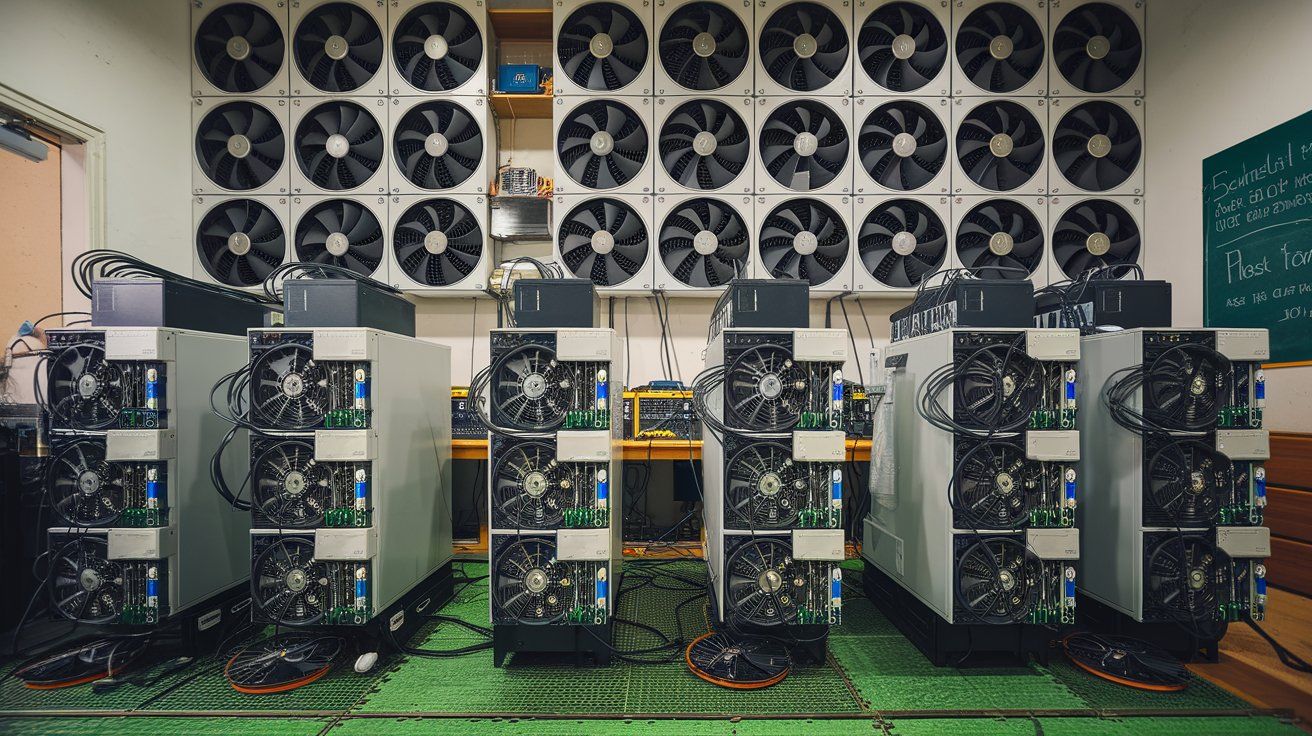
Each ASIC miner generates a significant amount of thermal energy. Effective “farming” requires a sophisticated airflow strategy. Most commercial farms utilize “Hot Aisle/Cold Aisle” containment. In this setup, the front of the miners faces a cold aisle where filtered, ambient air is pulled in. The back of the miners faces a hot aisle, where the 120mm fans on the ASICs exhaust the heated air. Advanced operations are increasingly moving toward Immersion Cooling, where the hardware is submerged in a non-conductive dielectric fluid. This fluid carries heat away more efficiently than air, allowing for “overclocking” (increasing the hash rate beyond factory settings) while reducing mechanical wear.
Network Connectivity and Latency Optimization
While Bitcoin mining does not require massive bandwidth, it requires extremely low latency and high stability. When a new block is found globally, your farm needs to receive that information instantly to start working on the next block. High latency (ping) can result in “stale shares”—computational work that was correct but arrived too late to be included in the blockchain. Technical setups often include redundant fiber-optic lines and optimized routing to ensure the farm stays synchronized with the global network state.
Scalability and Rack Configuration
A Bitcoin farm is organized into racks. Each rack must be engineered to support the weight of multiple ASICs and the electrical load they demand. Proper cable management is not just for aesthetics; it is a technical requirement to ensure unobstructed airflow. Furthermore, the use of smart PDUs allows operators to remotely cycle power to individual units, which is essential for troubleshooting “zombie” hash boards that have stopped communicating with the controller.
Software Integration and Mining Pool Configuration
Once the hardware is physically installed, the software layer manages the interaction between the local chips and the global Bitcoin protocol.
Mining Firmware and Operating Systems
Every ASIC comes with factory firmware, but many professional “farmers” replace this with custom firmware like Braiins OS+ or HiveOS. These custom operating systems provide more granular control over the hardware. Technically, they allow for “autotuning,” where the software adjusts the voltage and frequency of each individual chip on a hash board to find the “sweet spot” of efficiency. This can increase a farm’s output by 10-20% without increasing the power draw.
Connecting to Stratum Protocols and Mining Pools
Because the difficulty of the Bitcoin network is so high, an individual miner might go years without finding a block. To solve this, miners join “Mining Pools.” The software on the ASIC uses the Stratum Protocol to communicate with a pool server. The pool sends a “template” of a block to the farm; the farm’s ASICs work on pieces of that block and send back “shares” (proofs of work at a lower difficulty). This ensures a steady stream of income proportional to the hash rate contributed. Choosing a pool involves evaluating the payout mechanism (e.g., FPPS vs. PPLNS) and the geographical location of the pool’s nodes to minimize latency.
Monitoring Tools and Remote Management
Operating a farm of 50 or 5,000 miners requires centralized monitoring software. Tools like Foreman or Awesome Miner aggregate data from every ASIC, providing real-time metrics on temperature, fan speed, hash rate, and power consumption. These systems are configured with API triggers; for instance, if an ASIC’s temperature exceeds 85°C, the software can automatically shut down the unit or increase fan speeds to prevent permanent hardware degradation.
Security Protocols for Mining Operations
In the digital world of Bitcoin, security is as much a technical requirement as the hardware itself. A farm is a high-value target for both physical and cyber threats.
Hardening Network Security
Since ASICs are connected to the internet, they are vulnerable to malware that can “hijack” the hash rate, sending the mining rewards to an attacker’s address. Technical security involves placing the mining hardware on a separate VLAN (Virtual Local Area Network) with no direct access to the outside internet, except through a secured gateway. Firewalls must be configured to allow only Stratum traffic and administrative access via encrypted VPNs.
Wallet Integration and Secure Payouts
The ultimate goal of the farm is to accumulate Bitcoin. The technical management of these rewards requires a tiered wallet system. Mining pools usually pay out to a “hot wallet” for operational expenses, but the majority of the “harvested” Bitcoin should be moved to “cold storage”—hardware wallets or multisig (multi-signature) setups that are disconnected from the internet. Implementing a 2-of-3 or 3-of-5 multisig scheme ensures that no single point of failure (or single compromised employee) can move the farm’s assets.
Protecting Against Firmware Vulnerabilities
As ASICs become more complex, their controllers (usually based on Linux) become susceptible to exploits. Maintaining a regular update cycle for firmware and using digitally signed software are critical steps. Professional farms often run a “local proxy” for the mining pool, which acts as a buffer and provides an extra layer of security and data compression between the local network and the public internet.
By integrating high-performance ASIC hardware with robust thermal management and optimized software, a Bitcoin farm functions as a sophisticated industrial-tech operation. While the “farming” metaphor suggests simplicity, the technical reality is a high-stakes environment where efficiency, uptime, and security dictate success in the global race for hashes.
aViewFromTheCave is a participant in the Amazon Services LLC Associates Program, an affiliate advertising program designed to provide a means for sites to earn advertising fees by advertising and linking to Amazon.com. Amazon, the Amazon logo, AmazonSupply, and the AmazonSupply logo are trademarks of Amazon.com, Inc. or its affiliates. As an Amazon Associate we earn affiliate commissions from qualifying purchases.