
For many prospective investors, the question “how much is a Bitcoin?” is often the first step into a much larger world of decentralized finance. However, the answer is rarely a single, static number. Unlike a fixed-price consumer good, the price of Bitcoin is a living, breathing reflection of global economic sentiment, supply-and-demand mechanics, and its growing role as a legitimate asset class in a diversified portfolio.
To understand Bitcoin’s price is to understand the intersection of scarcity, technology, and psychology. Whether Bitcoin is trading at $30,000 or $100,000, its value is derived from its unique properties as a non-sovereign, digital store of value. For the modern investor, navigating this price action requires looking beyond the daily ticker and into the fundamental drivers that dictate its long-term financial trajectory.
The Mechanics of Bitcoin Valuation
To answer how much a Bitcoin is worth at any given moment, one must look at the global cryptocurrency exchanges. Bitcoin does not have a “closing price” because the market operates 24/7, 365 days a year. The price you see on financial news sites is the last traded price—the equilibrium point where a buyer and a seller agreed to exchange value.
Supply and Demand Dynamics
At its core, Bitcoin’s price is a function of pure supply and demand. Unlike fiat currencies (such as the US Dollar or the Euro), which central banks can print in response to economic crises, Bitcoin has a hard-coded supply cap of 21 million coins. As of today, over 19 million of those coins have already been mined.
This absolute scarcity is the primary driver of its valuation. When demand increases—whether from retail investors, hedge funds, or public companies—and the supply remains fixed, the price must move upward to find a new equilibrium. Conversely, when large-scale holders (often referred to as “whales”) sell their positions, the market experiences downward pressure.
The Role of the Halving Cycle
One of the most critical financial events in the Bitcoin ecosystem is the “Halving.” Approximately every four years, the reward given to Bitcoin miners for securing the network is cut in half. This effectively reduces the rate at which new Bitcoin enters circulation.
Historically, the Halving has served as a massive catalyst for price appreciation. By tightening the “inflation” rate of the asset, the Halving reinforces the scarcity narrative. For investors, understanding these cycles is essential for timing entries and understanding the long-term supply shocks that can lead to parabolic price moves.
Factors Influencing Bitcoin’s Market Price
While the internal mechanics of Bitcoin provide a foundation, external market forces play a massive role in day-to-day volatility. Bitcoin does not exist in a vacuum; it is increasingly correlated with broader financial markets and macroeconomic trends.
Macroeconomic Drivers and Inflation
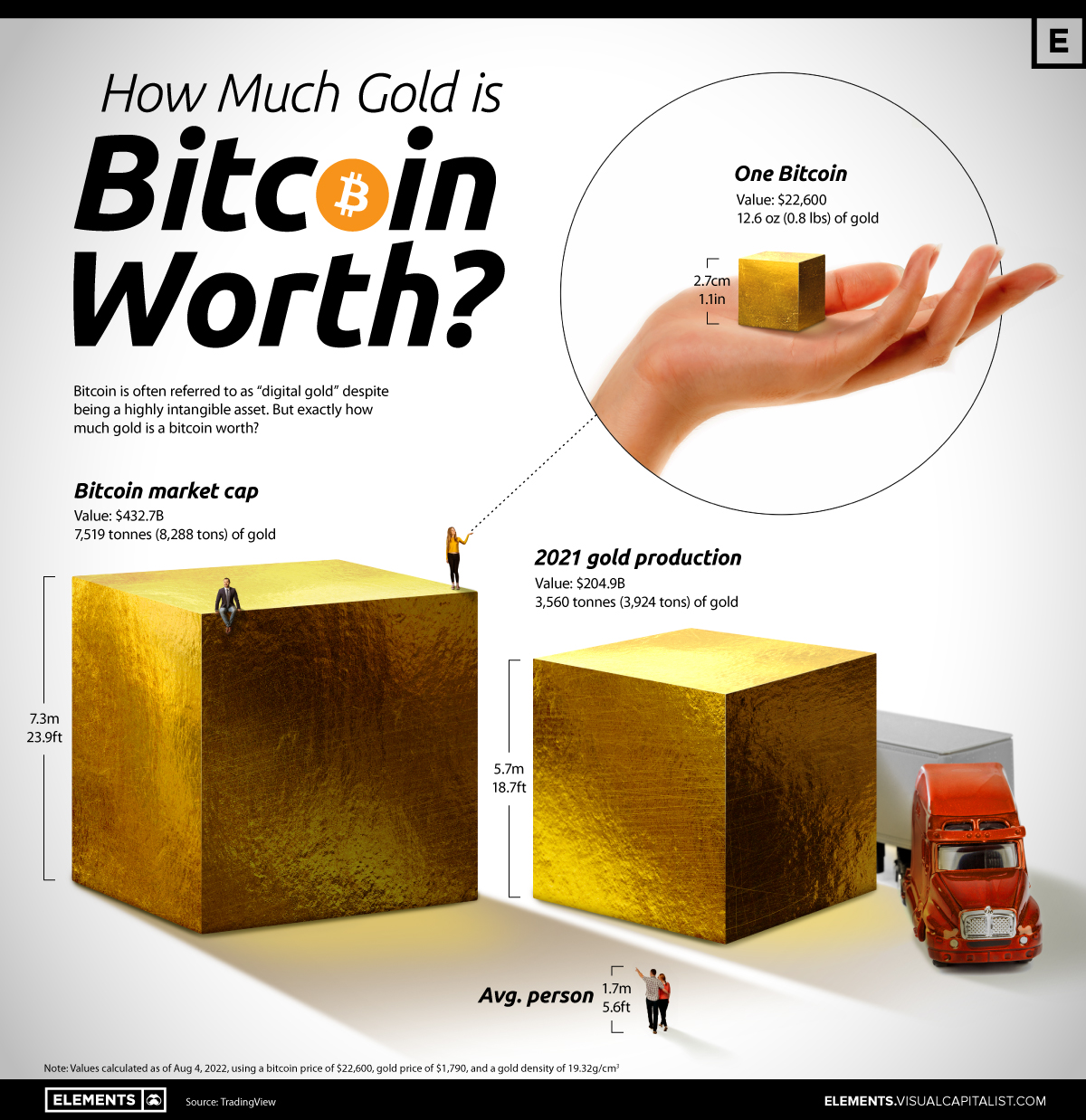
Bitcoin is frequently referred to as “Digital Gold.” This moniker stems from its use as a hedge against the debasement of fiat currency. When central banks engage in quantitative easing or when inflation rates rise unexpectedly, investors often flee to “hard assets.”
In a high-inflation environment, the purchasing power of cash diminishes. Because Bitcoin cannot be manipulated by government policy, it attracts those looking to preserve their wealth over long horizons. Therefore, the “price” of Bitcoin often reflects the global market’s confidence—or lack thereof—in traditional monetary systems.
Institutional Adoption and Spot ETFs
The landscape of Bitcoin valuation changed forever with the approval of Spot Bitcoin Exchange-Traded Funds (ETFs) in major markets like the United States. Before these financial instruments existed, “how much a Bitcoin cost” was a question mostly for those comfortable managing digital wallets and private keys.
With the advent of ETFs, massive amounts of institutional capital from pension funds, insurance companies, and sovereign wealth funds have a regulated pathway to buy Bitcoin. This “institutional wall of money” provides a higher floor for the price and increases liquidity, though it also means Bitcoin is now more susceptible to the fluctuations of the traditional stock market and interest rate decisions by the Federal Reserve.
Regulatory Sentiment
Government regulation remains one of the most significant “wildcards” in Bitcoin’s price. Positive regulatory clarity—such as a country recognizing Bitcoin as legal tender or a stable tax framework—can lead to massive price rallies. On the other hand, threats of bans or restrictive tax laws in major economies can lead to rapid sell-offs. For the investor, monitoring the legal landscape is as important as monitoring the price chart.
Strategies for Investing in Bitcoin
Because the price of a single Bitcoin can be substantial, many newcomers feel they have “missed the boat.” However, from a financial perspective, it is important to remember that Bitcoin is highly divisible. You do not need to buy a whole coin; you can buy “Satoshis” (the smallest unit of Bitcoin, equal to 0.00000001 BTC).
Dollar-Cost Averaging (DCA)
Given Bitcoin’s notorious volatility, trying to “time the bottom” is often a losing game for retail investors. The most recommended financial strategy is Dollar-Cost Averaging (DCA). This involves investing a fixed amount of money at regular intervals (e.g., $100 every month), regardless of the price.
DCA mitigates the risk of a market crash shortly after a large investment. When the price is high, your $100 buys less Bitcoin; when the price is low, your $100 buys more. Over time, this averages out the cost basis and reduces the emotional stress associated with daily price swings.
Long-term Holding (HODLing) vs. Active Trading
In the world of crypto-finance, there are two primary camps: traders and “HODLers.” Traders attempt to profit from short-term price movements using technical analysis and leverage. While lucrative for some, it is high-risk and requires significant expertise.
“HODLing”—a term derived from a famous internet typo meaning “hold on for dear life”—refers to a long-term investment philosophy. These investors ignore the “how much is Bitcoin today” noise, believing that the fundamental value of the network will be significantly higher in five to ten years. For most individuals looking to build wealth, a long-term holding strategy coupled with a secure storage plan is the most effective path.
Assessing Risk and Portfolio Management
No financial discussion about Bitcoin’s price is complete without addressing risk. Bitcoin is a “risk-on” asset, meaning it carries higher volatility than government bonds or blue-chip stocks.
Volatility and Risk Tolerance
It is not uncommon for Bitcoin to experience “drawdowns” of 30%, 50%, or even 80% during a bear market. If an investor’s financial stability depends on that capital being available next week, Bitcoin is not the right vehicle. A prudent financial approach involves only investing “risk capital”—money that you can afford to lose or, at the very least, money you do not need to access for several years.
Secure Storage and Custody
The price of Bitcoin is irrelevant if you lose access to your coins. Unlike a bank account, Bitcoin transactions are irreversible. Financial security in this niche requires an understanding of “self-custody.” Using “cold storage” (offline hardware wallets) protects your investment from exchange hacks and digital theft. As the saying goes in the industry: “Not your keys, not your coins.”
The Future Outlook: Is Bitcoin a Viable Long-Term Investment?
As we look toward the future, the question “how much is a Bitcoin” will likely be answered in even higher orders of magnitude if current adoption trends continue. We are witnessing the transition of Bitcoin from a niche experiment into a global reserve asset.
While the price will undoubtedly continue to experience volatile swings, the underlying fundamentals—decentralization, censorship resistance, and an immutable supply—remain unchanged. For the modern investor, Bitcoin represents more than just a speculative trade; it is a vote for a more transparent and mathematically sound financial system.
By focusing on education, employing disciplined investment strategies like DCA, and maintaining a long-term perspective, investors can navigate the complexities of Bitcoin’s price and potentially reap the rewards of the digital age’s most significant financial innovation. The “cost” of a Bitcoin is merely a snapshot in time; its “value” lies in its ability to redefine the future of money.
aViewFromTheCave is a participant in the Amazon Services LLC Associates Program, an affiliate advertising program designed to provide a means for sites to earn advertising fees by advertising and linking to Amazon.com. Amazon, the Amazon logo, AmazonSupply, and the AmazonSupply logo are trademarks of Amazon.com, Inc. or its affiliates. As an Amazon Associate we earn affiliate commissions from qualifying purchases.