
The landscape of personal audio changed forever in 2016 when Apple introduced the first generation of AirPods. What was initially met with skepticism regarding design and battery life quickly became a cultural phenomenon and the gold standard for the True Wireless Stereo (TWS) industry. Fast forward to today, and the AirPods lineup has branched into several specialized tiers designed to cater to audiophiles, casual listeners, and professional commuters alike.
As of late 2024, the AirPods lineup has seen significant hardware refreshes and software enhancements that solidify Apple’s position at the intersection of high-fidelity audio and seamless ecosystem integration. Whether you are looking for the best-in-class noise cancellation or the latest open-ear design, understanding the nuances of the newest models is essential for making an informed tech investment.
The Versatile Standard: AirPods 4 and the New Open-Ear Paradigm
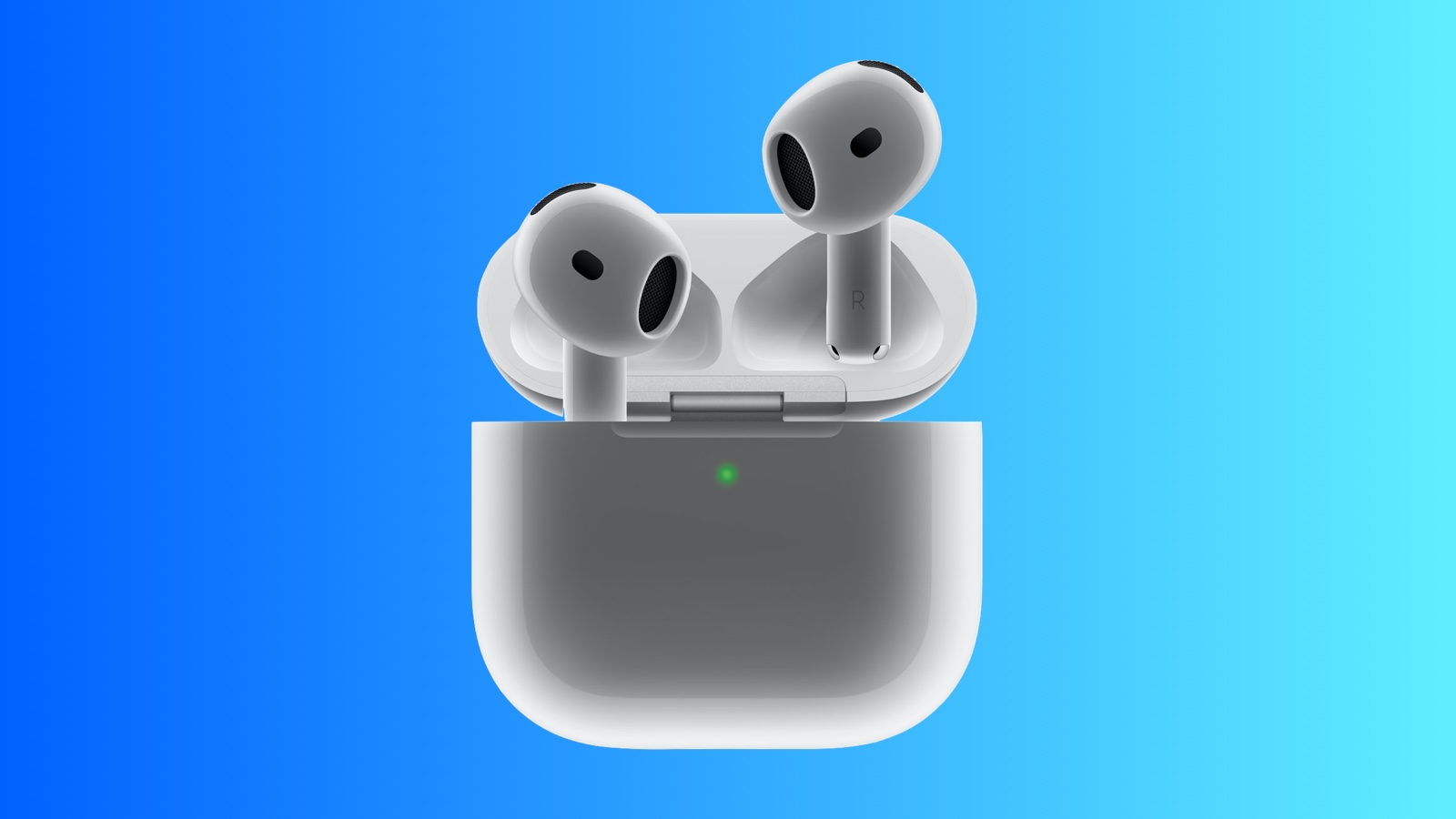
The most recent and perhaps most significant update to the core lineup is the introduction of the AirPods 4. Launched in late 2024, this model represents a massive leap forward for Apple’s non-pro earbuds, effectively replacing both the AirPods 2 and AirPods 3 with a dual-tier offering.
A Refined Acoustic Architecture
The AirPods 4 features a complete redesign of the internal acoustic architecture. Apple utilized advanced modeling techniques, including thousands of ear scans, to create a shape that fits a wider variety of users more comfortably than ever before. Under the hood, the AirPods 4 is powered by the H2 chip—the same silicon previously reserved for the Pro model. This allows for significantly improved computational audio, enabling features like Voice Isolation for clearer calls in windy environments and “Siri Interactions,” which allow users to nod or shake their head to respond to announcements.
Bringing Active Noise Cancellation to Open-Ear Buds
For the first time, Apple has introduced Active Noise Cancellation (ANC) to an open-ear design. The AirPods 4 is sold in two versions: a standard model and a version with ANC. The ANC version is a technical marvel because it manages to reduce environmental drone (like airplane engines or city traffic) without the use of silicone ear tips. This version also includes Transparency Mode, Adaptive Audio, and Conversation Awareness, features that were previously exclusive to the flagship Pro line.
Enhanced Charging and Connectivity
The charging cases have also seen a reduction in size, making them the most portable cases Apple has ever produced. The ANC model’s case includes a built-in speaker for “Find My” alerts and supports wireless charging via Apple Watch chargers or Qi-certified mats. Crucially, in line with European Union regulations and Apple’s own transition, all AirPods 4 models now utilize USB-C for wired charging.
The Flagship Performance: AirPods Pro (2nd Generation) with USB-C
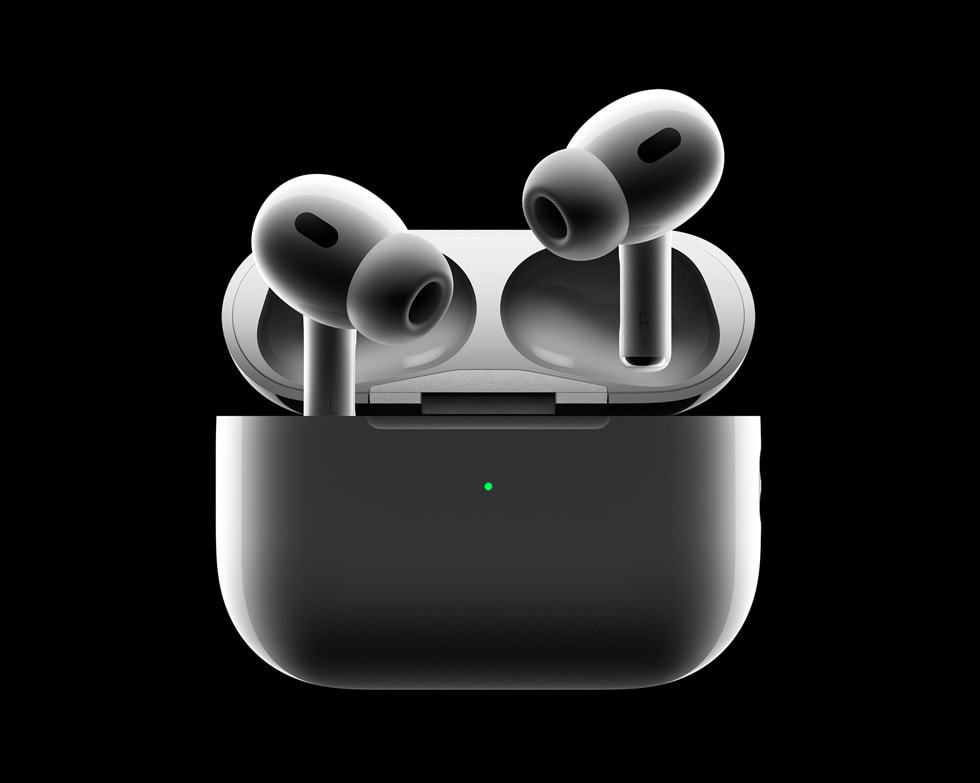
While the AirPods 4 has narrowed the gap, the AirPods Pro (2nd Generation) remains the pinnacle of Apple’s in-ear technology. Though the 2nd generation originally launched with a Lightning port, the “newest” iteration was updated in late 2023 and 2024 with a USB-C charging port and enhanced dust resistance (IP54 rating).
Superior Noise Cancellation and High-Fidelity Audio
The AirPods Pro 2 continues to lead the market in noise-canceling efficiency. Powered by the H2 chip, it can cancel up to twice as much noise as the previous generation. The inclusion of silicone ear tips provides a physical seal that is necessary for the most immersive audio experiences. This model also supports “Loud Sound Reduction,” a feature that protects your hearing by sampling environmental noise 48,000 times per second to dampen sudden loud bursts (like sirens or construction) while keeping the rest of your audio clear.
The Hearing Health Revolution
In late 2024, Apple introduced a groundbreaking software update for the AirPods Pro 2 that transformed them into a clinical-grade hearing health tool. Through iOS 18, users can now take a validated Hearing Test from home. If a hearing loss is detected, the AirPods Pro can function as a clinical-grade Hearing Aid, amplifying specific frequencies in real-time to help users engage more effectively in conversations. This move signals a major shift in how Apple views its audio gadgets—not just as entertainment devices, but as essential health tech.
Lossless Audio for Apple Vision Pro
The newest USB-C version of the AirPods Pro 2 features a specialized wireless audio protocol that enables 20-bit, 48 kHz Lossless Audio with ultra-low latency when paired with the Apple Vision Pro. This makes them the definitive choice for users investing in Apple’s spatial computing ecosystem, ensuring that the visual immersion of the headset is matched by perfect, lag-free sonic fidelity.
The Over-Ear Icon: The AirPods Max (2024 Refresh)
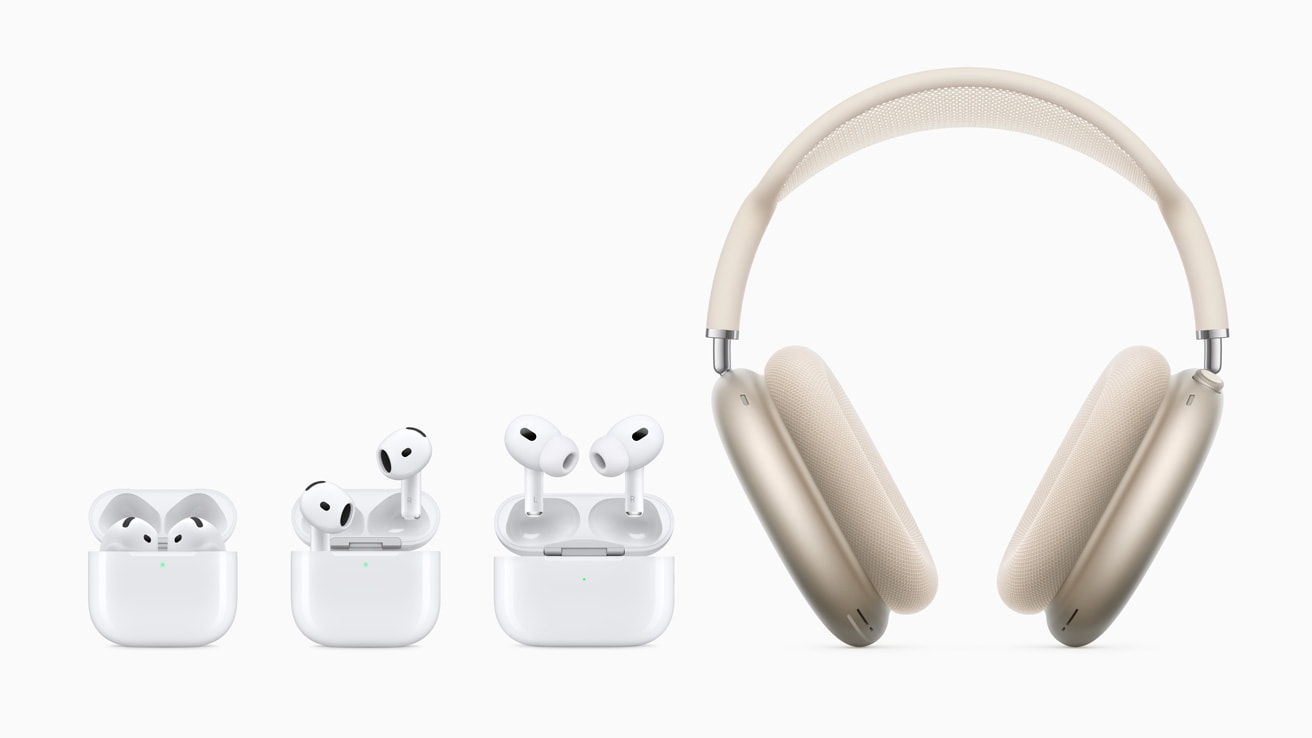
For those who prefer the richness of an over-ear headphone, the AirPods Max remains Apple’s premium offering. While the design has remained largely unchanged since its debut, the late 2024 refresh brought several much-requested technical updates to bring it in line with the rest of the family.
The Transition to USB-C and New Aesthetics
The most notable change in the newest AirPods Max is the replacement of the Lightning port with USB-C. This allows users to charge their iPhone, Mac, iPad, and AirPods Max with a single cable. Alongside the port change, Apple introduced a fresh palette of colors, including Midnight, Starlight, Blue, Orange, and Purple. While the internal H1 chip remained (missing out on some of the H2-specific features found in the Pro 2), the Max still delivers industry-leading build quality with its stainless steel frame and knit-mesh canopy.
Computational Audio and Spatial Immersion
The AirPods Max utilizes a custom-built 40mm dynamic driver that provides a wide frequency range with minimal distortion. Each ear cup features an H1 chip that uses computational audio to block outside noise and tailor the sound to the fit and seal of the ear cushions. Personalized Spatial Audio with dynamic head tracking transforms the experience of watching movies or listening to Dolby Atmos tracks, creating a theater-like environment that feels three-dimensional.
The Underlying Technology: What Sets Modern AirPods Apart
To understand why these are the “newest” and most advanced versions, one must look at the software and silicon integration that powers the hardware. The magic of AirPods isn’t just in the speakers; it’s in the computational intelligence provided by Apple’s custom silicon.
The Power of the H2 Chip
The H2 chip is the brain behind the most impressive features in the newest AirPods. It uses computational algorithms to deliver smarter noise cancellation, superior three-dimensional sound, and more efficient battery life. It enables “Adaptive Audio,” which intelligently blends Transparency mode and Active Noise Cancellation to tailor the noise control experience as you move between changing environments and interactions throughout your day.
Personalized Spatial Audio
The latest AirPods models utilize the TrueDepth camera on a user’s iPhone to create a personal profile for Spatial Audio. By scanning the geometry of the user’s ears, Apple’s hardware can tune the sound specifically to how the individual’s ear shape affects sound waves. This creates a highly accurate soundstage where audio feels like it is coming from all around the listener, rather than from inside their head.
The Find My Network and Precision Finding
Digital security and device recovery have become staples of the AirPods experience. The newest cases for the AirPods Pro 2 and AirPods 4 (ANC version) include the U1 (or improved) chip integration. This allows for “Precision Finding,” which uses an iPhone’s Ultra Wideband capabilities to guide the user directly to the case’s location within inches. Furthermore, the integration with the “Find My” network means that even if you lose your AirPods miles away, they can securely relay their location via other nearby Apple devices.
Choosing the Right Tech: A Comparative Summary
With three distinct categories of AirPods now featuring modern hardware, the choice depends largely on your specific technological needs and use cases.
- AirPods 4: The best choice for those who dislike the feeling of ear tips but want modern features. The ANC version offers a middle ground for commuters who want noise reduction without the “plugged” feeling of traditional earbuds.
- AirPods Pro 2 (USB-C): The gold standard for travelers, professionals, and those with hearing health concerns. It offers the best noise cancellation, the most advanced health features, and the highest level of integration with the Vision Pro.
- AirPods Max (2024): The choice for home-office professionals and luxury audio seekers. The over-ear design provides a level of comfort and “soundstage” depth that in-ear buds cannot replicate, now modernized with USB-C.
As Apple continues to iterate, the line between consumer electronics and professional-grade audio equipment continues to blur. The newest AirPods are no longer just accessories for the iPhone; they are sophisticated computers for the ears, capable of protecting hearing, enhancing reality through spatial audio, and providing a seamless bridge to the rest of the digital world.
aViewFromTheCave is a participant in the Amazon Services LLC Associates Program, an affiliate advertising program designed to provide a means for sites to earn advertising fees by advertising and linking to Amazon.com. Amazon, the Amazon logo, AmazonSupply, and the AmazonSupply logo are trademarks of Amazon.com, Inc. or its affiliates. As an Amazon Associate we earn affiliate commissions from qualifying purchases.