
The human brain, an intricate marvel of biological engineering, remains one of the universe’s most profound mysteries. Far from being merely a lump of grey matter, it is an exquisitely organized biological supercomputer, orchestrating everything from our most basic physiological functions to the complex nuances of thought, emotion, and creativity. For centuries, understanding its composition has been the exclusive domain of biology and medicine. However, in the 21st century, the question “what are human brains made of” has taken on a new dimension, becoming a foundational inquiry for the tech industry, driving advancements in artificial intelligence, neuromorphic computing, and brain-computer interfaces. By dissecting the brain’s fundamental components and architecture, we uncover not just biological truths, but also invaluable blueprints for the next generation of intelligent technologies.
The Brain’s Fundamental Architecture: A Biological Marvel
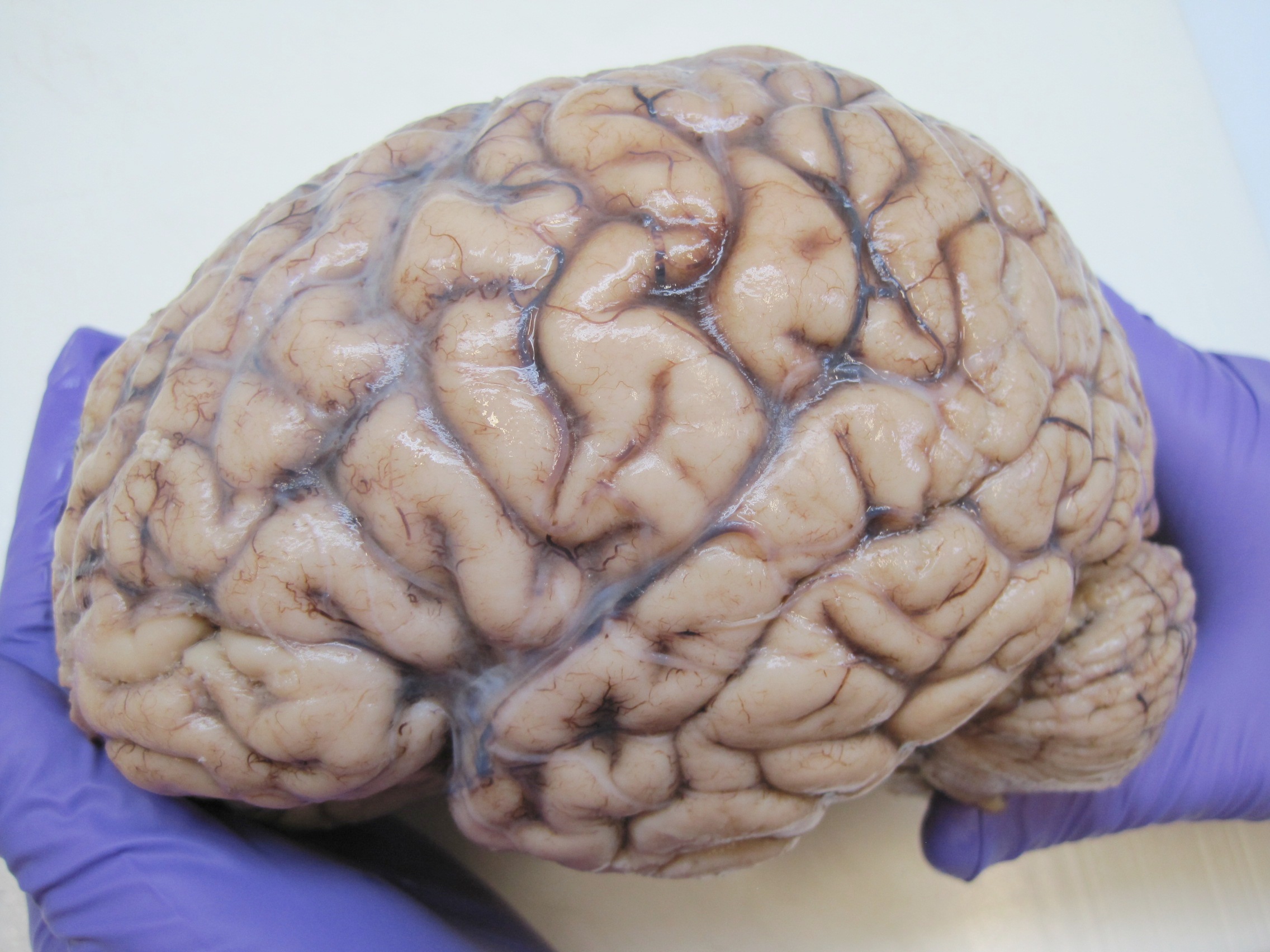
At its core, the human brain is an organic machine, comprised of billions of specialized cells and an intricate network of connections that facilitate rapid, complex information processing. This biological substrate gives rise to all known cognitive functions, offering a stunning example of emergent complexity from relatively simple building blocks.
Neurons: The Fundamental Processing Units
The undisputed stars of the brain are neurons, estimated to number around 86 billion. These specialized cells are the primary units responsible for transmitting information throughout the brain and the rest of the nervous system. Each neuron typically consists of a cell body (soma), dendrites (tree-like branches that receive signals), and an axon (a long projection that transmits signals). Information travels through neurons via electrical impulses, or action potentials, which are then converted into chemical signals at the synapses to bridge the gap between neurons. The sheer number of these units, coupled with their varied types and functions, allows for an incredible range of computational capabilities. Their ability to activate, inhibit, or modulate other neurons forms the basis of all neural activity, from sensory perception to complex reasoning.
Glia: The Support System and Beyond
For a long time, glial cells were considered mere “support staff” for neurons, providing structural integrity, nutrients, and waste removal. However, modern neuroscience reveals a much more active and crucial role for these cells. Astrocytes, oligodendrocytes, and microglia, the main types of glia, are now known to modulate synaptic transmission, influence neuronal circuit formation, and play critical roles in brain plasticity and repair. Oligodendrocytes, for example, form myelin sheaths around axons, significantly speeding up electrical signal transmission—a biological analogue to insulating wires for faster data transfer. Microglia act as the brain’s immune cells, pruning unnecessary synapses and responding to injury or disease. Without this intricate glial support system, the neurons could not function optimally, highlighting the importance of a comprehensive support infrastructure for any complex system.
Networks and Synapses: The Wiring Diagram
The true power of the brain doesn’t lie solely in its individual cells, but in the astounding complexity of their interconnections. Each neuron can form thousands of synapses with other neurons, leading to an estimated 100 trillion synaptic connections in the adult human brain. These synapses are where information is transferred and modulated, acting as the fundamental points of communication. The strength and efficiency of these synaptic connections are highly plastic, meaning they can change over time based on activity and experience—a phenomenon known as synaptic plasticity. This plasticity is the biological basis of learning and memory, allowing the brain to adapt, form new pathways, and store information. The emergent properties of these vast, dynamic networks give rise to consciousness, intelligence, and all the faculties we associate with the human mind.
From Biological Neurons to Digital Neural Networks
The inherent elegance and efficiency of the brain’s neuronal architecture have long captivated computer scientists and engineers. For decades, the quest to understand “what are human brains made of” has directly inspired the development of artificial intelligence, particularly the field of artificial neural networks (ANNs).
Simulating Intelligence: The Rise of AI
The fundamental concept of ANNs is rooted in mirroring the brain’s structure. Just as biological neurons process and transmit signals, artificial neurons (nodes) in ANNs receive input, perform a simple calculation, and then pass on an output. These artificial neurons are arranged in layers, with connections between them that have associated “weights”—analogous to synaptic strengths. By adjusting these weights through training data, ANNs learn to recognize patterns, make predictions, and perform complex tasks, from image recognition to natural language processing. The dramatic rise of deep learning, a subfield of machine learning using ANNs with many layers, has brought AI closer than ever to mimicking human cognitive abilities in specific domains, directly demonstrating the power of brain-inspired design.
Algorithmic Mimicry: How AI Learns
The learning mechanisms in ANNs, while computationally distinct, draw clear parallels to biological learning. Techniques like backpropagation, where errors are propagated backward through the network to adjust weights, functionally resemble how brains refine their internal models based on feedback and experience. Reinforcement learning, another AI paradigm, rewards agents for desirable actions, echoing how brains use neurotransmitters like dopamine to reinforce behaviors. While the underlying physics and chemistry are vastly different, the principles of iterative improvement, pattern recognition, and adaptive response are directly inspired by observations of how biological brains learn and adapt to their environment.
Limitations and Divergences: Where Biology Still Leads
Despite remarkable progress, today’s ANNs are still a rudimentary approximation of the human brain. Biological neurons are vastly more complex than their artificial counterparts, exhibiting dynamic firing patterns, neuromodulation, and intricate dendritic computations that current AI models struggle to replicate. The energy efficiency of the human brain (operating on roughly 20 watts) is also orders of magnitude superior to even the most powerful supercomputers performing similar tasks. Furthermore, the human brain’s ability for general intelligence, common-sense reasoning, and seamless integration of sensory information with abstract thought remains unparalleled. These limitations highlight that while we’ve adopted the basic “wiring diagram,” the deeper secrets of the brain’s composition and function still hold keys to unlocking truly advanced AI.
Neuromorphic Computing: Building Brain-Inspired Hardware
Recognizing the architectural and efficiency limitations of traditional Von Neumann computing architectures (where processing and memory are separate), researchers are now actively pursuing neuromorphic computing. This field aims to build hardware specifically designed to mimic the brain’s structure and function more closely, moving beyond software simulations to physical instantiations of brain-like computation.
Beyond Von Neumann: The Quest for Efficiency
Traditional computers excel at sequential, precise calculations but are inefficient for tasks requiring massive parallelism, pattern matching, and adaptive learning—precisely what brains do best. The “Von Neumann bottleneck,” caused by the constant movement of data between CPU and memory, wastes significant energy and time. Neuromorphic chips, in contrast, integrate processing and memory in a distributed fashion, much like neurons and synapses. This “in-memory computing” paradigm dramatically reduces data movement, offering the potential for vastly greater energy efficiency and speed for AI workloads.
Spiking Neural Networks: Closer to Biology
While ANNs often use continuous activation functions, biological neurons communicate through discrete “spikes” or action potentials, transmitting information not just by the frequency of spikes but also by their precise timing. Spiking Neural Networks (SNNs) in neuromorphic hardware aim to replicate this behavior. SNNs only process information when a neuron “spikes,” leading to sparse, event-driven computation that can be incredibly energy-efficient. Chips like IBM’s TrueNorth and Intel’s Loihi are pioneering this approach, demonstrating how mimicking the brain’s fundamental electrical communication method can lead to novel computational paradigms, especially for real-time sensory processing and edge AI applications.
Challenges and the Path Forward
Developing neuromorphic hardware presents significant challenges, including materials science, manufacturing techniques, and the development of new programming models. While current neuromorphic chips demonstrate impressive power efficiency for specific tasks, they are not yet general-purpose computers and face hurdles in scalability and widespread adoption. However, as our understanding of “what human brains are made of” deepens, and as material science advances, neuromorphic computing promises to unlock unprecedented levels of AI performance and energy efficiency, potentially revolutionizing everything from autonomous vehicles to personalized medicine.
Brain-Computer Interfaces (BCIs): Bridging the Organic and Digital Divide
Another cutting-edge technological frontier directly informed by understanding the brain’s composition is Brain-Computer Interfaces (BCIs). BCIs aim to establish a direct communication pathway between the brain and an external device, literally connecting the organic and digital worlds.
Decoding Neural Signals: The Language of Thought
At the heart of BCIs is the ability to detect and interpret the brain’s electrical activity. By placing electrodes on the scalp (non-invasive EEG) or implanting them directly into the brain (invasive ECoG or microelectrode arrays), researchers can capture the aggregate or individual firing patterns of neurons. Understanding “what human brains are made of” at this electrical and chemical level is crucial for decoding these signals. Different thoughts, intentions, or motor commands correspond to distinct neural patterns, which BCI algorithms then translate into control signals for computers, prosthetic limbs, or communication devices.
Prosthetics and Restoration: Empowering Human Potential
The most immediate and impactful applications of BCIs lie in restoring function for individuals with neurological disorders or injuries. Patients with paralysis can learn to control robotic arms or cursors on a screen using only their thoughts. Individuals with locked-in syndrome can communicate by selecting letters or words through neural signals. These technologies not only empower individuals but also provide invaluable real-time data on how the brain operates during specific tasks, further enhancing our understanding of its computational architecture and composition.
Augmentation and the Future: Expanding Human Capabilities
Beyond restoration, BCIs hold the promise of human augmentation—enhancing or expanding existing human capabilities. While still largely in the realm of science fiction, the long-term vision includes improving memory, facilitating direct thought-to-thought communication, or seamlessly integrating with digital information streams. As our knowledge of the brain’s intricate composition and neural codes becomes more sophisticated, the ethical considerations surrounding such profound integration of biology and technology will become paramount.
Ethical Implications and the Future of Brain-Inspired Tech
As technology increasingly draws inspiration from and interacts with the human brain, profound ethical questions arise. The advancements spurred by understanding “what are human brains made of” demand careful consideration.
The Responsibility of Innovation
Developing AI that mimics human cognition, hardware that emulates brain function, and interfaces that directly connect to our thoughts carries immense responsibility. Questions of bias in AI algorithms, the potential for misuse of powerful BCI technology, and the impact on human employment and society require proactive ethical frameworks. Ensuring these technologies are developed and deployed for the benefit of all humanity must be a guiding principle.
Consciousness, Identity, and AI
Perhaps the most profound questions revolve around consciousness and identity. If we can build AI that truly approximates the brain’s cognitive processes, will it achieve consciousness? What does it mean for human identity if our thoughts can be externally decoded or if our cognitive abilities can be seamlessly augmented by technology? Exploring “what are human brains made of” from a technological perspective inevitably leads to philosophical and existential inquiries that will shape our future.
The Endless Frontier of Understanding
Ultimately, the journey to understand “what are human brains made of” is far from over. Each technological leap, each new piece of data gathered from BCIs or simulated in neuromorphic systems, contributes to a more complete picture of this astonishing organ. The brain remains the ultimate frontier, a biological blueprint whose full potential we are only just beginning to decipher, promising an era of unprecedented technological innovation and self-understanding. The synergy between neuroscience and technology will continue to redefine the boundaries of what is possible, pushing humanity towards a future where the distinction between the organic and the artificial becomes increasingly nuanced.
aViewFromTheCave is a participant in the Amazon Services LLC Associates Program, an affiliate advertising program designed to provide a means for sites to earn advertising fees by advertising and linking to Amazon.com. Amazon, the Amazon logo, AmazonSupply, and the AmazonSupply logo are trademarks of Amazon.com, Inc. or its affiliates. As an Amazon Associate we earn affiliate commissions from qualifying purchases.