
In the intricate world of personal finance and loyalty programs, American Express Membership Rewards points stand out as a highly valuable and flexible currency. Far from being just another generic rewards system, Amex points represent a sophisticated tool that, when understood and utilized strategically, can significantly enhance one’s financial well-being and travel experiences. For the financially savvy individual, these points are not merely an incidental perk of a credit card; they are an integral part of a comprehensive financial strategy, offering tangible economic benefits ranging from luxury travel redemptions to direct savings on everyday expenses. This article delves into the core mechanics, optimal utilization, and strategic importance of Amex points, illustrating how they can be leveraged as a powerful financial asset.
Understanding the Amex Membership Rewards Program
At its heart, the American Express Membership Rewards program is a loyalty initiative designed to reward card members for their spending across a portfolio of Amex credit cards. Unlike co-branded cards that earn points or miles directly with a specific airline or hotel chain, Membership Rewards points are proprietary to American Express, offering unparalleled flexibility.
How Amex Points Are Earned
Earning Amex points is a multi-faceted process, with various avenues contributing to a healthy point balance:
- Credit Card Spending: The primary method of earning is through eligible purchases on American Express credit cards that participate in the Membership Rewards program. Different cards offer varying earning rates based on spending categories. For instance, the Amex Gold Card famously offers 4x points on U.S. supermarkets and dining at restaurants, while the Platinum Card offers 5x points on flights booked directly with airlines or via Amex Travel and on prepaid hotels booked through Amex Travel. The Blue Business Plus Credit Card is lauded for offering 2x points on all eligible business purchases up to a certain annual limit, making it a powerful everyday earner. Understanding the bonus categories of each card is crucial for maximizing accumulation based on individual spending habits.
- Welcome Offers (Sign-up Bonuses): A significant portion of points can be acquired through lucrative welcome offers for new card members. These bonuses often require meeting a certain spending threshold within an initial period (e.g., spending $4,000 in the first three months) and can range from 60,000 to over 100,000 points, providing a substantial jumpstart to one’s point balance.
- Referral Bonuses: Existing card members can earn additional points by referring friends or family to American Express cards. These referral bonuses are often generous, rewarding both the referrer and the new card member.
- Amex Offers: American Express frequently provides targeted offers (e.g., “Spend $50, Get $10 Back” or “Earn 5,000 Bonus Points”) through its online portal. Activating and utilizing these offers not only saves money but can also yield additional Membership Rewards points.
- Shopping Portals and Partners: While not directly through Amex, third-party shopping portals like Rakuten (formerly Ebates) allow users to earn Membership Rewards points instead of cash back at participating retailers, adding another layer to point accumulation strategies.
The Distinction of Membership Rewards
The defining characteristic that sets Membership Rewards apart is its flexibility. Unlike airline-specific miles or hotel-specific points, Amex points are not tied to a single loyalty program. This crucial distinction means:
- Diverse Redemption Options: Card members have the power to transfer their points to a wide array of airline and hotel partners, providing unparalleled choice in how they redeem their rewards. This contrasts sharply with a co-branded airline card, where points are generally locked into that specific airline.
- Protection Against Devaluation: While any loyalty program is subject to potential devaluations, the diversified nature of Membership Rewards offers a degree of protection. If one airline partner devalues its award chart, holders of Amex points can simply shift their focus to other partners, mitigating the impact. This flexibility provides a financial hedge that single-program points do not.
- Strategic Hedging: For astute financial planners, Amex points act as a form of “travel currency” that can be held and deployed strategically. They can be accumulated over time and then transferred to the most advantageous partner when a specific travel goal or an attractive transfer bonus emerges, optimizing their real-world value.
Maximizing the Value of Your Amex Points
The true power of Amex points lies not just in earning them, but in redeeming them for maximum value. The value of an Amex point is highly variable, ranging from a paltry 0.5 cents per point to upwards of 5 cents per point or more, depending on the redemption method. For the financially astute, understanding these nuances is paramount.
Best Redemption Options for High Value
To truly maximize the return on your accumulated points, focus on these high-value redemption strategies:
- Transferring to Airline Partners: This is overwhelmingly the most lucrative way to use Amex points. Amex partners with numerous global airlines, including Delta SkyMiles, ANA Mileage Club, British Airways Executive Club, Virgin Atlantic Flying Club, Singapore Airlines KrisFlyer, Air Canada Aeroplan, and many more. By transferring points to these partners, card members can book premium cabin international flights (business class, first class) that would otherwise cost thousands of dollars, effectively “buying” luxury travel at a fraction of the cash price.
- Strategy: Look for “sweet spots” in partner award charts, where specific routes or cabins require relatively few points. For instance, using Virgin Atlantic points for Delta One flights or ANA points for Star Alliance business class round-the-world tickets can yield incredible value, often exceeding 2-5 cents per point. This converts points into significant financial savings on travel budgets.
- Transferring to Hotel Partners: While generally less celebrated for outsized value compared to airline transfers, transferring to hotel partners like Marriott Bonvoy or Hilton Honors can still be beneficial for specific high-value redemptions, especially during peak seasons or for aspirational hotel stays. However, the redemption rate is typically lower than airline transfers.
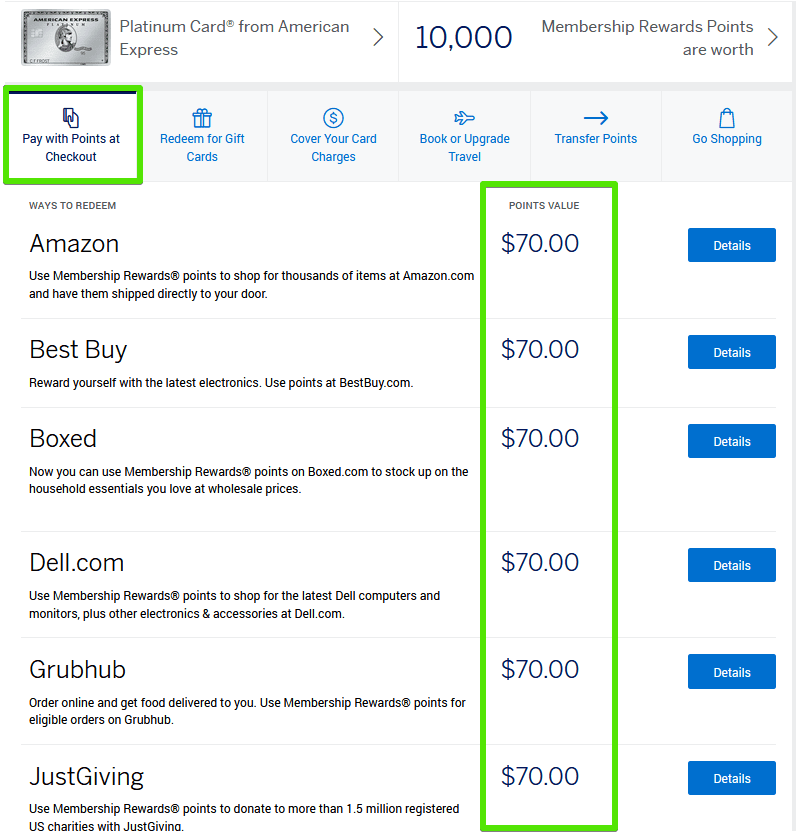
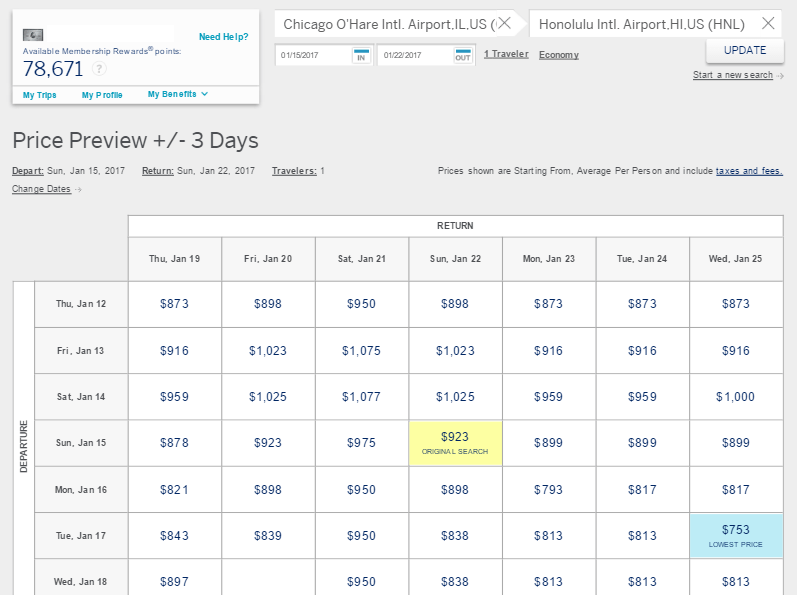
- Using Pay with Points for Travel Bookings via Amex Travel Portal: For those who prefer simplicity or cannot find suitable award space with airline partners, using points to book flights or hotels directly through the Amex Travel portal offers a fixed redemption rate (typically 1 cent per point for flights, and 0.7 cents for hotels). While not the absolute highest value, it’s a solid option for convenience and can still be a good deal for economy flights or for using up a small residual point balance.
Redemption Options to Generally Avoid (Low Value)
To protect the financial utility of your points, it’s crucial to steer clear of redemption methods that yield poor value:
- Statement Credit: Redeeming points for a statement credit typically offers a meager 0.6 cents per point. This is effectively “cashing out” your points at a rate significantly lower than their potential travel value, representing a poor financial decision for those aiming to maximize returns.
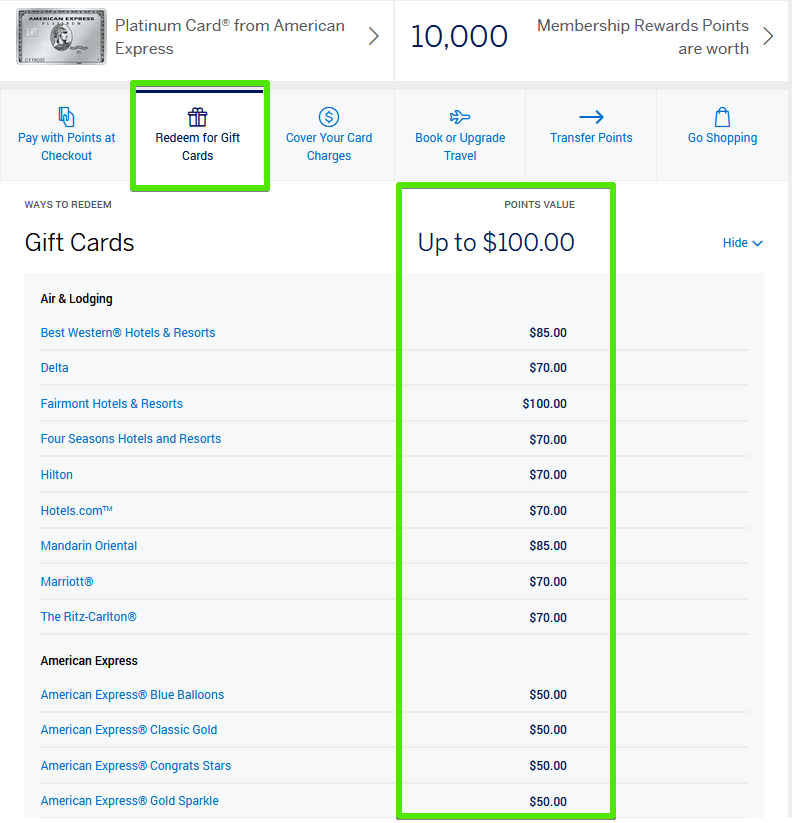
- Gift Cards: While convenient, gift card redemptions often hover around 0.7 to 1 cent per point, rarely offering superior value compared to strategic travel redemptions.
- Shopping on Amazon: Integrating Membership Rewards with Amazon purchases generally results in a value of 0.7 cents per point. This is another example of a redemption that undercuts the true potential of your points.
Strategic Point Accumulation
Optimizing the earning side is as important as maximizing redemption. A financially savvy approach involves:
- Choosing the Right Amex Cards: Match your spending profile to the cards that offer the highest multipliers for your most frequent categories. A combination of cards, like the Platinum for travel, Gold for food, and Blue Business Plus for everyday business expenses, can create a powerful earning ecosystem.
- Utilizing Category Bonuses: Be mindful of rotating or fixed category bonuses. If your card offers extra points on gas or groceries, prioritize using it for those purchases.
- Understanding Annual Fees vs. Point Value: The annual fees on premium Amex cards can be substantial. A key financial calculation involves assessing whether the value you extract from points, travel credits, and other card benefits (e.g., lounge access, elite status perks) outweighs the annual fee. For frequent travelers, the value can often significantly surpass the cost.
Advanced Strategies for Amex Point Utilization
Beyond basic earning and redeeming, advanced tactics can further amplify the financial leverage of Amex points, transforming them into an even more potent asset in one’s personal finance toolkit.
Timing Transfers for Bonus Offers
One of the most potent strategies is to time point transfers with promotional bonuses. American Express frequently offers transfer bonuses to select airline and hotel partners, sometimes providing an additional 20%, 30%, or even 40% more points when you transfer. For example, a “20% bonus” means transferring 10,000 Membership Rewards points yields 12,000 airline miles. This effectively reduces the cost of your award booking by 20%, representing a direct increase in the financial efficiency of your points. Astute users monitor these offers and transfer points only when a bonus aligns with their travel plans, maximizing their point-to-value ratio.
Combining Points Across Accounts
For households with multiple Amex cardholders, combining Membership Rewards points can be a powerful strategy. Points can typically be pooled with other Amex card accounts within the same household, provided both individuals have an eligible Membership Rewards card. This allows a family to consolidate their earnings, reach high-value redemption goals faster, and potentially qualify for larger award bookings that might be out of reach for individual balances. This financial cooperation within a household effectively leverages shared spending for collective benefit.
The Role of Elite Status in Maximizing Travel Redemptions
While Amex points primarily facilitate booking the travel itself, existing airline or hotel elite status can significantly enhance the value derived from those bookings. For example, using Amex points to book a business class flight on an airline where you hold elite status might grant you better seat selection, lounge access, priority boarding, or even upgrades (though often less common on award tickets). Similarly, using points for a hotel stay where you have status could lead to room upgrades, complimentary breakfast, late checkout, or other perks that enhance the overall experience and perceived value, thus increasing the return on your “point investment.” This intertwining of points and status elevates the entire financial proposition of loyalty programs.
Amex Points as a Financial Tool
Viewing Amex points not just as rewards but as a legitimate financial instrument is key to truly understanding their value proposition. They can play a significant role in broader financial planning, particularly for those who prioritize travel or seek to optimize their discretionary spending.
Integrating Points into Your Personal Finance Strategy
For many, travel is a significant discretionary expense. By strategically earning and redeeming Amex points, individuals can offset substantial travel costs, freeing up cash flow that can then be allocated to other financial goals. This could include:
- Investing: Redirecting cash saved on travel into investment vehicles, accelerating wealth accumulation.
- Debt Reduction: Using the saved funds to pay down high-interest debt, improving financial health.
- Savings: Bolstering emergency funds or saving for other significant life events (e.g., a down payment on a house, education).
Considering the opportunity cost of annual fees is also crucial. While a premium Amex card might have a high annual fee, if the value derived from points, lounge access, travel credits, and other benefits far exceeds this fee, it represents a net financial gain. A careful cost-benefit analysis is essential here.
Protecting Your Point Investment
Just like any other financial asset, your Amex points require a degree of stewardship:
- Understanding Expiration Policies: While Membership Rewards points generally do not expire as long as you have an active Amex card linked to the program, points transferred to airline or hotel partners do become subject to that partner’s expiration policy. Being aware of these policies helps prevent the loss of value.
- Account Security: Protecting your Amex account details is paramount to safeguarding your point balance from unauthorized use.
Financial Planning and Long-Term Value
In the long term, Amex points can be a powerful component of a holistic financial plan, especially for individuals who value experiences over possessions. They allow for the enjoyment of premium travel experiences that might otherwise be out of budget, enriching quality of life without depleting cash savings. By integrating point-earning and redemption strategies into a broader financial framework, one can achieve a more robust and financially rewarding lifestyle. This perspective shifts Amex points from a mere perk to a dynamic element of one’s personal financial strategy, offering flexibility, value, and the means to attain aspirational goals.
Conclusion
Amex points, at their core, are a versatile and potent financial tool. They represent a unique form of currency within the personal finance landscape, offering discerning individuals the power to transform everyday spending into extraordinary value. From the initial act of earning through diverse avenues and welcome bonuses to the sophisticated art of high-value redemptions via airline transfers, understanding and strategically managing Membership Rewards points is a hallmark of financial acumen. By avoiding low-value redemptions and embracing advanced tactics like transfer bonuses and household pooling, card members can unlock significant financial benefits, effectively subsidizing travel and freeing up cash for other critical financial objectives. For those committed to maximizing their financial resources, Amex points are far more than just rewards; they are an investment in a richer, more financially optimized lifestyle.
aViewFromTheCave is a participant in the Amazon Services LLC Associates Program, an affiliate advertising program designed to provide a means for sites to earn advertising fees by advertising and linking to Amazon.com. Amazon, the Amazon logo, AmazonSupply, and the AmazonSupply logo are trademarks of Amazon.com, Inc. or its affiliates. As an Amazon Associate we earn affiliate commissions from qualifying purchases.