
The annual ritual of filing taxes can often feel like a daunting task, a complex puzzle that requires precision and a clear understanding of financial regulations. However, much of the stress associated with tax season can be alleviated by simply knowing what documents you need to gather. Being prepared with the correct information not only ensures accuracy but can also help you identify potential deductions and credits, ultimately optimizing your financial outcome. This comprehensive guide will walk you through the essential tax documents you’ll need, categorizing them to help you organize your financial life for a smoother, more confident tax filing experience.

The Cornerstones of Income Reporting
At the heart of every tax return is the accurate reporting of all income earned throughout the year. The IRS and state tax authorities need a clear picture of what you’ve received, from wages to investment gains. These documents are typically issued by your employers, financial institutions, or government agencies.
W-2: For Employees’ Wages and Taxes
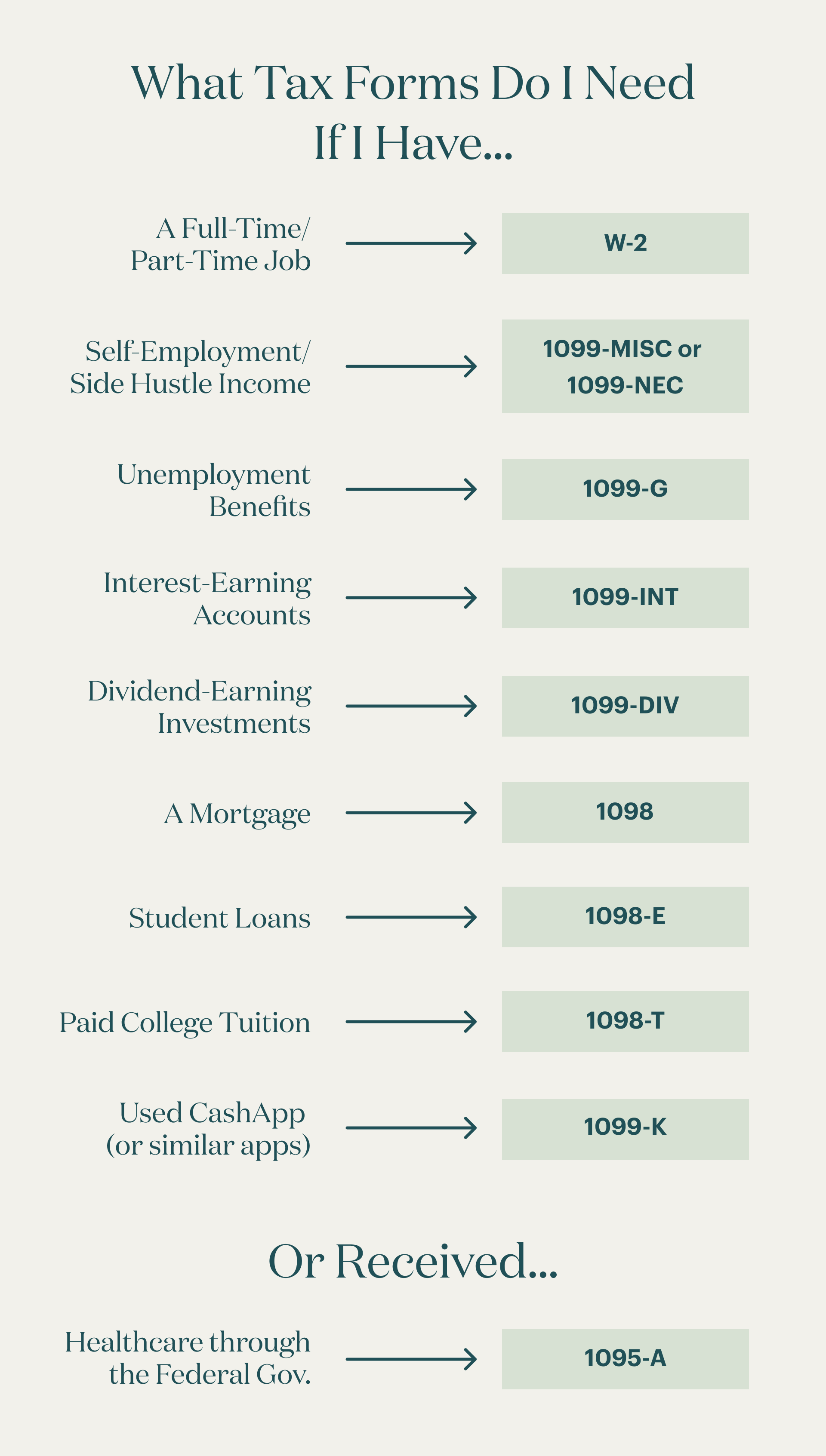
For the vast majority of employed individuals, the Form W-2, Wage and Tax Statement, is the most critical document. Issued by your employer, it details your annual wages, tips, and other compensation, along with the amount of federal, state, and local income taxes withheld from your paychecks. You should receive a W-2 from each employer you worked for during the tax year, typically by January 31st. It’s vital to ensure all W-2s are accounted for, as missing even one can lead to an inaccurate return and potential penalties.
1099 Forms: For Non-Employee Income and Other Gains
The family of 1099 forms covers a wide array of income sources outside of traditional employment wages. If you’re a freelancer, investor, or recipient of certain government payments, you’ll be very familiar with these. Like W-2s, most 1099s are due to you by January 31st.
- 1099-NEC (Nonemployee Compensation): This form replaced the 1099-MISC for reporting payments of $600 or more made to non-employees, such as independent contractors, freelancers, or self-employed individuals. If you’re a gig worker, this will be your primary income document.
- 1099-MISC (Miscellaneous Information): While no longer used for non-employee compensation, the 1099-MISC still reports other types of miscellaneous income, such as rents, royalties, prizes and awards, or other income payments of $600 or more.
- 1099-INT (Interest Income): Financial institutions issue this form if you earned $10 or more in interest from savings accounts, CDs, money market accounts, or bonds.
- 1099-DIV (Dividends and Distributions): If you received $10 or more in dividends from stocks, mutual funds, or other investments, your brokerage will send you this form.
- 1099-B (Proceeds From Broker and Barter Exchange Transactions): This form reports the proceeds from sales of stocks, bonds, mutual funds, and other securities. It’s crucial for calculating capital gains or losses, which can significantly impact your tax liability.
- 1099-R (Distributions From Pensions, Annuities, Retirement or Profit-Sharing Plans, IRAs, Insurance Contracts, etc.): If you received distributions from retirement accounts, pensions, or annuities, this form details the gross distribution and the taxable amount.
- 1099-G (Certain Government Payments): This form reports unemployment compensation, state or local income tax refunds, agricultural payments, and taxable grants.
- 1099-K (Payment Card and Third Party Network Transactions): If you’re an online seller or receive payments through third-party payment networks (like PayPal or Venmo for business transactions), you might receive this form if your gross payments exceed certain thresholds (though these thresholds changed in recent years, so confirm current IRS guidelines).
- SSA-1099 (Social Security Benefit Statement): If you receive Social Security benefits, this statement details the total amount of benefits paid to you during the year.
Schedule K-1: For Business Owners and Partners
For individuals involved in partnerships, S corporations, or trusts, the Schedule K-1 reports your share of the entity’s income, losses, deductions, and credits. Unlike W-2s and 1099s, K-1s often arrive later in the tax season, sometimes extending past the traditional April 15th filing deadline. If you’re expecting a K-1, be sure to communicate with the issuing entity to understand their delivery timeline.
Unlocking Savings: Deduction and Credit Documentation
Beyond reporting your income, gathering documents related to deductions and credits is where you can significantly reduce your taxable income or even generate a refund. These often require meticulous record-keeping throughout the year.
Education-Related Expenses
If you or your dependents are pursuing higher education, several tax breaks might be available.
- Form 1098-T (Tuition Statement): Issued by eligible educational institutions, this form reports tuition payments and scholarships received. It’s essential for claiming education credits like the American Opportunity Tax Credit or the Lifetime Learning Credit.
- Form 1098-E (Student Loan Interest Statement): Your student loan servicer will send this form if you paid $600 or more in student loan interest, which may be deductible up to a certain limit.
Homeownership and Mortgage Records
Owning a home comes with several potential tax advantages.
- Form 1098 (Mortgage Interest Statement): Your mortgage lender will issue this form, detailing the amount of mortgage interest you paid, which is often deductible.
- Property Tax Statements: Keep records of local real estate property taxes paid to your county or municipality.
- Private Mortgage Insurance (PMI) Records: In some cases, PMI premiums may be deductible.
Health Care Documents
The Affordable Care Act (ACA) introduced forms to verify health insurance coverage.
- Form 1095-A, B, or C: These forms verify health insurance coverage. Form 1095-A is for those who purchased coverage through the Health Insurance Marketplace, while 1095-B and 1095-C are for individuals with other types of coverage. These are important for proving you had minimum essential coverage.
- Form 1099-SA (Distributions From an HSA, Archer MSA, or Medicare Advantage MSA): If you took distributions from a health savings account (HSA), this form details those amounts.
- HSA Contribution Statements: Records of your contributions to an HSA.
Childcare and Dependent Care Expenses
If you paid for childcare to enable you (and your spouse, if applicable) to work or look for work, you might be eligible for the Child and Dependent Care Credit. You’ll need the name, address, and taxpayer identification number (EIN or SSN) of the care provider, along with the total amount paid.
Charitable Contributions
Donating to qualified charities can lead to deductions. Keep meticulous records for cash and non-cash contributions.
- Receipts and Bank Records: For cash contributions, bank records (cancelled checks, credit card statements) or written receipts from the organization are necessary.
- Acknowledgement Letters: For individual cash contributions of $250 or more, or non-cash contributions of over $500, you need a written acknowledgment from the charity describing the donation and stating whether goods or services were provided in return.
Retirement Contributions
Documents proving contributions to IRAs (Traditional or Roth) or other retirement accounts are essential. While 401(k) contributions are typically reflected on your W-2, direct IRA contributions need their own documentation.
Business and Self-Employment Expenses
For self-employed individuals, freelancers, and small business owners, detailed records of all business-related expenses are paramount. This includes receipts for supplies, travel, meals, home office expenses, vehicle mileage logs, and professional development. These expenses are reported on Schedule C (Profit or Loss from Business).
Other Pivotal Forms and Information
Beyond income and deduction-specific documents, a few other pieces of information are universally needed for every tax filing.
Prior Year’s Tax Return
Always have a copy of your previous year’s tax return readily available. It’s invaluable for referencing information like adjusted gross income (AGI), carryover deductions, or estimated tax payments. If you received a state tax refund last year, it might be taxable income this year, so having the prior year’s return helps confirm this.
Personal Identifying Information
You’ll need Social Security numbers (SSNs) or Individual Taxpayer Identification Numbers (ITINs) and dates of birth for yourself, your spouse, and all dependents you plan to claim. Incorrect or missing information here can cause significant delays.
Bank Account Information for Direct Deposit/Debit
To receive your refund quickly via direct deposit, or to pay any taxes owed directly from your account, you’ll need your bank’s routing number and your account number.
Identity Protection PIN (IP PIN)
If you’ve been issued an Identity Protection PIN (IP PIN) by the IRS, you must enter it correctly on your e-filed return for it to be accepted. This six-digit number helps prevent tax-related identity theft.
Organizing Your Documents for a Seamless Experience
Once you understand what documents you need, the next step is developing an effective organizational strategy.
Digital vs. Physical Storage
Many people prefer to go paperless, storing digital copies of all tax documents in a secure cloud service or on an encrypted external hard drive. Others prefer a physical filing system. The key is consistency and security. If going digital, ensure backups and strong passwords. If physical, use a designated folder or box that’s easily accessible but secure.
Creating a Checklist
Before tax season officially begins, create a personalized checklist based on your income sources and potential deductions. This proactive approach allows you to track documents as they arrive and identify any missing forms well before the filing deadline. Most tax software programs offer customizable checklists to guide you.
Understanding Deadlines
Be aware of when various forms are typically issued. Most W-2s and 1099s arrive by January 31st. Schedule K-1s can be later. Knowing these timelines helps you follow up with issuers if a document is delayed, preventing last-minute panic.
When in Doubt: Seeking Professional Guidance
While gathering your documents meticulously can simplify the process, complex financial situations may warrant professional help.
The Value of a Tax Professional
For intricate investment portfolios, self-employment income, or significant life changes (like marriage, divorce, or buying a home), a qualified tax professional (like a CPA or Enrolled Agent) can provide invaluable assistance. They can ensure all eligible deductions and credits are claimed and help navigate complex tax laws, potentially saving you more money than their fee.
Utilizing Tax Software
For less complex returns, reputable tax software (e.g., TurboTax, H&R Block, TaxAct) can guide you through the process, prompting you for necessary documents and performing calculations. Many even offer options to import W-2s and 1099s directly from financial institutions.
Conclusion
Filing taxes doesn’t have to be a source of annual dread. By understanding the specific documents required for your financial situation and establishing a robust system for collecting and organizing them, you empower yourself to approach tax season with confidence. Preparation is the ultimate antidote to tax-time anxiety, leading to accurate returns, maximized savings, and ultimately, greater financial peace of mind. Start gathering your documents early, stay organized, and don’t hesitate to seek expert advice when your situation warrants it.
aViewFromTheCave is a participant in the Amazon Services LLC Associates Program, an affiliate advertising program designed to provide a means for sites to earn advertising fees by advertising and linking to Amazon.com. Amazon, the Amazon logo, AmazonSupply, and the AmazonSupply logo are trademarks of Amazon.com, Inc. or its affiliates. As an Amazon Associate we earn affiliate commissions from qualifying purchases.