
In the dynamic and often complex world of telecommunications, understanding the underlying infrastructure that powers your mobile service is key to making informed decisions. Many consumers are familiar with major carriers like AT&T, Verizon, and T-Mobile, which own and operate their extensive networks. However, a significant portion of the market is served by Mobile Virtual Network Operators (MVNOs) – companies that offer cellular services without owning the actual network infrastructure. Cricket Wireless is a prime example of such an MVNO, and a common question among prospective and current subscribers is: “What service does Cricket Wireless use?”

The simple, direct answer is that Cricket Wireless operates exclusively on AT&T’s national network. This means that every call, text, and data packet you send or receive through Cricket Wireless travels across the same robust towers, fiber optics, and switching equipment that AT&T’s direct subscribers utilize. This relationship is not merely a partnership; Cricket Wireless is, in fact, a wholly-owned subsidiary of AT&T Inc., making it an integral part of the AT&T ecosystem, albeit with its own distinct branding, pricing structures, and customer service model. Delving deeper into this operational model reveals crucial insights into network performance, coverage, and the overall value proposition of Cricket Wireless.
The MVNO Model: How Cricket Wireless Operates
To truly grasp how Cricket Wireless functions, it’s essential to understand the concept of a Mobile Virtual Network Operator (MVNO). This business model has revolutionized access to mobile services, offering consumers more choices and often more competitive pricing by leveraging existing infrastructure rather than building new ones.
Understanding Mobile Virtual Network Operators (MVNOs)
An MVNO is a wireless communications services provider that does not own the wireless network infrastructure over which it provides services to its customers. Instead, an MVNO enters into a business agreement with a Mobile Network Operator (MNO), such as AT&T, Verizon, or T-Mobile, to obtain bulk access to network services at wholesale rates. The MVNO then resells these services to its own customers under its own brand, managing its own sales, marketing, customer support, and billing operations. This model allows MVNOs to focus on niche markets, offer specialized plans, or simply provide more affordable alternatives without the massive capital expenditure required to build and maintain a cellular network.
The Relationship Between MVNOs and MNOs
The relationship between an MVNO and an MNO can vary significantly. In some cases, MVNOs are completely independent entities that simply purchase network capacity. Examples include Mint Mobile (which uses T-Mobile’s network) or Google Fi (which uses T-Mobile and UScellular). In other instances, the MVNO is a subsidiary or a “flanker brand” of the MNO itself, designed to target specific market segments with different pricing strategies or service packages. This latter model perfectly describes the relationship between Cricket Wireless and AT&T. As a subsidiary, Cricket benefits from a deeply integrated relationship, ensuring a strong alignment in network strategy, technology upgrades, and long-term planning, albeit with some distinct operational differences like data prioritization.
Benefits of the MVNO Model for Consumers
The proliferation of MVNOs has been overwhelmingly positive for consumers. It fosters increased competition in the wireless market, driving down prices and encouraging innovation in service offerings. For customers of MVNOs like Cricket Wireless, the primary benefits include:
- Affordability: MVNOs typically offer more budget-friendly plans compared to their parent MNOs, often by streamlining services, offering fewer perks, or implementing data prioritization.
- Access to Premium Networks: Consumers gain access to the same reliable and extensive network coverage of major carriers without paying premium prices.
- Flexibility: Many MVNOs offer no-contract plans, allowing customers to switch providers more easily.
- Specialized Offerings: Some MVNOs cater to specific demographics or needs, such as international calling or family plans.
For Cricket Wireless customers, these benefits translate into affordable plans that run on one of the nation’s most extensive networks, combining cost savings with robust coverage.
Cricket Wireless and AT&T: A Deep Dive into the Network
The core of Cricket Wireless’s offering is its exclusive reliance on AT&T’s network. This fundamental aspect dictates everything from coverage maps to available technologies, directly impacting the user experience.
Confirming the Network Provider
There is no ambiguity regarding Cricket Wireless’s network provider. Cricket Wireless is explicitly marketed as using “AT&T’s nationwide network” for its 4G LTE and 5G services. This is a crucial distinction, as it assures customers that they are tapping into the infrastructure of a Tier-1 carrier known for its wide reach and quality of service. Unlike some MVNOs that might roam across multiple networks or have more complex agreements, Cricket’s singular focus on AT&T’s network simplifies understanding and manages expectations regarding performance and coverage.
Leveraging AT&T’s Robust Infrastructure
AT&T has invested billions of dollars into building and maintaining one of the most comprehensive and technologically advanced wireless networks in the United States. This infrastructure includes countless cell towers, extensive fiber optic backbones, sophisticated switching centers, and state-of-the-art data centers. When a Cricket Wireless customer makes a call or accesses data, their device communicates with the nearest AT&T cell tower, and their traffic is routed through AT&T’s network. This means Cricket users benefit directly from AT&T’s ongoing network upgrades, capacity expansions, and technological advancements, often without the higher price tag associated with direct AT&T plans.
The Spectrum of AT&T’s Network Technologies (4G LTE, 5G)
Cricket Wireless subscribers have access to the full suite of AT&T’s modern network technologies.
- 4G LTE: For many years, 4G LTE has been the backbone of mobile data, providing fast speeds and reliable connectivity for streaming, browsing, and app usage. Cricket Wireless customers enjoy AT&T’s extensive 4G LTE coverage, which blankets most populated areas and major roadways across the U.S.
- 5G: As the next generation of wireless technology, 5G promises even faster speeds, lower latency, and greater capacity. Cricket Wireless has progressively rolled out 5G access to its customers, leveraging AT&T’s expanding 5G network. This includes AT&T’s low-band 5G (often referred to as 5G Nationwide), which offers broad coverage similar to 4G LTE but with improved performance, and in select areas, mid-band 5G, which provides significantly faster speeds. Cricket Wireless also leverages AT&T’s 5G+ (mmWave) in very limited, dense urban environments, though this high-speed variant is less common for MVNOs due to its limited range and specific device requirements. Access to 5G is typically dependent on having a 5G-compatible device and a qualifying plan.
Performance and Features on the AT&T Network
While Cricket Wireless uses the AT&T network, there are nuances in how that network performs for Cricket subscribers compared to direct AT&T customers. These distinctions primarily revolve around data prioritization and specific feature availability.
Coverage: Reaching Across the Nation
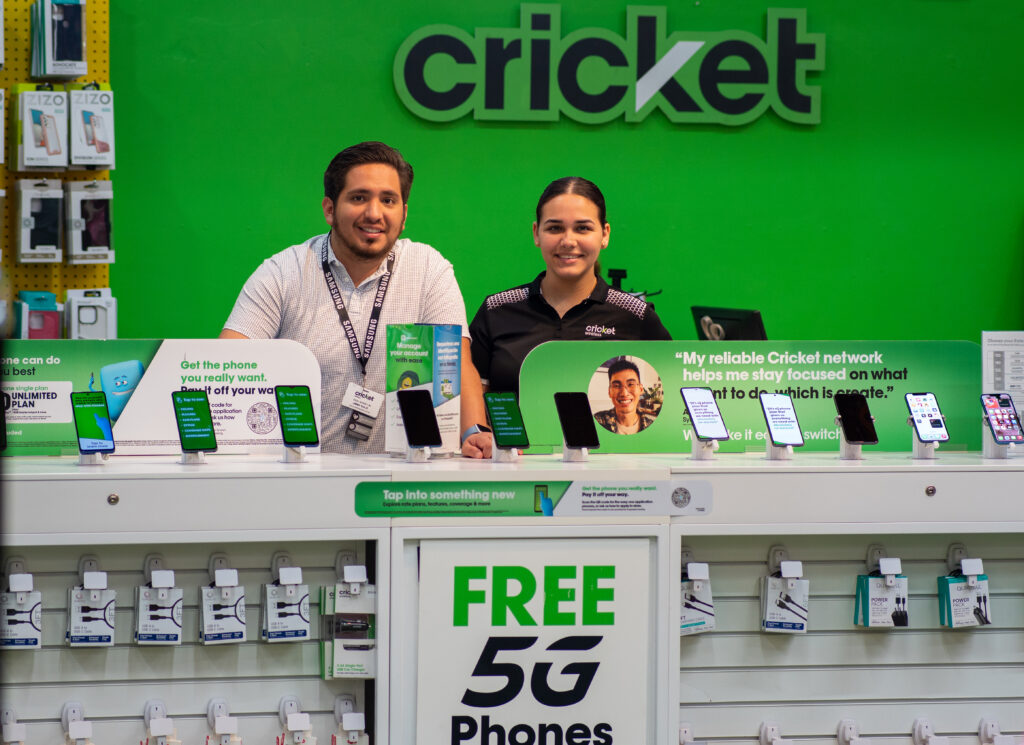
One of the most significant advantages of Cricket Wireless is its extensive coverage, which mirrors that of AT&T. AT&T boasts a vast network footprint, providing reliable service in metropolitan areas, suburban communities, and many rural regions across the United States. This broad coverage means that Cricket Wireless users can expect consistent connectivity in most places where AT&T service is available, including major highways and popular travel destinations. Customers can check Cricket’s coverage map, which is essentially a reflection of AT&T’s network, to verify service availability in specific locations.
Speed and Data Prioritization Considerations
This is where the primary difference between Cricket Wireless and direct AT&T service often lies. While Cricket users access the same physical network infrastructure, their data may be subject to deprioritization during periods of network congestion. This means that if an AT&T cell tower is experiencing high traffic, data speeds for Cricket Wireless customers might be temporarily reduced to ensure optimal performance for direct AT&T subscribers.
It’s important to note that deprioritization does not mean permanently throttled speeds; it only occurs during congestion and typically only affects the heaviest network users. For most everyday usage in non-congested areas, Cricket Wireless customers can expect fast and responsive data speeds comparable to what AT&T offers. However, during peak hours in busy locations (e.g., sporting events, concerts, or crowded urban centers), Cricket users might notice a slowdown that direct AT&T subscribers might not experience to the same degree. Some Cricket plans may also include specific speed caps (e.g., 8 Mbps for LTE), so it’s essential to review plan details.
Advanced Features: VoLTE, Wi-Fi Calling, and Hotspot
Cricket Wireless supports a range of modern cellular features that enhance the user experience:
- VoLTE (Voice over LTE): This technology allows voice calls to be carried over the 4G LTE data network, resulting in clearer call quality, faster call setup times, and the ability to use data services simultaneously during a call. Cricket Wireless fully supports VoLTE across its compatible device lineup.
- Wi-Fi Calling: This feature enables users to make and receive calls and texts over a Wi-Fi network when cellular signal is weak or unavailable. It’s particularly useful indoors or in areas with poor cellular reception. Cricket Wireless offers Wi-Fi Calling on eligible devices, leveraging the underlying AT&T technology.
- Mobile Hotspot: Many Cricket Wireless plans include the ability to use your smartphone as a mobile hotspot, sharing its cellular data connection with other Wi-Fi-enabled devices like laptops or tablets. The availability and data allowance for mobile hotspot functionality vary by plan, so customers should confirm this when selecting their service.
- Visual Voicemail: Cricket Wireless also offers Visual Voicemail, which displays voicemails as a list you can review and play in any order, rather than listening to them sequentially.
These features ensure that Cricket Wireless users enjoy a modern mobile experience that is largely on par with what is offered by major carriers, demonstrating the depth of integration with AT&T’s network capabilities.
Why Cricket Wireless Chooses AT&T’s Network
The decision for Cricket Wireless to operate on AT&T’s network is not accidental; it is a strategic choice rooted in ownership, market positioning, and network reliability.
Strategic Alignment and Ownership
As mentioned, Cricket Wireless is a wholly-owned subsidiary of AT&T. This ownership structure creates a natural and powerful alignment. AT&T acquired Leap Wireless International, the parent company of Cricket Wireless, in 2014. This acquisition was a strategic move by AT&T to expand its reach into the prepaid market, offering a more budget-friendly option to compete with other prepaid carriers and MVNOs, while simultaneously migrating Cricket’s original CDMA network users onto AT&T’s GSM/LTE network. This deep integration allows for seamless technology roadmaps, shared network resources, and a unified approach to infrastructure development, even if the go-to-market strategies differ.
Network Reliability and Market Reach
AT&T’s network is consistently ranked among the top carriers for reliability, speed, and coverage by independent third-party testers. By running on this network, Cricket Wireless immediately inherits these advantages. This is a significant draw for customers who want the dependability of a major network without the higher cost of a direct MNO plan. The extensive coverage footprint of AT&T means that Cricket Wireless can offer service to a vast majority of the U.S. population, including in many rural areas where other smaller MVNOs might struggle to provide consistent coverage. This market reach is a competitive differentiator, especially for a value-oriented brand.
Competitive Positioning in the MVNO Landscape
Operating on AT&T’s network strategically positions Cricket Wireless in the competitive MVNO market. It allows Cricket to directly compete with other AT&T MVNOs (like H2O Wireless or Red Pocket Mobile) and with MVNOs on other networks (like Metro by T-Mobile, Boost Mobile, or Verizon’s Visible). The ability to advertise “nationwide 5G access on AT&T’s proven network” is a strong selling point that distinguishes Cricket from smaller players or those using less extensive networks. This strategic choice helps Cricket maintain its position as one of the largest and most well-known prepaid brands in the U.S.
The User Experience: What This Means for Cricket Subscribers
Ultimately, knowing which network Cricket Wireless uses translates directly into the day-to-day experience for its subscribers. This impacts everything from device compatibility to future service enhancements.
Device Compatibility and Network Bands
Since Cricket Wireless operates on AT&T’s network, devices compatible with AT&T’s network bands are required. This typically means GSM-compatible phones that support AT&T’s 4G LTE bands (B2, B4, B5, B12, B17, B30, B66) and 5G bands (n5, n77). Most unlocked smartphones sold in the U.S. today are compatible. Cricket Wireless also sells a range of compatible devices directly. Customers bringing their own device (BYOD) should ensure it is unlocked and supports AT&T’s network frequencies for optimal performance. Devices that were previously locked to other carriers (e.g., Verizon CDMA-only phones) may not work on Cricket.
Roaming and International Service Capabilities
Cricket Wireless primarily provides domestic service within the United States. While AT&T’s direct plans often include extensive international roaming options, Cricket’s international capabilities are more limited. Some plans may include calling to Canada and Mexico, and international add-ons for specific countries might be available for purchase. However, extensive international data roaming typically is not a standard feature of Cricket Wireless plans. This is a common characteristic of budget-friendly MVNOs, which prioritize domestic service cost-efficiency.
Future-Proofing with Evolving Network Technologies (e.g., 5G Evolution)
One of the significant advantages of being an AT&T subsidiary is the inherent future-proofing it provides. As AT&T continues to invest in and evolve its network with new technologies like enhanced 5G (mid-band and mmWave expansions), 5G standalone (SA) architecture, and eventually 6G research, Cricket Wireless customers are positioned to benefit from these advancements. While there might be a slight delay in rolling out certain bleeding-edge features to the prepaid brand, the core infrastructure and underlying technological progress will always be shared. This ensures that Cricket Wireless customers will continue to have access to modern, high-performance mobile services as wireless technology continues to advance, ensuring their connectivity remains relevant and robust for years to come.
In conclusion, for anyone considering Cricket Wireless or simply curious about its technical foundation, the answer is clear: it leverages the full power and expansive reach of AT&T’s national network. This strategic choice offers a compelling blend of widespread coverage, reliable performance, and advanced features, all delivered through an affordable prepaid model. Understanding this symbiotic relationship demystifies the MVNO experience and highlights the robust technological backbone supporting millions of Cricket Wireless subscribers.
aViewFromTheCave is a participant in the Amazon Services LLC Associates Program, an affiliate advertising program designed to provide a means for sites to earn advertising fees by advertising and linking to Amazon.com. Amazon, the Amazon logo, AmazonSupply, and the AmazonSupply logo are trademarks of Amazon.com, Inc. or its affiliates. As an Amazon Associate we earn affiliate commissions from qualifying purchases.