
Moving can be one of life’s most exciting, yet also most stressful and expensive, endeavors. From packing up your belongings to transporting them across state lines or even just across town, the costs can quickly add up. Naturally, many people wonder if any of these substantial expenses can offer a silver lining in the form of a tax deduction. Understanding the rules surrounding tax-deductible moving expenses is crucial for effective financial planning, especially given recent changes in tax law.
For most individual taxpayers, the landscape of moving expense deductions has changed significantly in recent years. While there was a time when a broader range of moving costs could be deducted, current federal tax law has narrowed these provisions considerably. This article will delve into what constitutes a deductible moving expense today, who qualifies for these deductions, what costs are typically excluded, and essential best practices for managing your finances around a move.

The Evolving Landscape of Moving Expense Deductions
The ability to deduct moving expenses from your federal income tax has undergone a significant transformation, primarily due to the Tax Cuts and Jobs Act (TCJA) of 2017. To fully grasp the current situation, it’s helpful to understand what was once allowed and how that compares to today’s more restrictive rules.
A Look Back: Pre-TCJA Deductions
Prior to the TCJA, which went into effect for tax years 2018 through 2025, many taxpayers could deduct “reasonable” moving expenses if their move was job-related. The primary conditions for this deduction were:
- The Distance Test: Your new workplace had to be at least 50 miles farther from your old home than your old workplace was from your old home. For instance, if your old job was 10 miles from your old home, your new job had to be at least 60 miles from your old home.
- The Time Test: You had to work full-time at the new location for at least 39 weeks during the 12 months immediately following your move. Self-employed individuals had a similar rule, requiring 78 weeks of full-time work over the first 24 months.
If these conditions were met, a wide array of expenses could be deducted, including the cost of packing, shipping household goods, travel (including lodging but not meals) to the new home, and even temporary storage of household goods for a limited period. This provision provided substantial tax relief for individuals and families relocating for employment opportunities.
The Current Federal Reality: Post-2017 Changes
The TCJA significantly altered the tax code, and one of its provisions was the suspension of the deduction for moving expenses for most individual taxpayers. This suspension is currently in effect from January 1, 2018, through December 31, 2025. This means that, for the vast majority of people, moving expenses incurred during this period are not tax deductible at the federal level, even if the move is job-related and meets the old distance and time tests.
This change impacts not only those moving for a new job but also those whose employers reimburse their moving costs. Previously, “qualified” employer reimbursements were often excluded from the employee’s taxable income. Now, unless a specific exception applies (as detailed below), employer reimbursements for moving expenses are generally considered taxable income to the employee and must be reported on their W-2. This shift means that what was once a non-taxable benefit is now, for most, added to gross wages and subject to income tax withholding and FICA taxes.
This current reality underscores the importance of carefully budgeting for moving costs, as the federal government no longer offers a tax offset for these expenditures for most citizens.
The Primary Federal Exception: Active-Duty Military Personnel
While the TCJA eliminated the moving expense deduction for most, there is one significant exception that remains firmly in place at the federal level: members of the Armed Forces. This exception acknowledges the unique circumstances and demands placed upon military families.
Who Qualifies: Permanent Change of Station (PCS)
The federal deduction for moving expenses is still available to members of the U.S. Armed Forces who are on active duty and move due to a permanent change of station (PCS). This includes moves to a new duty station, as well as moves from the last duty station to a home within the United States or its possessions upon retirement or separation from the Armed Forces, provided the move occurs within one year of retirement or separation.
Crucially, the old distance and time tests that applied to civilians prior to the TCJA do not apply to qualified military personnel. If an active-duty member performs a PCS, their unreimbursed, qualifying moving expenses can be deducted, regardless of how far they moved or how long they’ve been at the new duty station. This special provision ensures that military personnel and their families are not financially penalized for their service and the often-frequent relocations it entails.
Eligible Expenses for Military Moves
For active-duty military personnel undergoing a PCS, a range of reasonable and necessary expenses can still be deducted. These typically include:
- Travel Expenses: The cost of traveling from your old home to your new home. This includes the cost of transportation for yourself and members of your household, such as airfare, train tickets, or the actual costs of driving (gas and oil) or standard mileage rates for personal vehicles.
- Lodging Expenses: The cost of lodging for yourself and your household members on the way to your new home. This covers hotel stays during the actual travel period.
- Shipping and Storage of Household Goods: The cost of packing, crating, and transporting your household goods and personal effects. This also includes the cost of storing and insuring these items for any period of time while they are in transit or awaiting delivery to your new home.
- Shipping of Personal Property: The cost of shipping your car, boat, or other personal property from your old home to your new home.
It’s important to remember that these expenses must be “reasonable” under the circumstances of the move. Lavish or extravagant expenditures would likely not qualify.
Unreimbursed Expenses and Reporting
Only the moving expenses that are not reimbursed by the government (or reimbursed and then included in your income) can be deducted. If the military reimburses you for certain moving expenses, you generally cannot deduct those specific costs. If your reimbursement exceeds your actual expenses, the excess amount would typically be included in your income.
Military personnel who qualify for this deduction will report their deductible moving expenses on Form 3903, Moving Expenses, and then transfer the total amount to Schedule 1 (Form 1040), line 14. This deduction is an “above-the-line” deduction, meaning it reduces your adjusted gross income (AGI), which can have further benefits for other tax calculations. Meticulous record-keeping, including receipts and detailed logs, is absolutely essential to substantiate any claims for this deduction.
Understanding Non-Deductible Moving Costs
Beyond the specific exception for active-duty military personnel, it’s equally important for all taxpayers to understand what moving expenses are generally not deductible at the federal level. Misconceptions can lead to incorrect tax filings and potential issues with the IRS.
Common Misconceptions and Excluded Expenses
For the vast majority of civilians, and even for military personnel who might attempt to deduct non-qualifying costs, many expenses commonly associated with moving are explicitly excluded from being tax-deductible. These include:
- Pre-move House Hunting Trips: Expenses incurred while looking for a new home, such as travel, meals, or lodging for these trips, are not deductible.
- Temporary Living Expenses: Costs associated with living in temporary quarters (e.g., hotels, short-term rentals) at the new location, beyond the actual travel period to get there, are not deductible.
- Meals During the Move: While lodging during travel is deductible for military personnel, the cost of meals consumed during the move itself (for anyone) is generally not.
- Costs Related to Selling/Buying a Home: Real estate commissions, title fees, mortgage points, closing costs, or expenses for breaking a lease on your old residence are not deductible as moving expenses. These might factor into the cost basis of your home for capital gains purposes but are not moving deductions.
- New Utility Connection Fees: The cost to connect utilities (electricity, water, internet, etc.) at your new home is not deductible.
- Car Registration or Driver’s License Fees: The cost to re-register your vehicles or obtain a new driver’s license in your new state is not deductible.
- Storage Fees (for civilians): For non-military personnel, storage fees for household goods, even temporary ones, are not deductible. This is a key distinction from the military exception.
- Personalized Items/Services: Costs for changing locks, installing new alarm systems, or other personalized home improvements are not considered moving expenses.
- Loss on Sale of Home: Any financial loss incurred from selling your previous home for less than its purchase price is not a deductible moving expense.
Understanding these exclusions is critical to avoid errors when preparing tax returns.
The Impact of Employer Reimbursements
As mentioned, for non-military personnel, employer reimbursements for moving expenses are now generally considered taxable income. This means that if your employer pays for your relocation, that amount will typically be added to your wages on your Form W-2 and will be subject to federal income tax, Social Security, and Medicare taxes.
This change often comes as a surprise to employees who expect employer-paid moves to be tax-free. While the reimbursement certainly helps with the immediate financial burden of moving, it’s essential to factor in the potential tax implications. Some employers might offer a “gross-up” for moving expense reimbursements, meaning they pay an additional amount to cover the taxes on the reimbursement, but this is at the employer’s discretion and not legally required.
If you are offered a relocation package, it’s advisable to clarify with your employer’s HR or finance department how the moving expense reimbursements will be handled for tax purposes and to plan accordingly for any potential increase in your taxable income.
Navigating State-Specific Rules and Best Practices
While federal tax law has largely eliminated the moving expense deduction for most taxpayers, the rules can vary at the state level. Moreover, effective financial management and meticulous record-keeping remain crucial for any move, regardless of federal deductibility.
State Tax Considerations for Moving Expenses
It’s important to remember that state tax laws are separate from federal tax laws. While most states tend to conform to federal tax changes, some states may still allow deductions for moving expenses, even if the federal government does not. For instance, a few states might still follow pre-TCJA federal rules or have their own unique provisions for moving expense deductions.
If you have moved across state lines or within the same state, it is highly advisable to check the specific tax laws of your state(s) of residence for the tax year of your move. You can typically find this information on your state’s department of revenue website or by consulting a tax professional who specializes in state tax laws. Ignoring state-specific rules could mean missing out on legitimate deductions or, conversely, making an incorrect claim.
Essential Record-Keeping for Potential Deductions
Regardless of whether you are an active-duty military member or hope to find a state-specific deduction, meticulous record-keeping is paramount. The burden of proof for any deduction rests with the taxpayer. Without proper documentation, even a legitimate claim can be denied by tax authorities.
For any expenses you believe might be deductible, you should keep:
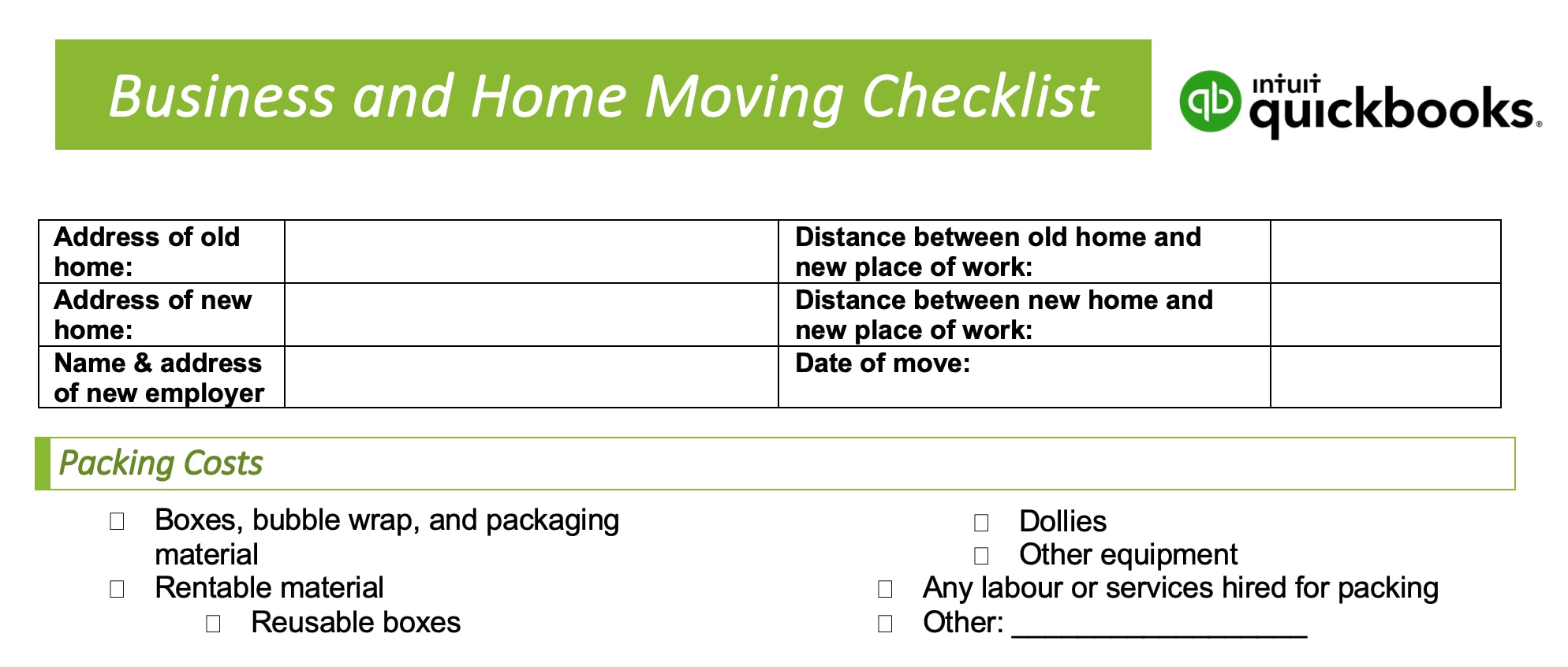
- Receipts: For all significant expenditures, such as moving company invoices, truck rentals, airline tickets, gas purchases (if using actual costs), and hotel stays.
- Mileage Logs: If you drive your own vehicle, keep a detailed log of dates, starting and ending locations, and mileage for travel directly related to the move.
- Bills of Lading/Contracts: Documentation from moving companies detailing services provided and costs.
- Employer Correspondence: If your employer offered relocation assistance, retain any letters, contracts, or summaries outlining the terms of the assistance and how reimbursements are handled.
- Military Orders: Active-duty military personnel must retain their permanent change of station (PCS) orders.
It’s wise to organize these documents chronologically and store them safely for at least three years from the date you file your tax return (or two years from the date you paid the tax, whichever is later), as this is the standard statute of limitations for IRS audits. Digital copies, backed up securely, can be a great way to manage these records.
When to Consult a Tax Professional
Given the complexities and recent changes in tax law, understanding what moving expenses are tax deductible can be challenging. If your situation is unique, involves a significant sum, or you are unsure about the applicability of specific rules (especially for military moves or state taxes), it is always best to consult with a qualified tax professional.
A certified public accountant (CPA) or an enrolled agent (EA) can provide personalized advice, help you navigate the nuances of both federal and state tax laws, and ensure that you are taking advantage of any legitimate deductions while avoiding costly errors. They can also advise on the proper forms and documentation needed to support your claims. While seeking professional advice incurs a cost, it can often save you money and stress in the long run by ensuring compliance and optimizing your tax position.
Moving is a substantial life event with significant financial implications. While federal tax deductions for moving expenses are largely a thing of the past for most, understanding the remaining exceptions and the overall tax landscape is essential for smart personal finance. By being informed, keeping diligent records, and seeking expert advice when needed, you can navigate your relocation with greater financial clarity and confidence.
aViewFromTheCave is a participant in the Amazon Services LLC Associates Program, an affiliate advertising program designed to provide a means for sites to earn advertising fees by advertising and linking to Amazon.com. Amazon, the Amazon logo, AmazonSupply, and the AmazonSupply logo are trademarks of Amazon.com, Inc. or its affiliates. As an Amazon Associate we earn affiliate commissions from qualifying purchases.