
While the literal answer to the question “what movie is Shin Godzilla in” is the eponymous 2016 Japanese masterpiece Shin Godzilla (released internationally as Godzilla Resurgence), the significance of this title extends far beyond a simple film credit. From a brand strategy perspective, Shin Godzilla represents one of the most successful corporate pivots in the history of intellectual property management. It wasn’t just a movie; it was a total recalibration of a 60-year-old brand that had become burdened by its own tropes and diluted by international interpretations.
Toho Studios, the parent company of the Godzilla IP, faced a significant branding challenge in the mid-2010s. With the emergence of the American “MonsterVerse” by Legendary Pictures, Toho needed to reclaim the cultural soul of their most famous asset. This article explores how Shin Godzilla served as a masterclass in brand revitalization, corporate identity, and strategic market positioning.
Defining the “Shin” Identity: More Than Just a Title
The prefix “Shin” (シン) in the movie’s title was a deliberate and calculated branding choice. In Japanese, “Shin” is phonetically versatile and can be written with various kanji meaning “New” (新), “True” (真), or “God” (神). By keeping the title in katakana—a phonetic script—Toho allowed the brand to occupy all three meanings simultaneously.
The Etymology of “Shin” and Brand Perception
From a brand strategy standpoint, this ambiguity was brilliant. It signaled to the audience that this was a “New” beginning, a “True” return to the character’s terrifying roots, and a depiction of a “God-like” entity beyond human comprehension. This triple-entendre created an aura of prestige and mystery that set the film apart from previous “Versus” installments which had positioned Godzilla as a campy protector of humanity. The “Shin” brand identity effectively wiped the slate clean, allowing Toho to market the film as a high-concept disaster drama rather than a standard monster movie.
Shifting from Hero to Existential Horror
For decades, the Godzilla brand had oscillated between being a destructive force of nature and a heroic defender. Toho recognized that to command modern premium brand equity, they needed to return to the character’s 1954 origins: an allegory for national trauma. By branding Shin Godzilla as an evolving, grotesque, and unstoppable force, they moved the IP away from the “Action Figure” category and into the “Cinephile and Cultural Critique” category. This shift in brand perception allowed the film to appeal to older demographics and critics who had long dismissed the franchise as juvenile.
Strategic IP Management: How Toho Reclaimed the Narrative
The management of the Godzilla brand is a complex dance between domestic Japanese interests and international licensing. When Hollywood produced Godzilla in 2014, it was a massive commercial success, but it presented a brand risk: the world was beginning to see Godzilla through a purely Western lens.
The Response to Legendary’s MonsterVerse
Toho’s strategic response was not to compete with Hollywood’s big-budget spectacle, but to provide a “prestige” alternative. While the American films focused on “Titan” mythology and cinematic universes, Shin Godzilla focused on hyper-realism and political satire. This is a classic “Blue Ocean Strategy.” Instead of fighting for the same “Summer Blockbuster” audience, Toho created a new market space for a sophisticated, dialogue-heavy political thriller that just happened to feature a giant monster.
Licensing and the “Godzilla Resurgence” Campaign
The international branding of the film encountered a fascinating hurdle. Originally marketed in the West as Godzilla Resurgence, the brand was eventually unified under the Shin Godzilla moniker. This decision reflected a growing global brand awareness: Toho realized that “Shin” was a brand in itself. By maintaining the Japanese title, they leaned into the “Authentic Japanese IP” value proposition, which carries significant weight in global markets obsessed with “Cool Japan” aesthetics.
Marketing through Satire: The Corporate Identity of Chaos
One of the most radical aspects of Shin Godzilla‘s brand strategy was its focus on bureaucracy. Unlike the American versions that follow a single hero or a small family, the “protagonist” of Shin Godzilla is effectively the Japanese Government.
Bureaucracy as a Brand Element
The film’s marketing leaned heavily into the aesthetics of government offices, press conferences, and technical jargon. This was a deliberate attempt to brand the film as a reflection of the modern Japanese corporate and political identity. It resonated deeply with a public that had witnessed the bureaucratic failures of the 2011 Fukushima disaster. By branding Godzilla as a “natural disaster” that exposes the flaws in human systems, Toho turned a monster movie into a socio-political event.
Visual Marketing: The Evolution of Form
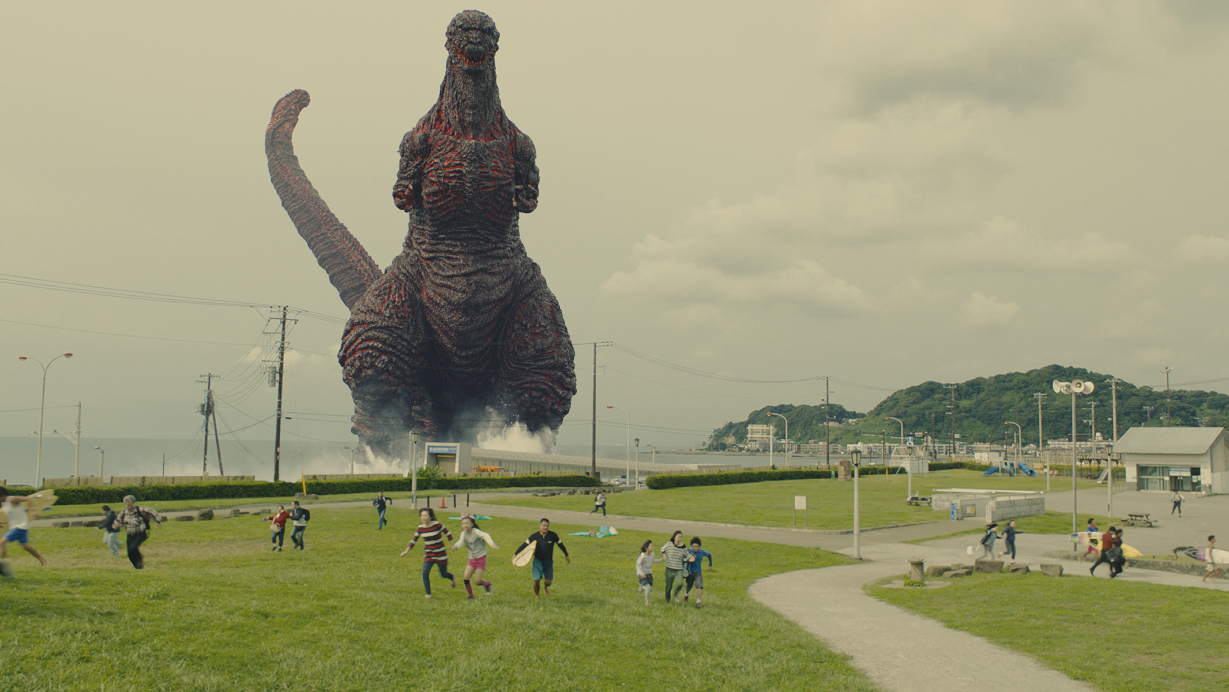
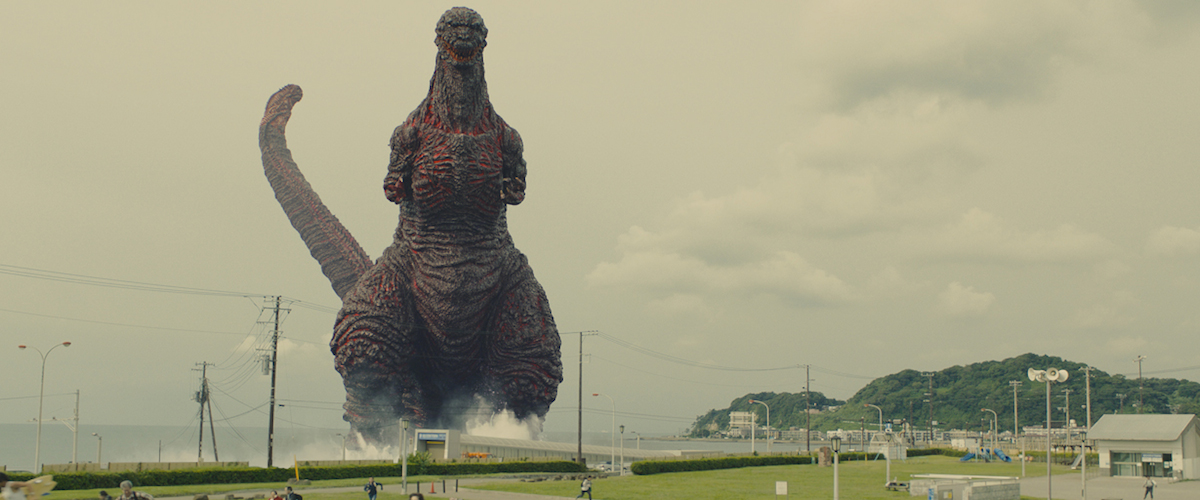
The visual branding of Shin Godzilla himself was a departure from established norms. The creature’s four distinct “forms” were teased through marketing materials to create a sense of organic growth and unpredictability. The brand was no longer static; it was dynamic. The grotesque “Kamata-kun” (the second form) became an unexpected viral marketing sensation, spawning merchandise and memes that reached audiences who weren’t traditional Kaiju fans. This “accidental” brand expansion showed the power of unique creature design in the digital age.
The Global Reach of a Culturally Specific Brand
A common mistake in brand strategy is trying to appeal to everyone at once, which often results in a bland, generic product. Toho took the opposite approach with Shin Godzilla. They made a film that was intensely, specifically Japanese, and in doing so, created a brand that was globally fascinating.
Adapting Localized Trauma for a Global Market
The brand equity of Godzilla has always been rooted in the atomic bombings of Hiroshima and Nagasaki. Shin Godzilla updated this brand promise to reflect the 3/11 Triple Disaster (earthquake, tsunami, and nuclear meltdown). While the specific references were Japanese, the brand’s themes of “crisis management” and “national resilience” are universal. The professional, stoic tone of the film’s marketing communicated to international audiences that this was a “serious” piece of cinema, leading to higher-than-expected box office returns in limited international releases and high demand on streaming platforms.
Cross-Promotional Synergy and “Shin” Collaboration
Toho maximized the brand’s value through ingenious cross-promotions. They partnered with the Evangelion franchise (as both were directed by Hideaki Anno) for “Godzilla vs. Evangelion” marketing campaigns. This wasn’t just a gimmick; it was a strategic alignment of two of Japan’s most powerful pop-culture brands. These collaborations increased the “Shin” brand’s footprint in the worlds of high-end collectibles, theme park attractions (Universal Studios Japan), and digital media.
Long-term Brand Equity: The Legacy of Shin Godzilla
The success of Shin Godzilla did more than just sell tickets; it provided a roadmap for how Toho could manage its legacy characters in the 21st century. It proved that there was a massive appetite for “auteur-driven” takes on classic IP.
The Birth of the Shin Japan Heroes Universe (SJHU)
The “Shin” brand has since expanded into a full-fledged corporate ecosystem. Following the success of the movie, the brand strategy was applied to other iconic Japanese characters, resulting in Shin Ultraman and Shin Kamen Rider. This created the “Shin Japan Heroes Universe,” a collaborative project between Toho, Khara, Tsuburaya Productions, and Toei. This is a masterstroke of brand synergy, allowing four competing companies to pool their IP under a single, prestigious banner that promises a specific tone and quality level.

Conclusion: The Future of the Godzilla Brand
So, what movie is Shin Godzilla in? He is in a film that saved a brand. Before 2016, the Japanese Godzilla was largely seen as a relic of the past, struggling to find its place in an era of CGI-heavy Hollywood spectacles. Through the Shin Godzilla project, Toho redefined what the character stands for: not just a monster, but a mirror to society.
By leveraging the “Shin” identity, focusing on a “Blue Ocean” market strategy, and embracing a culturally specific narrative, Toho successfully transitioned Godzilla from a legacy brand to a modern powerhouse. The lessons learned from Shin Godzilla continue to influence how IP is managed today, proving that with the right brand strategy, even a 70-year-old radioactive lizard can remain the most relevant figure in the room.
aViewFromTheCave is a participant in the Amazon Services LLC Associates Program, an affiliate advertising program designed to provide a means for sites to earn advertising fees by advertising and linking to Amazon.com. Amazon, the Amazon logo, AmazonSupply, and the AmazonSupply logo are trademarks of Amazon.com, Inc. or its affiliates. As an Amazon Associate we earn affiliate commissions from qualifying purchases.