
In an era defined by rapid technological advancement, where new gadgets and sophisticated machinery emerge almost daily, there’s an inherent adversary working against the longevity and optimal performance of every physical component: wear. Far more complex than a simple scratch or dent, wear is a multifaceted process of material degradation that impacts everything from the micro-processors in our smartphones to the colossal turbines generating our power. Understanding “what is wear” is not just an academic exercise; it is fundamental to designing more durable products, enhancing system reliability, and fostering a more sustainable technological future. This deep dive will explore the nature of wear in a technological context, its intricate mechanisms, profound impacts, and the innovative strategies engineers are employing to combat its pervasive influence.
Defining Wear: More Than Just Scratches
At its core, wear refers to the progressive loss of material from the surface of a solid body, typically due to mechanical action or interaction with another surface. It’s a ubiquitous phenomenon that limits the operational lifespan of virtually all engineered products and systems. While often visible as abrasion, pitting, or deformation, the underlying processes are complex, occurring at microscopic and even atomic scales.
The Fundamental Nature of Material Loss
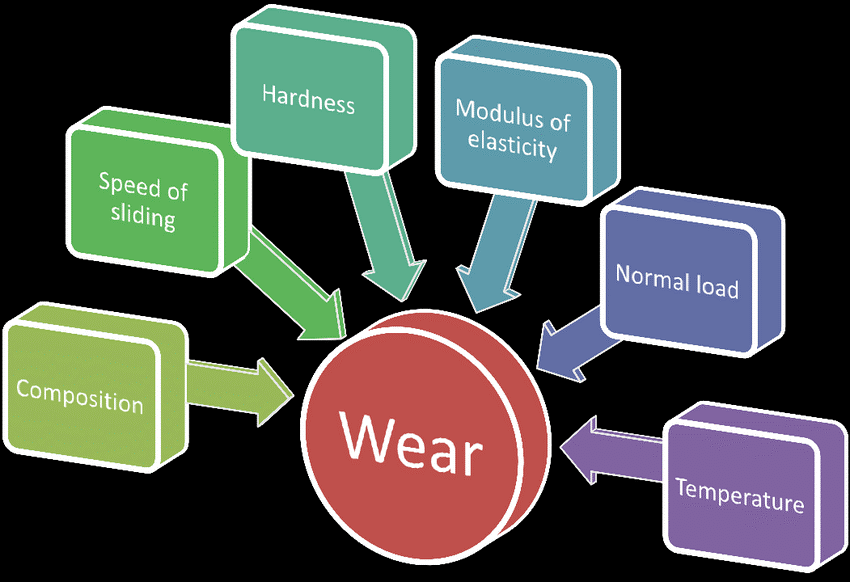
Wear is essentially a surface phenomenon. It initiates at the interface between two contacting bodies or between a body and an environment, leading to the gradual removal, displacement, or transformation of material. This material loss alters the geometry, surface finish, and mechanical properties of the affected components, eventually leading to diminished performance or outright failure. It’s a slow, insidious process that accumulates over time, often unnoticed until it manifests as a significant problem. The rate and severity of wear are influenced by a myriad of factors, including the properties of the materials involved, the nature of contact, applied loads, sliding speeds, and environmental conditions such as temperature, humidity, and the presence of corrosive agents.
Classifying Wear: A Spectrum of Degradation
While the end result of wear is material degradation, the mechanisms by which this occurs are diverse. Understanding these classifications is crucial for diagnosing wear problems and developing effective mitigation strategies in technological applications.
Abrasion: The Grinding Force
Abrasive wear occurs when a hard, rough surface slides against a softer one, causing material to be removed from the softer surface by plowing, cutting, or chipping. This is perhaps the most intuitive form of wear, akin to sandpaper working on wood. In technology, abrasive wear can be caused by hard particles (like dust or debris) trapped between moving parts, or by asperities (microscopic peaks) on one surface gouging another. Examples include the wear on hard drive platters due to dust particles, or the degradation of gears in dusty environments.
Adhesion: The Sticking Point
Adhesive wear, often referred to as galling, occurs when two surfaces slide against each other under pressure, causing microscopic junctions to form between their asperities. If these junctions are stronger than the base material, shearing occurs, and material is transferred from one surface to the other, or fragments break off. This mechanism is particularly problematic in unlubricated metal-on-metal contacts, leading to seizure or catastrophic failure in machinery components like bearings and piston rings. The formation and fracture of these “cold welds” deplete material and roughen surfaces.
Fatigue: The Silent Killer
Fatigue wear, or surface fatigue, results from repeated cyclic loading of a material, even when the stresses are below the material’s yield strength. Over time, microscopic cracks initiate beneath the surface due to repeated stress cycles. These cracks propagate until a fragment of material breaks away, forming pits or spalls. This type of wear is critical in components subjected to fluctuating loads, such as rolling element bearings, gears, and cam followers, where it can lead to sudden and often unexpected failure without obvious prior warning signs.
Erosion & Corrosion: Environmental Assaults
Erosive wear involves the removal of material from a surface due to the impact of solid particles or fluid jets. Think of sandblasting or the impact of rain on aircraft wings. In technological systems, this can be seen in pipelines transporting slurries, turbine blades exposed to particulate matter, or even circuit boards subjected to high-velocity airflow carrying dust.
Corrosive wear is a synergistic degradation process where chemical or electrochemical reactions (corrosion) combine with mechanical wear. While corrosion alone can degrade materials, the mechanical removal of the corrosion product (e.g., rust layer) exposes fresh, uncorroded material to the environment, accelerating the overall degradation rate. This is a significant concern in many industrial and marine applications, impacting everything from structural integrity to electronic components exposed to humid or chemically active environments.
The Intricate Mechanisms of Wear in Action
Understanding the classifications of wear is one thing, but comprehending the intricate mechanisms that drive these processes at a microscopic level is another. This deeper insight allows engineers to tailor materials and designs to resist specific wear modes.
Microscopic Battlegrounds: From Atoms to Surfaces
At the heart of all wear mechanisms is the interaction between material surfaces at an atomic and molecular level. Even seemingly smooth surfaces possess microscopic irregularities (asperities). When two surfaces come into contact, actual contact occurs only at the tips of these asperities, leading to extremely high localized pressures. It’s at these contact points that the fundamental processes of plastic deformation, fracture, adhesion, and material transfer initiate. Factors like crystal structure, grain boundaries, and the presence of dislocations within a material all play a role in how it responds to these microscopic stresses. The tribological system—which includes the two interacting surfaces, any intermediate medium (like a lubricant), and the operating environment—dictates the specific wear mechanisms that will dominate.
Factors Influencing Wear Rate: A Complex Interplay
The rate at which wear progresses is not uniform but is influenced by a complex interplay of several factors, making its prediction and control a significant engineering challenge.
Material Properties
The intrinsic properties of the materials in contact are paramount. Hardness, toughness, ductility, elastic modulus, fatigue strength, and chemical inertness all contribute to a material’s wear resistance. For example, harder materials generally exhibit better abrasive wear resistance, while materials with high fatigue strength are more resistant to fatigue wear. Surface treatments and coatings can significantly alter these properties at the surface, providing enhanced protection without changing the bulk material.
Contact Pressure and Sliding Velocity
The intensity of interaction at the interface is directly related to contact pressure (load per unit area) and sliding velocity. Higher pressures and faster relative motion generally accelerate wear rates. Increased pressure can lead to deeper penetration of asperities, stronger adhesive junctions, or more rapid crack initiation. Higher velocities increase the frequency of contact events and can generate significant localized heat, which can further modify material properties and accelerate chemical reactions.
Environmental Conditions
The surrounding environment plays a critical role. Temperature can affect material hardness, ductility, and the efficacy of lubricants. Humidity and the presence of corrosive gases or liquids can accelerate chemical degradation and corrosive wear. The presence of abrasive particles (e.g., dust, grit) in the environment can drastically increase abrasive wear. Understanding the operating environment is therefore crucial in selecting appropriate materials and designing protective measures.

The Far-Reaching Impact of Wear on Technological Systems
The consequences of wear extend far beyond mere cosmetic damage. It fundamentally impacts the performance, reliability, safety, and economic viability of technological systems across all sectors.
Performance Degradation and Efficiency Loss
Wear directly leads to a degradation of performance. In precision machinery, wear on critical components can alter tolerances, introduce backlash, and reduce positional accuracy. In engines and power transmission systems, wear on moving parts increases friction, leading to energy loss and reduced efficiency. For instance, wear in internal combustion engine cylinders and piston rings leads to increased oil consumption and reduced compression, lowering fuel efficiency and power output. This efficiency loss translates directly into higher operating costs and a larger energy footprint.
Reliability, Safety, and Economic Implications
One of the most significant impacts of wear is on system reliability. Worn components are prone to failure, which can lead to costly downtime for repairs or replacement. In critical applications, such as aerospace, medical devices, or nuclear power plants, wear-induced failures can have catastrophic consequences, posing severe safety risks to operators and the public. The economic cost of wear worldwide is staggering, estimated to be several percent of the Gross Domestic Product (GDP) in industrialized nations, encompassing replacement parts, maintenance labor, lost productivity, and energy waste. For businesses, managing wear is a constant battle to balance upfront costs with long-term operational expenses and reliability.
Environmental Footprint and E-Waste Challenges
The short lifespan of wear-prone components contributes significantly to the growing global challenge of electronic waste (e-waste) and resource depletion. When a component fails due to wear, the entire device or system it belongs to may become obsolete, even if other parts are still functional. This drives a culture of frequent replacement rather than repair or reuse, exacerbating environmental problems related to mining raw materials, manufacturing, and waste disposal. Addressing wear is thus a critical pathway towards more sustainable technology and a circular economy.
Engineering Against Wear: Strategies for Enhanced Durability
Given the pervasive and detrimental effects of wear, a vast field of engineering is dedicated to understanding and mitigating it. Engineers employ a range of sophisticated strategies, leveraging materials science, design principles, and advanced technologies.
Material Selection and Design Optimisation
The first line of defense against wear is judicious material selection. Engineers choose materials with inherent properties that resist the expected wear mechanisms in a given application (e.g., hard ceramics for abrasive environments, corrosion-resistant alloys for harsh chemicals). Beyond material choice, design plays a crucial role. Features like optimized surface geometry, appropriate clearances, and minimizing stress concentrations can significantly reduce wear rates. For example, designing components to distribute loads more evenly or to reduce sliding distances can extend their operational life.
Surface Engineering: The Armor of Components
Since wear is primarily a surface phenomenon, modifying the surface properties of components without altering the bulk material is a highly effective strategy.
Coatings and Treatments
Various surface engineering techniques can impart superior wear resistance. These include:
- Hard Coatings: Applying thin, extremely hard layers like PVD (Physical Vapor Deposition) or CVD (Chemical Vapor Deposition) coatings (e.g., TiN, DLC – Diamond-Like Carbon) can dramatically increase abrasive and adhesive wear resistance.
- Thermal Sprays: Techniques like plasma spray or high-velocity oxy-fuel (HVOF) can deposit thick, wear-resistant layers of ceramics or metals.
- Case Hardening: Processes like carburizing or nitriding introduce carbon or nitrogen into the surface of steel, creating a very hard outer layer while retaining a tough core.
- Anodizing: For aluminum, this electrochemical process creates a hard, corrosion- and wear-resistant oxide layer.
These treatments create a robust “armor” that shields the softer, tougher bulk material from direct wear.
Lubrication: Reducing Friction’s Grip
Lubrication is a cornerstone of wear prevention in systems with relative motion. Lubricants (oils, greases, solid lubricants) create a separating film between moving surfaces, reducing direct metal-to-metal contact, thereby minimizing friction, heat generation, and adhesive and abrasive wear. Modern lubricants are engineered with additives that provide anti-wear, anti-corrosion, and extreme pressure properties, further extending component life and improving efficiency. Hydrodynamic, elastohydrodynamic, and boundary lubrication regimes describe how lubricants function under different operating conditions.
Predictive Maintenance and Smart Sensors: A Proactive Approach
Beyond material and design solutions, modern technology allows for proactive wear management. Integrating smart sensors (e.g., accelerometers, temperature sensors, acoustic sensors) into machinery can monitor wear-related parameters in real-time. This data, often analyzed by machine learning algorithms, enables predictive maintenance. Instead of waiting for a component to fail (reactive maintenance) or replacing it at fixed intervals regardless of its actual condition (preventive maintenance), predictive maintenance allows for interventions precisely when wear indicators suggest an impending failure, optimizing maintenance schedules, reducing downtime, and extending the useful life of components.
The Horizon of Wear Management: Innovation for a Sustainable Future
The battle against wear is ongoing, with researchers and engineers continually pushing the boundaries of materials science and digital technology to develop even more sophisticated solutions.
Advanced Materials: Self-Healing and Ultra-Resistant Solutions
The future holds immense promise for materials that can actively combat wear. Research into self-healing materials, which can autonomously repair microscopic damage, could revolutionize component longevity. Imagine a polymer or metal that can “heal” a crack before it propagates into a catastrophic failure. Developments in superalloys, advanced ceramics, and composite materials continue to yield materials with unprecedented combinations of hardness, toughness, and chemical inertness, pushing the limits of wear resistance in extreme environments. Metamaterials, engineered at the micro-scale, also offer potential for novel wear-resistant surfaces.
AI and Machine Learning in Wear Prediction
The integration of Artificial Intelligence (AI) and Machine Learning (ML) is transforming wear management. Beyond basic predictive maintenance, AI models can analyze vast datasets from sensors, historical failure records, and even environmental data to develop highly accurate wear prediction models. These models can identify subtle patterns indicative of wear progression long before traditional methods, optimizing maintenance scheduling, spare parts inventory, and even influencing future design iterations. AI can also aid in material discovery, simulating wear behavior of new alloys and coatings virtually, significantly accelerating R&D cycles.
Embracing Circular Economy Principles: Longevity as a Design Goal
Ultimately, combating wear is integral to moving towards a more sustainable technological landscape. A circular economy model emphasizes designing products for longevity, repairability, and recyclability. By extending the life of components and systems through advanced wear prevention and management, we reduce the demand for new raw materials, minimize energy consumption in manufacturing, and decrease the volume of e-waste. Designing for wear resistance is not just about making products last longer; it’s about embedding sustainability into the very fabric of technological innovation, ensuring that our advancements serve both human progress and planetary well-being.
In conclusion, “what is wear” is a question that opens up a complex yet fascinating realm of materials science, engineering, and technological innovation. From the microscopic interactions of atoms to the global implications for sustainability, understanding and mitigating wear remains a critical endeavor. As technology continues to evolve, so too must our strategies for preserving its integrity, ensuring that the devices and systems we rely on are not only powerful and efficient but also durable and sustainable for generations to come.
aViewFromTheCave is a participant in the Amazon Services LLC Associates Program, an affiliate advertising program designed to provide a means for sites to earn advertising fees by advertising and linking to Amazon.com. Amazon, the Amazon logo, AmazonSupply, and the AmazonSupply logo are trademarks of Amazon.com, Inc. or its affiliates. As an Amazon Associate we earn affiliate commissions from qualifying purchases.