
In the vast lexicon of digital communication and computation, few symbols are as foundational and ubiquitous as the “less than” symbol. While seemingly simple, < is a cornerstone of modern technology, driving everything from conditional logic in software to the very structure of the internet. Understanding its precise meaning, diverse applications, and inherent power is crucial for anyone navigating the digital landscape, from novice coders to seasoned data scientists.
At its most basic, the “less than” symbol, represented as <, is a relational operator used to compare two values. It asserts that the value on its left side is numerically or lexicographically smaller than the value on its right side. This fundamental comparison underpins nearly every decision-making process within computing systems, making it a pivotal element in programming languages, database queries, and data analysis tools.
The Fundamental Role of the Less Than Symbol in Computing
The simplicity of the less than symbol belies its profound impact on the architecture and functionality of computing. It’s not merely a mathematical notation; it’s a core component of digital logic.
Defining the < Symbol
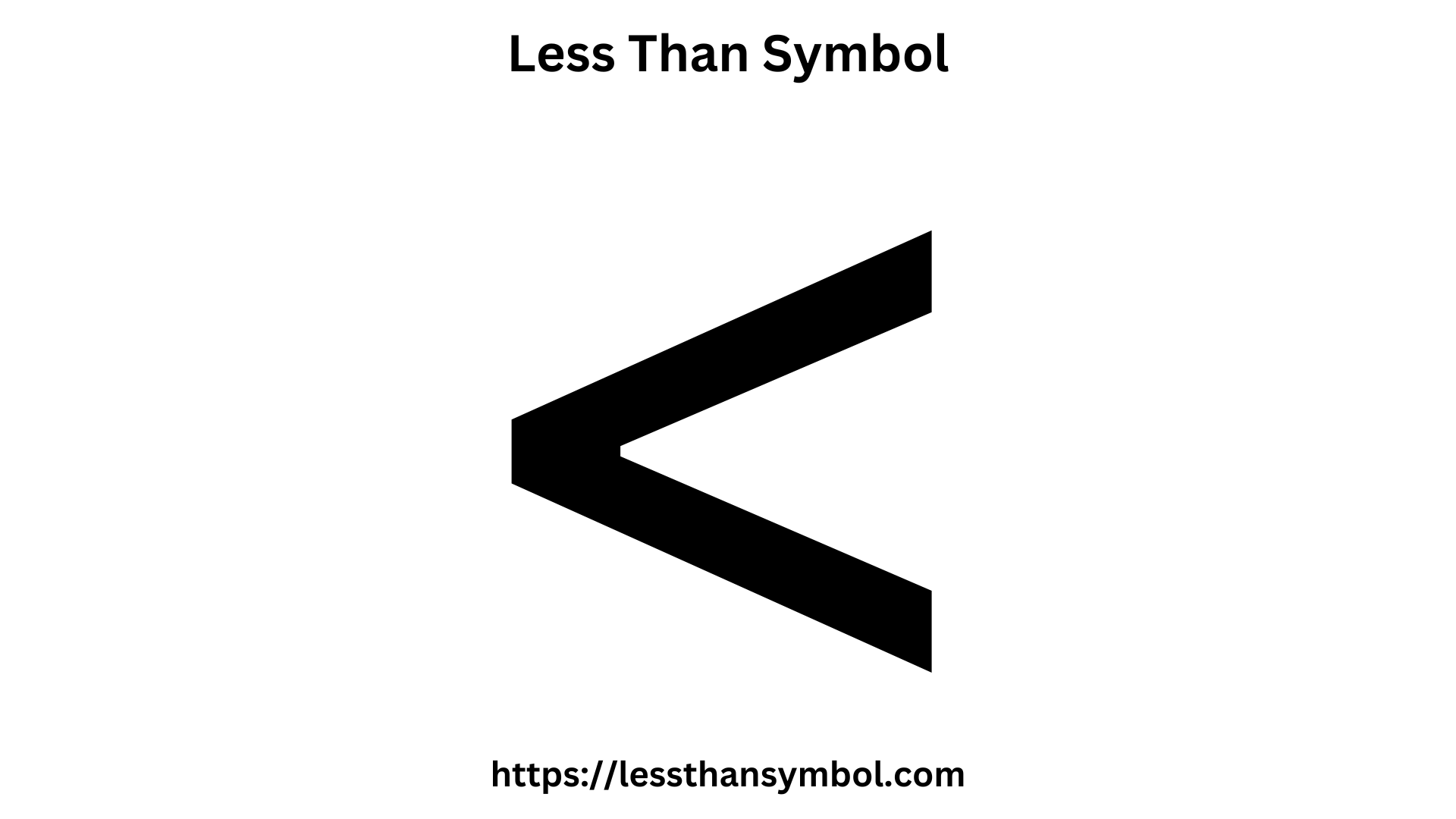
Formally, the < symbol is an infix binary operator that evaluates to a Boolean value (true or false). When used in an expression like A < B, it checks if the value of A is strictly less than the value of B. If this condition holds true, the expression returns true; otherwise, it returns false. This true/false outcome is the bedrock of conditional execution, allowing programs to make decisions and adapt their behavior based on input or state.
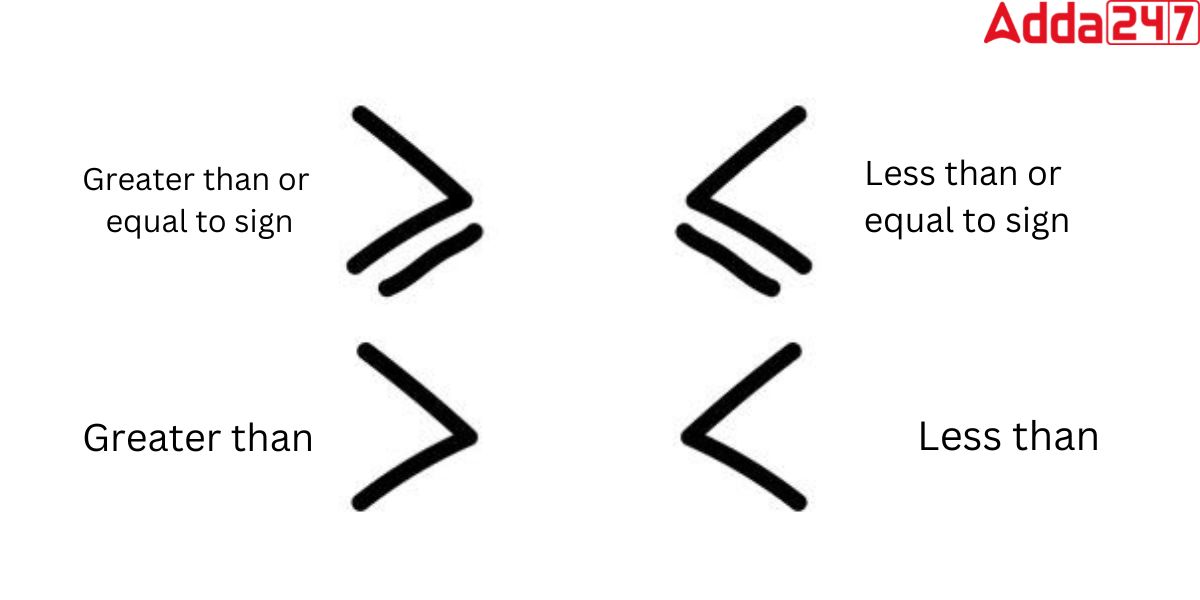
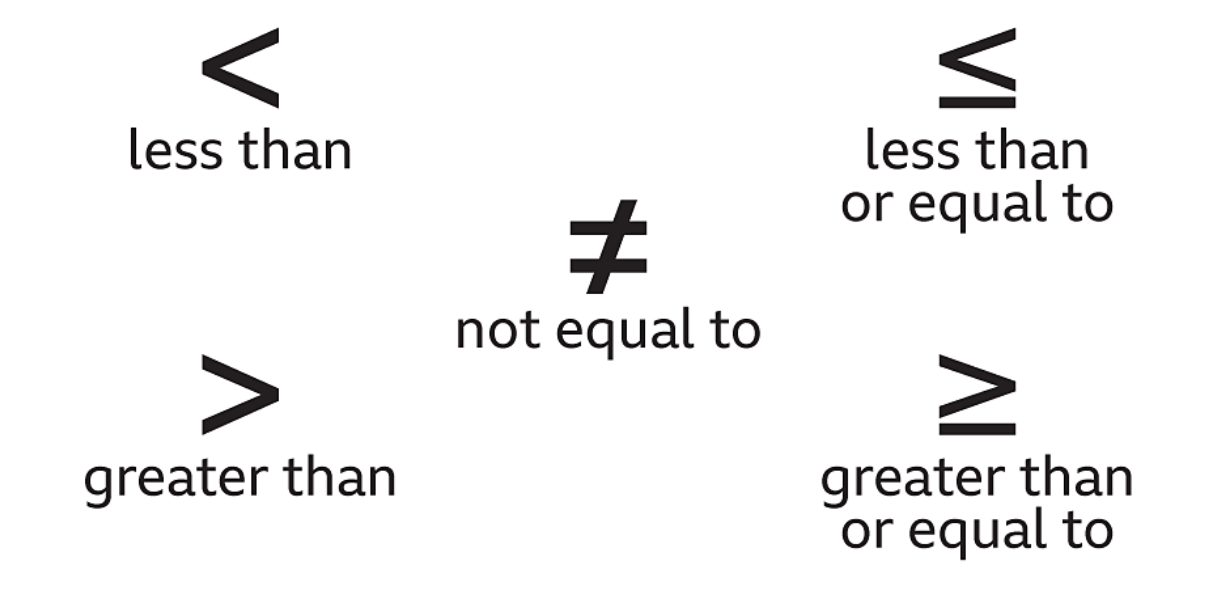
The symbol is distinct from its counterpart, the “greater than” symbol (>), and related operators like “less than or equal to” (<=) and “not equal to” (!= or <>). Each serves a specific comparative purpose, but the strict inequality of < is fundamental to many common logical constructs.
Its Origins and Mathematical Significance
The use of < and > to denote inequality dates back to the 17th century, introduced by English mathematician Thomas Harriot. His seminal work, Artis Analyticae Praxis, published posthumously in 1631, formalized these symbols. While their origin is purely mathematical, their adoption into the realm of computing was a natural progression. Early computer scientists recognized the need for clear, concise ways to express logical comparisons within machine instructions and high-level programming languages.
In mathematics, these symbols are crucial for defining intervals, expressing inequalities in algebra, and constructing proofs. In computing, they extend this role to the manipulation of data, the control of program flow, and the evaluation of complex conditions within algorithms.
Keyboard Input and Universal Recognition
The less than symbol is conveniently located on standard QWERTY keyboards, typically shared with the comma key (,). To type it, users typically press Shift + Comma. This universal accessibility ensures that programmers, data entry specialists, and even casual computer users can easily input this critical character. Its visual representation is also widely recognized, reducing ambiguity across different platforms and programming environments. This standardization is vital for ensuring consistency and interoperability in a globally connected digital world.
Less Than in Programming Languages: Conditional Logic and Control Flow
In the world of software development, the less than symbol is an indispensable tool for building intelligent and responsive applications. It is central to how programs make decisions.
Boolean Expressions and Comparison Operators
At the heart of programming logic are Boolean expressions, named after George Boole’s work on algebraic logic. A Boolean expression is a statement that can only be true or false. Comparison operators, including < (less than), > (greater than), == (equal to), <= (less than or equal to), >= (greater than or equal to), and != (not equal to), are used to construct these expressions.
When a program encounters an expression like if (score < 100):, it evaluates score < 100. If score is indeed less than 100, the expression yields true, and the code block associated with the if statement is executed. If score is 100 or greater, the expression yields false, and that code block is skipped. This fundamental mechanism allows programs to respond dynamically to varying conditions.
Examples in Popular Languages (Python, JavaScript, C++)
Virtually every modern programming language incorporates the less than symbol as a standard comparison operator.
-
Python:
age = 18
if age < 21:
    print("User is a minor in the US")
else:
    print("User is an adult in the US")
Here,
age < 21dictates which message is printed. -
JavaScript:
let temperature = 15;
if (temperature < 0) {
    console.log("It's freezing!");
} else if (temperature < 20) {
    console.log("It's cool.");
} else {
    console.log("It's warm.");
}
Multiple
<comparisons are used to categorize the temperature. -
C++:
cpp

#include <iostream>

int main() {

    int count = 5;

    while (count < 10) {

        std::cout << "Count is: " << count << std::endl;

        count++;

    }

    return 0;

}
In C++,<controls the loop’s execution, continuing as long ascountis less than 10. This demonstrates its use not just inifstatements but also in loop conditions, array indexing, and other control flow mechanisms.
Impact on Algorithms and Data Structures
The less than symbol is integral to the efficiency and correctness of many algorithms and data structures.
- Sorting Algorithms: Algorithms like Bubble Sort, Quick Sort, and Merge Sort rely heavily on comparisons (often using
<or>) to determine the relative order of elements, enabling them to arrange data in ascending or descending order. - Searching Algorithms: Binary search, for instance, repeatedly compares a target value with the middle element of a sorted array to decide whether to search the left or right half, significantly speeding up data retrieval.
- Data Structures: Priority queues use comparison operators to determine which element has the highest priority. Binary search trees rely on
<and>to decide whether to place a new node to the left or right of an existing node, maintaining their ordered structure. Without the<symbol, the logic for these fundamental computing operations would be far more complex, if not impossible to implement efficiently.
Practical Applications Across Tech Disciplines
Beyond pure programming logic, the less than symbol permeates various tech disciplines, enabling data manipulation, web design, and database management.
Data Analysis and Spreadsheet Functions (e.g., Excel, Google Sheets)
In data analysis, particularly within spreadsheet applications, the less than symbol is a powerful tool for filtering, conditional formatting, and logical calculations.
- Filtering Data: Users can filter rows where a specific column’s value is less than a certain threshold, isolating relevant subsets of data for analysis.
- Conditional Formatting: It allows cells to be highlighted automatically if their values meet a “less than” condition (e.g., flagging inventory levels below a reorder point in red).
- Logical Functions: Functions like
IF,COUNTIF,SUMIFin Excel or Google Sheets frequently utilize<to define conditions. For example,=COUNTIF(A1:A10, "<50")counts how many numbers in a range are less than 50. This empowers users to derive insights and automate data processing without writing complex code.
Web Development (HTML Entities, CSS Selectors, JavaScript DOM Manipulation)
The less than symbol holds a critical position in web development, often serving different purposes in HTML, CSS, and JavaScript.
- HTML: In HTML, the
<character is the opening delimiter for tags (e.g.,<p>,<a>). Because of this special role, if you want to display an actual “less than” symbol on a webpage, you must use its HTML entity,<or<, to prevent the browser from interpreting it as the start of a tag. This mechanism is crucial for displaying code snippets or mathematical expressions correctly. - CSS: While less directly used as a comparison operator, angle brackets play a role in advanced CSS selectors, such as the child combinator (
>) which selects direct children of an element. - JavaScript DOM Manipulation: JavaScript, being a programming language, uses
<extensively for conditional logic, data validation, and comparisons when manipulating the Document Object Model (DOM) to dynamically change web page content or behavior.
Database Queries (SQL WHERE Clauses)
In database management, particularly with SQL (Structured Query Language), the less than symbol is fundamental for retrieving specific subsets of data. It is commonly used within the WHERE clause of SELECT, UPDATE, and DELETE statements.
For example, SELECT * FROM Orders WHERE OrderTotal < 100.00; would retrieve all orders with a total value less than $100. Similarly, DELETE FROM Users WHERE LastLogin < '2023-01-01'; could be used to remove inactive users. This allows database administrators and developers to precisely target and manipulate data based on quantitative comparisons.
Digital Security (Input Validation, Scripting Vulnerabilities)
The correct handling of the less than symbol is paramount in digital security.
- Input Validation: When users input data into web forms or applications, server-side and client-side validation often uses
<(and>) to check for valid lengths, ranges, or to prevent malicious inputs. For instance, a password length might be validated to be greater than 8 characters. - Cross-Site Scripting (XSS): Conversely, the improper handling of
<(and>) can lead to severe security vulnerabilities, particularly Cross-Site Scripting (XSS). If user input containing<script>tags is not properly sanitized or encoded, a malicious script can be injected into a webpage, potentially stealing user data or defacing the site. Developers must always escape these characters when rendering user-provided content to prevent such attacks.
Beyond Simple Comparison: Advanced Uses and Nuances
While its primary role is straightforward comparison, the less than symbol’s utility extends into more complex scenarios, requiring a deeper understanding of its behavior and potential interactions.
Chained Comparisons and Logical Operators
Many programming languages allow for chained comparisons, making code more concise. For instance, 0 < x < 10 in Python checks if x is greater than 0 AND less than 10 simultaneously. This is equivalent to (0 < x) and (x < 10). Understanding how these expressions are evaluated, especially when combined with other logical operators (AND, OR, NOT), is crucial for constructing sophisticated conditional statements. These multi-part conditions are common in data validation, game logic, and financial modeling.
Type Coercion and Potential Pitfalls
A critical aspect of using the less than symbol, particularly in loosely typed languages like JavaScript, is understanding type coercion. When comparing values of different data types (e.g., a number and a string), the language might implicitly convert one type to another before performing the comparison.
For example, in JavaScript, 5 < "10" evaluates to true because the string “10” is coerced to the number 10. However, "10" < "5" evaluates to true because when comparing strings, it uses lexicographical (dictionary-like) order, where ‘1’ comes before ‘5’. This can lead to unexpected results and subtle bugs if not explicitly handled. Best practices often advocate for explicit type conversion to avoid such ambiguities.
Relational Operators in Regular Expressions
While not the same literal symbol, the concept of “less than” or “range” is abstractly present in regular expressions (regex). Character classes like [0-9] define a range of characters, implicitly embodying a “less than or equal to” or “between” logic for character values. Though [a-z] does not use the < character directly, it functions similarly by matching any character whose ASCII/Unicode value falls within the specified range, indicating an ordered relationship. Advanced regex patterns also involve backreferences and lookaheads that can depend on the “position” or “occurrence count” being less than a certain number.
Best Practices and Common Misconceptions
Effective use of the less than symbol involves adhering to best practices and being aware of common pitfalls.
Readability and Code Clarity
While x < 10 is clear, complex expressions can quickly become unreadable. Using parentheses to group conditions ((a < b) and (c < d)) can significantly enhance clarity. Additionally, avoiding “magic numbers” (unexplained numerical literals) and using descriptive variable names makes conditions more understandable. For instance, if user_age < MIN_LEGAL_AGE: is far clearer than if a < 18:.
Distinguishing from Other Symbols (e.g., Left Angle Bracket)
It’s important to remember that the < character serves multiple roles. In HTML and XML, it’s the “left angle bracket” that marks the beginning of a tag. In programming, it’s the “less than” operator. While visually identical, their functional context dictates their meaning. Misinterpreting this context, especially in string manipulation or input sanitization, can lead to functional errors or security vulnerabilities (as seen with XSS). Developers must always be mindful of the parser’s perspective.
Troubleshooting Common Errors
Common errors related to the less than symbol include:
- Off-by-one errors: Forgetting whether the condition should be
<or<=can lead to loops running one iteration too many or too few, or ranges being slightly incorrect. - Type mismatch errors: Comparing incompatible types without proper handling can result in runtime errors or logical bugs, especially in dynamically typed languages.
- Operator precedence issues: In complex expressions, the order of operations can lead to unintended results if parentheses are not used correctly to enforce the desired evaluation order.
- Unicode vs. ASCII: When comparing strings across different character encodings, the sort order might differ, leading to unexpected “less than” results if not handled consistently.
By understanding these nuances and embracing careful coding practices, developers can leverage the power of the less than symbol effectively and avoid common pitfalls.
In conclusion, the humble less than symbol, <, is far more than a simple mathematical notation. It is a fundamental building block of the digital world, empowering decision-making, structuring data, securing applications, and driving the very algorithms that define our technological landscape. Its pervasive presence across programming languages, web development, data analysis, and database management underscores its indispensable role in the tech ecosystem. Mastering its use and understanding its implications is a core competency for anyone operating within the realm of technology.