
Navigating the annual tax season is often viewed with a mixture of trepidation and confusion. However, for the fiscally responsible individual or business owner, filing tax forms is not merely a legal obligation—it is a critical component of a comprehensive personal finance strategy. Understanding the nuances of tax documentation allows you to optimize your financial position, ensure compliance, and potentially secure a significant refund. This guide provides a deep dive into the mechanics of filing tax forms, focusing on organization, methodology, and strategic financial planning.
The Foundation of Filing: Organization and Documentation
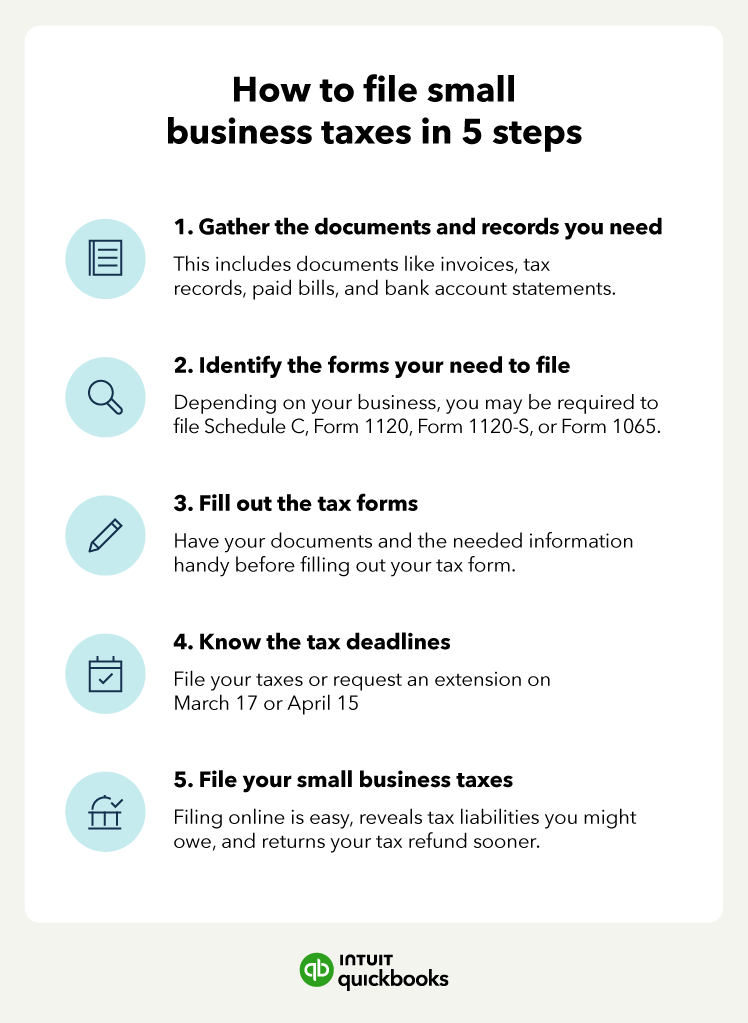
Before a single number is entered into a form, the success of your tax filing depends on the quality of your preparation. Tax preparation is an exercise in data management. Without a structured approach to gathering documentation, you risk missing out on valuable deductions or, worse, triggering an audit due to inaccuracies.

Gathering Essential Income Documentation
The IRS requires a comprehensive account of your “Total Income.” For most employees, this begins with the Form W-2, which summarizes annual earnings and taxes withheld. However, in an era of diversified income streams, many taxpayers must also account for various 1099 forms.
- 1099-NEC: Essential for independent contractors and side-hustlers.
- 1099-INT/DIV: Vital for investors who earned interest or dividends through brokerage accounts.
- 1099-B: Required for reporting the sale of stocks, bonds, or capital assets.
Understanding Your Filing Status
Your filing status is a fundamental pillar of your tax return because it determines your standard deduction and your tax brackets. Choosing the correct status is a strategic financial decision. While “Single” or “Married Filing Jointly” are the most common, “Head of Household” often provides significant tax advantages for unmarried individuals who pay more than half the cost of keeping up a home for a qualifying person. Misidentifying your status can lead to overpaying your tax liability or having your return rejected.
The Role of Digital Record Keeping
In modern personal finance, the shoe-box method of keeping receipts is obsolete. Professional financial management involves maintaining a digital archive of deductible expenses throughout the year. Whether you use dedicated expense-tracking software or a simple categorized spreadsheet, having digital copies of charitable donations, medical expenses, and business-related costs ensures that when it comes time to file, the data is ready for analysis rather than requiring a frantic search.
Navigating the Methodology: How to Submit Your Returns
Once your documentation is organized, the next step is determining the most efficient and cost-effective method for submission. The “Money” niche has been transformed by financial technology, offering various paths to compliance based on the complexity of your financial situation.
The Shift to E-filing
The IRS strongly encourages electronic filing (e-filing) as the primary method for submitting tax forms. From a financial perspective, e-filing is superior to paper filing for several reasons: it reduces mathematical errors, provides immediate confirmation of receipt, and significantly accelerates the processing of refunds. For those expecting a refund, e-filing combined with direct deposit is the fastest way to put that capital back into your savings or investment accounts.
IRS Free File and Low-Cost Alternatives
For individuals with an Adjusted Gross Income (AGI) below a certain threshold (typically $79,000 as of recent tax years), the IRS Free File program offers access to professional-grade tax software at no cost. This is an essential tool for maximizing your “Online Income” by avoiding high preparation fees. For those above the threshold, various commercial software packages offer tiered services based on the complexity of your investments and business interests.
When to Consult a Tax Professional
While software is sufficient for many, complex financial portfolios—including rental properties, foreign assets, or intricate business structures—often require the expertise of a Certified Public Accountant (CPA) or an Enrolled Agent (EA). The cost of a professional is often offset by their ability to identify tax-saving strategies that automated software might overlook, representing a proactive investment in your financial health.
Decoding the 1040 and Supplemental Schedules
The Form 1040, officially titled the “U.S. Individual Income Tax Return,” is the cornerstone of American tax filing. Understanding its structure is key to understanding how your taxable income is calculated and how you can influence the final result.

The Anatomy of Form 1040
The 1040 has been streamlined in recent years, but it remains the central hub where all financial data converges. It begins with your personal information and filing status, proceeds to your total income, and then applies “Adjustments to Income.” These adjustments—often called “above-the-line” deductions—are particularly powerful because they reduce your AGI, which can make you eligible for further credits and deductions. Common adjustments include student loan interest, HSA contributions, and educator expenses.
Navigating Schedules 1, 2, and 3
To keep the main Form 1040 simple, the IRS utilizes supplemental schedules for more complex scenarios:
- Schedule 1: Used to report additional income (like business profit or unemployment) and adjustments to income.
- Schedule 2: Used if you owe “Additional Taxes,” such as the Alternative Minimum Tax (AMT) or self-employment tax.
- Schedule 3: Used to claim non-refundable credits other than the child tax credit or credit for other dependents.
Reporting Self-Employment and Business Income
For those involved in side hustles or small businesses, Schedule C is where you report profit or loss. This form is where “Business Finance” meets “Personal Finance.” By accurately reporting every legitimate business expense—from home office deductions to marketing costs—you lower your net business income, which in turn lowers both your income tax and your self-employment tax liability.
Strategic Financial Planning: Deductions and Credits
The most critical phase of filing tax forms is the application of deductions and credits. This is where you can actively reduce your tax liability and retain more of your hard-earned money.
Standard vs. Itemized Deductions
Every taxpayer must choose between taking the standard deduction or itemizing their deductions on Schedule A. The standard deduction is a fixed dollar amount that reduces the income you’re taxed on. Itemizing becomes financially beneficial only when your total deductible expenses (such as mortgage interest, state and local taxes up to $10,000, and charitable gifts) exceed the standard deduction amount. Analyzing this choice annually is vital for high-income earners or those with significant deductible life events.
Maximizing Tax Credits
While deductions lower the income you are taxed on, tax credits are far more valuable because they provide a dollar-for-dollar reduction in the actual tax you owe.
- Child Tax Credit (CTC): Provides significant relief for families.
- Earned Income Tax Credit (EITC): A refundable credit for low-to-moderate-income working individuals and couples, particularly those with children.
- Education Credits: The American Opportunity Tax Credit (AOTC) and the Lifetime Learning Credit (LLC) help offset the costs of higher education, representing a strategic investment in human capital.
The Qualified Business Income (QBI) Deduction
A relatively recent addition to the tax code, the QBI deduction allows eligible self-employed individuals and small business owners to deduct up to 20% of their qualified business income from their taxes. This is a significant boon for those focused on “Online Income” and “Side Hustles,” providing a substantial incentive for entrepreneurial activity.
Post-Filing Best Practices: Compliance and Long-Term Health
Filing the form is not the final step in the tax lifecycle. To maintain a healthy financial profile, you must manage the aftermath of the filing and prepare for the years ahead.
Tracking Your Refund and Managing Payments
If you are owed a refund, the IRS “Where’s My Refund?” tool provides transparency into the processing timeline. Conversely, if you owe money, it is vital to arrange payment immediately to avoid interest and penalties. Utilizing the Electronic Federal Tax Payment System (EFTPS) is the most professional way to manage these liabilities, especially for those making quarterly estimated payments.
Record Keeping and the 7-Year Rule
Financial discipline requires maintaining copies of all filed tax forms and supporting documentation. While the IRS generally has three years to audit a return, certain circumstances can extend this window. Most financial advisors recommend keeping tax records for seven years. This practice ensures that you have a “paper trail” to defend your financial positions should any questions arise in the future.
Adjusting Withholding for the Future
The goal of efficient tax filing is often to get as close to a $0 balance as possible—neither owing a large sum nor receiving a massive refund (which is essentially an interest-free loan to the government). If you find yourself with a significant discrepancy, use the IRS Withholding Estimator to adjust your Form W-4 with your employer. This allows you to keep more money in your monthly paycheck to put toward “Investing” or “Debt Repayment” throughout the year, rather than waiting for a lump sum in April.
In conclusion, filing tax forms is a sophisticated exercise in financial management. By approaching the process with organization, utilizing the right tools, and understanding the strategic implications of deductions and credits, you transform a yearly chore into a powerful tool for wealth preservation and financial growth. Mastery over your tax forms is, ultimately, mastery over your financial future.
aViewFromTheCave is a participant in the Amazon Services LLC Associates Program, an affiliate advertising program designed to provide a means for sites to earn advertising fees by advertising and linking to Amazon.com. Amazon, the Amazon logo, AmazonSupply, and the AmazonSupply logo are trademarks of Amazon.com, Inc. or its affiliates. As an Amazon Associate we earn affiliate commissions from qualifying purchases.