
Italy, a nation renowned for its rich cultural heritage, unparalleled craftsmanship, and significant contributions to art and science, also holds a pivotal position in the global economic landscape. At the heart of understanding Italy’s economic standing lies its Gross Domestic Product (GDP)—a critical financial metric that encapsulates the monetary value of all finished goods and services produced within its borders over a specific period. For investors, businesses, policymakers, and indeed, ordinary citizens, comprehending Italy’s GDP is not merely an academic exercise; it’s essential for assessing economic health, identifying investment opportunities, navigating financial risks, and understanding the trajectory of one of Europe’s largest economies. This article delves into the intricacies of Italy’s GDP, exploring its components, historical trends, current challenges, and future prospects from a comprehensive financial perspective.

Understanding Gross Domestic Product (GDP): A Core Financial Metric
Gross Domestic Product (GDP) stands as the single most important indicator of a country’s economic activity and financial robustness. It provides a snapshot of the economy’s size and performance, acting as a crucial barometer for investors, businesses, and government bodies alike.
Defining GDP: More Than Just Numbers
In its simplest form, GDP is the total market value of all final goods and services produced within a country’s geographical boundaries during a given period, typically a quarter or a year. It’s a comprehensive measure that reflects the output generated by domestic labor and property, regardless of whether the producers are domestic or foreign-owned. The “final” aspect is crucial; it prevents double-counting by excluding intermediate goods used in the production process. For Italy, this encompasses everything from the production of luxury cars and fashion items to the revenue generated by its vast tourism sector, agricultural output, and the provision of financial and healthcare services. GDP is often measured in nominal terms (current prices) or real terms (adjusted for inflation), with the latter providing a more accurate picture of actual economic growth.
Why GDP Matters for Investors and Businesses
For anyone looking to deploy capital or expand operations, GDP is an indispensable tool. A rising GDP generally signals a healthy, expanding economy, implying higher corporate profits, increased consumer spending, and greater employment opportunities. This environment is typically attractive to investors, suggesting potentially higher returns on equity, bond investments, and direct foreign investment. Businesses, both domestic and international, rely on GDP figures to forecast demand, plan production levels, assess market size, and make strategic decisions regarding expansion or contraction. A robust GDP indicates a strong consumer base with purchasing power, while a contracting GDP (recession) warns of potential financial headwinds, reduced demand, and increased business risk. Understanding Italy’s GDP, therefore, is crucial for assessing the viability and potential profitability of ventures within its borders.
Different Approaches to Measuring GDP
Economists typically employ three primary methods to calculate GDP, each offering a distinct perspective but ultimately yielding the same result:
- The Expenditure Approach: This is the most common method, summing up all spending on final goods and services in the economy. It comprises Consumption (C) by households, Investment (I) by businesses, Government Spending (G), and Net Exports (NX = Exports – Imports). For Italy, understanding the breakdown of these components reveals much about its economic structure—e.g., the relative importance of household spending versus industrial investment or the trade balance.
- The Income Approach: This method calculates GDP by summing all incomes earned from the production of goods and services, including wages, salaries, rents, interest, and profits. It provides insight into how the economic pie is distributed among different factors of production.
- The Production (or Value-Added) Approach: This method sums the “value added” at each stage of production. For instance, if a raw material costs X and is sold as a finished product for Y, the value added is Y-X. This approach highlights the contributions of different economic sectors to the overall GDP, which is particularly insightful for an economy like Italy’s with diverse sectors ranging from high-tech manufacturing to traditional crafts and services.
Italy’s Economic Landscape: A Deep Dive into its GDP
Italy’s economy is one of the largest in the European Union and globally, characterized by a highly diversified industrial structure, a strong export orientation, and a significant services sector. Its GDP reflects the complex interplay of these elements.
Historical Trajectories and Growth Patterns
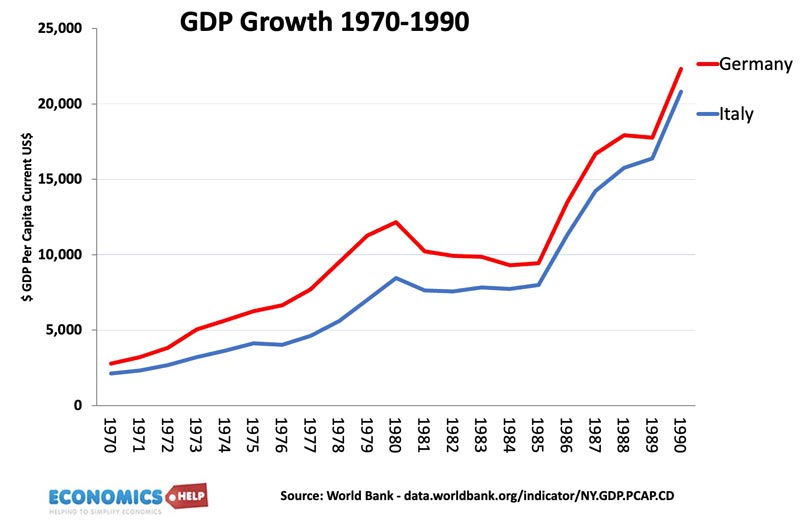
Italy’s post-World War II economic history is famously marked by an “economic miracle” from the 1950s to the 1970s, during which it transformed from an agrarian nation into a highly industrialized one. This period saw robust GDP growth driven by manufacturing, particularly in industries like automotive, fashion, and machinery. However, since the 1990s, Italy’s GDP growth has lagged behind many of its European counterparts. Structural rigidities, persistently high public debt, and a relatively slow pace of reforms have contributed to periods of stagnation and even contraction, particularly following the 2008 global financial crisis and the subsequent Eurozone sovereign debt crisis. More recently, the COVID-19 pandemic delivered a significant shock, causing a sharp contraction in GDP, followed by a period of recovery fueled by EU recovery funds and resilient domestic demand. Understanding these historical cycles is crucial for financial analysts assessing long-term investment viability.
Key Sectors Driving Italy’s Economic Output
Italy’s GDP is a mosaic of contributions from several key sectors:
- Manufacturing: This remains a cornerstone, with a strong focus on high-quality, niche products. Italy is a global leader in machinery, automotive components, pharmaceuticals, food processing, and, most famously, luxury goods (fashion, leather, jewelry). Small and medium-sized enterprises (SMEs) are particularly vital here, forming dense industrial districts that are highly competitive internationally. The “Made in Italy” brand carries significant financial value, reflecting quality and design excellence.
- Services: The services sector, encompassing tourism, finance, retail, healthcare, and public administration, accounts for the largest share of Italy’s GDP and employment. Tourism, in particular, is a perennial economic engine, attracting millions of visitors annually and generating substantial revenue for the hospitality, transport, and retail industries. Financial services also play a crucial role, supporting business investment and personal finance needs across the country.
- Agriculture: Though its share of GDP has diminished significantly over time, Italian agriculture remains important, known for its high-quality produce, wine, and olive oil. This sector contributes to Italy’s strong export performance in food and beverage products, adding to the nation’s overall financial output.
The Impact of Public Debt and Fiscal Policy on GDP
One of the most persistent financial challenges for Italy has been its high level of public debt relative to GDP. While this debt is largely held by domestic investors and has long maturity profiles, its sheer size imposes constraints on fiscal policy. Servicing this debt consumes a significant portion of the national budget, potentially diverting funds from productive investments in infrastructure, education, or innovation that could otherwise boost long-term GDP growth. Fiscal policy—government decisions regarding taxation and spending—plays a critical role in managing this dynamic. Prudent fiscal measures, coupled with structural reforms, are vital for ensuring debt sustainability and fostering an environment conducive to economic expansion, directly influencing investor confidence and financial stability.
Navigating Challenges and Opportunities in the Italian Economy
Italy’s economic narrative is one of resilience amidst persistent challenges, coupled with significant untapped potential. Understanding these aspects is key to forecasting future GDP performance and identifying strategic financial plays.
Structural Issues: Productivity, Demographics, and Bureaucracy

Several long-standing structural issues continue to weigh on Italy’s GDP growth. Productivity growth has been sluggish compared to peers, often attributed to underinvestment in R&D, an aging capital stock, and a rigid labor market. Demographically, Italy faces a rapidly aging population and low birth rates, which pose significant fiscal challenges for pension and healthcare systems, and limit the growth of the labor force. Furthermore, bureaucratic hurdles, a complex legal framework, and sometimes slow judicial processes can deter both domestic and foreign investment, acting as a drag on business efficiency and innovation. Addressing these issues through targeted reforms is critical for unlocking Italy’s full economic potential and ensuring sustainable GDP growth.
External Factors: Global Trade and Geopolitical Influences
As an open economy, Italy’s GDP is significantly impacted by external factors. Global trade dynamics, including changes in demand from major trading partners (like Germany, France, and the United States), commodity price fluctuations, and supply chain disruptions, directly affect Italy’s export-oriented manufacturing sector. Geopolitical events, such as conflicts, trade disputes, or energy crises, can introduce volatility, raise input costs, and dampen investor confidence, thereby influencing capital flows and domestic economic activity. The financial health of the Eurozone as a whole also profoundly impacts Italy, given its membership in the monetary union. Navigating these external complexities requires agile policy responses and a strong commitment to international economic cooperation.
Leveraging Strengths: Innovation, Niche Markets, and Brand Power
Despite the challenges, Italy possesses formidable strengths that offer significant opportunities for GDP expansion. Its industrial districts, particularly in the north, are hubs of innovation and specialized manufacturing, creating high-value products that command premium prices globally. The “Made in Italy” brand, synonymous with quality, design, and authenticity, provides a unique competitive advantage in luxury goods, fashion, food, and tourism. Furthermore, Italy is increasingly investing in renewable energy and digital infrastructure, creating new growth sectors. Leveraging these strengths through strategic investments, fostering a supportive environment for startups, and promoting digital transformation across industries can drive future GDP growth and attract foreign direct investment, bolstering the nation’s financial outlook.
GDP and Its Repercussions for Personal Finance and Investment
The ebb and flow of Italy’s GDP are not abstract economic concepts; they have tangible consequences for individuals’ financial well-being and the broader investment landscape.
How National Economic Health Affects Individual Wealth
A country’s GDP directly influences the financial health of its citizens. Robust GDP growth typically translates into higher employment rates, rising wages, and increased consumer confidence, allowing individuals to save more, invest, and improve their living standards. Conversely, periods of low or negative GDP growth can lead to job losses, wage stagnation, and reduced purchasing power, impacting personal savings, pension values, and overall financial security. For Italian households, understanding GDP trends is crucial for making informed decisions about career paths, real estate investments, and long-term financial planning. A stable and growing economy provides a more fertile ground for individual wealth accumulation.
Investment Implications: Opportunities and Risks in the Italian Market
For investors, Italy’s GDP data serves as a vital signal. A positive GDP outlook can indicate a promising environment for equity investments in Italian companies, particularly those within resilient or growing sectors like luxury goods, specialized manufacturing, or renewable energy. Bond investors monitor GDP for insights into the government’s ability to service its debt; a stronger economy reduces perceived sovereign risk. However, periods of weak GDP growth or high public debt can elevate risks, potentially leading to lower credit ratings, higher borrowing costs for the government and corporations, and increased market volatility. International investors, in particular, weigh these factors carefully when allocating capital to Italian assets, balancing the potential for returns against macro-economic risks.
The Role of GDP in Sovereign Credit Ratings and Interest Rates
Italy’s GDP performance is a primary determinant of its sovereign credit ratings. Agencies like Standard & Poor’s, Moody’s, and Fitch assess a country’s economic strength, fiscal health, and growth prospects when assigning a rating. A higher GDP, especially coupled with sustainable public finances, generally leads to a better credit rating. This, in turn, translates into lower interest rates on government bonds, making it cheaper for Italy to borrow money and service its substantial debt. Conversely, a deteriorating GDP outlook can trigger downgrades, increasing borrowing costs for both the state and Italian businesses, thereby impacting the broader financial markets and potentially dampening future economic growth. Understanding this intricate relationship is fundamental for anyone analyzing Italy’s financial stability and investment attractiveness.
The Future Outlook for Italy’s GDP: Pathways to Sustainable Growth
Looking ahead, Italy’s GDP trajectory will largely depend on its ability to implement structural reforms, leverage new technologies, and adapt to global economic shifts. The nation is at a critical juncture, with significant potential for revitalization.
Policy Reforms and European Union Initiatives
The European Union’s NextGenerationEU recovery fund, of which Italy is a primary beneficiary, represents an unprecedented opportunity to address long-standing structural weaknesses. The National Recovery and Resilience Plan (PNRR) outlines significant investments in digitalization, green transition, infrastructure, and reforms to public administration and the justice system. Successful implementation of these reforms and investments is paramount for boosting productivity, enhancing competitiveness, and fostering long-term GDP growth. These initiatives aim to modernize the Italian economy, attract foreign capital, and create a more dynamic environment for businesses, ultimately strengthening the nation’s financial footing.
Digitalization and Green Transition as Growth Catalysts
The twin transitions of digitalization and the green economy are set to be major drivers of Italy’s future GDP. Investments in digital infrastructure, e-government, and digital skills can enhance efficiency across all sectors, from manufacturing to services. Similarly, the shift towards a greener economy—through renewable energy projects, sustainable agriculture, and eco-friendly manufacturing—not only addresses climate change but also creates new industries, jobs, and export opportunities. By positioning itself at the forefront of these transitions, Italy can unlock significant economic value, attracting “green” investment and fostering innovation that will underpin future GDP expansion.
The Long-Term Vision for Italian Economic Prosperity
Italy’s long-term economic prosperity, and by extension its GDP growth, hinges on a coherent vision that addresses its historical challenges while capitalizing on its inherent strengths. This involves a sustained commitment to fiscal responsibility, continuous investment in human capital and R&D, fostering a business-friendly environment, and leveraging its cultural and industrial heritage to compete in high-value global markets. By embracing a forward-looking strategy that combines structural reforms with strategic investments, Italy can overcome past limitations and build a more resilient, dynamic, and prosperous economy, ensuring its continued relevance and financial health on the world stage. The journey of Italy’s GDP is a testament to its enduring spirit and its ongoing pursuit of economic stability and growth in an ever-evolving global financial landscape.
aViewFromTheCave is a participant in the Amazon Services LLC Associates Program, an affiliate advertising program designed to provide a means for sites to earn advertising fees by advertising and linking to Amazon.com. Amazon, the Amazon logo, AmazonSupply, and the AmazonSupply logo are trademarks of Amazon.com, Inc. or its affiliates. As an Amazon Associate we earn affiliate commissions from qualifying purchases.