
The Kennedy Half Dollar, a coin steeped in American history and cultural significance, often sparks curiosity regarding its actual monetary worth. For many, encountering this substantial coin in circulation is a rare event, leading to speculation that it must hold value beyond its fifty-cent face value. The truth, however, is more nuanced, with a broad spectrum of valuations ranging from its nominal worth to potentially thousands of dollars, depending on specific characteristics and market demand. Understanding what drives these variations requires delving into the coin’s history, composition, and the intricate world of numismatics. This article aims to demystify the value of the Kennedy Half Dollar, offering a comprehensive guide to identifying its potential worth and navigating the factors that influence it.
Understanding the Face Value vs. Intrinsic Value
The immediate question for anyone holding a Kennedy Half Dollar is often, “Is it worth more than 50 cents?” The answer, while sometimes a resounding yes, is more often a simple “no.” Discerning the difference between a coin’s face value and its intrinsic or numismatic value is the first crucial step in appraising any Kennedy Half Dollar.
The Common Perception: 50 Cents
For the vast majority of Kennedy Half Dollars produced since 1971, their worth is precisely their face value: 50 cents. These coins, made from a copper-nickel clad composition, contain no precious metals and were minted in extremely high quantities for general circulation. While they are legal tender and can be spent as 50 cents, they are rarely seen in everyday transactions. This scarcity in circulation is not due to rarity or high value, but rather a combination of factors including a lack of widespread use in vending machines, public inclination to save them out of nostalgia or a mistaken belief in their collectible value, and banks often not stocking them for easy exchange. Consequently, most Kennedy Half Dollars found in change jars or inherited collections fall into this category, holding no premium above their stated value.
The Silver Content Factor: Pre-1971 Coins
The defining characteristic that elevates a Kennedy Half Dollar’s value beyond 50 cents, for many examples, is its silver content. The early years of the Kennedy Half Dollar’s mintage saw a direct link to the price of silver, making these coins worth significantly more than their face value due to their melt value.
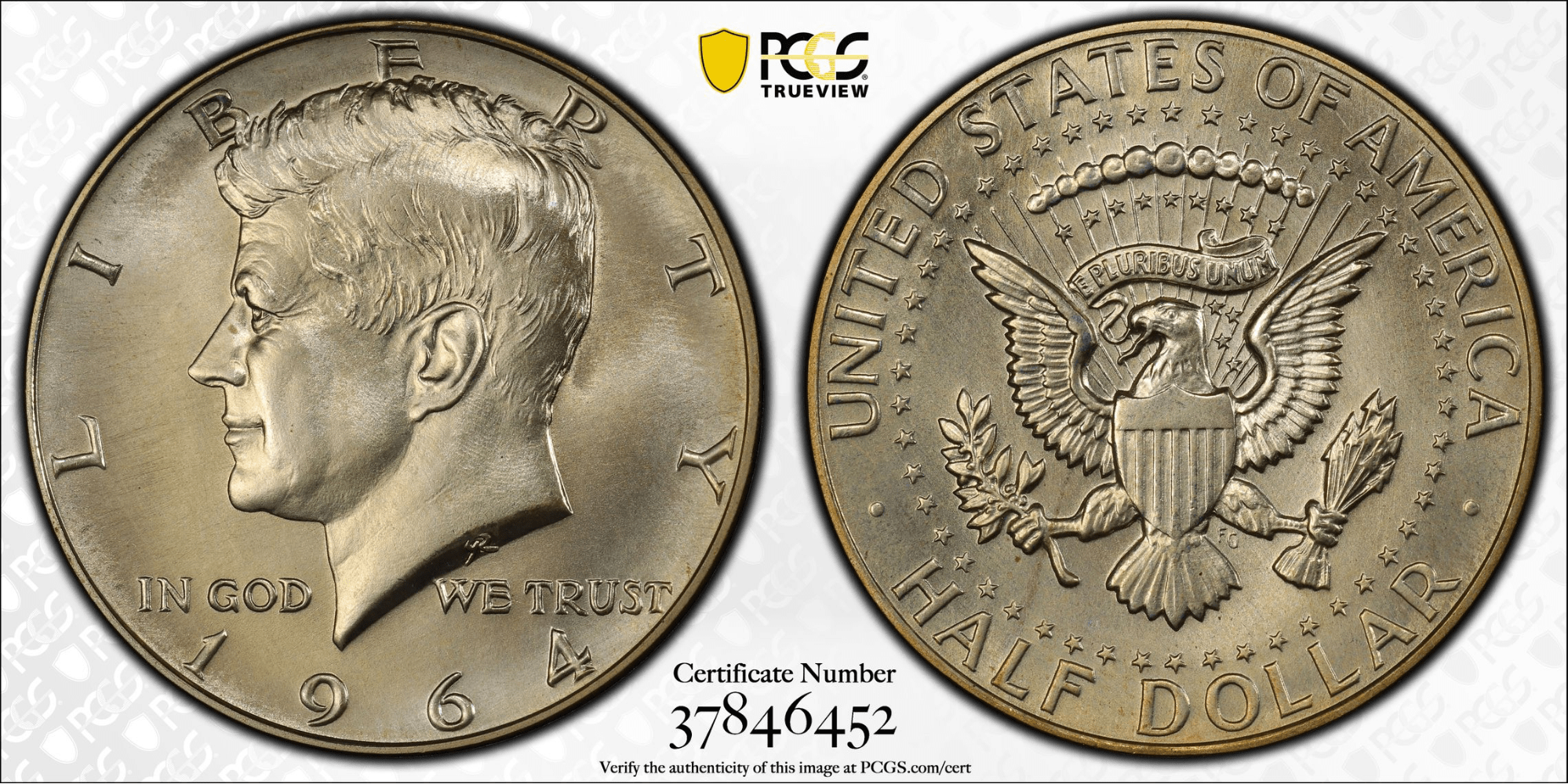
1964 Kennedy Half Dollars: These coins are the most valuable in terms of intrinsic metal content among circulating strikes. Following President Kennedy’s assassination in November 1963, Congress quickly authorized the striking of a half dollar in his honor. The 1964 Kennedy Half Dollars were composed of 90% silver and 10% copper, mirroring the composition of preceding half dollars. At the time of their release, they were widely hoarded by the public, anticipating their collectible value and potential for silver appreciation. Today, the melt value of a 1964 Kennedy Half Dollar is directly tied to the fluctuating spot price of silver. Even in circulated condition, these coins are worth several times their 50-cent face value, making them highly sought after by silver investors and collectors alike. Identifying a 1964 half dollar is straightforward: simply check the date.
1965-1970 Kennedy Half Dollars: Due to rising silver prices, the U.S. Mint phased out 90% silver coinage after 1964. However, the Kennedy Half Dollar retained a partial silver composition for a few more years. From 1965 to 1970, these half dollars were struck in a 40% silver and 60% copper alloy. This “silver clad” composition means the outer layers of the coin contain silver, bonded to a copper core. While they contain less silver than their 1964 counterparts, their melt value is still substantially higher than 50 cents. To identify these coins, check the date and examine the coin’s edge. A faint copper stripe along the edge is indicative of the clad composition, but for the 1965-1970 issues, the specific weight and slight difference in appearance compared to pure clad coins can help confirm the 40% silver content. Like the 1964 coins, their value fluctuates with the market price of silver.
Understanding these silver compositions is paramount. Any Kennedy Half Dollar dated 1971 or later (excluding specific proof issues detailed below) is copper-nickel clad and generally only worth 50 cents, unless it possesses a rare error or exceptionally high grade.
Factors Influencing Collectible Value (Beyond Silver)
While silver content is a primary driver for many early Kennedy Half Dollars, certain examples, regardless of their metal composition, can command significant premiums due to their rarity, condition, and specific characteristics that appeal to numismatists.
Rarity and Mintage Figures
The number of coins originally struck for a given year and mint mark (known as mintage figures) plays a critical role in determining a coin’s rarity. Generally, lower mintage figures translate to higher potential value, especially for coins in good condition.
- Key Dates and Semi-Key Dates: While the Kennedy Half Dollar series doesn’t have as many dramatic “key dates” as older series, some years and mint marks are scarcer than others. For example, the 1970-D Kennedy Half Dollar was only issued in mint sets and was not released for general circulation. Its limited availability makes it a semi-key date, with uncirculated examples fetching a significant premium. Similarly, proof coins from certain years or special issues can be rarer due to lower production numbers or specific distribution methods.
- Special Mint Sets (SMS) and Proof Sets: Some of the most valuable Kennedy Half Dollars are not from regular circulation but were part of special collector issues. The 1964 Special Mint Sets (SMS), while not technically proofs, are highly polished and rare, especially in top grades. Proof coins, produced with specially prepared dies and planchets to achieve a mirror-like finish, are also generally more valuable than their circulating counterparts, with silver proofs (e.g., from 1992 to present, and some earlier issues) being particularly desirable.
Condition and Grading
For collectors, a coin’s condition is paramount. The better preserved a coin is, the higher its grade, and thus the higher its potential value. Professional coin grading can significantly impact a coin’s market price.
- Understanding Coin Grades: Coins are graded on a 70-point scale, from Poor (P-1) to Mint State (MS-70) for uncirculated coins. Circulated coins receive grades like Good (G-4), Very Fine (VF-20), or About Uncirculated (AU-50). For Kennedy Half Dollars, especially those from the 1964-1970 silver era, even a slight difference in grade can mean a substantial difference in price.
- Full Bell Lines (FBL): For some series, specific features are used as “full strike” indicators. While less pronounced for Kennedy Half Dollars compared to other series, a sharp strike and excellent preservation of details (such as the distinct lines in the bell on the reverse of Liberty Seated halves, or fine details on Kennedy’s hair) can elevate a coin’s appeal and grade. For Kennedy halves, emphasis is often placed on the sharpness of Kennedy’s hair details and the eagle’s feathers.
- Professional Grading Services: For potentially valuable coins (especially those in uncirculated condition or with identified errors), submitting them to reputable third-party grading services like the Professional Coin Grading Service (PCGS) or the Numismatic Guaranty Corporation (NGC) is highly recommended. These services provide an unbiased assessment of a coin’s authenticity and grade, encapsulating it in a tamper-evident slab with a certification number. This certification instills confidence in buyers and often leads to higher sale prices.
Mint Marks and Varieties
Small distinctions, often overlooked by the casual observer, can dramatically influence a coin’s value.
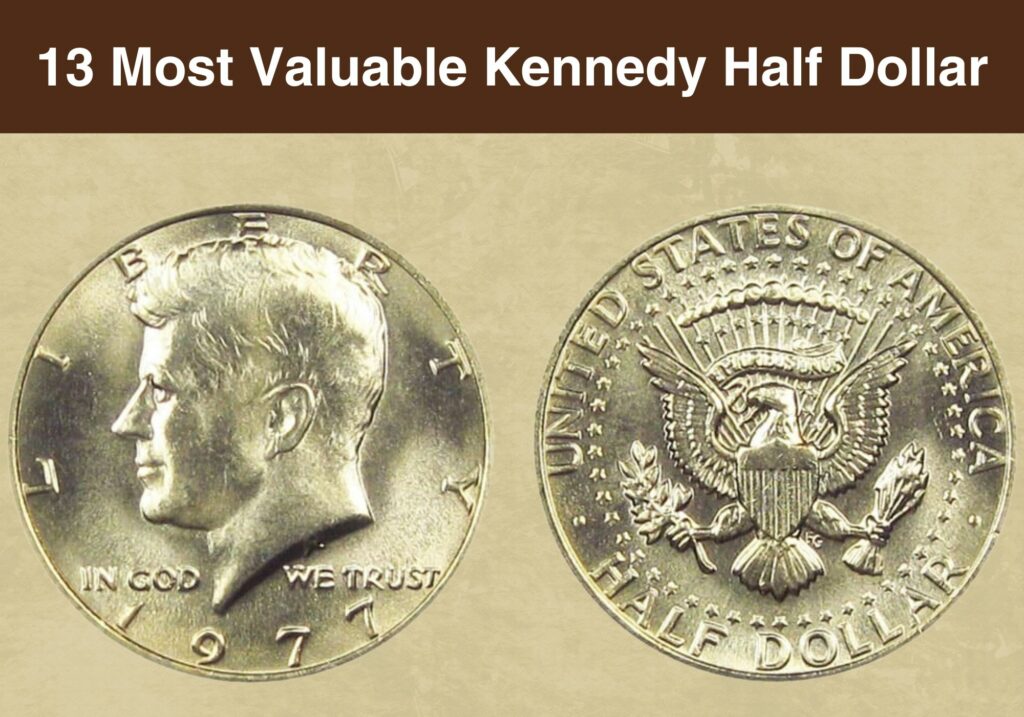
- Mint Marks: A small letter (or lack thereof) below the eagle on the reverse of the coin indicates where it was minted. “P” for Philadelphia (often no mark before 1980), “D” for Denver, and “S” for San Francisco (primarily for proof and clad silver proof issues). Some mint marks are rarer for specific years, thus increasing value.
- Varieties and Errors: These are coins that deviate from the standard production due to a mistake in the minting process. While true major errors for Kennedy Half Dollars are not as common or as dramatic as in some other series (e.g., the 1955 Doubled Die Lincoln Cent), some notable varieties exist:
- “No FG” Error: Found on some 1971 and later Kennedy Half Dollars, this error occurs when the designer’s initials “FG” (Frank Gasparro) on the reverse, near the eagle’s left leg, are missing or very weak due to over-polishing of the die. While not exceptionally rare, examples in high grades do carry a premium.
- Doubled Dies: While less common or pronounced, doubled die errors can occur where the coin’s design appears doubled. Collectors constantly search for these subtle variations, as they can significantly increase a coin’s value.
- Off-Center Strikes, Planchet Errors, etc.: Other manufacturing anomalies like off-center strikes, incorrect planchets, or clipped planchets can also create rare and valuable error coins.
Proof Sets and Special Issues
Proof coins are specially struck for collectors, exhibiting a sharp, mirror-like finish. They are not intended for circulation and are typically sold in special government-issued sets.
- Silver Proofs: From 1992 to the present, the U.S. Mint has produced special silver proof sets, which include a 90% silver Kennedy Half Dollar. These are distinctly different from the clad proof issues and carry a higher intrinsic value due to their silver content, plus an additional numismatic premium based on rarity and demand for specific years.
- Clad Proofs: Most other proof Kennedy Half Dollars (e.g., 1971-1991, and some later issues not in silver proof sets) are made of the copper-nickel clad composition. While not having intrinsic silver value, their superior finish and limited mintage still make them more valuable than their circulating counterparts, especially in higher grades.
- Bicentennial Half Dollars (1776-1976): These coins feature a special reverse design celebrating the U.S. Bicentennial. They were minted in clad circulation strikes, clad proofs, and 40% silver uncirculated and proof versions. The 40% silver Bicentennial Half Dollars are notable exceptions to the “1971 and later are clad” rule, and they carry a premium based on their silver content.
Practical Strategies for Valuing Your Kennedy Half Dollar
Armed with knowledge of these factors, you can approach the valuation of your Kennedy Half Dollar systematically.
Initial Identification: Date, Mint Mark, Silver Content
Start by examining the coin carefully:
- Date: This is the most critical first step.
- Mint Mark: Look for a small letter (P, D, or S) on the reverse below the eagle.
- Edge: For coins dated 1964, 1965-1970, and 1976 (Bicentennial), check the edge for the distinct silver stripe (1964) or the subtle copper stripe (1965-1970, 1976 40% silver). If it’s pure copper-nickel clad, you’ll see a very obvious copper stripe.
- Condition: Assess its general condition. Is it heavily worn, or can you still see most of the details? Is it shiny and free of scratches, typical of an uncirculated or proof coin?
Researching Current Market Values
Once you have identified the specifics of your coin, it’s time to research its market value.
- Numismatic Price Guides: The “Red Book” (A Guide Book of United States Coins) is a standard reference, offering estimated values for various grades. However, it’s published annually and values can change rapidly.
- Online Auction Sites: Websites like eBay (specifically checking “sold listings” for actual transaction prices, not just asking prices), Heritage Auctions, and Stacks & Bowers Galleries provide real-time market data for various grades and types of coins.
- Coin Dealer Websites: Many reputable online coin dealers publish their buying and selling prices, offering a good benchmark.
- Professional Grading Service Price Guides: PCGS and NGC provide comprehensive price guides for certified coins, which are generally higher due to the assurance of authenticity and grade.
- Silver Calculators: For 90% and 40% silver coins, use an online silver melt value calculator to determine their intrinsic value based on the current spot price of silver.
Seeking Professional Appraisal
If you believe you have a rare, high-grade, or error coin, consider a professional appraisal.
- When to Seek Appraisal: For coins that appear to be uncirculated, exceptionally rare, or have unusual features, a professional opinion is invaluable. The cost of appraisal or grading is often justified by the potential increase in realized value.
- Benefits: A professional numismatist or appraiser can accurately identify varieties, grade the coin, and provide an expert valuation. They can also advise on the best selling strategies if you decide to part with your coin.
- Finding Reputable Professionals: Look for dealers affiliated with organizations like the American Numismatic Association (ANA) or those with strong reputations in the numismatic community.
Investing in Kennedy Half Dollars: A Numismatic Perspective
For many, collecting Kennedy Half Dollars is a cherished hobby, connecting them to a piece of American history. While some coins can appreciate significantly, it’s crucial to approach numismatic collecting with realistic investment expectations.
A Hobby for Enthusiasts, Not a Primary Investment Vehicle
For the vast majority of collectors, numismatics is a passion, not a get-rich-quick scheme. The market for collectible coins can be illiquid, and substantial profits often require deep knowledge, significant capital, and long-term patience. Beginners should focus on the joy of collecting and learning, rather than viewing it purely as an investment.
Potential for Appreciation
Despite being primarily a hobby, certain Kennedy Half Dollars do offer potential for appreciation:
- Silver Content: Coins from 1964 and 1965-1970 will always have a baseline value tied to the price of silver. As silver prices rise, so too will the melt value of these coins.
- Rarity and High Grades: Key dates, scarce varieties, and coins in exceptionally high, professionally graded conditions (e.g., MS-67 or higher for business strikes, PR-69DCAM for proofs) are genuinely rare assets. Their value is driven by limited supply and consistent collector demand, which can lead to significant appreciation over time, independent of metal prices.
- Historical Significance: The enduring legacy of John F. Kennedy ensures a continuous level of interest in these coins, which can help maintain demand for special issues.
Risks and Considerations
Like any form of collecting or alternative investment, there are risks:
- Market Fluctuations: Numismatic markets can be cyclical, influenced by economic conditions and collector trends.
- Grading Subjectivity: While professional grading aims for consistency, slight differences in opinion can affect value.
- Counterfeits: As valuable coins become more desirable, so does the risk of encountering sophisticated counterfeits. Purchasing from reputable dealers and using certified coins mitigates this risk.
- Costs Involved: Acquisition costs, grading fees, and proper storage can add up, impacting overall returns.
In conclusion, the question “What is a Kennedy Half Dollar worth?” doesn’t have a single, simple answer. It’s a spectrum that begins at its 50-cent face value for common clad issues and extends to hundreds or even thousands of dollars for rare silver examples, high-grade specimens, and scarce varieties. Identifying the date, mint mark, and crucially, the silver content, are the initial steps. For those looking beyond melt value, understanding rarity, condition, and specific minting characteristics becomes essential. Whether you view them as historical artifacts, a speculative asset, or simply charming reminders of a bygone era, the Kennedy Half Dollar continues to captivate and challenge our perceptions of value. With careful research and a discerning eye, you might just uncover a hidden treasure in your pocket change or family collection.
aViewFromTheCave is a participant in the Amazon Services LLC Associates Program, an affiliate advertising program designed to provide a means for sites to earn advertising fees by advertising and linking to Amazon.com. Amazon, the Amazon logo, AmazonSupply, and the AmazonSupply logo are trademarks of Amazon.com, Inc. or its affiliates. As an Amazon Associate we earn affiliate commissions from qualifying purchases.