
In an increasingly digital world, where data visualization, algorithmic thinking, and logical problem-solving are paramount, foundational mathematical concepts often get a technological facelift. One such powerful, yet often underestimated, tool that bridges abstract mathematical ideas with concrete understanding is the bar model. Originating from Singapore Math, a highly successful teaching methodology, the bar model is a pictorial representation of numbers and relationships between them, designed to simplify complex word problems and develop a deeper conceptual understanding. But in the age of interactive whiteboards, educational apps, and AI-driven learning platforms, what exactly is a bar model, and how does technology amplify its effectiveness as a cornerstone of mathematical literacy?
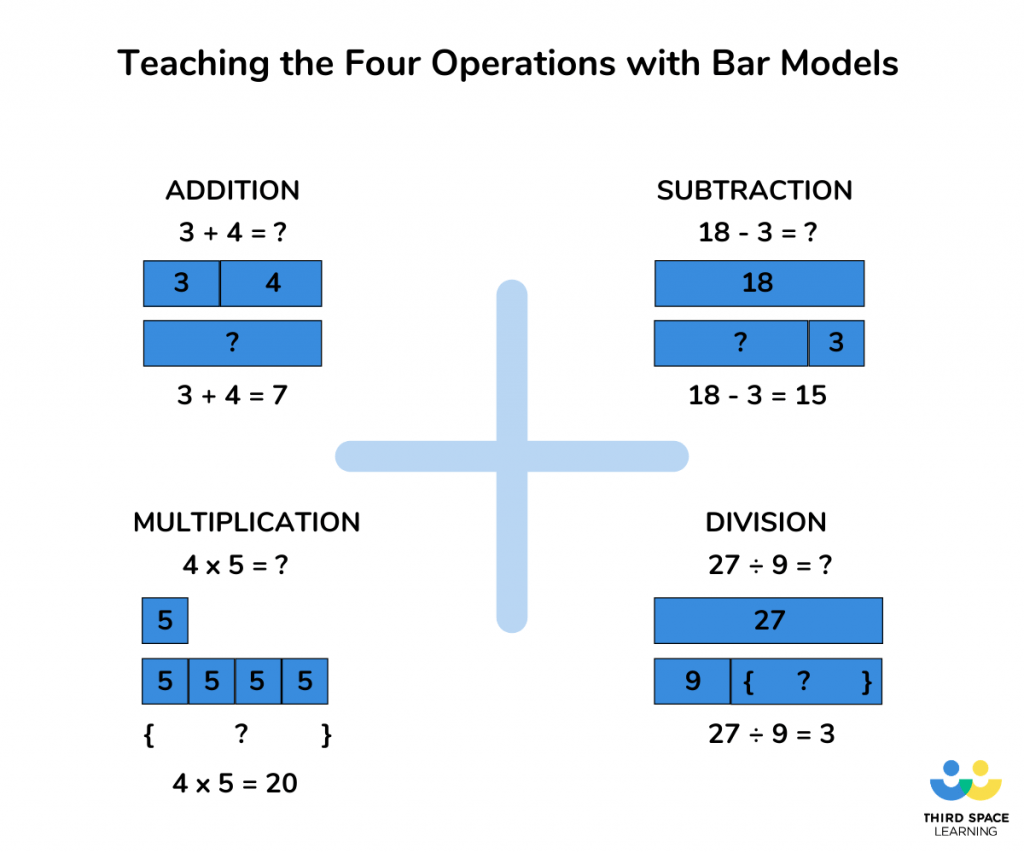
At its core, a bar model is a visual algorithm, a step-by-step visual strategy that transforms abstract numerical problems into tangible, manipulable segments. It helps students, from elementary to pre-algebra levels, to literally see the math, providing a critical intermediary step between concrete manipulatives and purely abstract symbols. This visual approach isn’t just about getting the right answer; it’s about fostering the kind of logical and structural thinking that underpins computational reasoning and data interpretation – skills indispensable in the tech landscape.
The Core Mechanics of Bar Models: A Visual Algorithm for Problem Solving
The strength of the bar model lies in its intuitive visual simplicity, breaking down complex scenarios into manageable parts. It’s a method that encourages students to visualize the unknown, plan their steps, and represent mathematical operations through the manipulation of bar segments. This process closely mirrors the structured, logical approach required in programming and data science, where problems are often broken down into smaller, interconnected components.
From Concrete to Abstract: The Pedagogical Bridge
Bar models serve as a crucial pedagogical bridge, helping students transition from concrete understanding (using physical objects) to abstract thinking (using numbers and symbols). When faced with a word problem like “John has 5 apples, and Sarah has 3 more apples than John. How many apples does Sarah have?”, a student might first use actual apples or blocks. The bar model then provides the next level of abstraction: drawing a bar for John’s apples and another, longer bar for Sarah’s, clearly showing the “3 more” segment.
This visual representation directly addresses one of the biggest challenges in math education: helping students understand why certain operations are performed. Instead of blindly applying an algorithm, the bar model compels them to construct a visual narrative of the problem, revealing the underlying mathematical structure. In a digital environment, this construction can be dynamic. Interactive software allows students to drag and drop bar segments, resize them, and see the numerical values update in real-time. This dynamic manipulation capability enhances engagement and provides immediate feedback, reinforcing the connection between the visual model and the mathematical solution. It transforms a static drawing into an interactive learning object, providing a richer experience than traditional paper-and-pencil methods.
Types of Bar Models and Their Applications
Bar models are versatile and can be adapted to various mathematical concepts. Understanding their different forms is key to applying them effectively, particularly when leveraging digital tools designed for specific problem types.
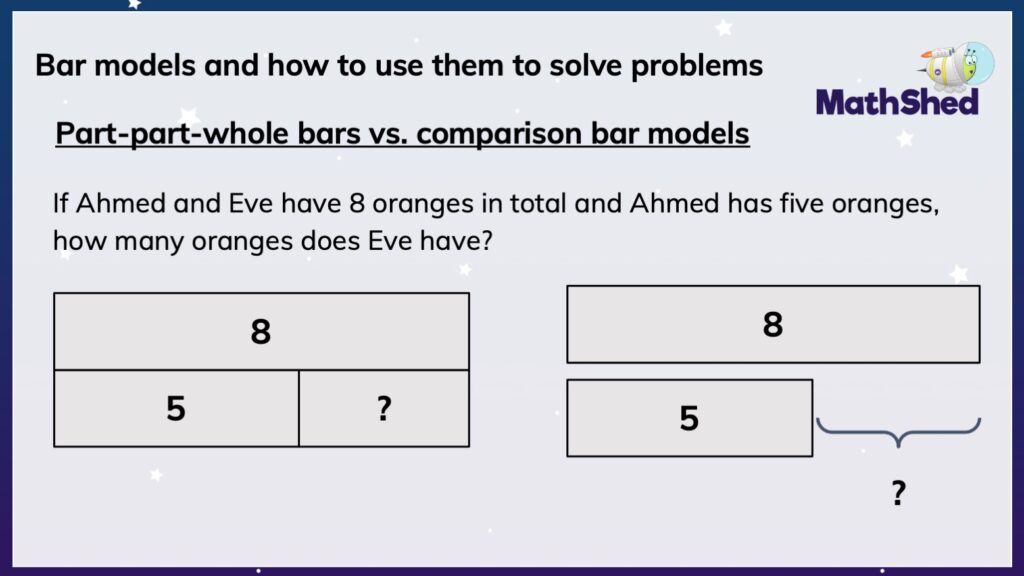
- Part-Whole Model: This is the most fundamental model, used for addition, subtraction, and representing fractions or percentages of a whole. A single bar represents the total, divided into segments that represent the parts. For example, if a total quantity (the “whole”) is known, and one “part” is given, the model visually guides students to subtract to find the other part. In a digital context, students can easily adjust the size of the “whole” bar, and the software can automatically calculate and display the corresponding “parts,” making it effortless to explore different numerical scenarios.
- Comparison Model: This model is used when comparing two or more quantities. Two or more bars are drawn, one above the other, to illustrate differences, ratios, or “more than/less than” relationships. For instance, to solve “Alice has 10 marbles, and Bob has 4 less than Alice. How many marbles does Bob have?”, two bars are drawn, with Bob’s bar visibly shorter by a segment of 4. Digital platforms often allow for easy alignment and comparison, and even offer features to highlight the difference between bars, making complex comparisons clear and intuitive.
- Multiplication and Division Model: This extends the part-whole model to repeated addition or equal sharing. A bar is divided into equal segments to represent multiples, or a known total is divided by the number of segments to find the value of each. For example, 3 bags with 5 apples each can be shown as a bar divided into 3 equal segments, each labeled “5.” Digital tools excel here by allowing users to instantly duplicate segments or divide a bar into a specified number of equal parts, instantly calculating and displaying the value of each part or the total, significantly speeding up the exploration of multiplication and division concepts.
Bar Models in the Digital Classroom: Enhancing Learning with EdTech
The advent of educational technology (EdTech) has revolutionized how traditional teaching methods are implemented and experienced. Bar models are no exception; their visual nature makes them highly adaptable to digital platforms, unlocking new potentials for interactive and personalized learning.
Interactive Tools and Software for Bar Model Creation
The shift from static drawings to dynamic digital tools has profoundly impacted the utility of bar models. Online bar model generators, interactive whiteboard applications (like Google Jamboard or Miro), and specialized math education apps (like those from McGraw-Hill, Pearson, or even dedicated Singapore Math apps) provide rich environments for creating and manipulating bar models. These tools offer several advantages:
- Ease of Creation and Modification: Digital tools eliminate the tediousness of drawing and re-drawing models. Segments can be easily resized, moved, copied, or deleted with a click or drag, encouraging experimentation without fear of making mistakes on paper. This iterative process is crucial for deeper understanding.
- Real-time Feedback and Calculation: Many apps offer instant feedback, automatically calculating values as students manipulate the bars. This immediate validation helps students self-correct and reinforces correct mathematical relationships.
- Collaboration Features: Interactive whiteboards enable multiple students to work on the same bar model simultaneously, fostering collaborative problem-solving and peer learning, even in remote settings. This simulates real-world team environments where visual aids are often used to explain complex ideas.
- Accessibility and Differentiation: Digital models can incorporate features like text-to-speech, high-contrast colors, or adjustable sizes, making them more accessible for students with diverse learning needs. Teachers can also easily differentiate instruction by providing varying levels of complexity or pre-built model templates.
Gamification and Engagement through Digital Bar Models
EdTech has masterfully integrated gamification elements into learning, and bar models fit seamlessly into this trend. Educational games and adaptive learning platforms often embed bar model challenges as a core component of problem-solving. This approach transforms what might be perceived as a mundane task into an engaging puzzle.
By framing bar model construction as a quest or a challenge within a game, students are more motivated to practice and master the skill. The immediate rewards (points, badges, progression to the next level) provide positive reinforcement, while the visual nature of the bar model itself makes the “puzzle” solvable and satisfying. Furthermore, AI-driven adaptive learning systems can track a student’s performance with bar models, identify areas of struggle, and then tailor subsequent problems to target those weaknesses, providing a truly personalized learning journey. This fusion of visual pedagogy with cutting-edge technology ensures that students remain engaged while building fundamental mathematical reasoning skills.
Beyond Basic Arithmetic: Bar Models for Complex Computational Thinking
While bar models are invaluable for elementary arithmetic, their underlying principles extend far beyond simple addition or subtraction. They lay a crucial foundation for higher-level mathematical concepts and, more broadly, for computational thinking and data representation – skills vital for any tech-oriented career.
Visualizing Ratios, Fractions, and Percentages Digitally
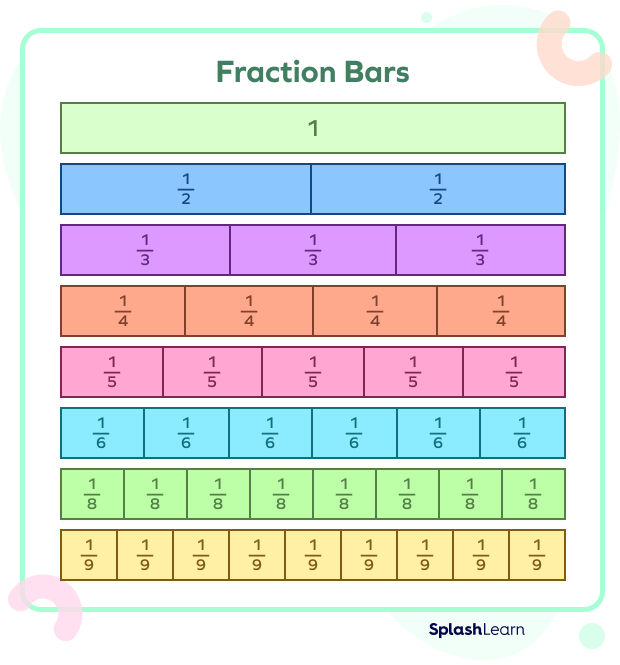
Ratios, fractions, and percentages are notorious stumbling blocks for many students due to their abstract nature. Bar models provide a powerful visual aid to demystify these concepts. For instance, a bar can be divided into segments to represent fractions of a whole, clearly showing equivalent fractions or operations like addition and subtraction of fractions. For ratios, two or more bars can be drawn to represent the proportional relationship between quantities.
Digital tools take this a step further by offering dynamic visualizers. Students can adjust a slider to change the numerator or denominator of a fraction, and the bar model visually expands or contracts in real-time, instantly showing the new equivalent fraction. Similarly, percentage problems (e.g., finding 25% of a number or a percentage increase/decrease) become much clearer when a bar representing the whole is divided into 100 parts or segments representing a particular percentage. These dynamic visualizations not only enhance understanding but also help students internalize the relationships between these different representations of parts of a whole, a crucial skill in data analysis and programming.
Preparing for Algorithmic Thinking and Data Representation
Perhaps one of the most significant, yet often understated, benefits of bar models, especially in a tech-centric world, is their role in cultivating algorithmic thinking and foundational data representation skills. The process of constructing a bar model involves:
- Decomposition: Breaking down a complex problem into smaller, manageable parts.
- Pattern Recognition: Identifying the mathematical relationships (part-whole, comparison, multiplication) within the problem.
- Abstraction: Representing these parts and relationships symbolically (the bars and their segments).
- Algorithm Design: Planning a sequence of steps to solve the problem based on the visual model.
These are the exact same steps involved in designing algorithms, writing code, or even structuring databases. A bar model trains the brain to segment information, assign values, and understand how different segments relate to a whole, much like how data arrays or objects are structured in programming. By visually representing quantities and their relationships, students are subtly being prepared for more formal data structures and visualization techniques they will encounter in higher education and tech professions. Understanding that a bar can represent a numerical value, and segments within it represent subsets of that value, is a rudimentary form of data modeling – a fundamental skill for anyone working with data.
Challenges and Best Practices for Implementing Digital Bar Models
While the benefits of integrating digital bar models are clear, their successful implementation requires careful consideration of challenges and adherence to best practices, especially within evolving educational technology landscapes.
Overcoming the Digital Divide and Tool Adoption
A significant challenge is ensuring equitable access to technology. Not all schools or students have access to the necessary devices, stable internet, or familiarity with digital tools. Bridging this “digital divide” is crucial for the widespread adoption of digital bar models. Furthermore, teachers require adequate training and professional development to effectively integrate these tools into their pedagogy. Selecting user-friendly software that requires minimal setup and offers clear tutorials can accelerate adoption. Investing in open-source bar model generators or platforms can also reduce financial barriers for schools.
Integrating Bar Models into a Blended Learning Environment
The most effective use of digital bar models often occurs within a blended learning environment, where technology complements, rather than completely replaces, traditional methods. It’s essential to:
- Start with Conceptual Understanding: Ensure students grasp the basic concept of bar models using physical manipulatives or paper before moving to digital tools. The technology should enhance understanding, not replace it.
- Focus on Problem-Solving, Not Just Tool Usage: The goal is to improve mathematical reasoning, not just proficiency with an app. Encourage students to explain their reasoning based on the bar model, whether digital or drawn by hand.
- Vary Activities: Mix individual digital practice with collaborative whiteboard sessions and teacher-led demonstrations. This keeps learning dynamic and caters to different learning styles.
- Assess Strategically: Incorporate assessment methods that evaluate students’ ability to construct and interpret bar models, both digitally and on paper, to gauge their conceptual understanding rather than just their ability to use the software.
Looking ahead, the integration of AI could further personalize the bar model learning experience, with intelligent tutors suggesting appropriate models, providing tailored hints, and even dynamically generating problems that target specific learning gaps identified through student interaction with the digital models.
Conclusion
The bar model, a seemingly simple visual tool, holds profound power in unlocking mathematical understanding. In the digital age, its relevance has only grown, transforming from a static drawing into a dynamic, interactive component of educational technology. By providing a clear, visual pathway from concrete concepts to abstract mathematical principles, bar models, especially when enhanced by software and interactive platforms, do more than just help students solve word problems. They cultivate crucial skills in logical reasoning, data visualization, and computational thinking – competencies that are not just beneficial for math class but are absolutely essential for navigating and innovating in a tech-driven world. As EdTech continues to evolve, the bar model will undoubtedly remain a cornerstone, empowering a new generation of learners with the foundational understanding required to thrive in the digital future.
aViewFromTheCave is a participant in the Amazon Services LLC Associates Program, an affiliate advertising program designed to provide a means for sites to earn advertising fees by advertising and linking to Amazon.com. Amazon, the Amazon logo, AmazonSupply, and the AmazonSupply logo are trademarks of Amazon.com, Inc. or its affiliates. As an Amazon Associate we earn affiliate commissions from qualifying purchases.